Police & Emergency Services on Fuerteventura – What You Need to Know
Fuerteventura welcomes you with wind, light and wide open spacessafety, emergency services and the police on Fuerteventura.
The emergency number 112 – One call for all emergencies
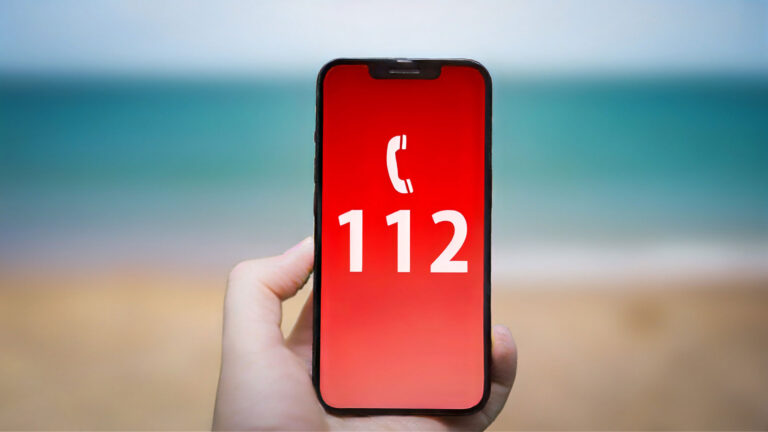
In Spain, there is a single number for all emergencies: 112. This number connects you to the police, the fire service and the Red Cross – round the clock, free of charge, even without mobile signal. It couldn’t be simpler.
Police Structures on Fuerteventura
The Spanish police system comprises several levels. Three are particularly relevant for travellers:
Due to growing visitor numbers, the police contingent on Fuerteventura is currently being increased.
Theft whilst on holiday – don’t forget to file a ‘denuncia’
Anyone who falls victim to theft on Fuerteventura – for example, from a hire car – should be aware of one thing: filing an official report (Denuncia) is essential for insurance purposes. The good news is that the Cuerpo Nacional de Policía offers a special tourist helpline through which you can file the Denuncia by telephone – without having to wait for ages at the police station.
Traffic checks – Be well prepared when on the road
The island police frequently carry out traffic checks – particularly in the evenings on the approach roads to tourist centres. You should therefore always carry your driving licence and vehicle documents with you.
Alcohol limit in Spain – Who needs to be careful
The legal alcohol limit in Spain is 0.5 per mille – a figure that’s easy to underestimate when you’re on holiday. For new drivers with less than two years’ driving experience, an even stricter limit of 0.3 per mille applies. Anyone strolling through Corralejo in the evening and planning to get behind the wheel afterwards should bear this in mind.
Fines – No negotiation, just prompt payment
Contrary to what is sometimes claimed, traffic fines in Spain follow a fixed schedule of penalties – no officer sets the amount at their own discretion Failing to stop at a stop sign is considered a serious offence and usually costs .200 euros.
The key factor is the voluntary payment period: anyone who settles the fine within 20 days automatically receives a 50 per cent discount – meaning they pay just 100 euros instead of 200. That is the most important advantage, not any negotiating skills.
Police officers are permitted to collect the fine on the spot from tourists who do not have a permanent residence in Spain. Anyone unable to pay risks having their vehicle impounded. Most patrol cars now carry mobile card terminals – though cash payment is still possible.
Common pitfalls on Fuerteventura
A few rules that are often overlooked during a holiday but are strictly enforced:
Coastguard – Between safety and humanitarian responsibility
Fuerteventura lies less than 100 kilometres from the African coast. You can view this as a mere number on a map – or you can feel it when you stand on the beach early in the morning and look in the direction from which exhausted people sometimes arrive.
Who rescues – and who coordinates?
The main burden of sea rescue falls on Salvamento Marítimo (SASEMAR) – the Spanish state-run sea rescue organisation. Its distinctive orange-red vessels, such as the Salvamar Izar, and rescue helicopters are the key players when migrant boats get into distress at sea. The Guardia Civil secures the coastline and coordinates the operations; the Red Cross provides first aid to those rescued on land.
The Atlantic Route – Record-high numbers
The Canary Islands are currently experiencing record-high numbers of migrants on the so-called Atlantic Route. People from Morocco, Mauritania and other West African countries are risking the dangerous crossing in makeshift rubber dinghies, known as ‘pateras’ – a word that, for many, carries the weight of destiny.
In response to the rise in the number of crossings, Spain has significantly bolstered the fleet and personnel of Salvamento Marítimo in the Canary Islands in recent years – a step that saves lives without addressing the root causes of the flight.
The relevant directorate is based in Gran Canaria: Dirección Gran Canaria· Edificio Autoridad Portuaria · Explanada Tomás Quevedo, SN · E-35008 Las Palmas de Gran Canaria 📞 +34 928 467 757 · +34 928 467 955 · +34 928 467 760 ✉️ laspalma(at)sasemar.es