
Safety warnings for your holiday in Fuerteventura
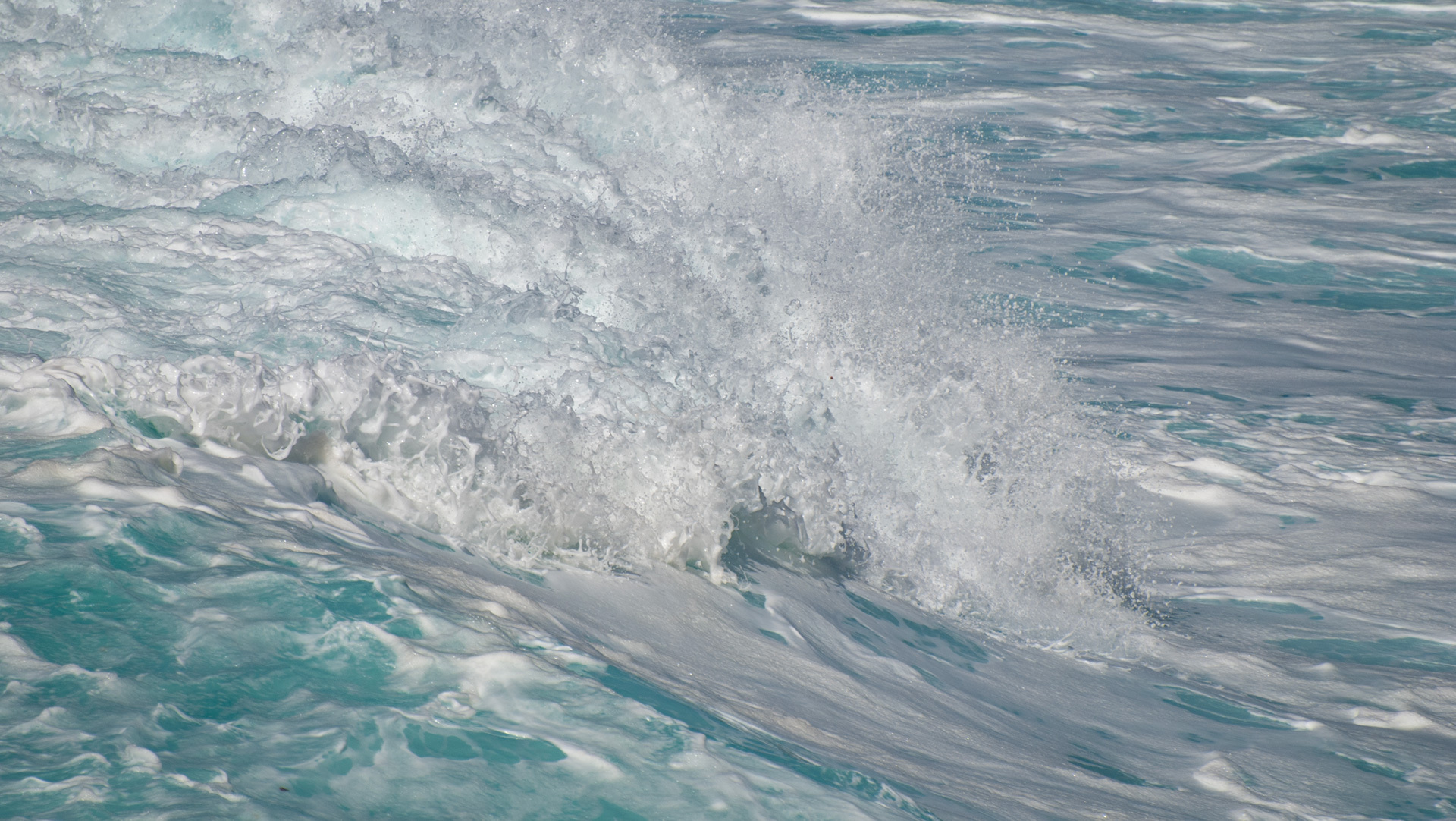
Dangerous surf
Some sections of beach on Fuerteventura are characterised by strong surf, which is often accompanied by undercurrents that are difficult to assess. Very strong waves and currents are particularly prevalent along the western coast. It is advisable to exercise caution, especially on unguarded stretches of coast.
Lifeguards indicate the beach conditions using a flag system:
The West Coast and Cliff Areas
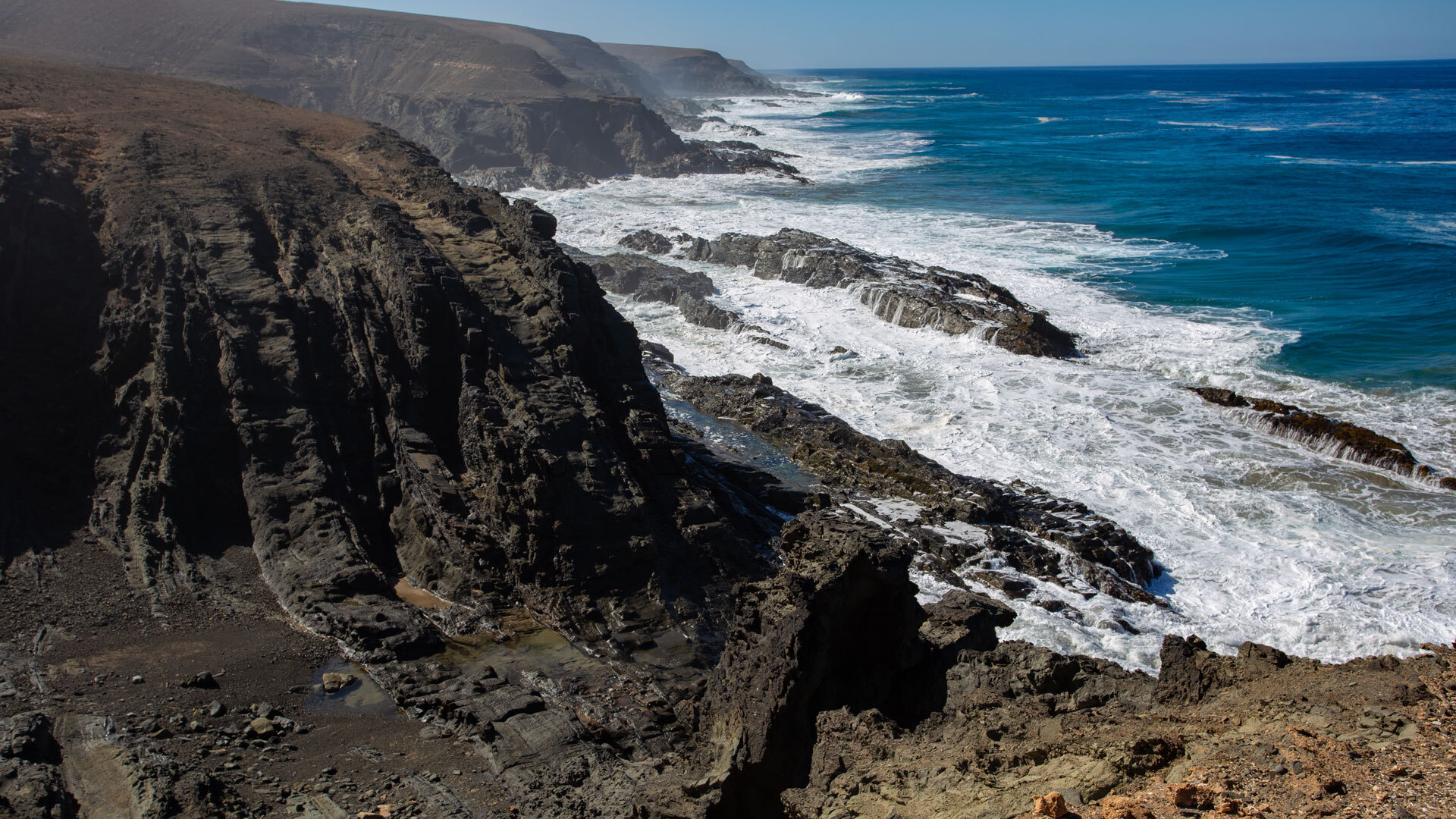
The west coast of Fuerteventura is one of the island’s most scenically impressive, yet also most dangerous, regions. Steep cliffs, rough terrain and the direct influence of the Atlantic Ocean mean that particular caution is required.
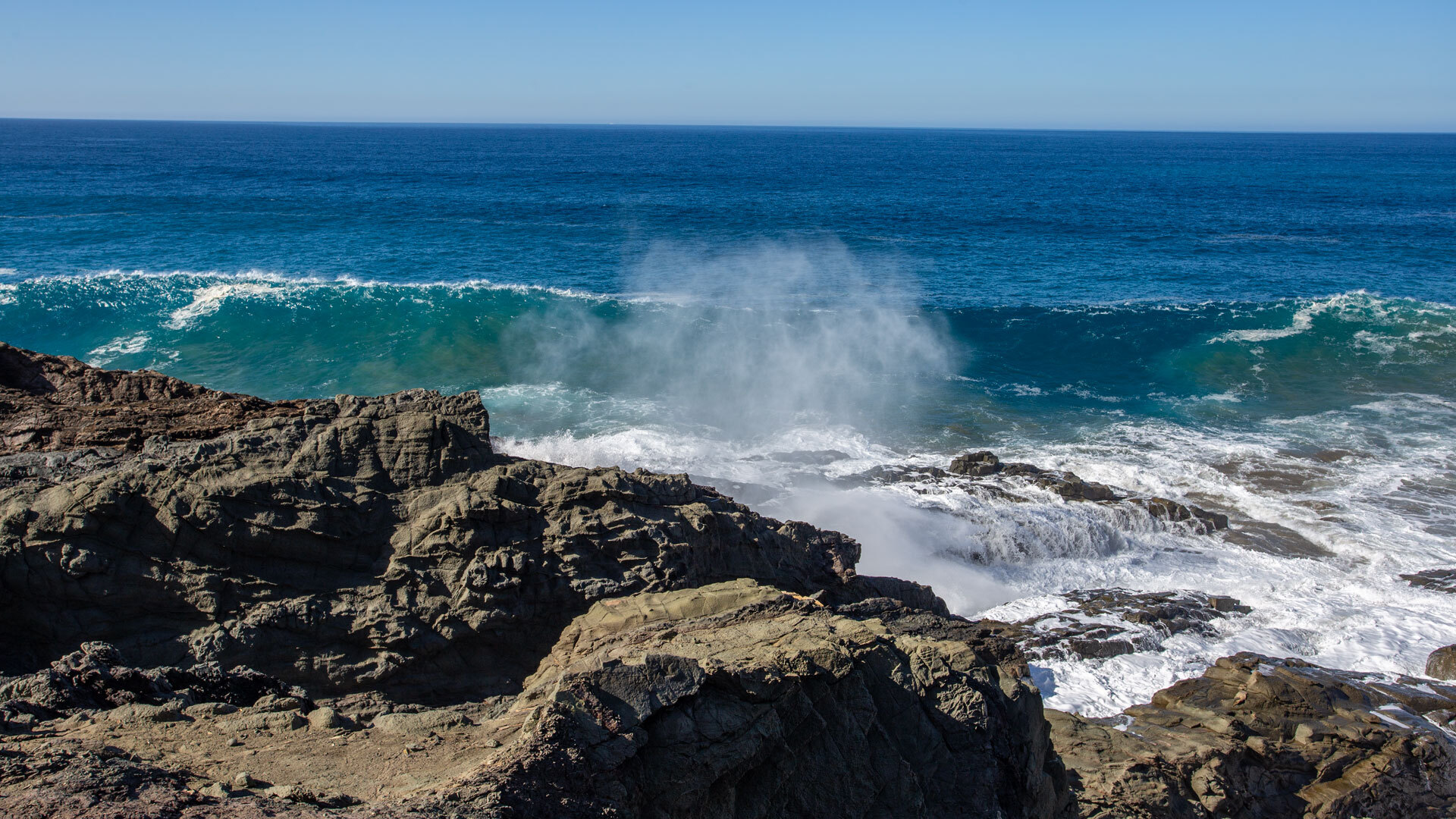
Cliffs and rocky coasts
The cliff areas along the west coast – such as around Cofete, Punta Pesebre or the Jandía Peninsula – are known for their sudden, breaking waves. Even when the sea appears calm, so-called ‘sneaker waves’ can strike rocky outcrops with enormous force without warning and drag people into the sea. Always maintain a safe distance from the water when near cliffs and avoid wet rocks at all costs.
Tides – an underestimated risk
The tides play a significant role on the west coast of Fuerteventura and are greatly underestimated by many holidaymakers. The tidal range – that is, the difference between low and high tide – can be several metres and change considerably within a short space of time. This poses the following specific dangers:

Unsupervised beaches – implicit ban on swimming
Beaches such as Cofete or La Pared often have no permanent lifeguard service and no official flag system. However, due to the life-threatening undercurrents and unpredictable surf, an ‘implicit red flag’ effectively applies here – in other words, a permanent, unofficial ban on swimming. Anyone who nevertheless chooses to swim at these beaches does so at their own risk, without any safety measures in place.
Current safety situation on the west coast (as of February 2026)
The danger on the west coast is not an abstract risk – recent incidents show just how serious the situation is:
Fatal accident near El Cotillo (January 2026) At the end of January 2026, a foreign national fell into the sea near El Cotillo. In the aftermath, witnesses and the authorities once again issued a strong warning about the extremely high waves and dangerous surf in this area.
Increased drone surveillance (February 2026) In the municipality of La Oliva, which includes parts of the west coast, drone flights were used more extensively for beach surveillance in February 2026 in order to improve the safety of beachgoers and detect dangerous situations at an early stage.
Statistics: 14 drowning incidents on Fuerteventura (2024) Fuerteventura recorded a total of 14 drowning incidents in 2024 – meaning the island has the third-highest rate in the Canary Islands, after Tenerife and Gran Canaria.

New cost regulations for rescue operations (Canary Islands, February 2026)
In February 2026, the Regional Government of the Canary Islands announced a tightening of the cost regulations for rescue operations. This follows a rise in accidents in which warnings such as red flags or coastal closures were deliberately ignored – most recently the deaths of four tourists in Tenerife in December 2025 and another fatal accident in Lanzarote in January 2026.
The key points of the new regulations:
Objective: The new provisions under the Civil Defence Act are intended to act as a deterrent and prevent the general public from having to foot the bill for the reckless behaviour of individual holidaymakers or local residents.
Practical advice for the west coast
Crime
Fuerteventura is considered a relatively safe holiday destination. The police ensure a good level of security in the larger towns. However, pickpocketing can occur, particularly during large gatherings – for example, during major festivals or on busy beaches.
In addition, some thieves target the countless hire cars, as they suspect money and valuables may be left inside. Accommodation such as hotel rooms is also increasingly at risk of break-ins.
As a general rule, the following safety measures should be observed to prevent theft:
If you do, however, fall victim to theft, please contact your nearest police station immediately or dial the emergency number 112.