Caletillas de Cotillo – Where Lava Transforms the Sea into Dream Beaches
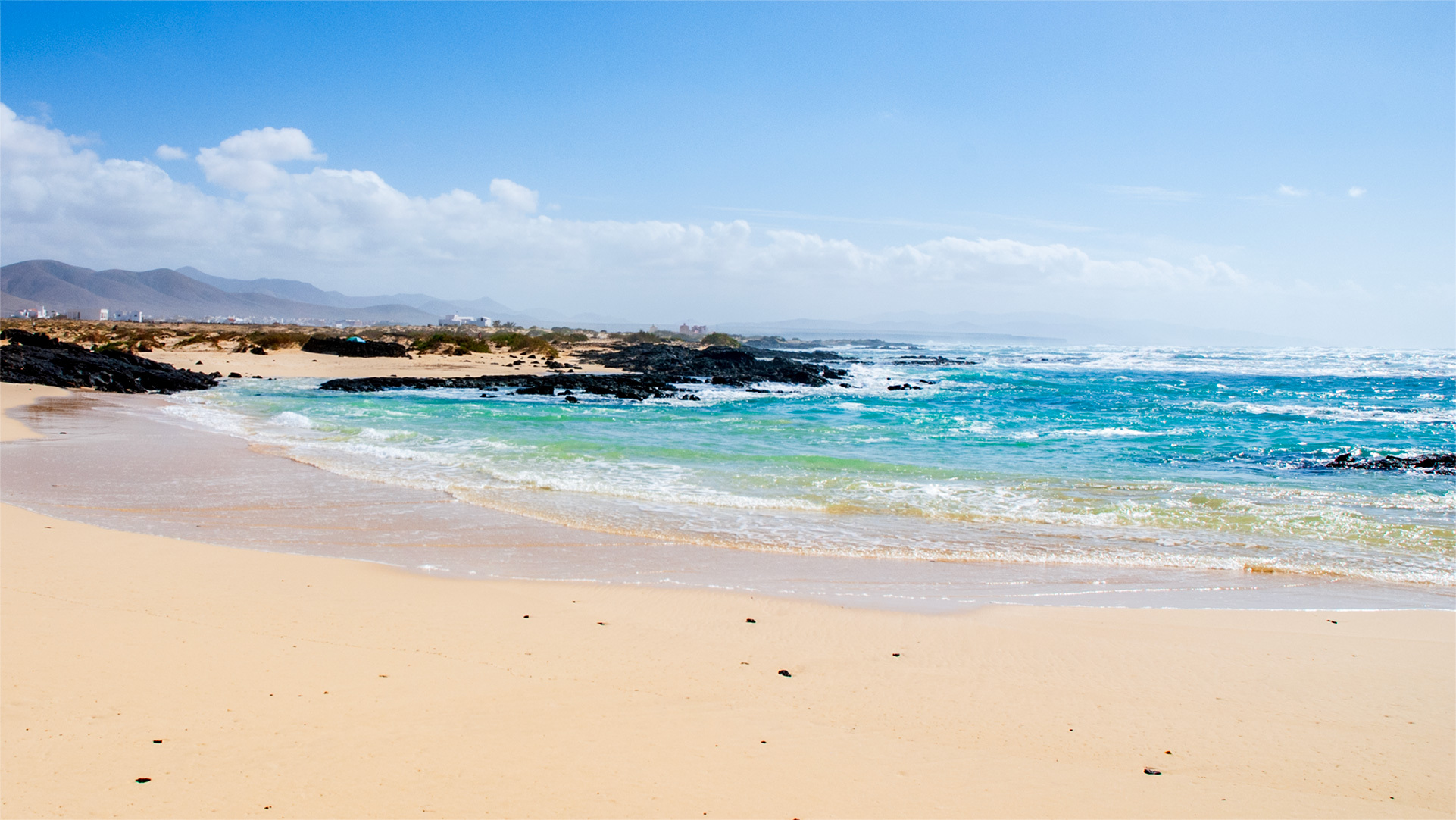
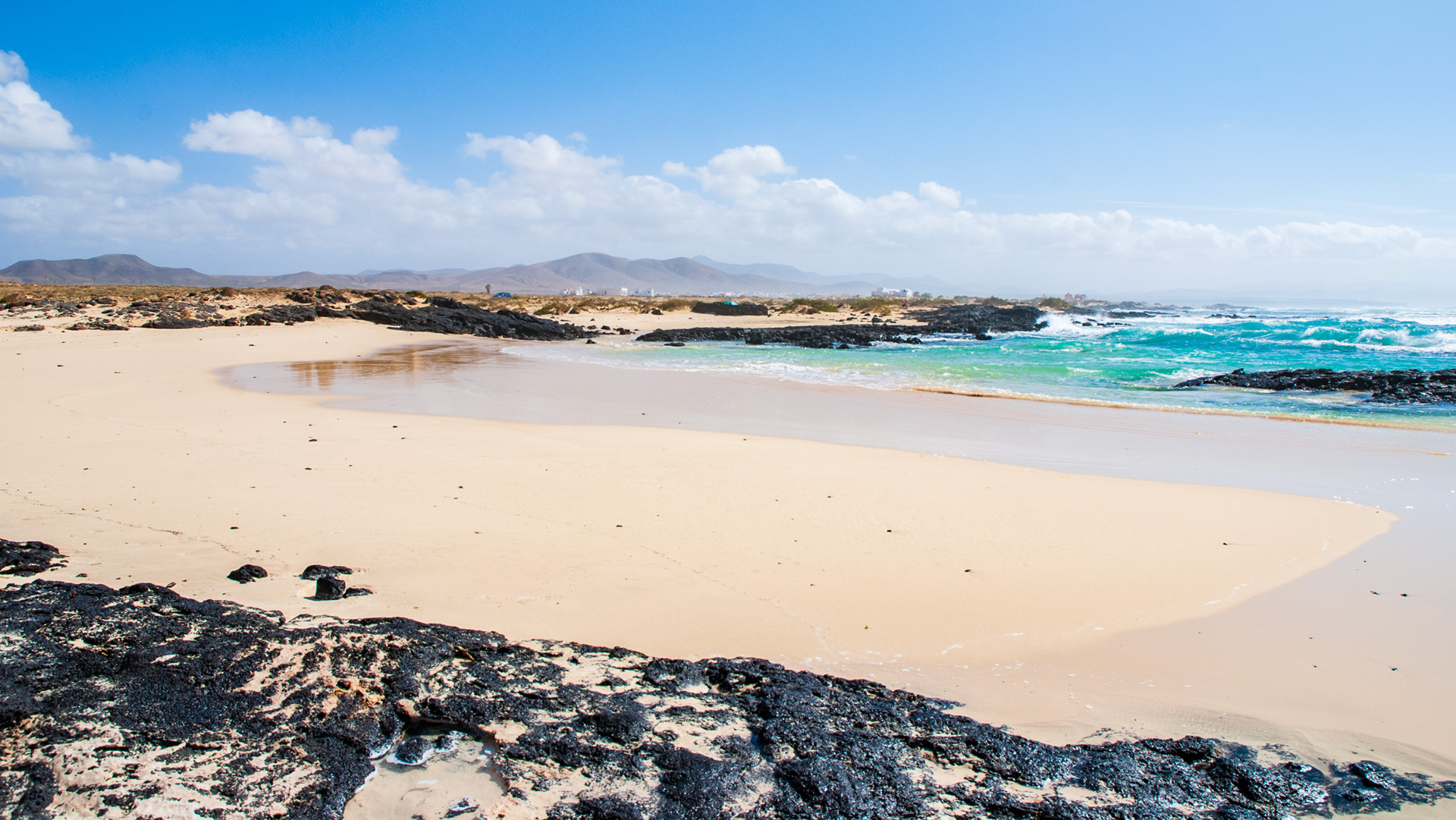
There are places you don’t seek out – you simply find them. The Caletillas de Cotillo on the north-western coast of Fuerteventura are one such place. North of El Cotillo, far from the main tourist crowds, you encounter a coastal landscape that seems to belong to another world: bizarrely shaped lava tongues that once poured glowing into the sea, and between them – like small gifts from nature – hidden sandy coves on Fuerteventura, so calm and unspoilt that you involuntarily hold your breath.
Lava Coves from Another Age
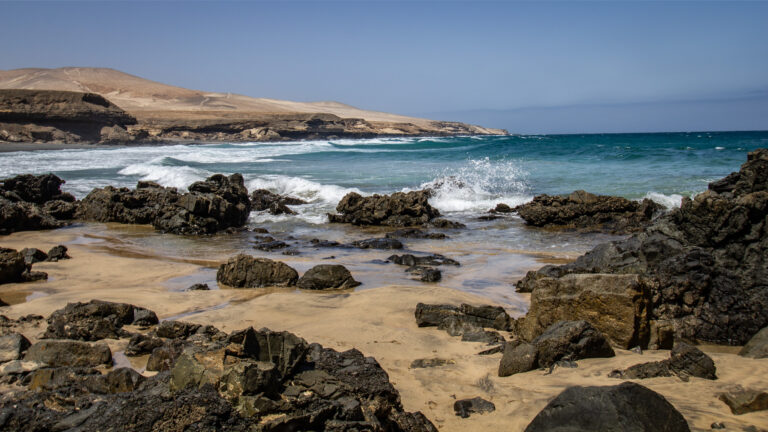
What makes the Caletillas de Cotillo so special is their geological history. Cooled lava flows on Fuerteventura have divided the coastline into individual segments – natural lagoons formed by solidified rock that channel the Atlantic’s waves into calmer currents. Lava reefs jutting into the sea break the largest waves before they reach the beach.
You stand there and gaze at the interplay of black rock and turquoise-blue water – and come to understand that Fuerteventura is so much more than just wind and open space.
Swimming, Snorkelling and Diving: Discovering the Sea
On calm days, the lava coves near El Cotillo transform into a natural aquarium. Those who bring snorkelling gear to Fuerteventura dive into a quiet underwater world that few people know: along the seabed run the cooled lava flows that once stretched from the island’s interior deep into the sea. A sight that burns itself into the memory.
Diving at the Caletillas de Cotillo is also possible – though you should always keep a close eye on the currents along Fuerteventura’s north-western coast. The golden rule: don’t venture too far into open water, and never dive alone. Safety whilst diving on Fuerteventura is not an optional extra – it is essential.
In rougher swell, the same applies for swimmers. The natural reefs offer some protection, but the Atlantic remains the Atlantic – it should always be treated with respect.
Surfing at the Caletillas de Cotillo
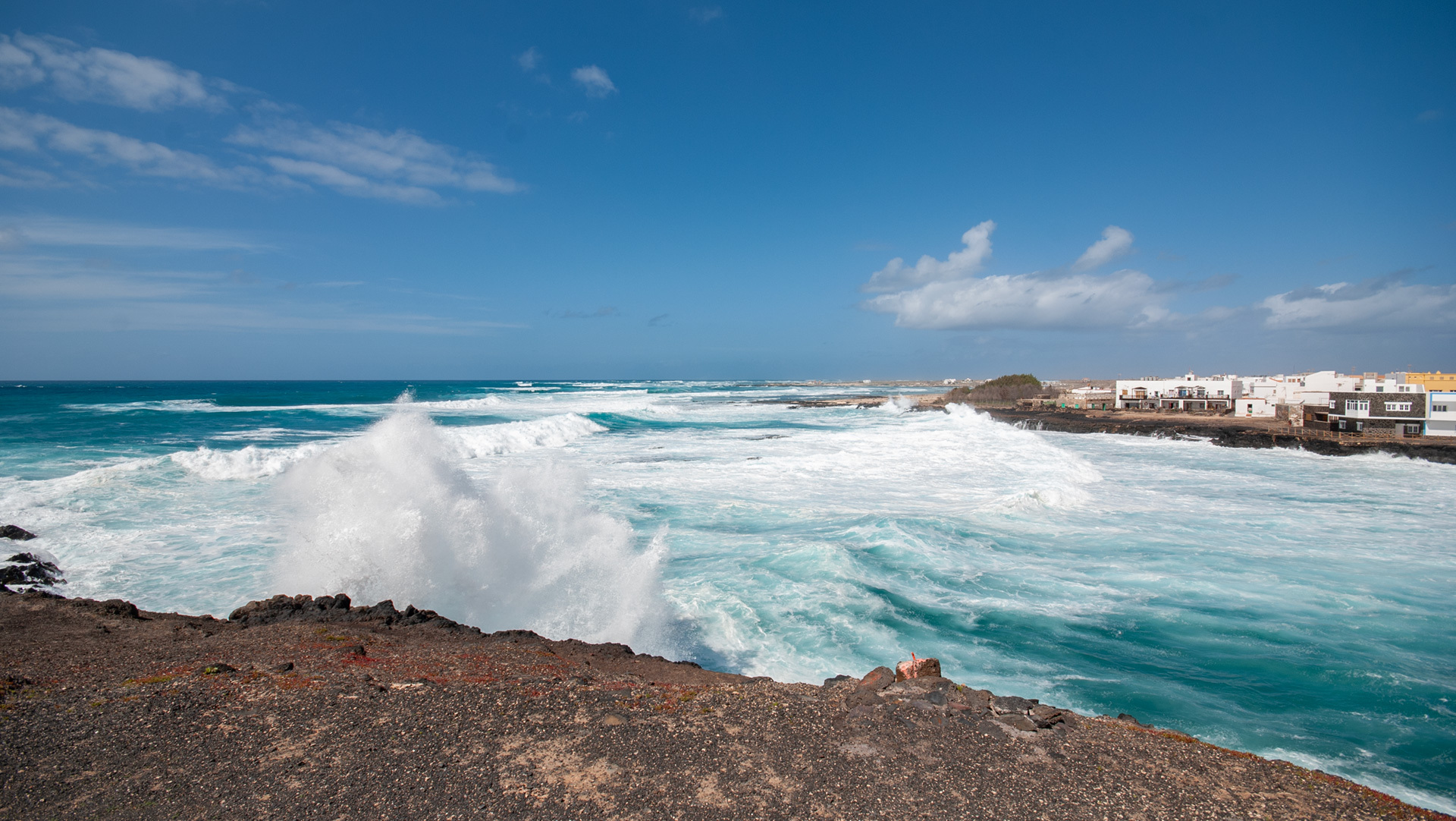
Fuerteventura’s north-western coast is renowned for its winds – and that is precisely what makes it a paradise for surfers. Surfing near El Cotillo is generally possible, including at the Caletillas. Beginners, however, should only enter the water under the supervision of an experienced surf school on Fuerteventura – the conditions there are not to be taken lightly.
Those with a little experience will find varied surf here. The true surfing aficionados, however, are drawn a little further towards the village: Playa del Castillo near El Cotillo is considered one of the most popular surf beaches on Fuerteventura and is a firm fixture on the local surfing scene.
El Cotillo – The Village Behind It
A visit to the Caletillas de Cotillo would feel incomplete without taking a look at the nearby village of El Cotillo. This small fishing village in the north of Fuerteventura has developed in recent years into a quiet hidden gem for independent travellers on Fuerteventura – far from the hustle and bustle of the large resorts such as Corralejo or Morro Jable.
Here you stroll through narrow lanes, stop at one of the simple but welcoming restaurants, and sense that time moves at a different pace. There are toilet facilities and small places to eat and drink – nothing more is needed. Surf equipment is best brought along yourself to be safe, as the local supply is limited.
Getting There: The Route via Lajares
El Cotillo is easily reached by car via Lajares on the FV-10 road. The drive through the sparse, wide interior of the island is itself an experience – a quiet landscape of volcanic hills, stone walls and the eternal blue of the sky above. Anyone wishing to explore the north-west of Fuerteventura independently would be well advised to hire a car.
Conclusion: A Beach for Explorers
The Caletillas de Cotillo on Fuerteventura are not a beach for sun loungers and parasols. They are a place for people who seek something genuine – who love the raw, the unfinished, the wild. Those who embrace them will find a coastline full of contrasts: black lava rock and white sand, the rough Atlantic and quiet lagoons, solitude and the gentle sound of the sea.
And those who have been there once will always return.