Swimming & Watersports on Fuerteventura – Where the Atlantic Shows Its True Face
There are places in this world where the water is not simply wet – it is a promise. On Fuerteventura, the second-largest of the Canary Islands, this promise begins with the very first glance at the horizon. Turquoise water shimmering in the morning light like liquid glass. Golden sand stretching for kilometres. And the wind – that relentless, warm trade wind that has made the island one of Europe’s most coveted watersports destinations.
Fuerteventura: Eldorado for Watersports Enthusiasts
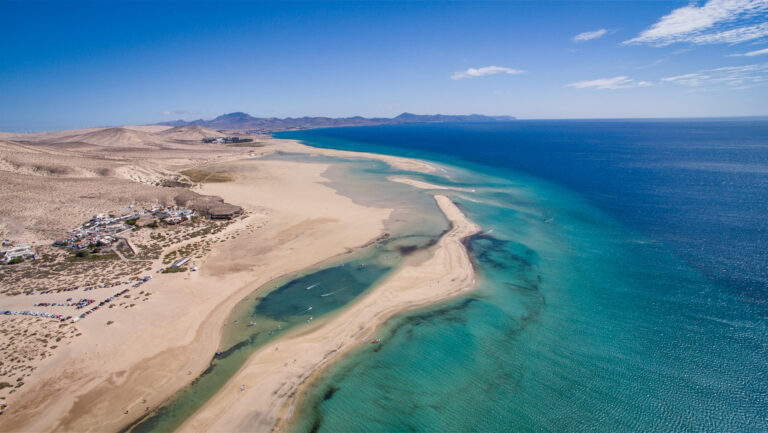
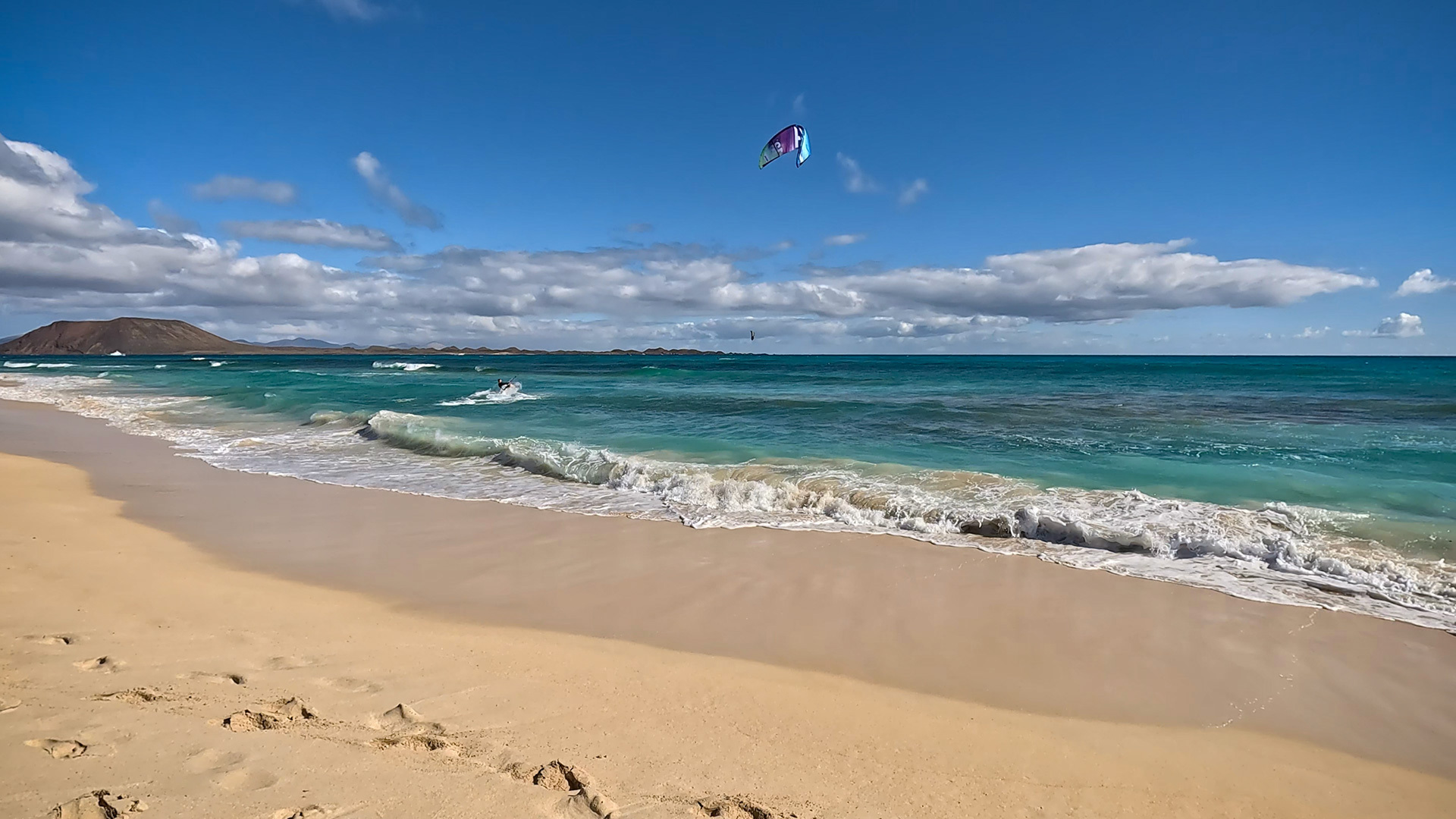
Those who seek watersports on Fuerteventura will not be disappointed. The island welcomes thrill-seekers with near-perfect conditions – year-round, reliable, unrivalled. It is no coincidence that the Playas de Sotavento have been the venue for the Surf World Cup for more than two decades. This 16-kilometre stretch of beach along the south-eastern coast of Jandía draws surfers from across the globe like a magnet. The wind gusts here with force, the waves break in long, even lines – ideal conditions for surfing on Fuerteventura at the highest level.
More recently, the Kite World Cup Fuerteventura has also become a fixture in the sporting calendar. Colourful kites dance like giant butterflies above the water, and even as a spectator you cannot help but feel the tingle of that speed and freedom.
But watersports on Fuerteventura mean far more than surfing and kitesurfing. The strait between the island and the small protected islet of Los Lobos is regarded by divers as one of the finest diving areas in the Canary Islands. Those who dive here encounter an underwater world of quiet beauty: moray eels peering from rock crevices, rays gliding silently across the sandy seabed, and colourful fish populating the moray reef of Fuerteventura. Diving on Fuerteventura is an experience that stays with you long afterwards.
Those who prefer a gentler pace can join a fishing trip on Fuerteventura or drift along on a sailing tour through the Canarian Archipelago – past rugged coastlines, with dolphins as occasional companions and the feeling of having arrived at the edge of the world.
The Most Beautiful Beaches of Fuerteventura
Fuerteventura is not without reason considered the beach island of the Canaries. No other island in the archipelago can match such an impressive variety of beaches. Pristine, endless white sandy beaches alternate with jagged black lava coves – a coastal landscape that is sometimes gentle, sometimes dramatic, and always captivating.
The quality of these beaches is no mere tourism slogan, as tangible accolades demonstrate: in 2026, Fuerteventura holds 10 Blue Flag beaches – the international environmental award for outstanding water quality, cleanliness, and facilities. A figure that speaks for itself.
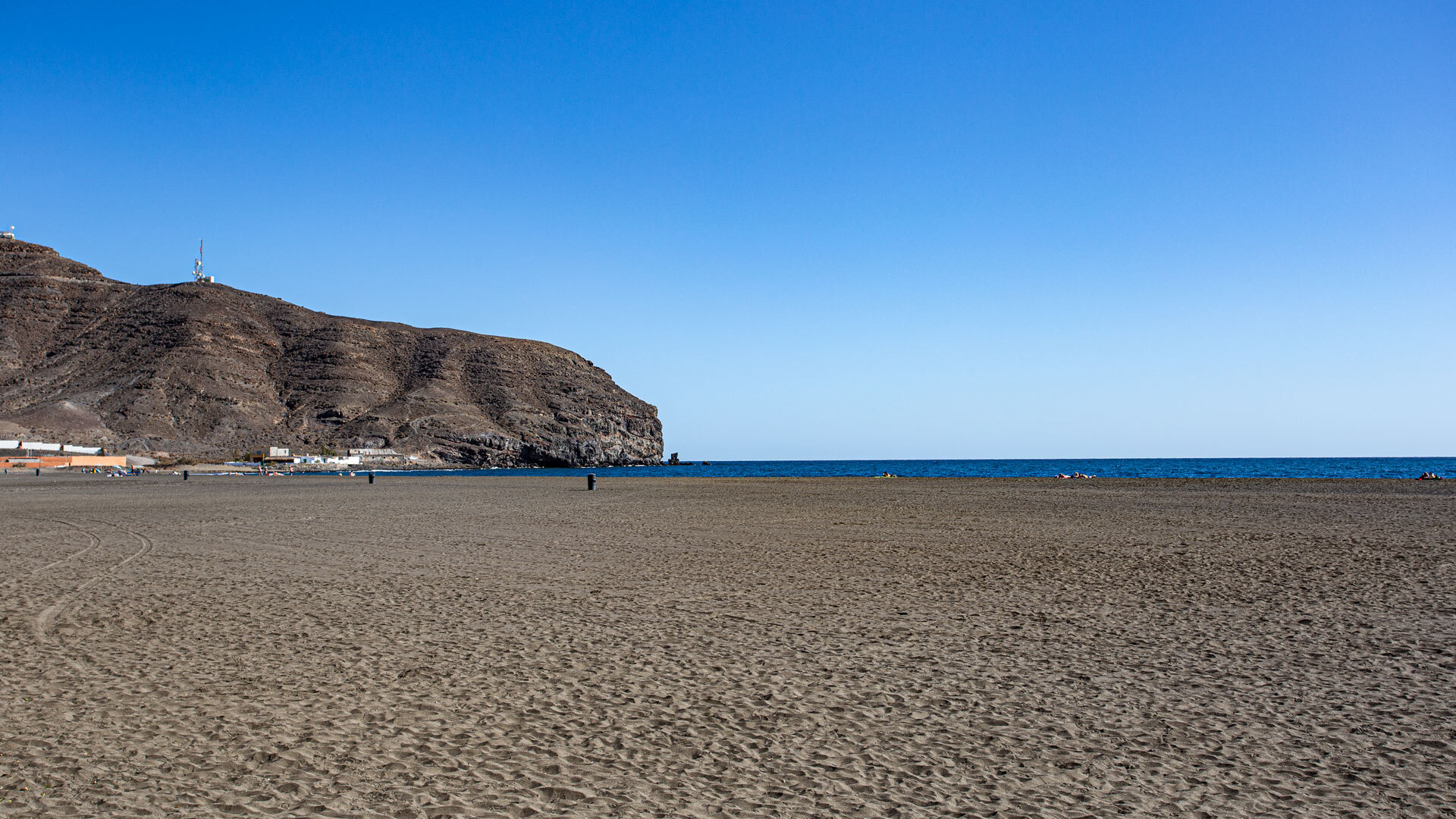
Blue Flag Beaches on Fuerteventura (as of 2026)
In the north (La Oliva), the Grandes Playas de Corralejo shine with their sweeping dunes, as does the Playa de La Concha (El Cotillo), which is particularly popular with families thanks to its calm, sheltered waters.
In the east and central island (Puerto del Rosario & Antigua), no fewer than four beaches carry the award: Playa Blanca near the capital, Playa de Los Pozos (Chica) as a sheltered town beach – note that there were construction works here in 2025, so it is worth checking the current situation on arrival –, Puerto Lajas, and Playa del Castillo (Caleta de Fuste), known for its shallow, child-friendly waters.
The south (Pájara & Tuineje) is particularly well endowed, with no fewer than five certified beaches: Playa de Costa Calma, Playa de Butihondo (Esquinzo), Playa del Matorral (Morro Jable) with its distinctive lighthouse, Playa de Gran Tarajal with its characteristically darker sand, and Playa de Tarajalejo – another lava beach with excellent water quality.
Note: Corralejo Viejo beach no longer holds the Blue Flag.
Playas de Sotavento – The Dream Coast of the South
The Playas de Sotavento are the centrepiece of beach tourism on Fuerteventura. More than 16 kilometres of golden sand, barely developed, shaped by the wind, kissed by the sea. Particularly popular are the stretches around Costa Calma, Esquinzo/Butihondo and Jandía Playa – names that have long become legend among beach holidaymakers. Here lively beach life sits alongside sporting activity, and those who wish can still find their own quiet corner amidst the vastness.
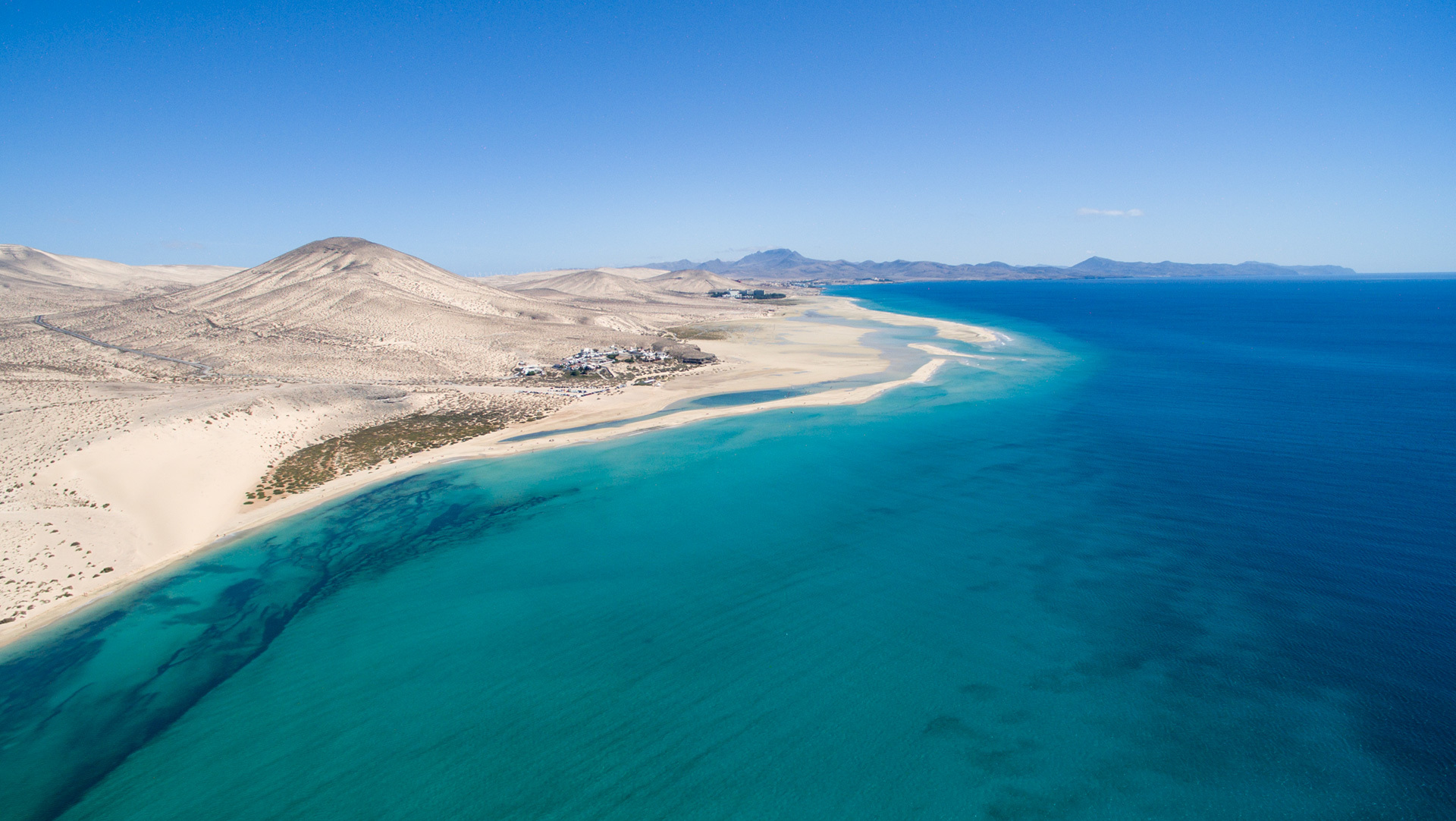
Playas de Corralejo – Lava Meets White Sand
In the north-east of the island, a different spectacle unfolds. The Playas de Corralejo captivate with their unique appearance: black tongues of lava divide the pale sand into separate coves, as if nature itself had erected partition walls. The result is of breathtaking beauty. The dunes of Corralejo, rising up behind, amplify this impression to monumental proportions.
Costa Caleta – The Safe Family Haven
Those travelling with young children will find ideal conditions at Playa Costa Caleta on the east coast. A harbour breakwater dampens the waves here, the water is calm, and the sand is fine. This family beach on Fuerteventura is therefore hugely popular with parents who want to give their little ones a safe first encounter with the Atlantic.
The West Coast – Beautiful, but Unpredictable
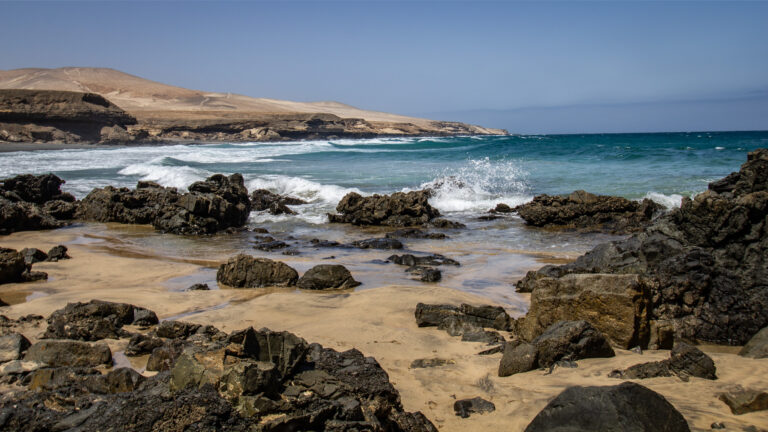
The west coast of Fuerteventura feels like another continent. Heavy surf, unpredictable currents – it is barely suitable for swimming. But those who seek solitude will find it here. Playa de Cofete and Playa de Barlovento possess a wild beauty: pale sand that seems to stretch into infinity, not a soul in sight. Walks by the sea become a meditative experience.
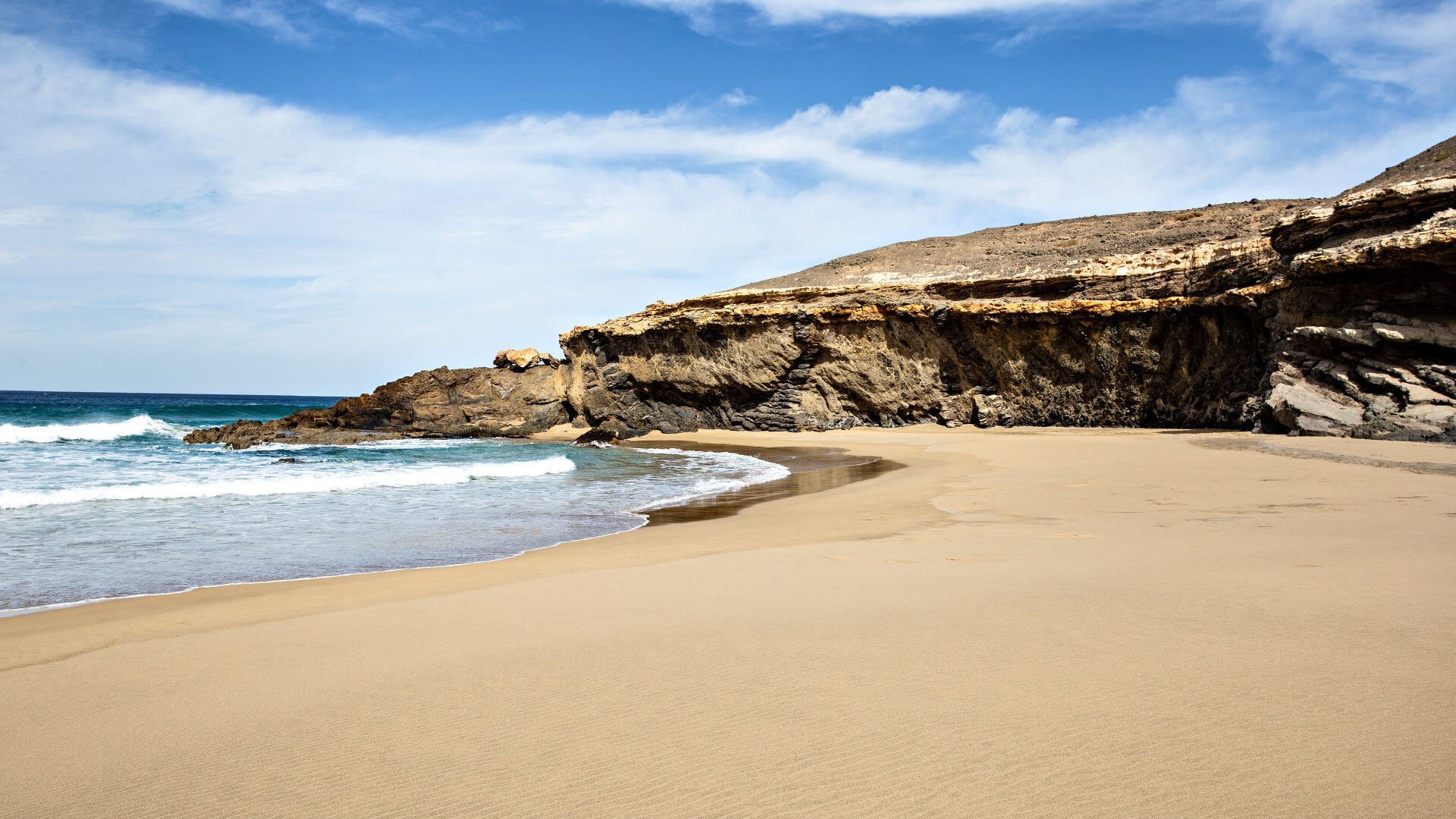
Naturism on Fuerteventura – The Nudist Paradise of the Canaries
Fuerteventura is regarded as the naturist paradise of the Canary Islands – and this reputation is more than deserved. Over 30 nudist beaches are spread across the island, and nude bathing on Fuerteventura is long-established practice at almost every beach outside the town centres. The island’s strong international tourism character makes it considerably more open in this respect than the western Canary Islands. Going topless is, in any case, perfectly normal everywhere.
The Best Nudist Beaches on Fuerteventura
Those planning a dedicated naturist holiday on Fuerteventura will quickly find what they are looking for:
Grandes Playas (Corralejo) in the north of the island are sweeping, wind-swept, and criss-crossed with small stone windbreaks – the so-called corralitos – which seem purpose-built as sheltered nooks for naturism. Lying here, you feel as though you are on the moon: silent, vast, free.
Playa de Sotavento (Jandía) offers simply boundless space with its vast sandy expanses and shimmering lagoons. Seamless sunbathing without crowds or prying eyes – south-eastern Fuerteventura at its most generous.
Playa del Viejo Rey (La Pared) on the west coast is wild, untouched, and imbued with a spirit of pristine nature. Surfers and naturists share this beach in peaceful coexistence – united by their love of the unspoilt.
El Cotillo (Playa El Islote) to the north of the village surprises with small, rock-framed coves that naturally provide privacy. Here you do not need to seek out solitude – it is simply there.
Playa de Cofete is the archetypal deserted nudist beach on Fuerteventura: kilometres of empty sand on the remote west coast. Nude bathing is possible everywhere here – but beware: the currents are strong and swimming in the sea is correspondingly dangerous.
Naturist Rules & Etiquette – Freedom Requires Respect
On Fuerteventura there is no law prohibiting nudity in public, provided nobody is disturbed. But freedom and respect go hand in hand. There are a few unwritten rules worth knowing:
In the immediate vicinity of hotel complexes, busy town beaches, or the town beach at Corralejo, clothing is expected. The further you move from the centre, the more naturally nudism is accepted. Even among naturists, the rule applies: keep your distance, do not stare. Gawping or blatantly staring at others is considered disrespectful and will be met accordingly. Photographing or filming strangers on nudist beaches is an absolute taboo – an offence that is taken very seriously. For hygiene reasons, always lie on your own towel. And public sexual acts are legally prohibited – with real consequences.
Tip: Specialist Naturist Accommodation
Those planning a thoroughly clothing-free holiday from arrival to departure will also find suitable accommodation. The BHH Naturist Resort in Costa Calma and establishments such as Monte Marina offer specialist facilities for naturists – discreet, comfortable, and tailored to the needs of the naturist community.
Beach Flags on Fuerteventura – What the Colours Mean
At supervised beaches, safety literally hangs on a flag. Lifeguards hoist a daily assessment of conditions – a system you should know before entering the water:
The presence of a lifeguard is usually indicated by an additional red-and-yellow striped flag or directly by a manned lifeguard tower – in Spanish, socorrista. If the tower is manned, you are in good hands. If it is empty, you are on your own.
Even on the generally safer east coast, these signals should be taken seriously. The Atlantic is and remains an ocean – and an ocean demands respect.
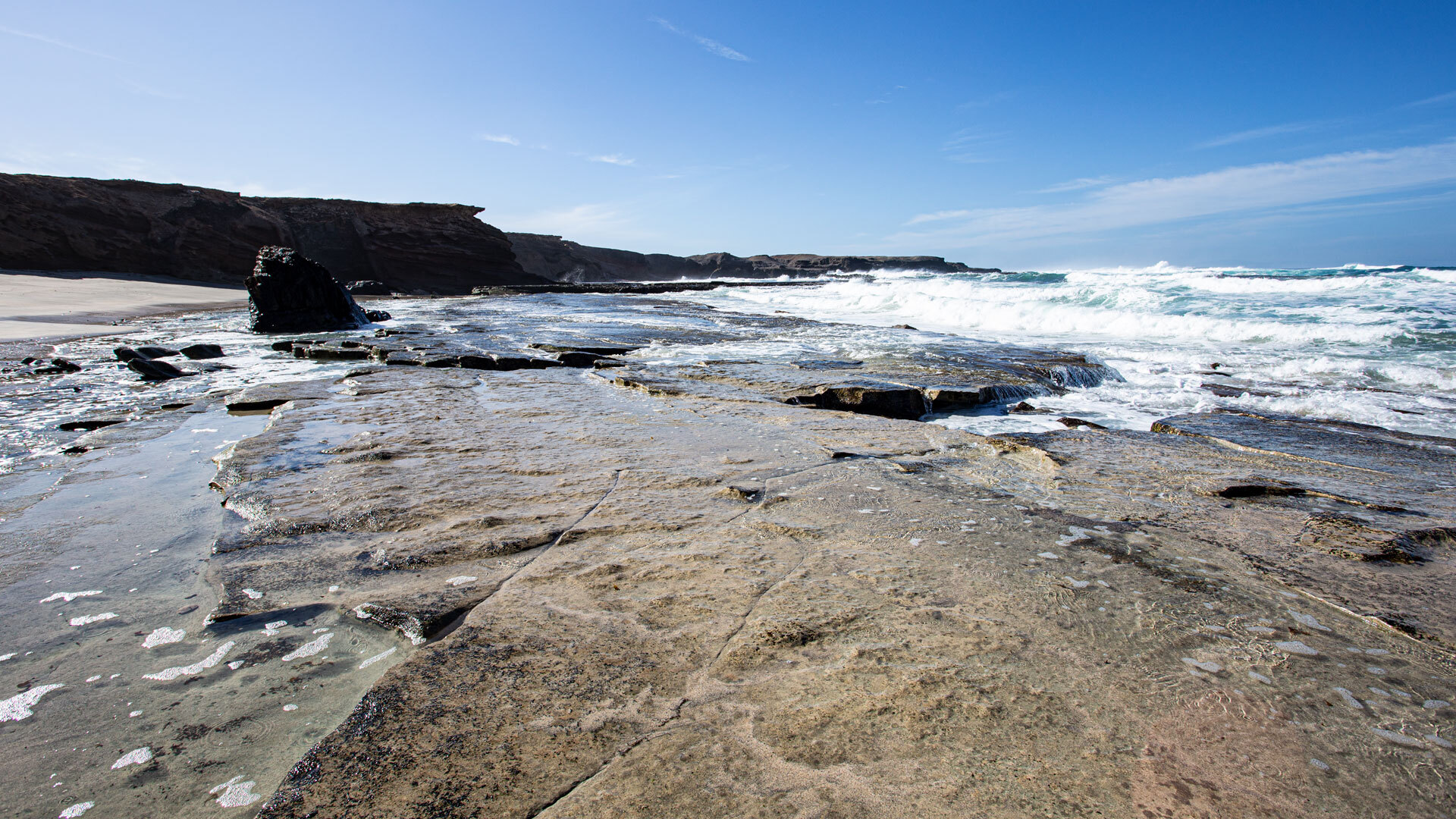
Fuerteventura – Island of Water, Waves, and Vastness
What sets Fuerteventura apart from other destinations is hard to put into words. It is the combination of light, wind, and water. It is the feeling of being in a place that has not yet been fully tamed. Where the Atlantic draws its own boundaries. Where you surf in the morning, dive at midday, lie in the sand with a book in the afternoon – and use the sea as a canvas for a sunset in the evening that you will not soon forget.
Watersports, beaches, and nature on Fuerteventura – this is not a holiday. It is an encounter with a place that changes you.