Pájara in Fuerteventura – Where desert, waves and wilderness meet
The sun beats down, the salty wind whistles across the headland – and anyone who sets foot on the Jandía Peninsula realises straight away: this is no ordinary holiday destination. Pájara, Fuerteventura’s largest municipality by area, stretches across the entire south of the island. Rugged, vast, authentic. That’s exactly what makes it so incredibly special.
Beaches that leave you speechless
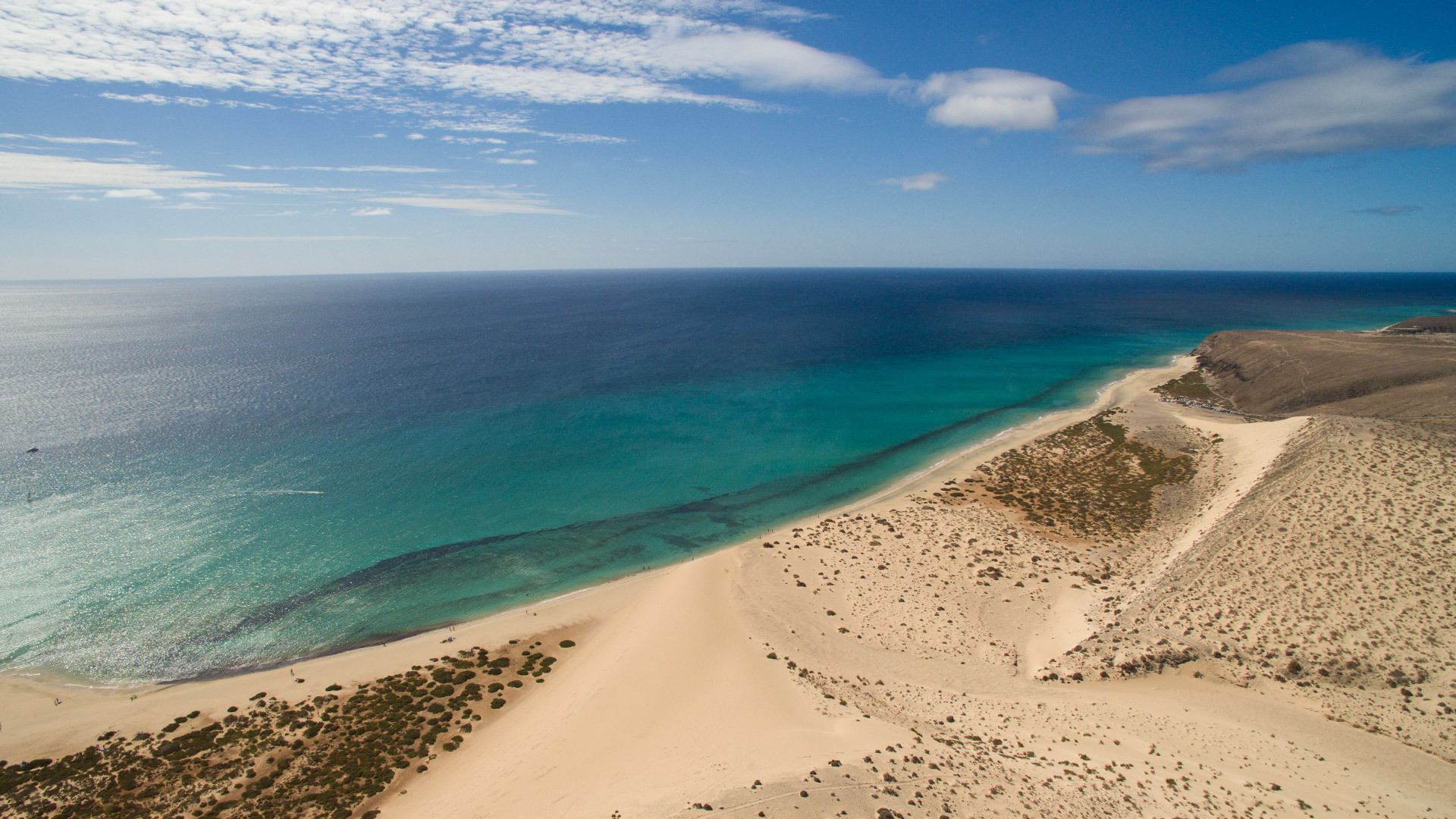
Anyone thinking of Fuerteventura’s beaches will inevitably end up at the Playas de Sotavento – five kilometres of dazzling white sand on the south-east coast of Jandía, turquoise-blue water, lagoons straight out of a travel magazine’s dream. Playa Barca is the star of the show: a sheltered lagoon for beginners, with the open sea behind it for those who really want to get to grips with it. This is where the annual Windsurfing World Championships take place – and that really says it all.
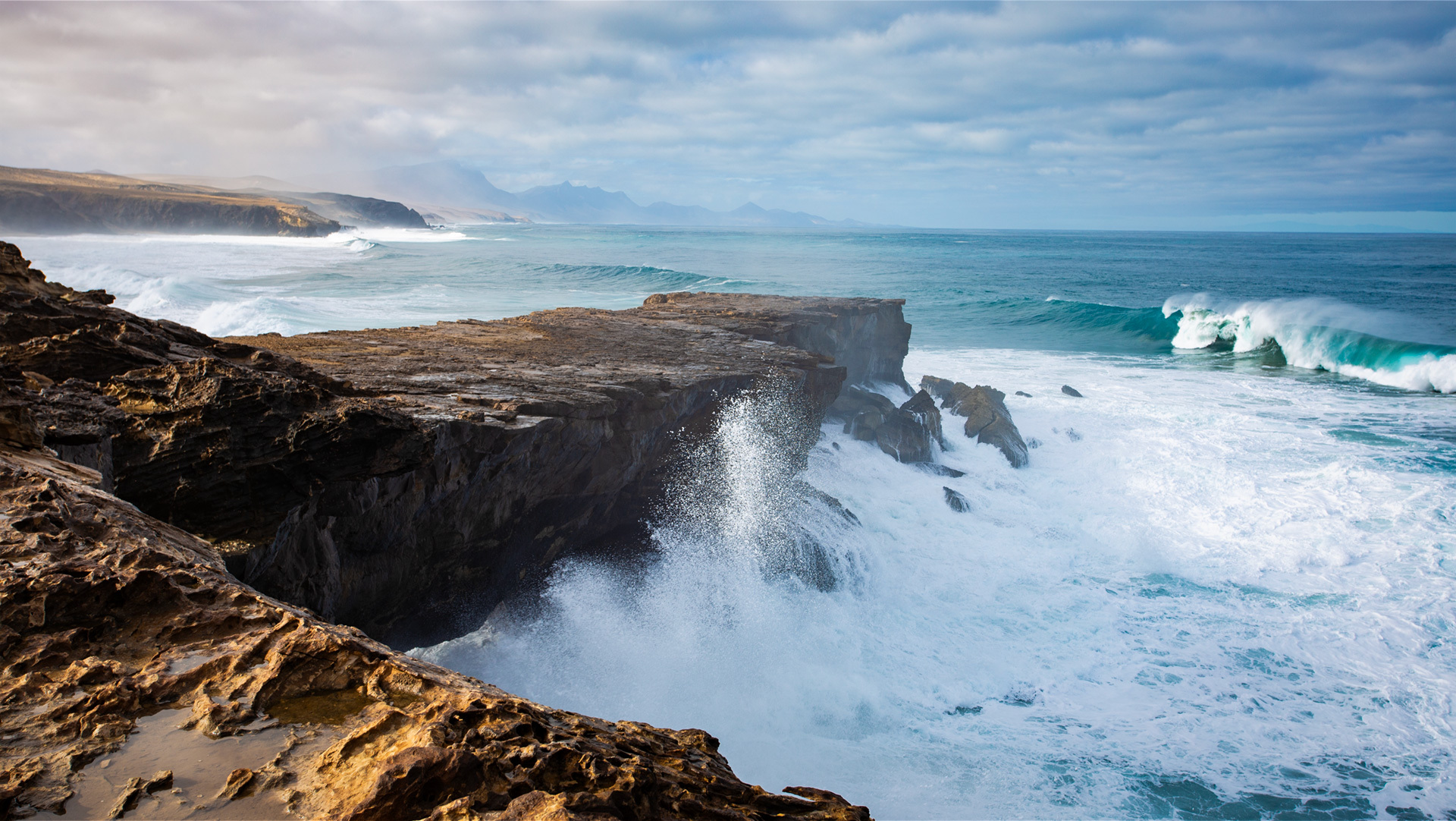
Those who prefer a quieter existence should follow the coast westwards. Playa de Cofete – endless, unspoilt, framed by barren mountains – is the anti-Instagram beach in the sense that it’s simply too vast and too wild to fit into a single photo. Nude sunbathing, solitude, the horizon. The real Fuerteventura.
Morro Jable – a former fishing village, now the hottest spot in the south
What was once a sleepy fishing village with a population of 200 is now the largest holiday resort on Fuerteventura. Morro Jable and Playa de Jandía have long since merged – and yet the old centre has survived. Narrow alleyways, whitewashed houses, fishermen setting out in the afternoon whilst tourists buy freshly caught seafood at the fish market (Pescadería).
Playa del Matorral beach connects the two parts of the town over a stretch of three kilometres – with fine sand, beach volleyball, sun loungers and everything you need for a proper lazy day. And from the harbour, you can take the ferry straight to Gran Canaria or Tenerife, should the urge to island-hop take hold.
Costa Calma – chill mode activated
Further north lies Costa Calma, the more laid-back alternative to Morro Jable. A holiday resort, yes – but one with style. The main road (FV-2) is lined with palm trees, pines and casuarinas, creating a surprisingly green, almost woodland-like atmosphere.
At the roundabout heading towards La Pared, a real hidden gem awaits: a wind chime by César Manrique – the legendary Lanzarote artist designed the ironwork ‘Fobos’ before his death in 1992. It was erected in 2006 and has been spinning in the Canarian wind ever since. Cool, minimalist, meaningful.
Villa Winter – the island’s spookiest spot
If you’re into dark stories: Villa Winter in the western part of Jandía is a must-see. The estate, built during the Nazi era, is said to have served as a secret submarine base for the German Reich – complete with underground passages and, according to legend, as a possible place of exile for Hitler. Historically unconfirmed. Atmospheric? Absolutely spine-chilling. A must-visit for anyone who wants to experience a completely different side of Fuerteventura.
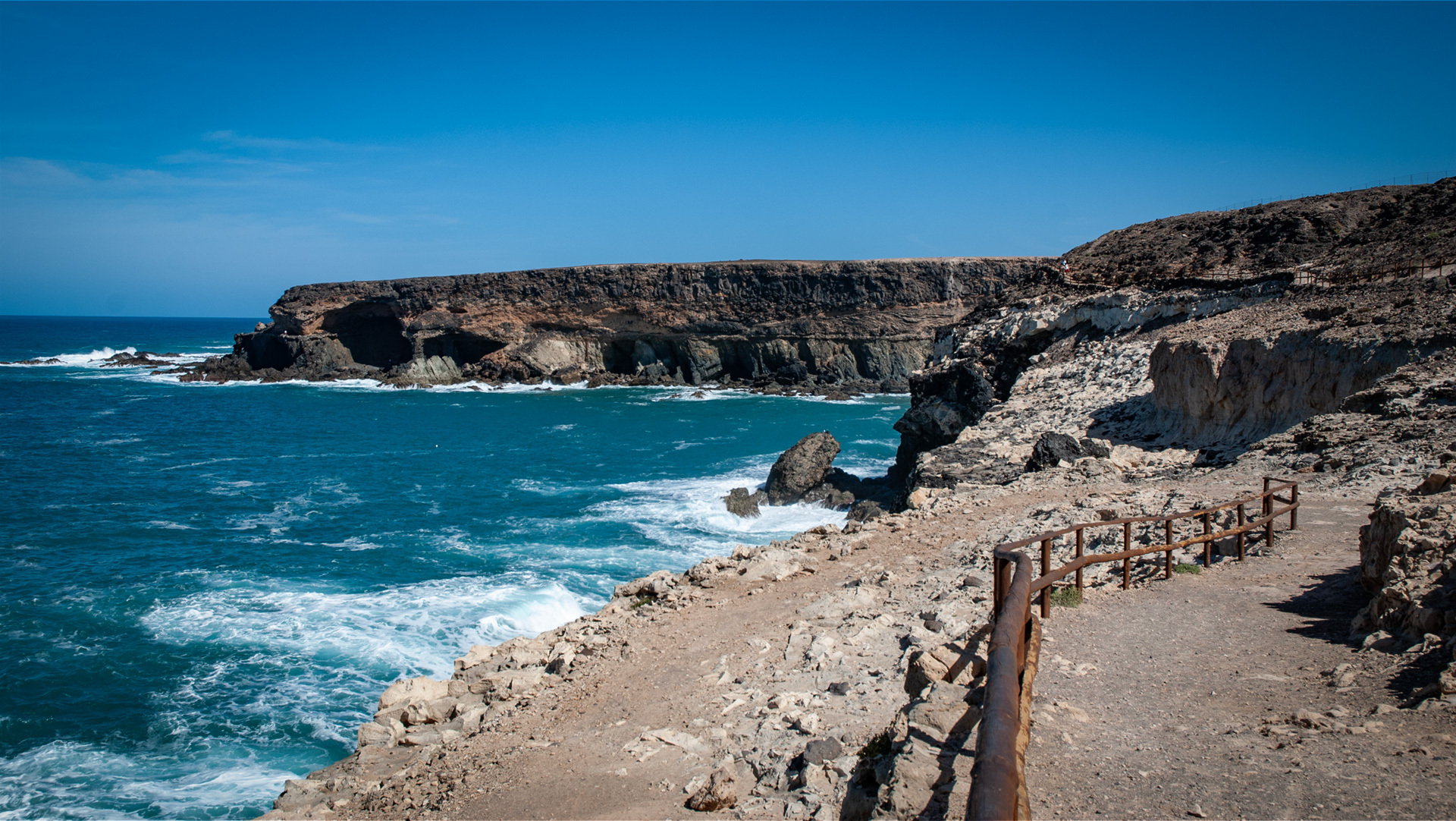
Ajuy & the caves of Caleta Negra
The fishing village of Ajuy on the rugged west coast has exactly 91 inhabitants – and one of the island’s most fascinating natural attractions. Caleta Negra, with its volcanic cave formations through which the Atlantic waters rush, is a real thrill for geologists and adventurers alike. Incidentally, the beach is called Playa de los Muertos – Beach of the Dead – named after historical pirate raids. Not for everyone, but just right for the right people.
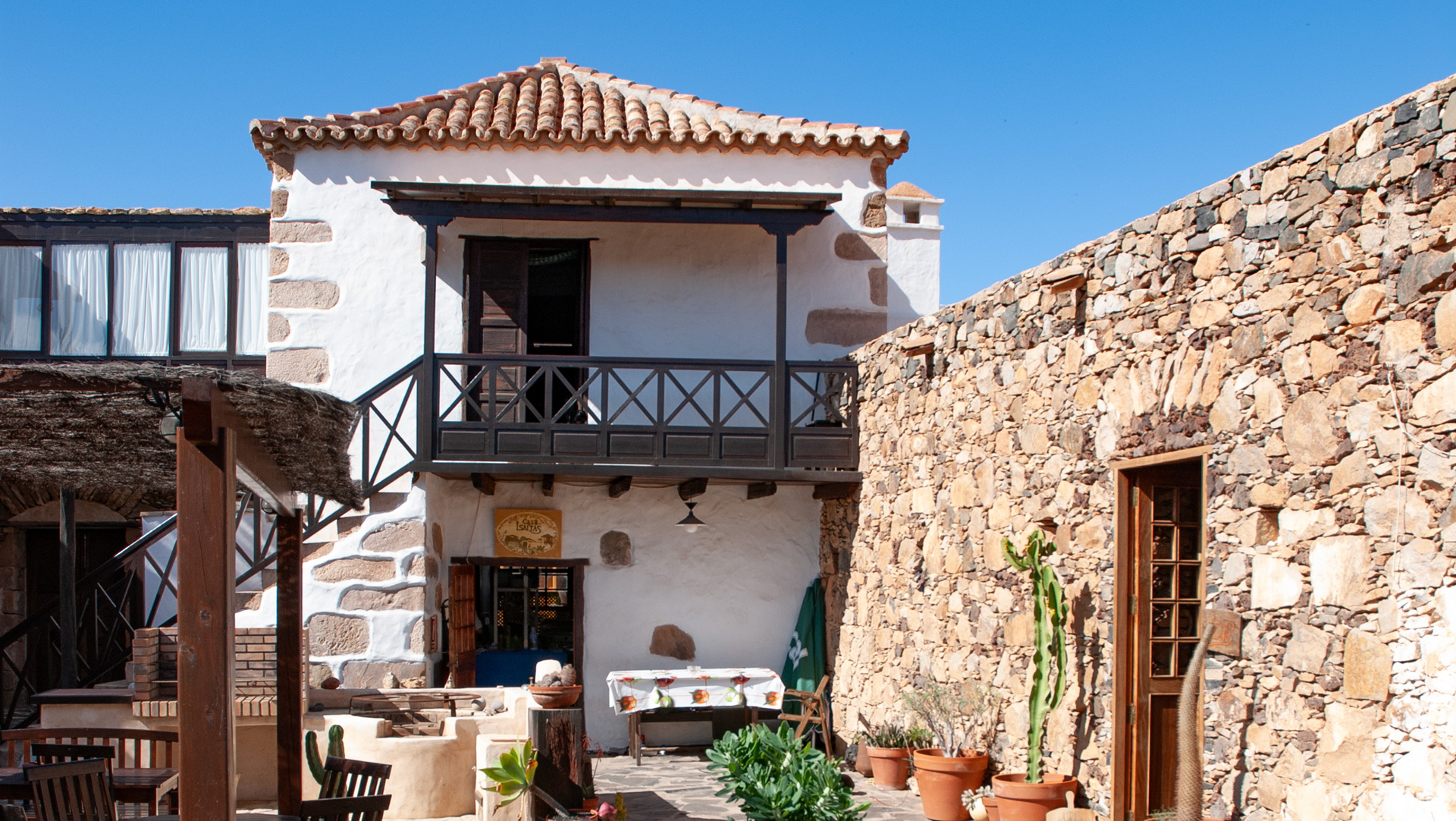
The village of Pájara – authentic, peaceful, underrated
The administrative centre Pájara itself is a real slow-travel gem. Stately homes with carved wooden balconies, an old Noria waterwheel in front of the town hall (in operation during morning tourist demonstrations), and the highlight: the Iglesia de Virgen de la Regla with its unique, Aztec-style ornate portal. One of a kind in the Canary Islands. Behind it lies a public freshwater pool – a little luxury in the desert.
Incidentally, on 2 July, the Fiesta de Nuestra Señora de Regla is celebrated here: fireworks at midnight, a procession in the evening, and celebrations continuing until you drop. Come for the beaches, stay for the fiesta.