La Oliva on Fuerteventura – Where the volcanoes fall silent and history whispers
For anyone travelling around Fuerteventura who wants to escape the hustle and bustle of the large resorts, a different world opens up in the north of the island. A world of black rock, whitewashed walls and a horizon so vast that you get the feeling time has stood still. Amidst this ancient expanse lies La Oliva – a place that appears quiet and unassuming, yet harbours a history greater than its narrow streets would suggest.
La Oliva – the heart and administrative centre of the north
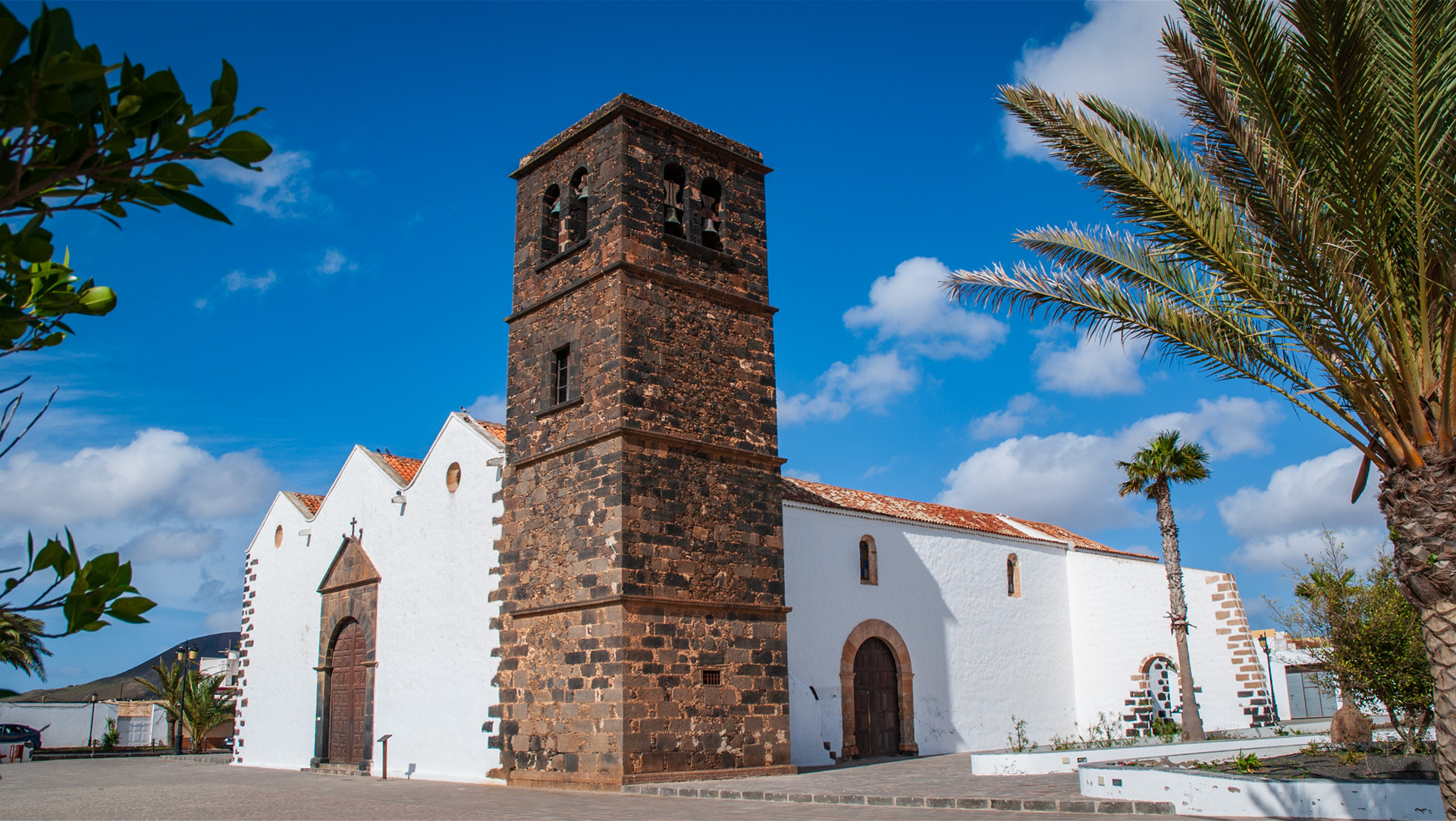
The village of La Oliva lies on a vast plain, framed by dark volcanic cones that rise from the barren soil like sleeping giants. The village’s name evokes a bygone era: it is said that a stately grove of olive trees once flourished here. The inhabitants of that time lived off the land – through farming and livestock rearing. Today, it is mainly tomatoes that ripen in the sparse fields, and only a few farmers still work the land.
Yet La Oliva was never merely a farming village. In 1708, the town gained significance that extended far beyond its borders: the stately estate Casa de los Coroneles became the administrative centre of Fuerteventura’s military government. Three years later, in 1711, La Oliva was granted its own parish – a further sign of its growing influence. For almost a century and a half, the island’s rulers directed the fortunes of Fuerteventura from here, until the administration was moved to what is now Puerto del Rosario in 1860.
Today, La Oliva has a population of around 1,295 and is the administrative centre of the municipality of the same name – which also includes the small neighbouring island of Los Lobos. The town has lost some of its political clout, but it has gained something that is difficult to quantify: a peaceful, traditional atmosphere that allows visitors to take a deep breath.
White houses, flower beds in bloom, time standing still
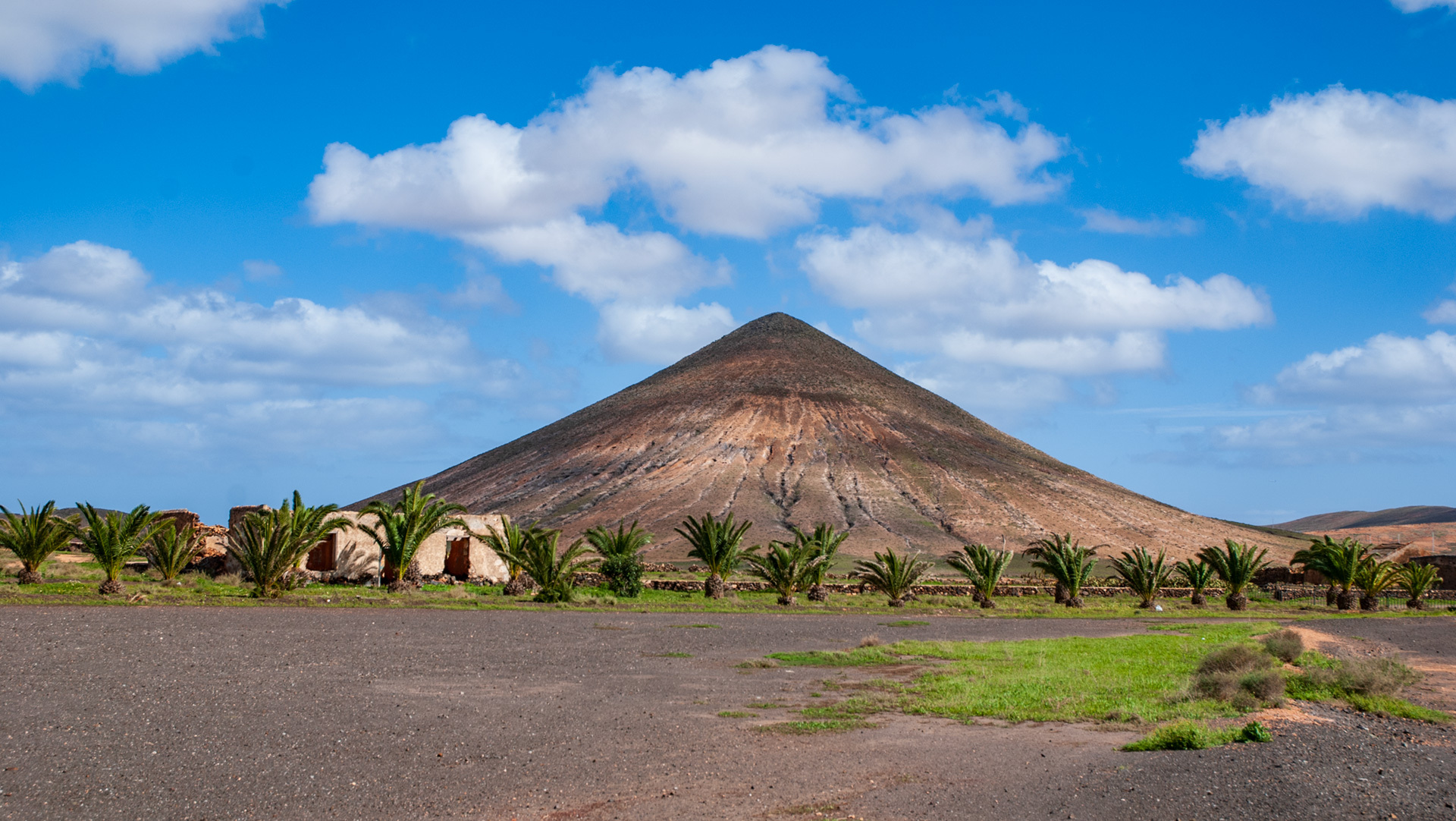
Anyone strolling along La Oliva’s main street will quickly notice what makes this place so special. The whitewashed houses gleam in the sun, many of them framed by small flower beds whose colours provide a vivid contrast to the ochre tones of the surrounding landscape. A considerable array of plants now lines the main street – silent proof that the residents take great care of their village.
If you get hungry or thirsty, pop into one of the traditional cafés or restaurants. Here, authentic Canarian cuisine is still served, and the conversations at the next table are usually in Spanish.
To get to La Oliva, take the FV-10 country road from the south or the FV-101 from the north – both routes pass through a volcanic landscape that is well worth the trip in its own right.
The Church of Nuestra Señora de la Candelaria – a landmark and bastion
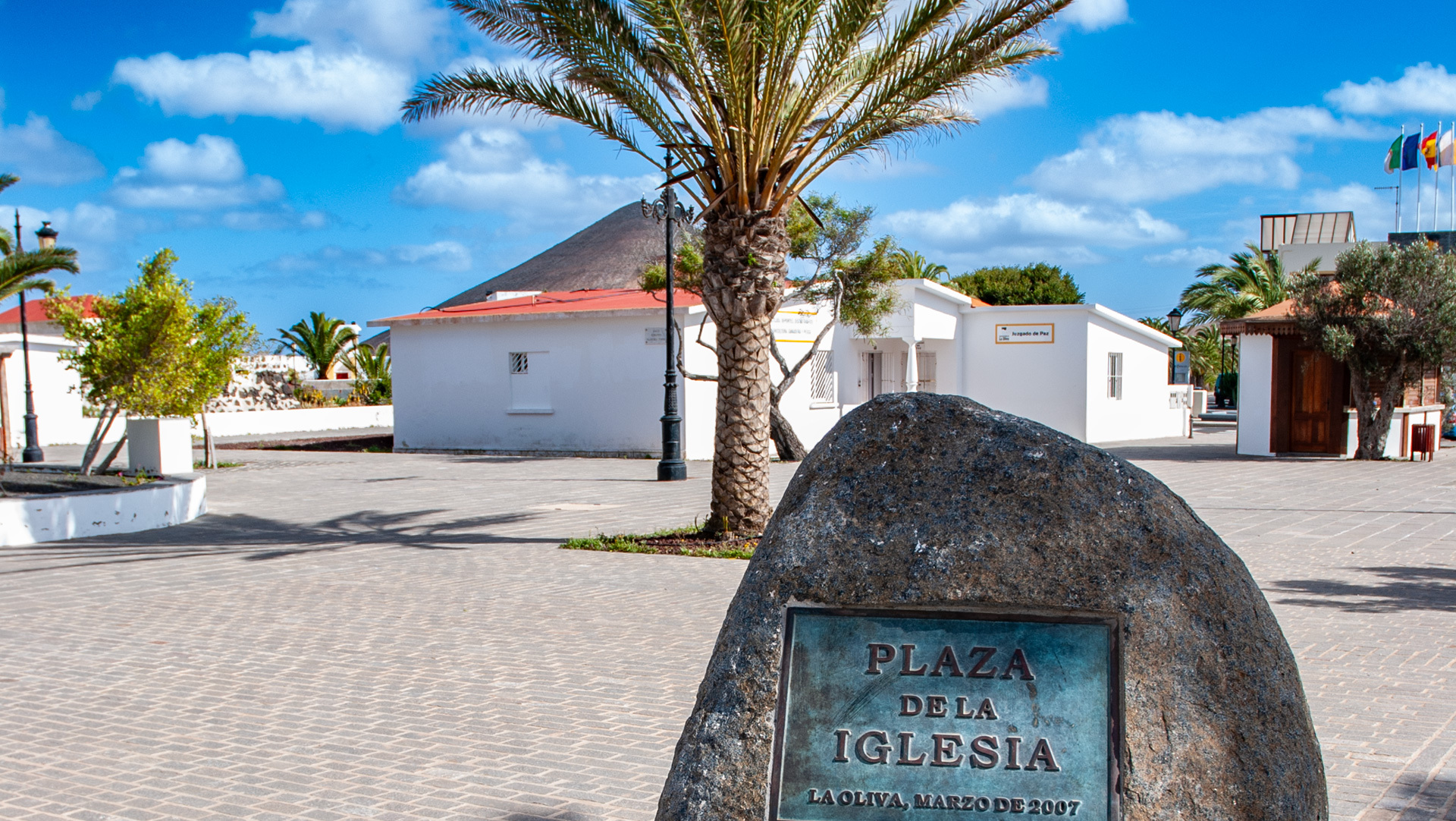
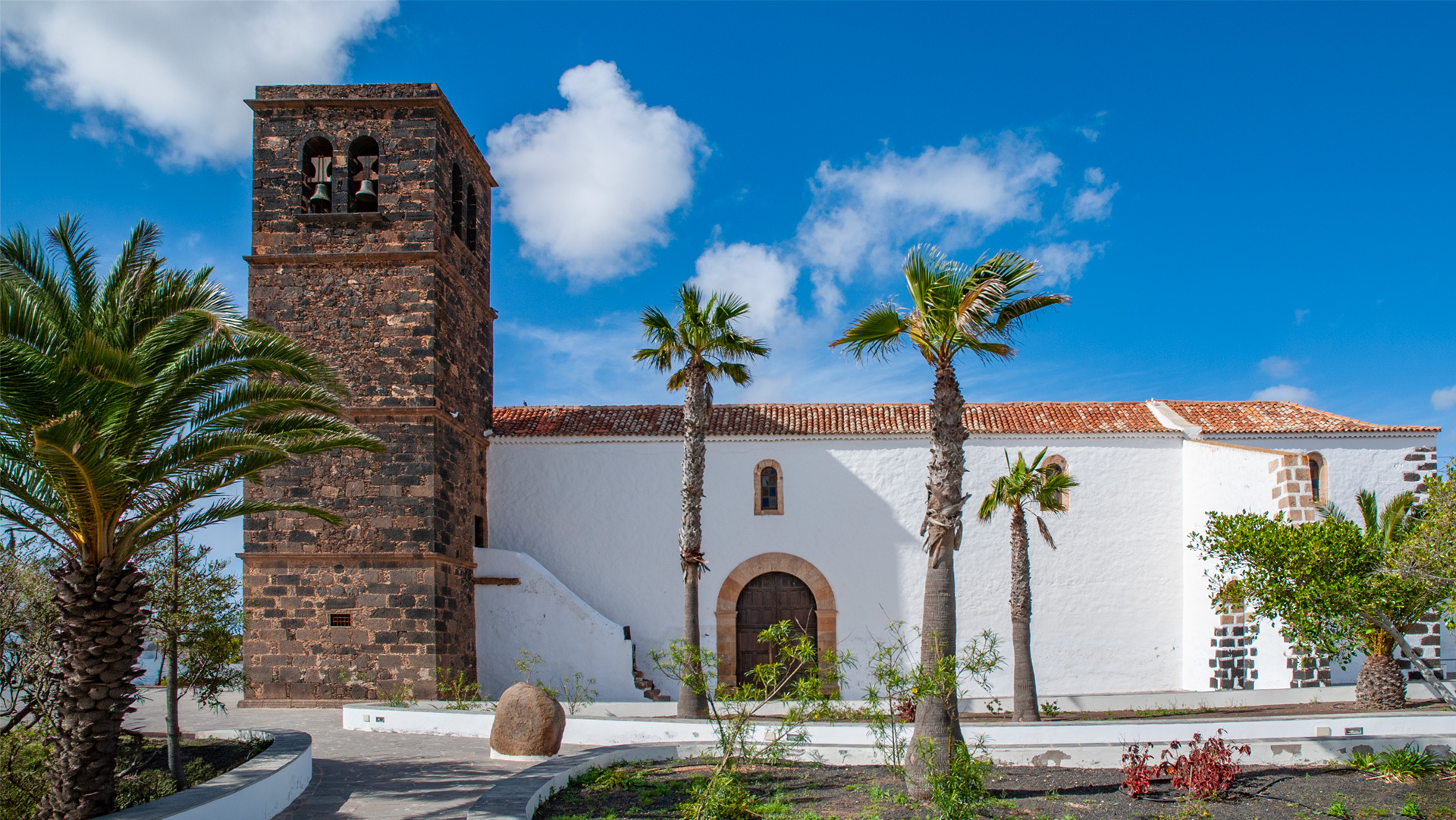
No visit to La Oliva would be complete without a look at the town’s most striking building: the Iglesia de Nuestra Señora de la Candelaria The three-nave parish church was built at the beginning of the 18th century and, alongside the parish church in Betancuria , is the only church of this design on the whole of Fuerteventura.
What immediately catches the eye is the imposing bell tower, which towers high above the nave and is more reminiscent of a medieval defence tower than a place of worship. This is no coincidence: right up until the late 17th century, a sentry was stationed at the top of this tower, scanning the coast for enemy ships. When pirates posed a threat, the local population sought refuge behind the thick walls of the church.
The church’s main entrance impresses with its grand Renaissance-style design, flanked by smaller side entrances that bear the same artistic hallmark. Inside lies perhaps the most impressive work of art in the town: the painting ‘The Last Judgement’, donated in 1732 by the military commander of the time – a picture that shines into the depths of the room with an intensity that is not easily forgotten.
Casa de los Coroneles – Power carved in stone
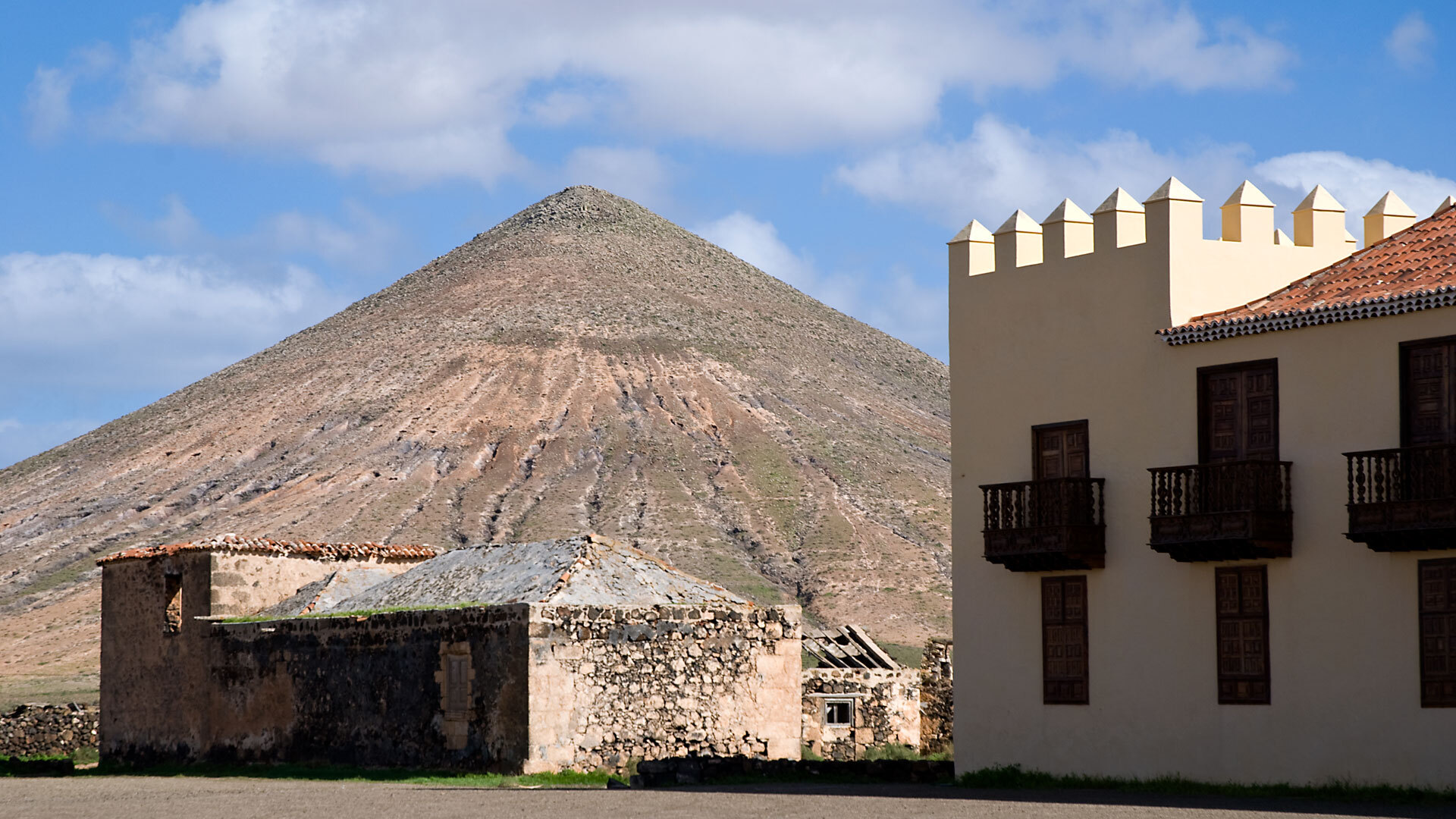
On the outskirts of La Oliva stands the historic mansion, Casa de los Coroneles, which served as the residence of the island’s military commanders between 1708 and 1859. The imposing building stands as a silent witness to an era when La Oliva was the island’s centre of power. Following years of restoration, the estate now houses a museum and a historical archive – a cultural centre that keeps the past alive.
Those interested in contemporary art will find the Casa Mané in the neighbouring mansion, Centro de Arte Canario, which exhibits works by contemporary Canarian artists. Other historic buildings in the town – the Casa de la Cilla and the Casa del Capellán – complete the picture of a small town that has preserved its cultural heritage.
The municipality of La Oliva – diversity in northern Fuerteventura
The municipality of La Oliva stretches across the entire northern part of Fuerteventura and covers an area of 356 square kilometres, home to around 25,000 inhabitants (as of 2015). The landscape of the north is characterised by the vast dune area of El Jable and a unique volcanic landscape that fascinates geologists and walkers alike. The municipality includes towns such as Corralejo, Villaverde, Lajares, El Cotillo and Tindaya – each with its own character, and each well worth exploring in its own right.
Corralejo – surfing, diving and endless dunes
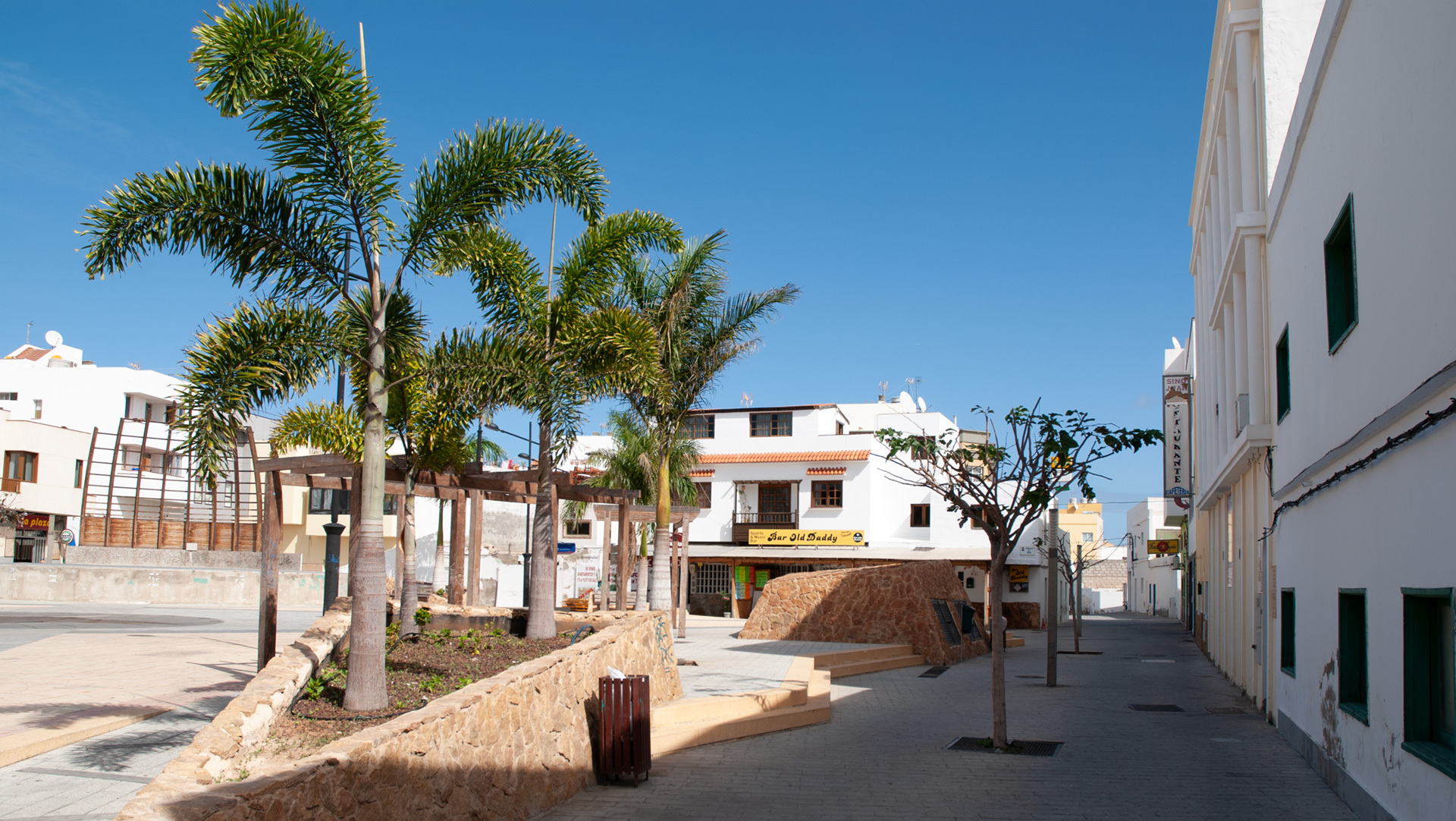
If you’re looking for a holiday in Fuerteventura that combines activity with a seaside setting, Corralejo is the place to go. Fuerteventura’s second-largest holiday resort is situated on the north-eastern tip of the island and has developed from a former fishing village with barely 200 inhabitants into a lively water sports centre. The first apartment complexes were built in 1967, but the real boom began in the 1980s – today, Corralejo is a magnet for surfers, divers and beach lovers from all over the world.
The La Bocaina strait, which separates Fuerteventura from the small island of Los Lobos, is home to an exceptionally rich variety of marine vegetation that holds a magical attraction for divers. There are regular ferry services from Corralejo harbour to Los Lobos and Lanzarote. The small market square in the centre of the residential area, the seafront promenade with its restaurants, and the sea view that opens up whilst you’re eating – all this gives Corralejo an atmosphere that feels surprisingly authentic despite its tourist infrastructure.
Tip: The most beautiful beaches are located outside the town, along the El Jable dune area. There you’ll find a desert landscape reminiscent of the Sahara and waves that delight surfers.
El Jable – shifting dunes flowing into the sea
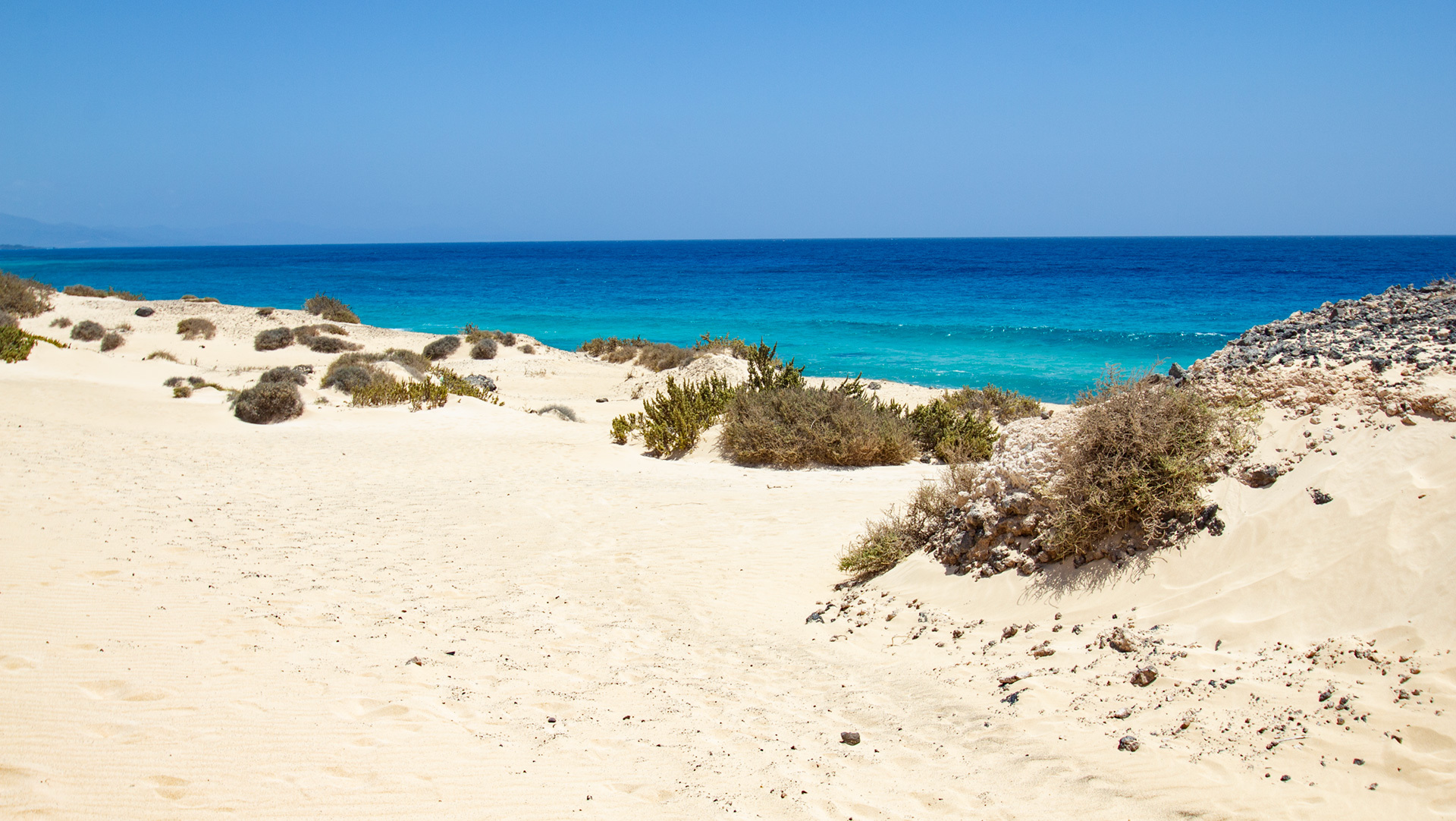
The El Jable dune area is one of the most impressive natural phenomena in the Canary Islands . The shifting dunes stretch along the east coast, reshaping themselves daily and creating a backdrop of surreal beauty. Anyone who walks here – barefoot, in the soft sand – will understand why Fuerteventura is one of Europe’s most sought-after travel destinations.
The beaches along El Jable are not just a visual treat: the shallow water, the constant wind and the long sandy beaches make them a paradise for surfers, kitesurfers and swimmers alike. Hiking in Fuerteventura here means: no paths, no signs – just sand, wind and the horizon.
Villaverde – The Green Village with underground secrets
Around three kilometres north-east of La Oliva lies Villaverde, the so-called ‘Green Village’. The village has no traditional centre, but instead boasts a handful of restored farmhouses, a few old windmills and a tranquillity that travellers seeking relaxation come to appreciate.
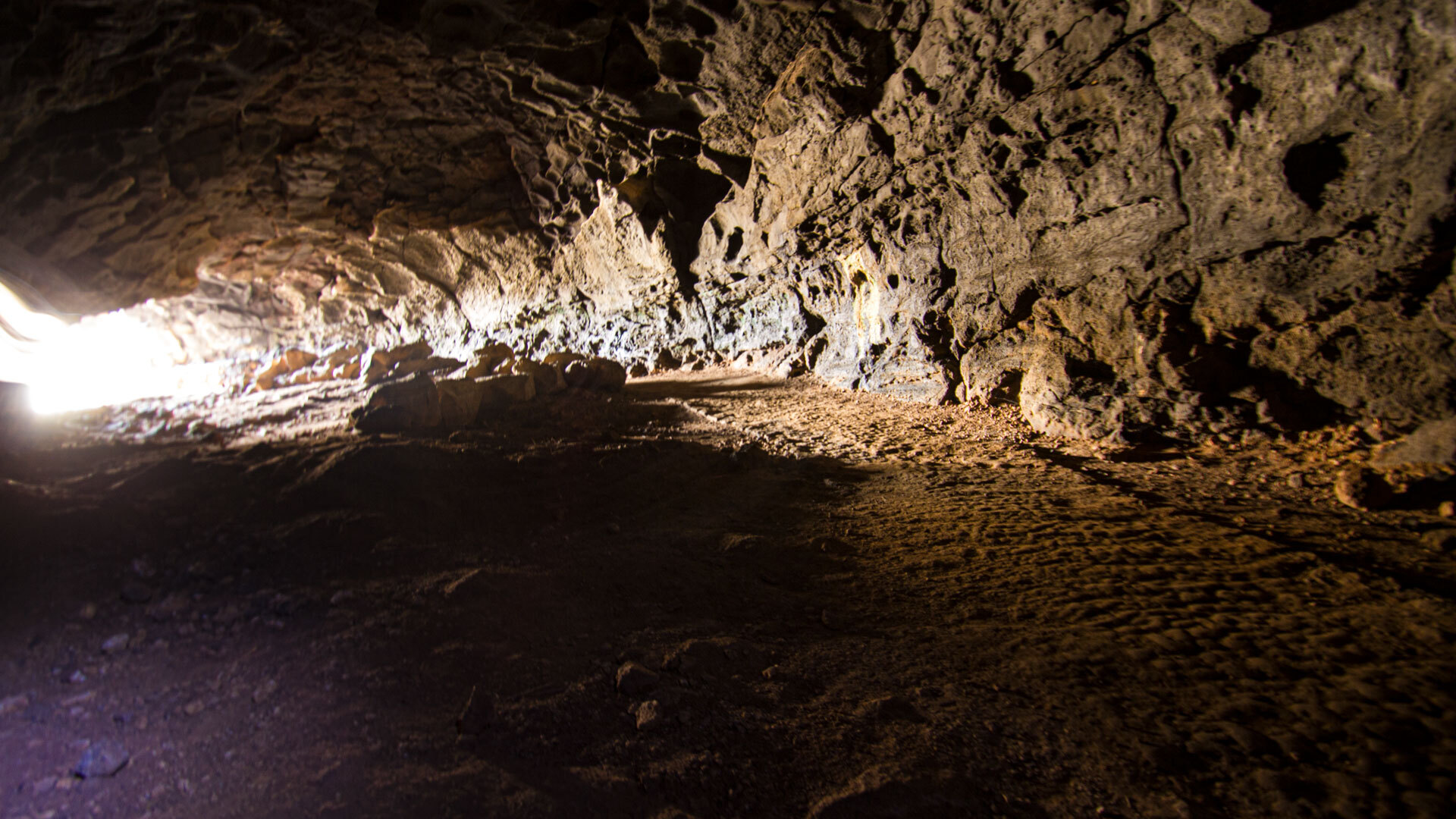
The highlight of Villaverde lies literally underground: the Cueva del Llano cave complex. In this lava tunnel, some 600 metres long, researchers have discovered unique fossilised remains of vertebrates and spiders – a window into the island’s prehistoric geological past. Today, the cave can only be visited as part of a guided tour, which lends the experience an almost ceremonial air.
Those who prefer to stay above ground can visit the 18th-century Ermita de San Vicente de Ferrer chapel – a small place of worship with a pretty forecourt – or the , where you can buy Canarian goat’s cheese, cactus liqueur, fig jam and handmade pottery. The best souvenir is always the one that tastes of home.
To the west of Villaverde, the volcanic cone of Montaña de la Arena rises to around 420 metres. Today, the volcano serves as a quarry for lapilli, the black volcanic rock renowned in the Canary Islands for its ability to retain moisture in the soil – a wonder of nature that benefits agriculture.
Tindaya – Where the indigenous people banished the spirits
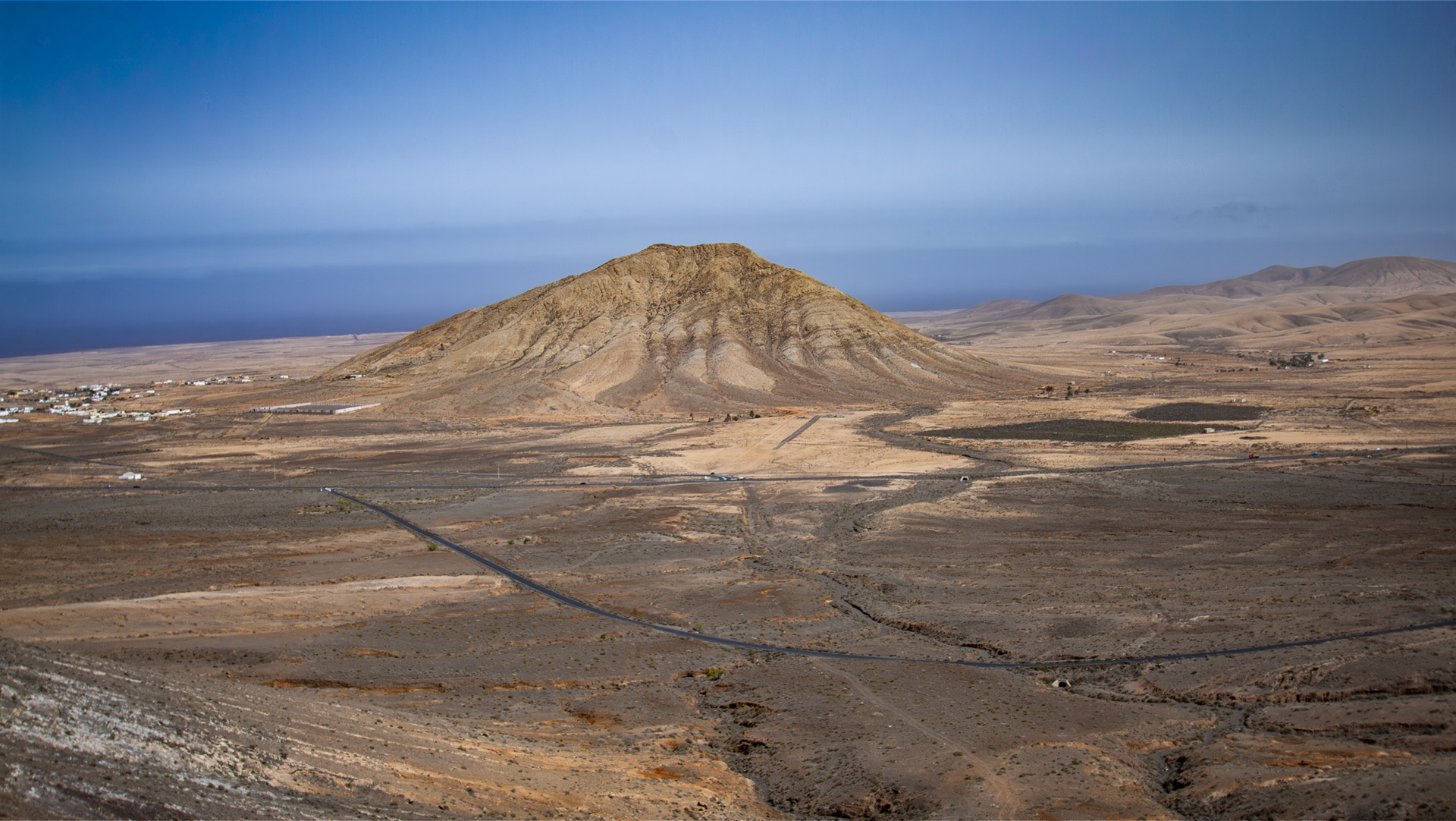
South-west of La Oliva, at the foot of a striking volcanic cone, lies the scattered settlement of . Around 600 people still live here today, largely from cheese-making and tomato cultivation – a way of life that has hardly changed for centuries. The local church of the Virgen de la Caridad features a magnificent Baroque altar and several paintings.
The real won, however, is Mount Tindaya itself Carved into its rock face are over a hundred footprints petroglyphs created by the indigenous people of Fuerteventura, the so-called Mahoreros. These carvings were probably intended to ward off evil spirits and promote fertility. Standing at the top of the crater rim, one can appreciate the spiritual power of this place: on a clear day, the view stretches as far as Mount Teide on Tenerife.
Tindaya experienced a modern resurgence when the Basque sculptor Eduardo Chillida unveiled a spectacular project: the mountain was to be hollowed out from within and transformed into a large-scale, walk-through work of art. A plan as bold as it was controversial. Chillida died before he could realise his dream – and Tindaya remained what it has always been: a sacred mountain that keeps its secrets to itself.
Los Lobos – Fuerteventura’s quiet sister
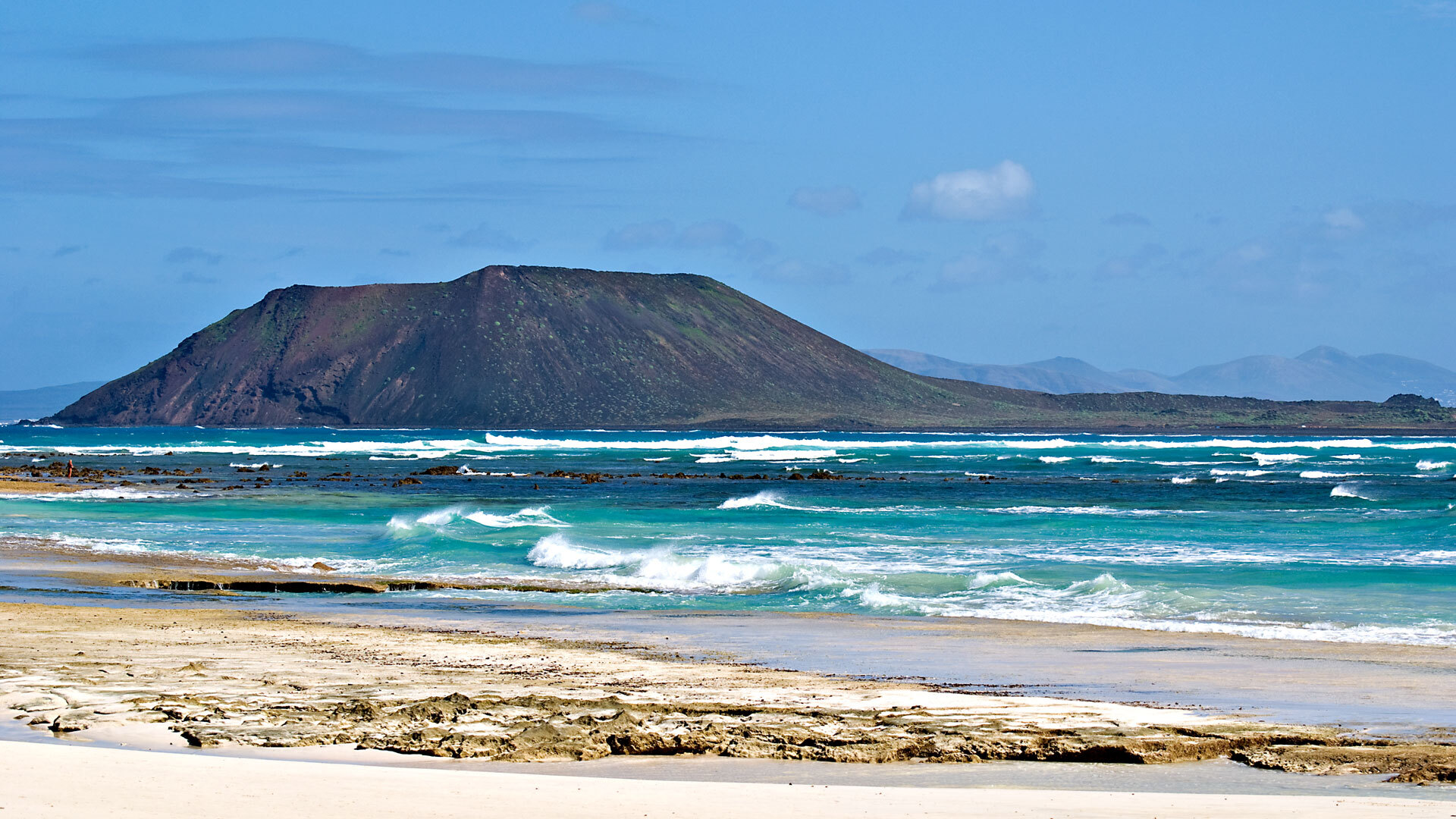
Just a few kilometres off the coast of Corralejo lies the small islet of Los Lobos, which belongs to the municipality of La Oliva. Only four people live here permanently – the rest is nature, as far as the eye can see. Hiking trails on Los Lobos lead through an almost unreal, unspoilt landscape of black lava rock and turquoise waters. Those seeking tranquillity will find it here.
Parque Holandés and El Jablito – Discoveries off the beaten track
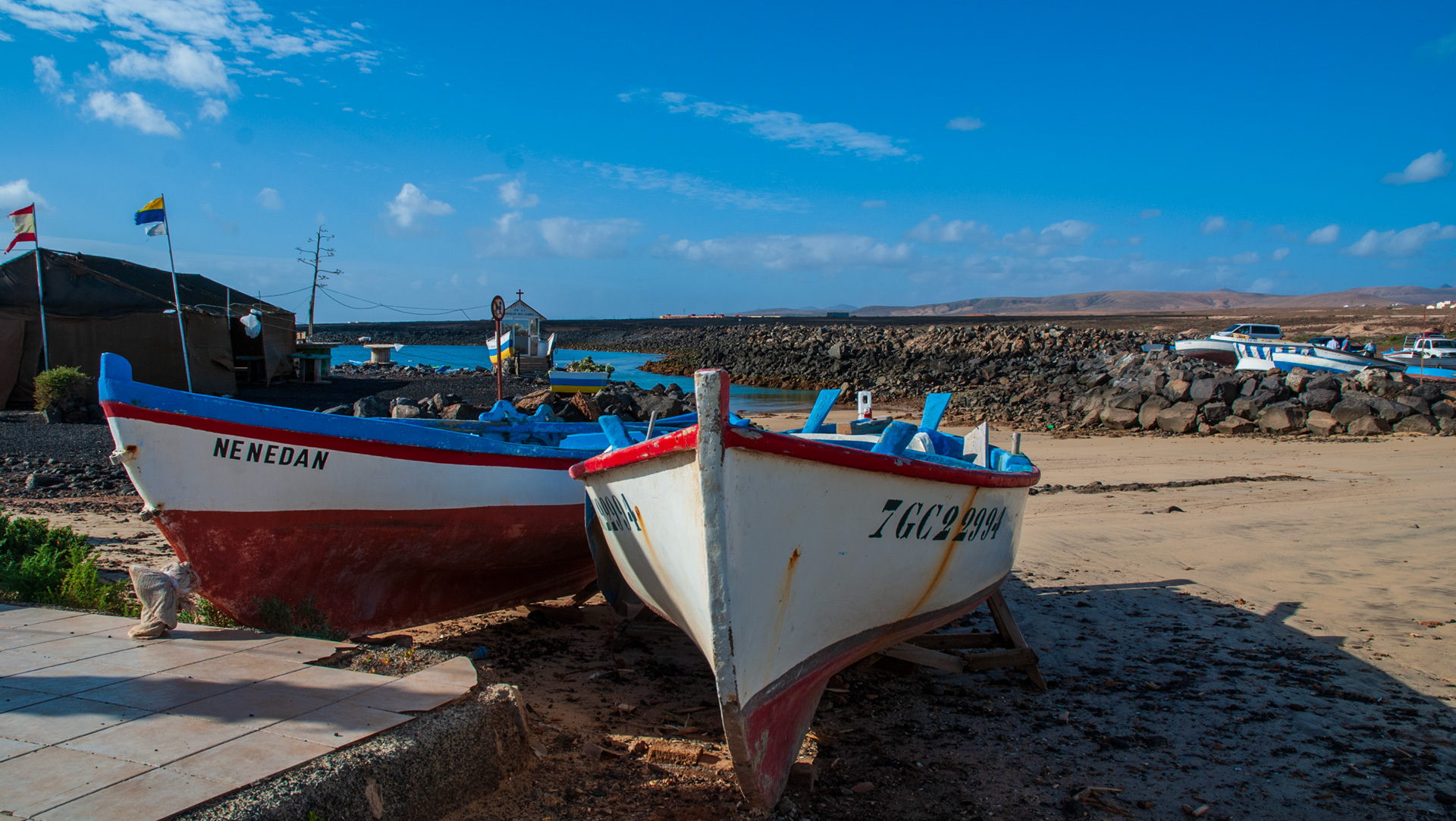
On the east coast of Fuerteventura, around 13 kilometres north of Puerto del Rosario, lies – originally founded under the name Puerto de La Oliva and planned as a major holiday resort, today a quiet coastal village with a few holiday homes and traditional pubs. To the south of the settlement lie the ruins of an old lime kiln (Horno de Cal) dating from the 19th century; you can climb the steps and peer down into the shaft.
Just a few kilometres further south lies El Jablito Bay, an insider’s tip for beginner divers. The offshore reef protects the bay and ensures clear, calm waters. At depths of between two and fifteen metres, you’ll encounter reef perch, ghost crabs, tiger moray eels, seahorses and stonefish – an underwater world that remains easily accessible even in changeable weather.
Conclusion: The La Oliva holiday resort – more than just a stop-off point
The La Oliva holiday resort on is not a bustling destination. It is a place that rewards patience – with breathtaking volcanic landscapes, historic buildings that tell of past grandeur, beaches that are still shared by visitors, and people who live life at a leisurely pace. Anyone exploring the north of Fuerteventura will find more than just sights – they’ll find an island that hasn’t forgotten who it is.
Getting there: La Oliva can be reached via the FV-10 (from the south) and FV-101 (from the north) country roads. The nearest airport is in Puerto del Rosario.