Betancuria on Fuerteventura – A journey through time to the heart of the Canary Islands
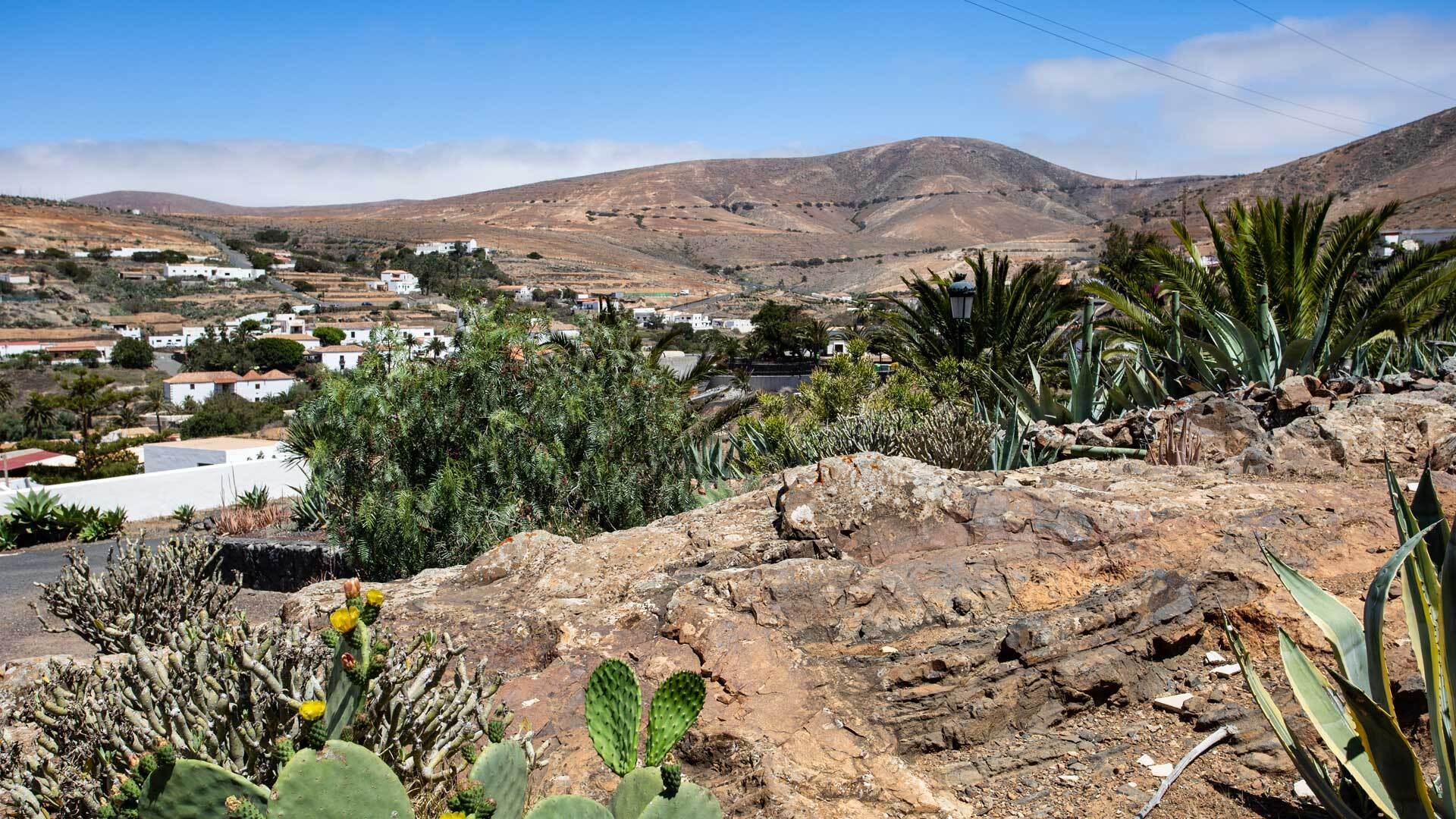
Anyone familiar with Fuerteventura will initially think of endless beaches, dunes and surfers’ paradises. But anyone who ventures deeper into the island’s interior comes across something unexpected: Betancuria, the former capital of the island, which lies quietly and steadfastly in a sheltered valley at the geographical centre of the island. Here, the Atlantic wind gives way to an almost Mediterranean tranquillity. Here, you can breathe in history.
Betancuria – Fuerteventura’s oldest town
The year is 1404conquistador Jean de Béthencourt The Norman oldest town on Fuerteventura.
What de Béthencourt did not realise was that the very valley that promised protection would also limit the town’s growth forever. No harbour, no space for extensive farming. Thus, Betancuria on Fuerteventura has always remained modest – and it is precisely this that has made it what it is today: an authentic, vibrant monument to Canarian history.
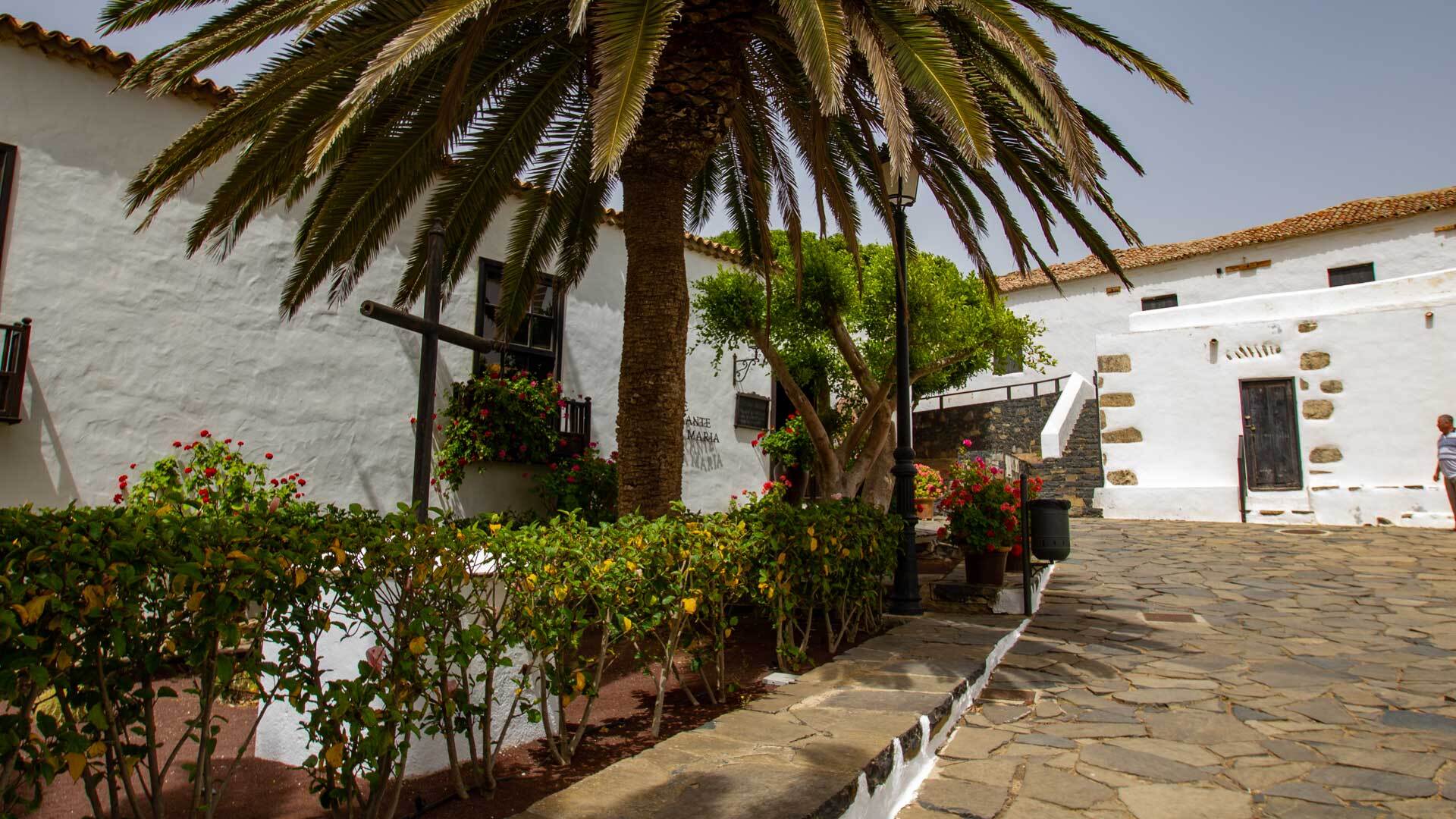
Today, the village has a population of just around 215. The town centre has been a listed conservation area since 1988. Anyone strolling through the narrow alleyways can sense this special status in every faithfully restored façade, in every artistically decorated wooden balcony that tells of noble families from a bygone era.
History between splendour and pirate fires
The history of Betancuria reads like an adventure novel. No sooner had the settlement been elevated to the status of capital of Fuerteventura than its slow struggle for survival began. Around 1593, North African pirates raided the town and destroyed it almost completely. Almost all the buildings visible today date from the period following this devastating attack – a town that has reinvented itself from the ashes.
In 1834, Betancuria lost its status as the island’s capital, first to Antigua to the east, and then, in 1860, definitively to the up-and-coming port town of Puerto del Rosario. The population migrated away. Yet the town remained – and in doing so, retained its distinctive character.
The fortified church of Iglesia Santa María – the heart of the historic town
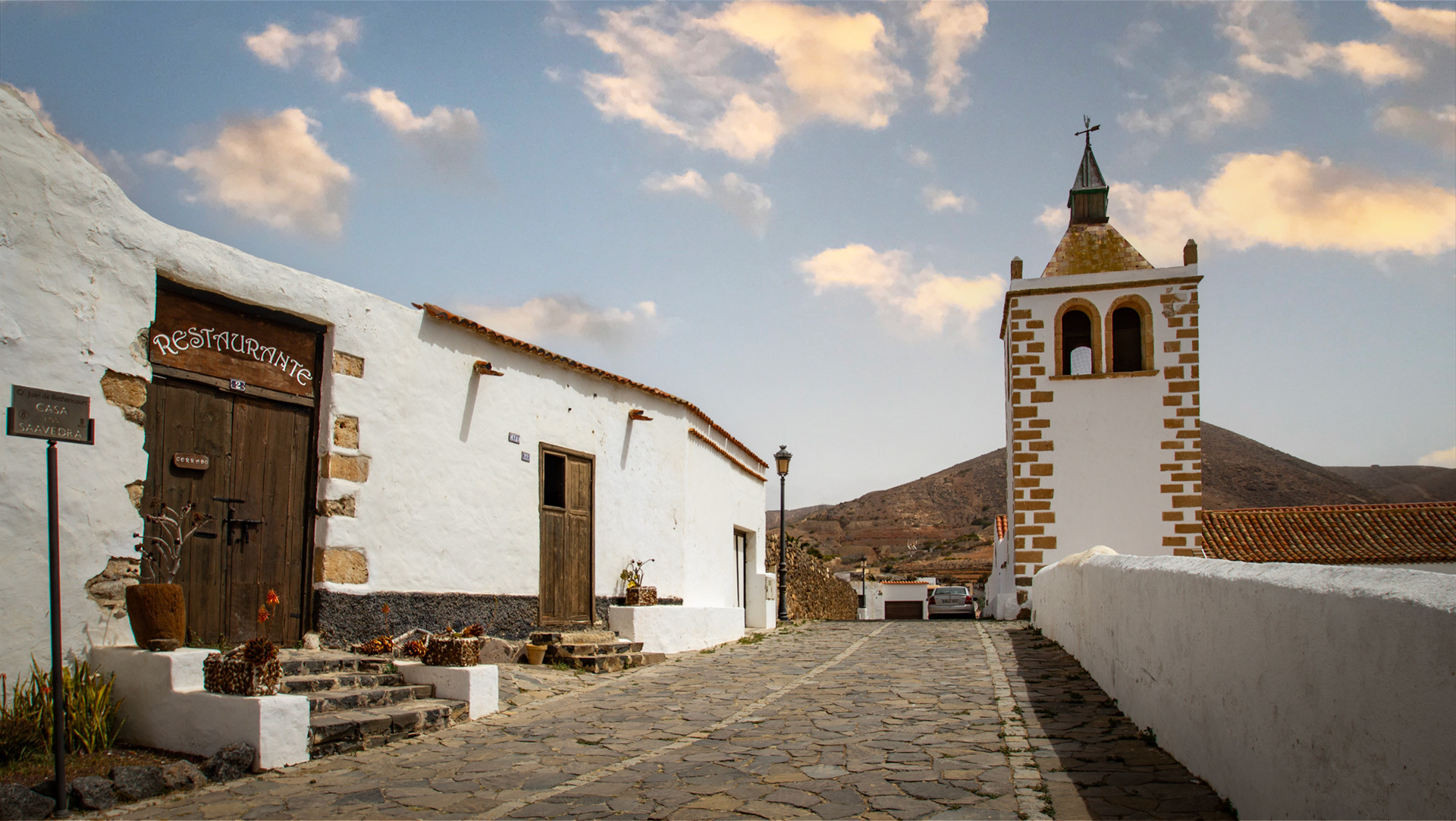
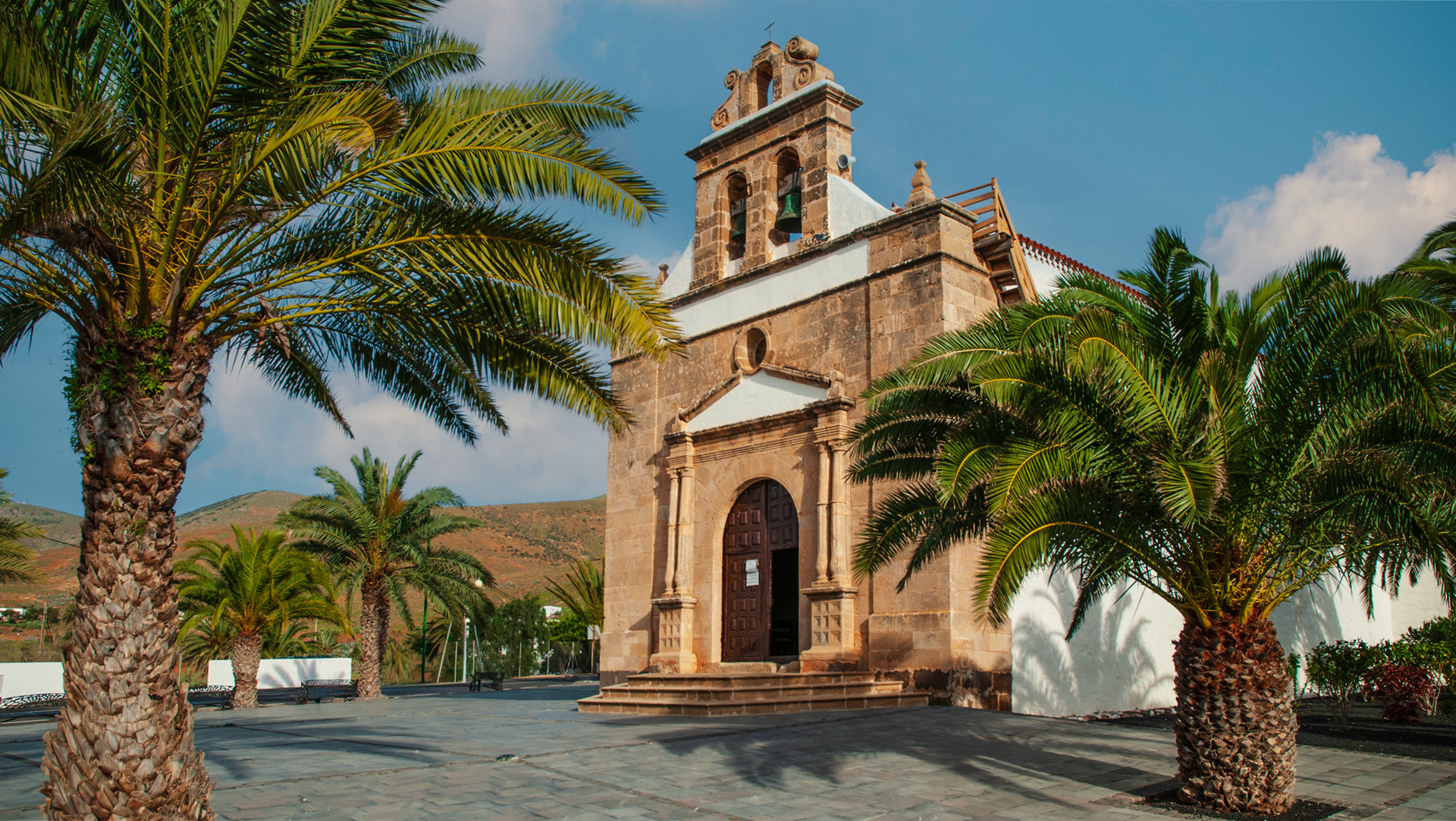
Anyone entering Betancuria cannot fail to notice it: the Iglesia Nuestra Señora de la Concepción, also known as the Iglesia Santa María It is the spiritual, architectural and historical heart of the town – and one of the most significant sights on Fuerteventura.
Following a pirate raid at the end of the 16th century, the church was rebuilt in the 17th century as a fortified church. Thick walls, high-set windows: the church was designed to offer protection in future. Its Late Renaissance-style entrance is situated on the right-hand aisle and invites you to pause for a moment.
Inside, a three-nave space opens up, its ceiling clad in pine wood in the Mudéjar style – a touch of Andalusia in the Atlantic. A particular highlight is the gold-embellished high altar dating from 1684, a masterpiece of Baroque woodcarving. In the side aisle stands the figure of Santa Catalina – the oldest wooden sculpture in the Canary Islands, dating from the 15th century.
Opening hours: daily from 10.00 to 18.00
Museums and culture in Betancuria
Anyone wishing to fully understand the history of Betancuria should pay a visit to the museums. At the Museo de Arte Sacro, visitors can admire a fine selection of sacred art – a serene collection that brings home the religious depth of Canarian history.
At the Museo Arqueológico de Betancuria, on the other hand, you are immersed in the world of the Majos, the indigenous people of Fuerteventura. Pottery, tools and grave goods tell the story of a civilisation that has long since passed – and yet lives on in every stone of this island. The museum’s entrance is flanked by two cannons captured from the English during the Battle of Tamacite (1740).
Anyone interested in traditional Canarian crafts will find an authentic showcase of local craftsmanship at the El Centro Insular de Artesanía. Here, artisans create their works using ancient techniques – a living part of Canarian culture.
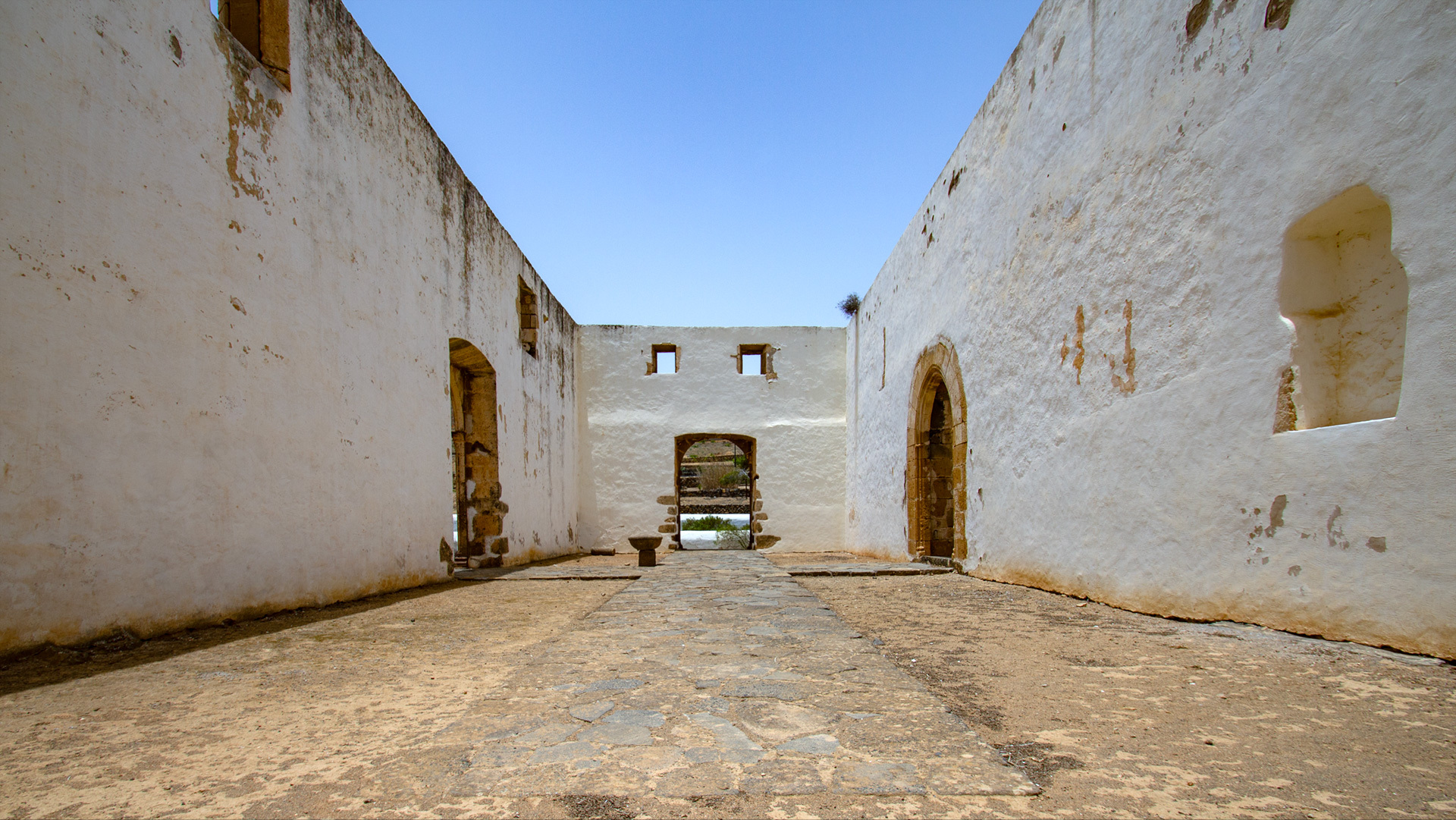
On the outskirts of Betancuria on Fuerteventura, walkers come across the picturesque outer walls of the former Convento de San Buenaventura. The Franciscan monastery was founded in the 15th century and was largely destroyed during one of the biggest pirate raids of the 16th century. The locals used what remained as a quarry. Today, the surviving walls have been restored and integrated into an atmospheric garden – a place to linger, reflect and marvel.
Dining and accommodation in Betancuria
Culinary-wise, this little town surprises with some excellent restaurants and cafés, whose flower-adorned patios invite you to linger. Anyone wishing to sample should definitely order the local goat or lamb ragout – dishes that taste of the countryside.
For travellers wishing to escape the hustle and bustle of Fuerteventura’s tourist centres, Betancuria also offers the chance to rent a small place to stay and experience the unique atmosphere of this historic town over several days. Far away from massive hotel complexes and beach promenades, you’ll find true tranquillity here.
The municipality of Betancuria – the island’s smallest municipal area
The Betancuria holiday region encompasses far more than just its eponymous main town. The municipality of Betancuria – with an area of around 103.64 km², the smallest and least populated on the island – stretches from the mountainous west of Fuerteventura down to the valleys and gorges of the Vega de Río Palmas and on to the western coast.
With a population density of just 6.8 inhabitants per square kilometre, it is one of the quietest corners of the Canary Islands – a stark contrast to the tourist infrastructure of other regions on the island. This seclusion is also its greatest appeal.
Vega de Río Palmas – Fuerteventura’s greenest valley
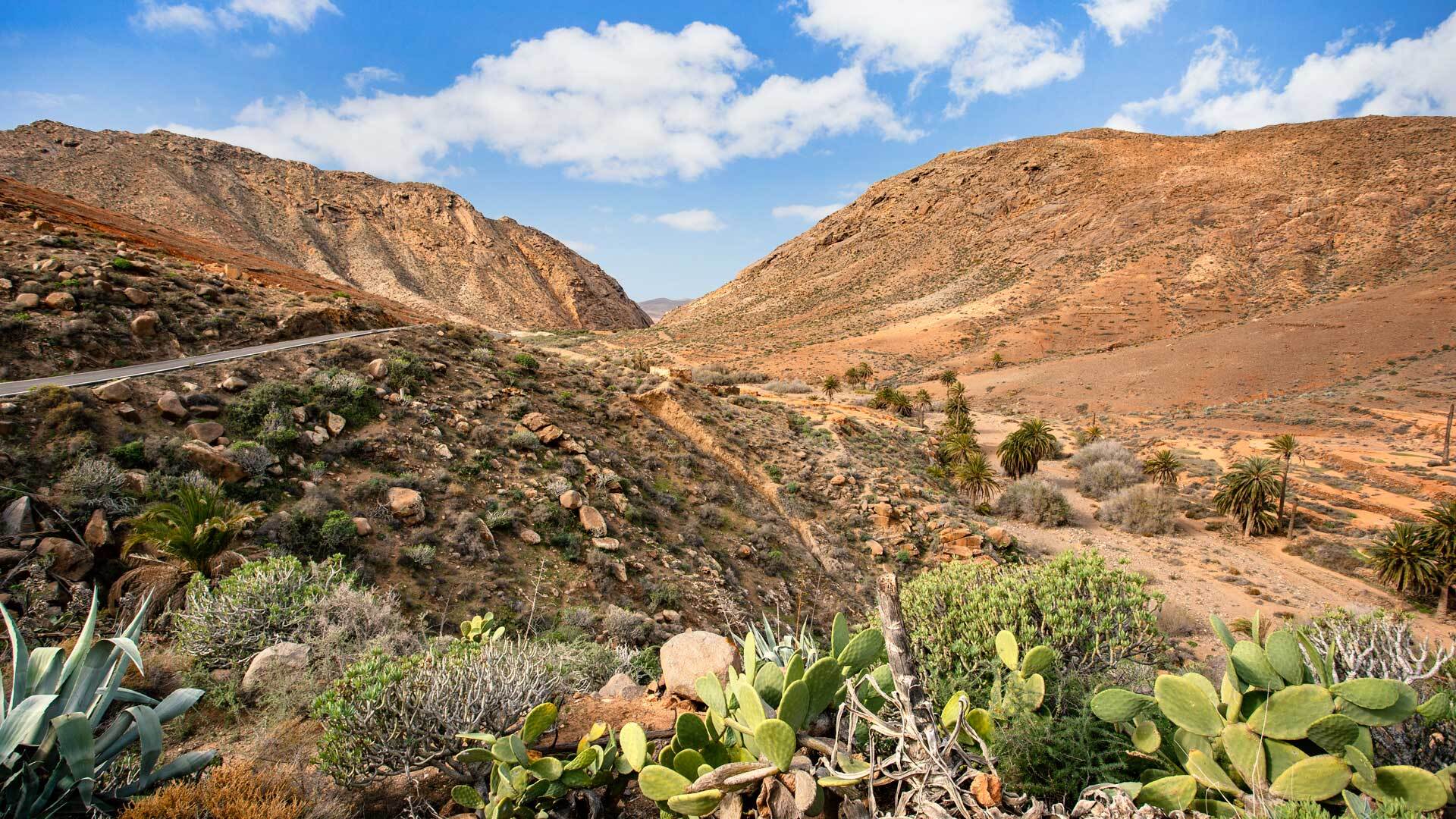
A few kilometres south of Betancuria, tucked away in the valley of the same name, lies the small hamlet of Vega de Río Palmas. It is considered the valley with the most water on the entire island – and you can see why: terraced fields of vegetables, potatoes and pulses climb the slopes, and what is arguably Fuerteventura’s most beautiful stand of palm trees fans out in the soft light of the afternoon sun.
Two places of worship lend the village its spiritual character: the 17th-century Iglesia Nuestra Señora de la Peña and the 18th-century Ermita de Virgen de la Peña, situated just outside the village, which can be reached via a footpath heading west.
Every year on the third Sunday, the quiet village is transformed: this is when the solemn procession in honour of the patron saint takes place – the most important religious festival on the whole of Fuerteventura. Music, dancing and worshippers from across the island fill the narrow streets – and for one day, the heart of the island beats particularly loudly.
Vega de Río Palmas is also ideal for hiking through the lush countryside – a rare experience on an island that is otherwise characterised by its barren landscape.
Natural attractions: reservoir, coastline and volcanic landscape
The natural environment in the Betancuria holiday region also has plenty to offerEmbalse de las Peñitas The biotope, a long-silted-up reservoir in the Vega de Río Palmas valley, has developed into a valuable birdwatchers on Fuerteventura.
On the west coast, the island reveals its wild side. Near the black-sand beach of Playa de los Muertos lies Caleta Negra bay, where, over thousands of years, the sea has carved impressive cave systems into the volcanic rock. Anyone walking through them can appreciate the raw power of the Atlantic – and the unimaginable timescales of geological history.
Mirador de Morro Vellosa viewpoint – panoramic view over the valley
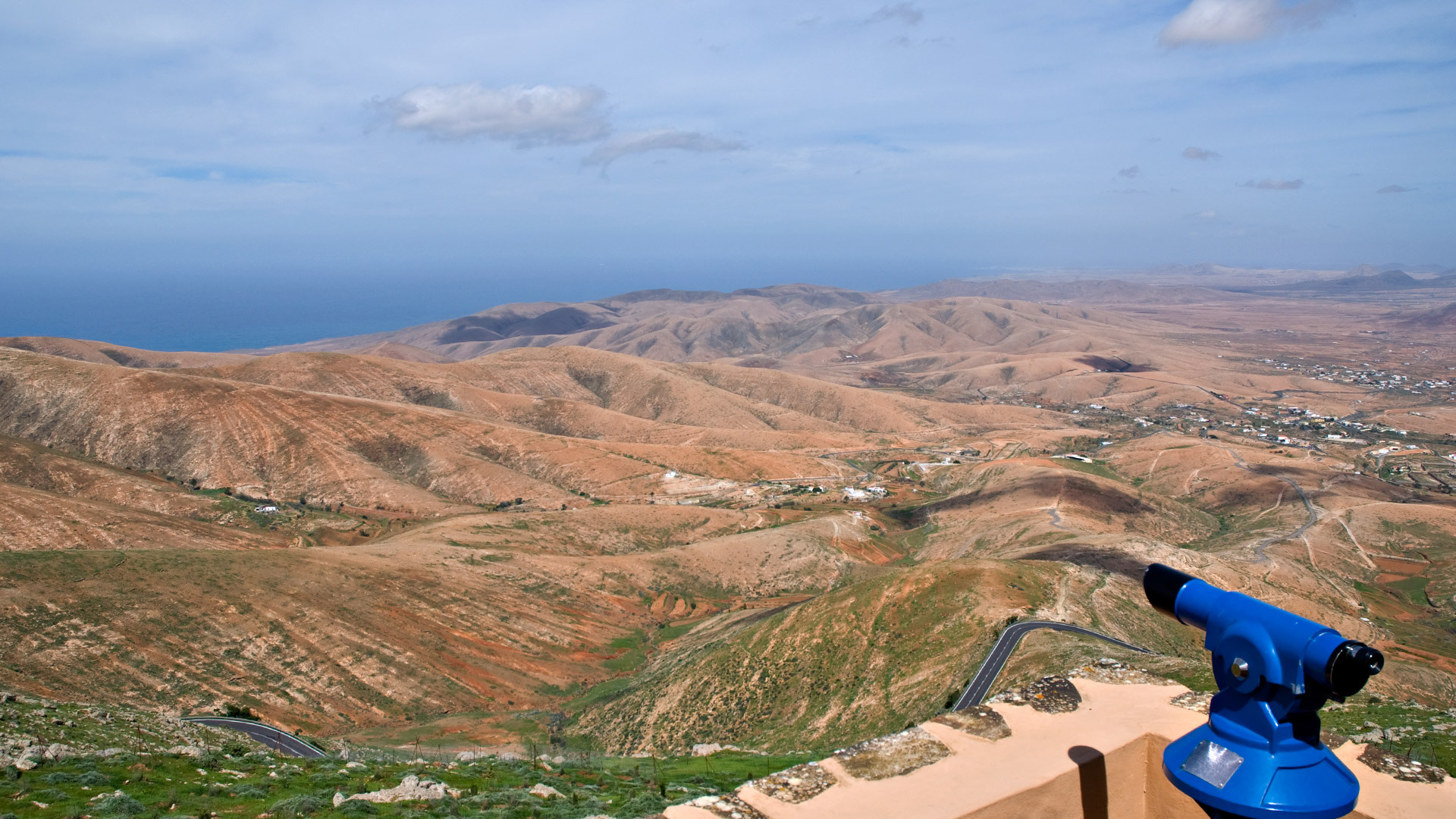
Anyone wishing to take a final, sweeping view of the Betancuria holiday resort should drive to the , situated north of the village. From here, a breathtaking panorama opens up over the valley and the mountainous landscape – a moment that will stay with you.
In the adjoining restaurant, you can enjoy traditional Canarian cuisine whilst letting your gaze wander over the valley through huge panoramic windows. A perfect way to round off a day in the historic heart of Fuerteventura.
Valle de Santa Inés – Pottery and old chapels
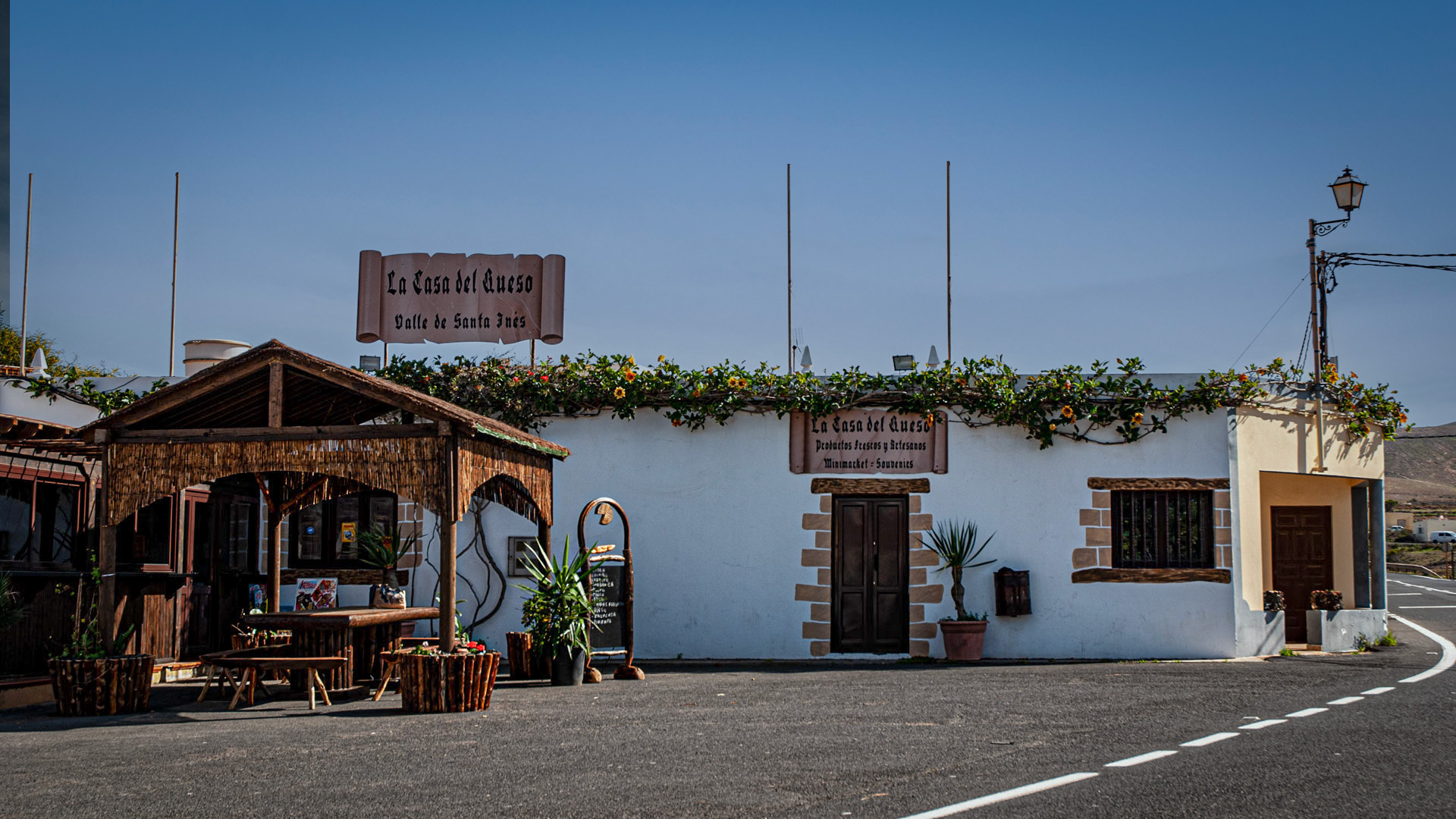
To the north of Betancuria lies the small farming village of Valle de Santa Inés, once an important centre for traditional Majos pottery – crafted without a potter’s wheel, using a technique handed down directly from the island’s indigenous people. This craftsmanship can still be observed today in a small pottery workshop to the south of the village.
On the southern edge of the hamlet stands the Ermita de Santa Inés, a 15th-century chapel that was renovated in the 17th or 18th century. It stands as a quiet testament to the village’s former importance: within its walls, two of the island’s four councillors were once appointed – an unassuming chapel with historical significance.
Getting there and location
Betancuria lies on the FV-30 road and is easily accessible by car. The drive through the mountainous landscape is an experience in itself. Whether setting off from the tourist centres in the north or south of the island, you’ll reach the historic heart of Fuerteventura in around 30 to 45 minutes.
Conclusion: Betancuria – The quiet heart of Fuerteventura
Betancuria on Fuerteventura is more than just a day-trip destination. It is a place that slows you down. A place where history seems to emerge from the very stones, where the church still forms the centre of life, where a glass of wine on a flower-adorned patio carries more weight than any all-inclusive buffet in the holiday resorts.
Anyone who really wants to get to know Fuerteventura – beyond sun loungers and surfing lessons – should come to Betancuria. And stay a little longer than planned.