Fuerteventura is your very own road trip – only with better weather
Window down. Music on. Somewhere up ahead lies the sea.
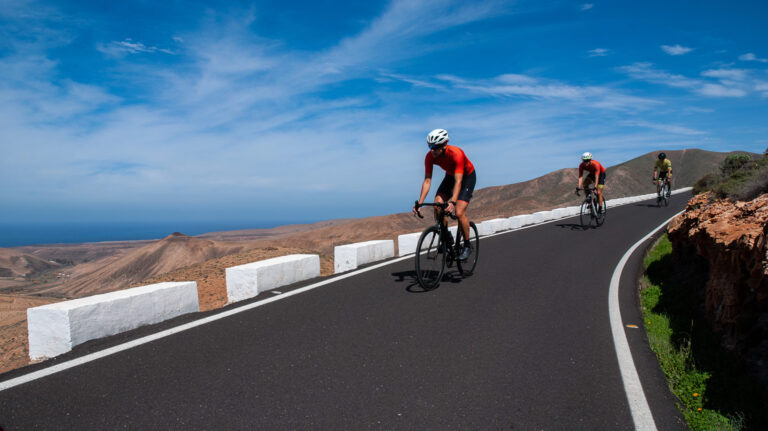
There are those kinds of trips where you get in the car in the morning and, by the evening, you’re not quite sure where the time has gone. Fuerteventura is exactly that sort of island. Anyone who hires a car here and simply sets off will realise straight away: this isn’t a beach holiday. It’s a road trip – with all the trimmings.
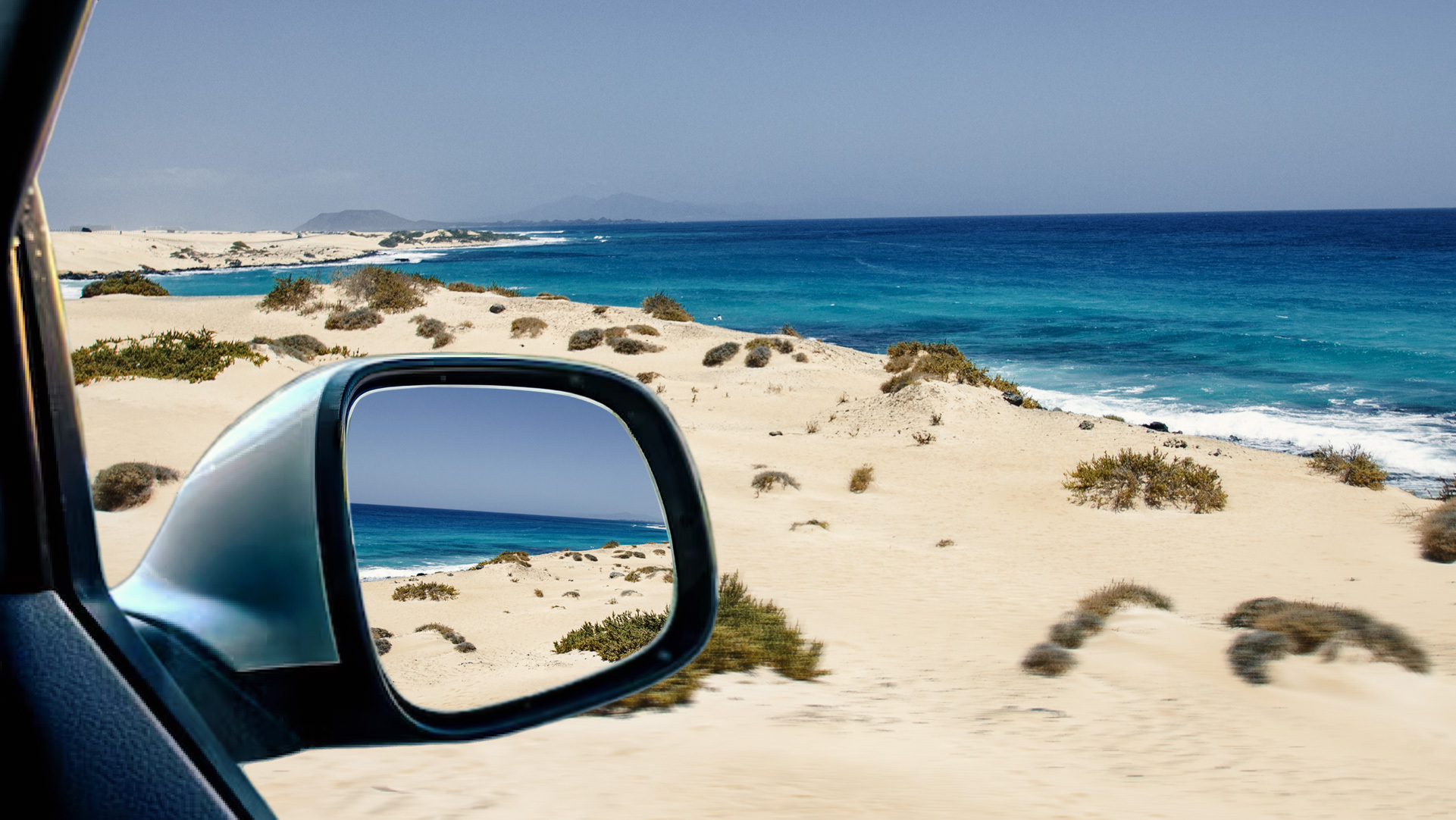
Dusty country roads winding through ochre-coloured expanses. Unsignposted turnings. A secluded beach that suddenly appears round a bend. Over 150 kilometres of sandy beach, more than 3,000 hours of sunshine a year and a landscape that feels like a mix of the Sahara, Highway 1 and a Caribbean cove. Welcome to the coolest island in the Atlantic.
The plan? It doesn’t matter. The direction? North.
Every good road trip starts with a loose plan – and ends up somewhere completely different. Exploring Fuerteventura by car works on exactly this principle. You set out on the first route, thinking, ‘I’ll easily make it by midday’ – and at 3 pm you’re still sitting in La Oliva with a coffee, gazing at the mountains.
That’s not a problem. That’s the point.
The trip up north starts in Puerto del Rosario, the capital. It sounds unspectacular, but as soon as you set off, it feels as though you’re leaving the outskirts of a small American town behind and heading out onto the motorway.
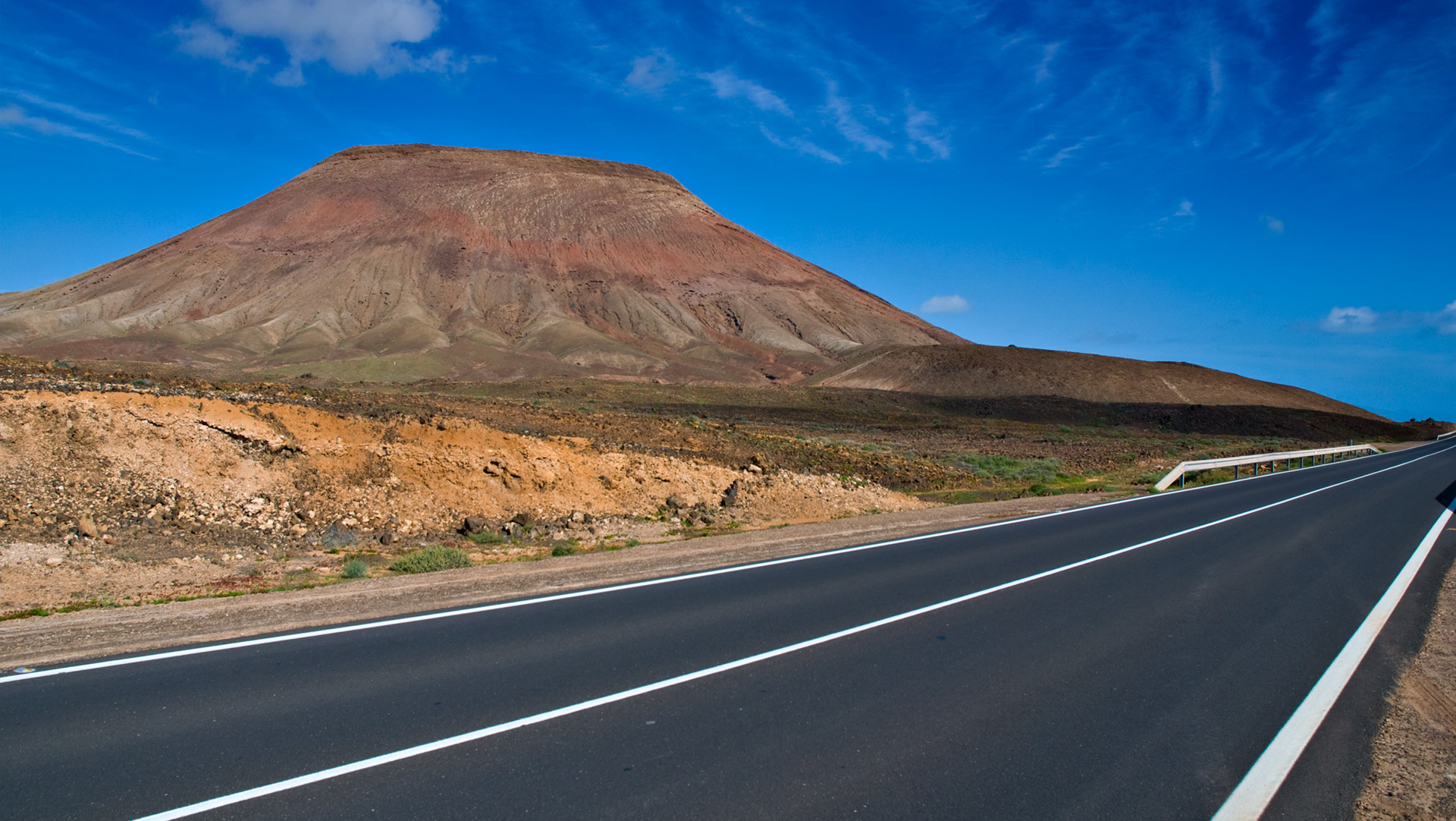
Vallebrón – up here, everything gets smaller
Just past Tetir, the Vallebrón Nature Reserve begins. A mountain ridge at just under 690 metres, flanked by two deep gorges. The Mirador de Vallebrón is situated exactly where you’d spontaneously pull over, because the view is simply too good to drive past. The north-west of the island spreads out like a huge, crumpled map.
You look around. You have a drink of water. You look again. And before you know it, half an hour has flown by.
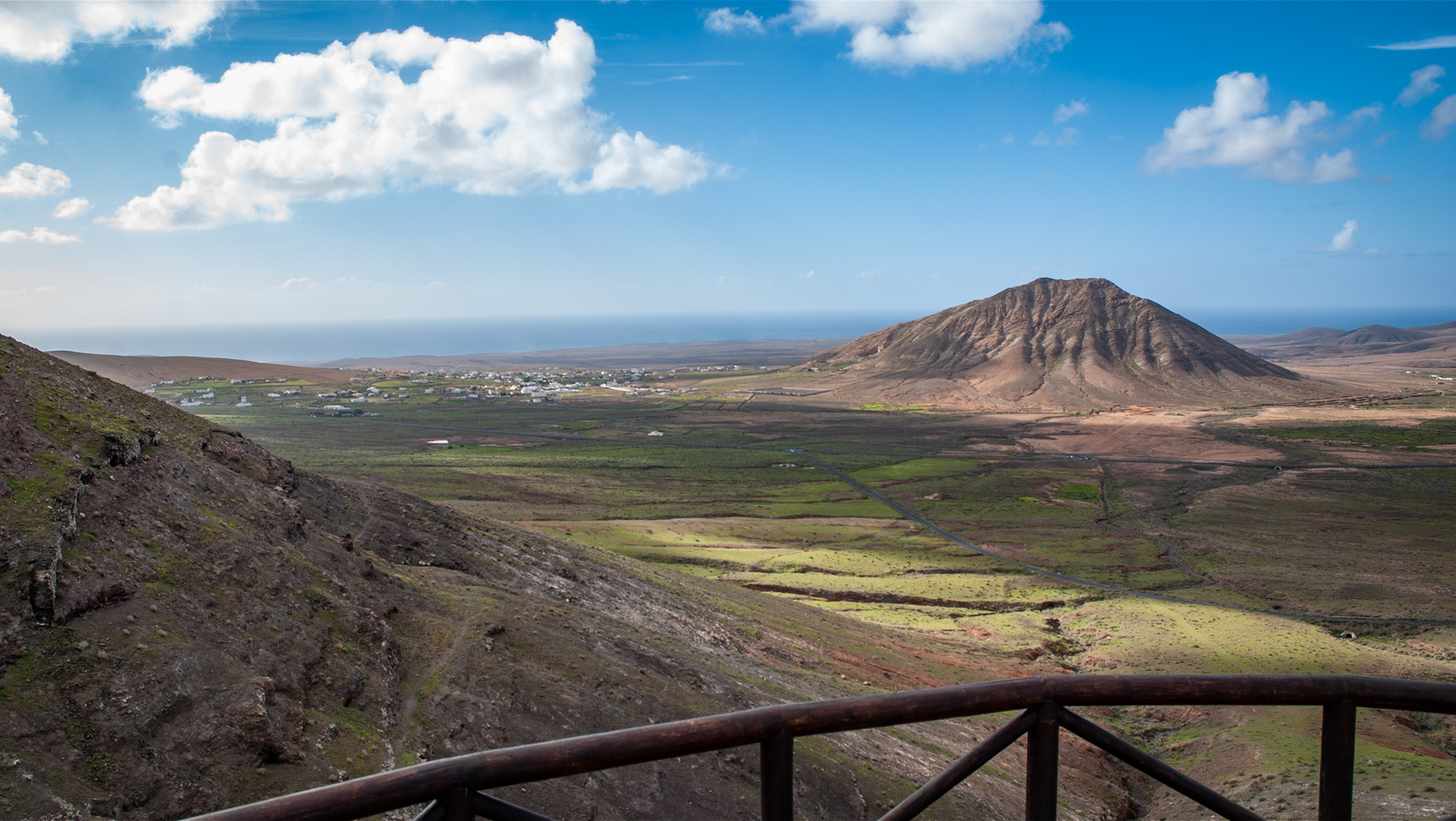
Mount Tindaya – something’s not quite right here, and that’s a good thing
The sacred Mount Tindaya lies a few kilometres further on and has an energy that’s hard to describe. Archaeologists have found over 300 foot-shaped rock carvings there, made by the indigenous people – magical, religious symbols that no one has fully deciphered for centuries. You stand in front of them and get the feeling you’re looking at something ancient that wasn’t meant for tourists.
It’s a good thing you’re here anyway.
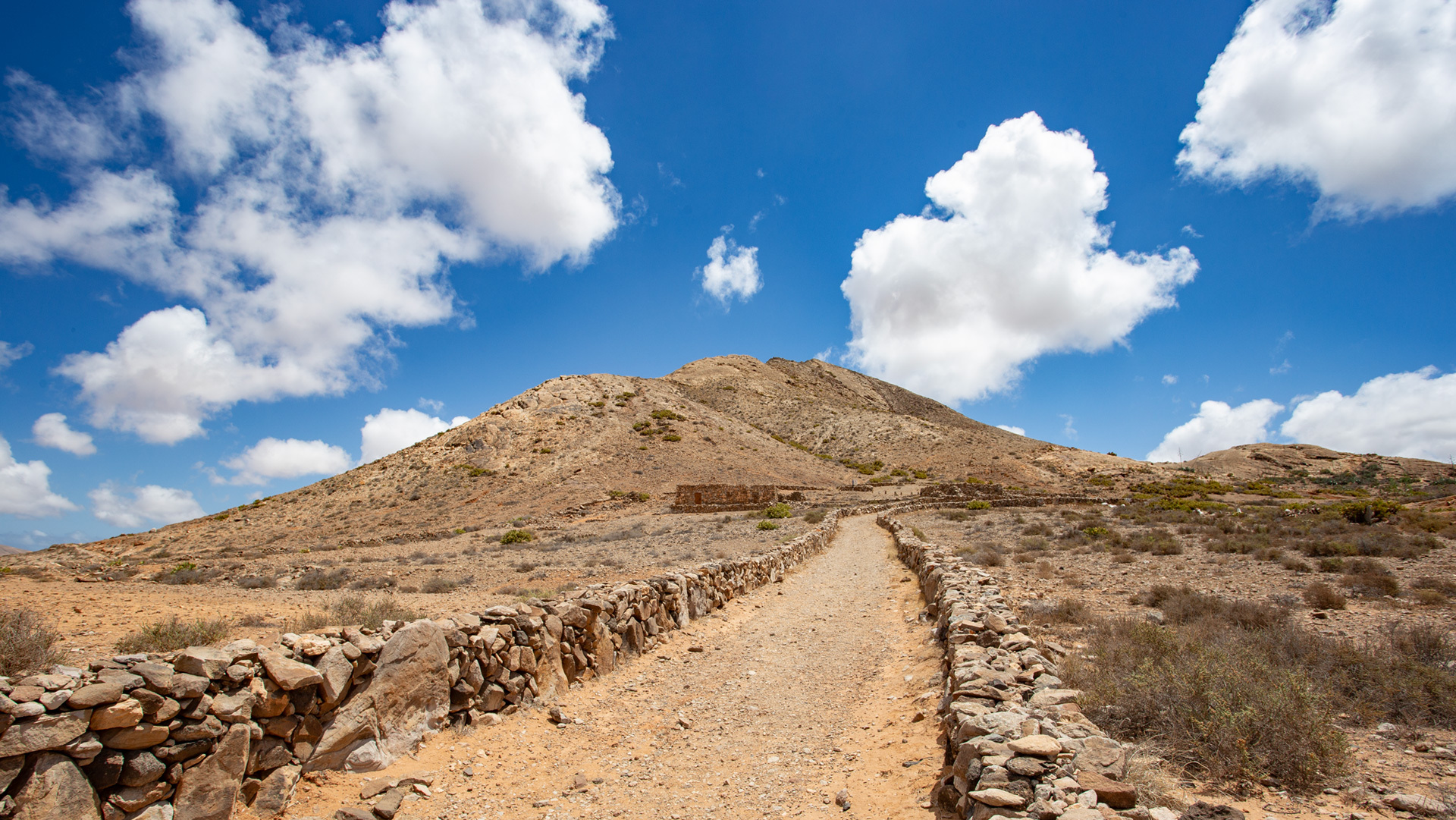
La Oliva – a short break, a longer break
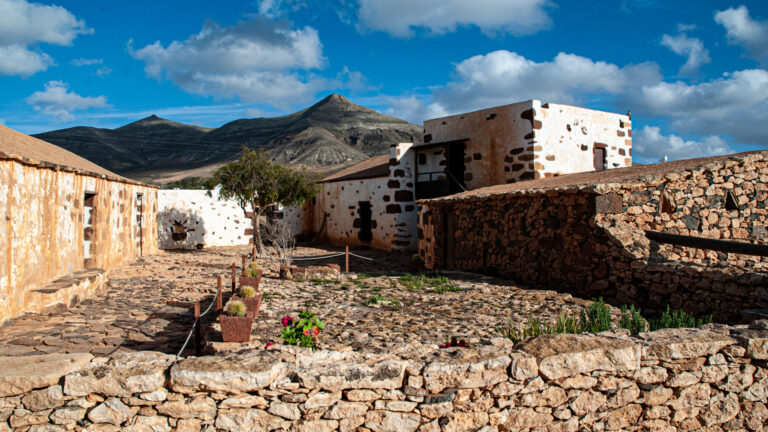
La Oliva is the sort of place you’d normally only plan to stop at briefly. And then you end up staying. The ochre-coloured landscape all around, a little café, the tranquillity – here, that Fuerteventura vibe is in full swing. Anyone who thinks they’ll be able to carry on on time is underestimating the appeal of this little spot.
Note: The return journey from Fuerteventura always gets off to a late start. This isn’t a glitch – it’s by design.
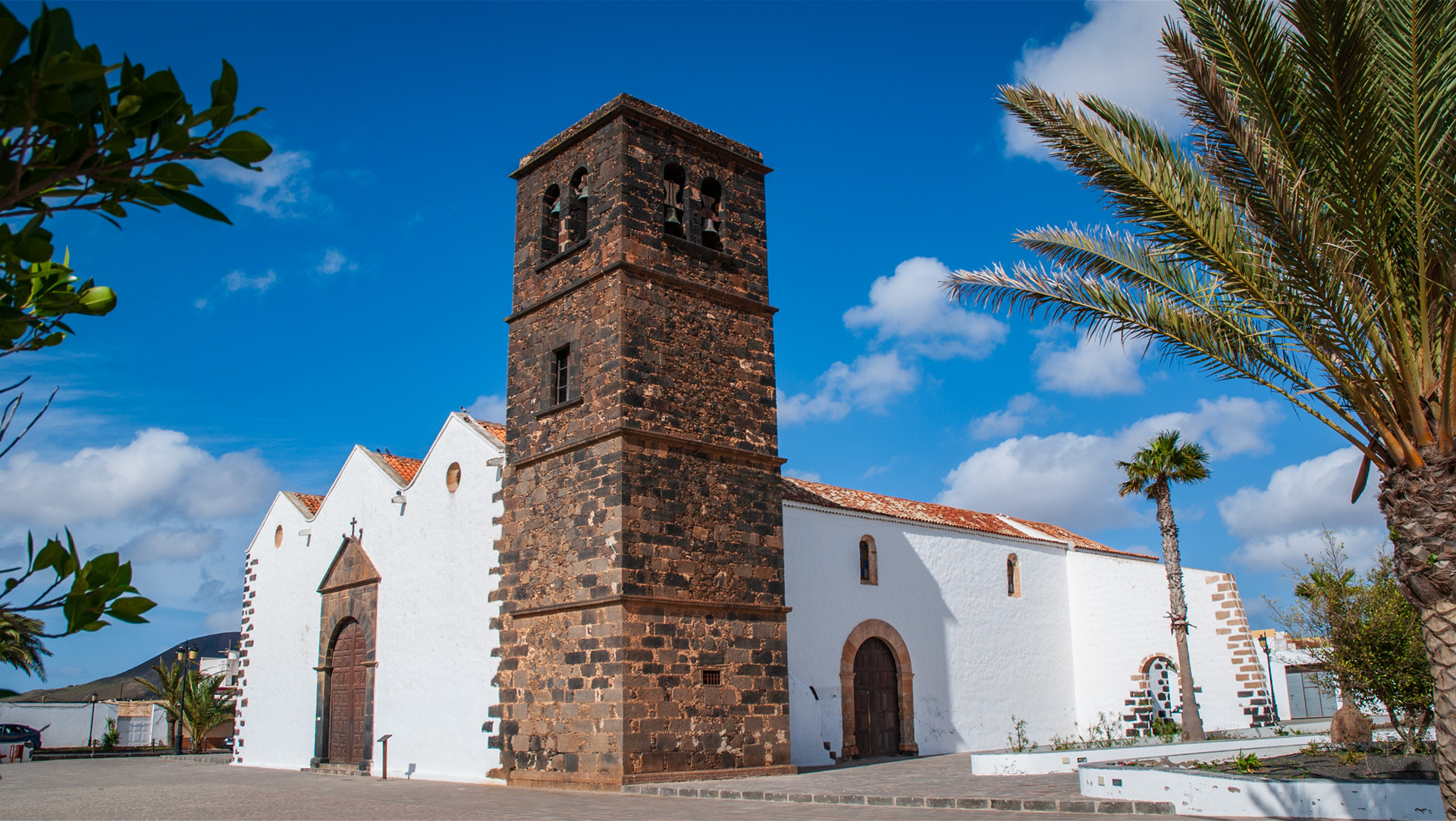
Corralejo – the village that’s actually a town
Corralejo used to be a fishing village. Today, it’s the liveliest place in the north – yet it’s still retained that laid-back, somehow unhurried vibe. The white sand dunes stretch right down to the sea, Lanzarote lies on the horizon like a silhouette, and the little island of Lobos glistens in the afternoon sun.
Here, you park the car and just set off on foot. No destination, no app, no timer.
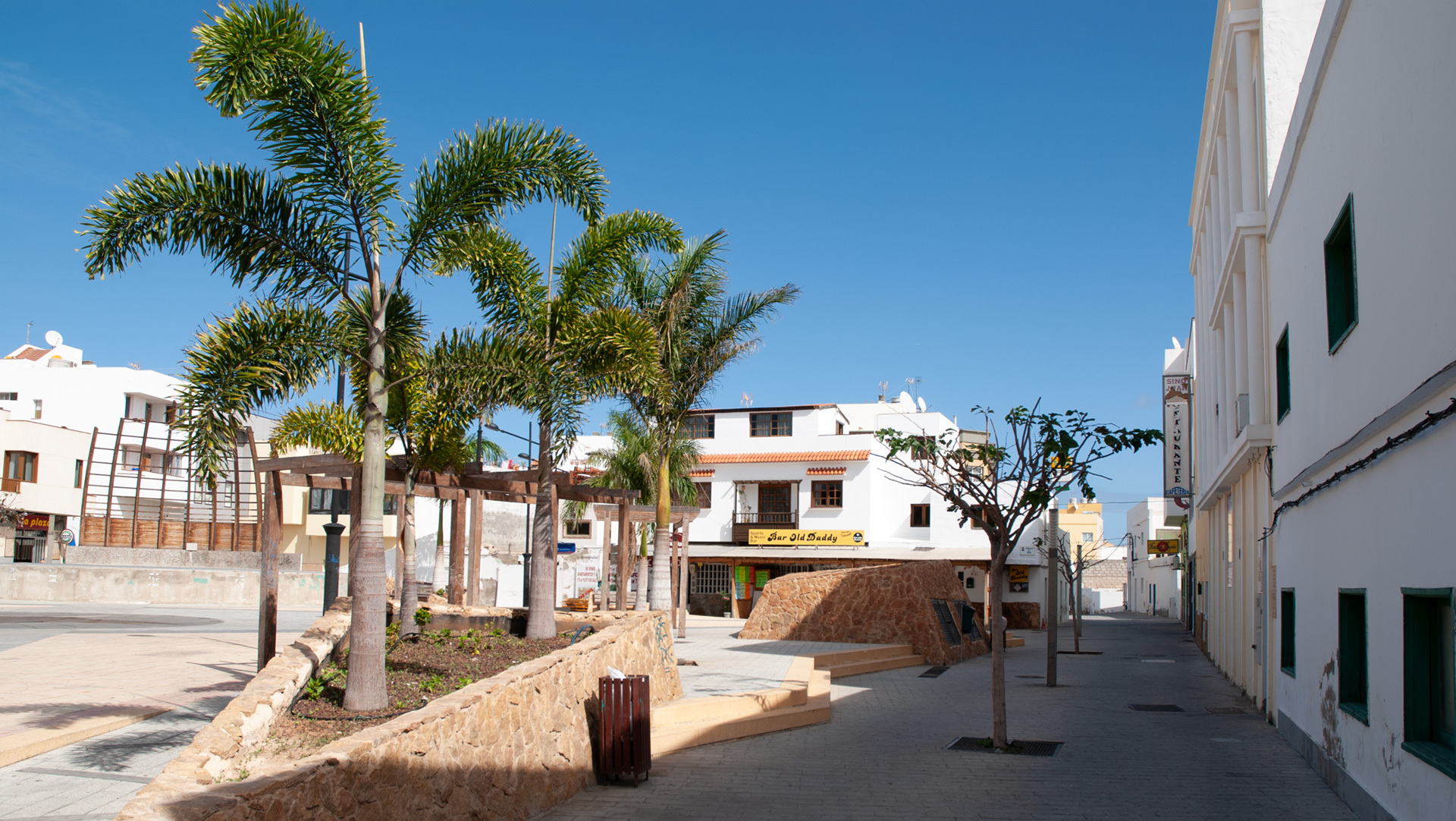
El Cotillo – where the wind has the final say
If you’re still up for it, carry on along the FV-101 to El Cotillo. There’s always a breeze here. Not unpleasant – more as if the island were saying to you: “Hey, I’m still awake.” The waves that form here are a paradise for kitesurfers and for anyone who simply wants to watch the sea put on its own show.
And yes – here, too, you lose track of time. Here, too, the return journey starts later than planned.
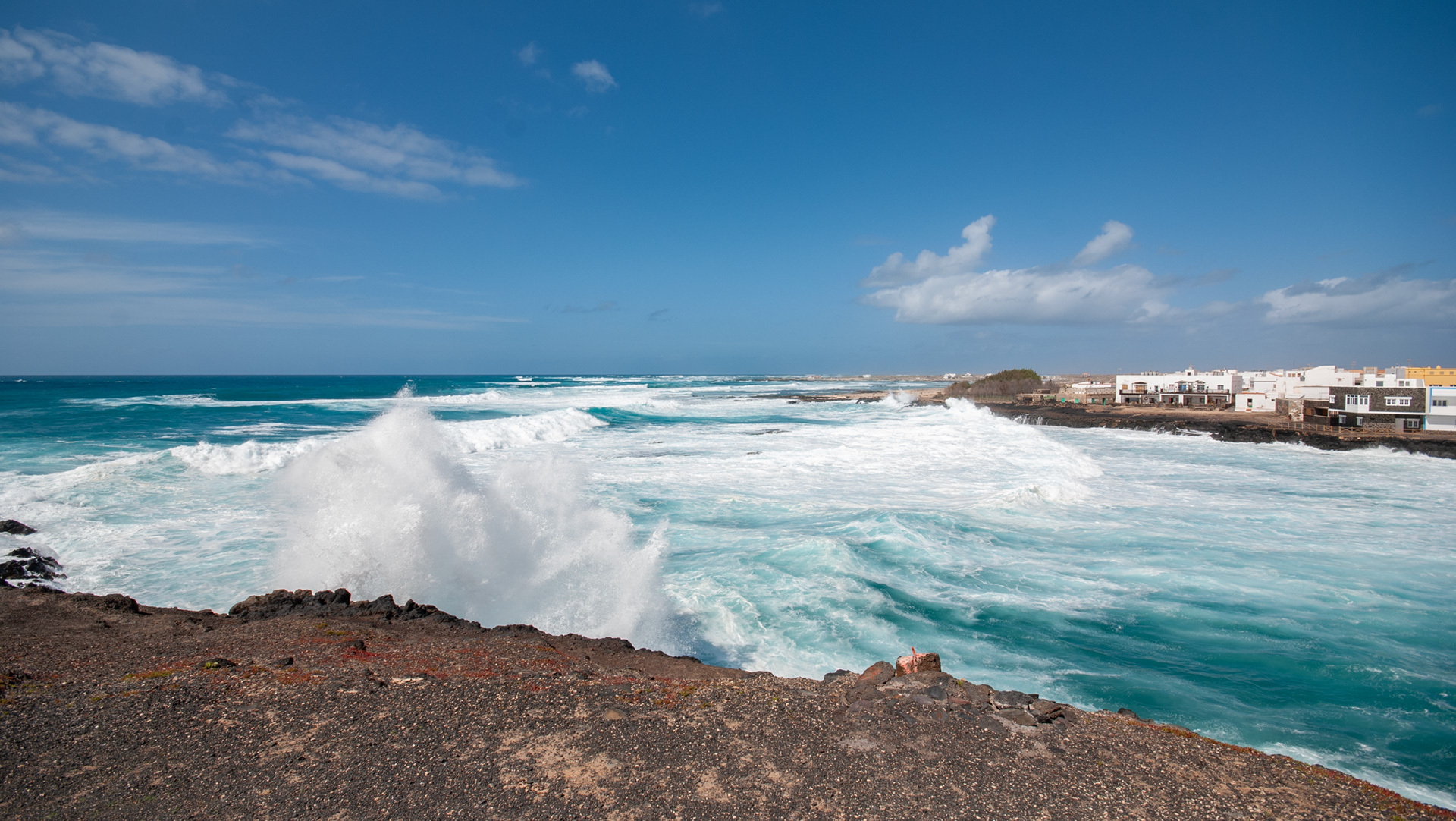
Heading south: where the island gets wild
Parque Natural de Jandía – solitude at full throttle
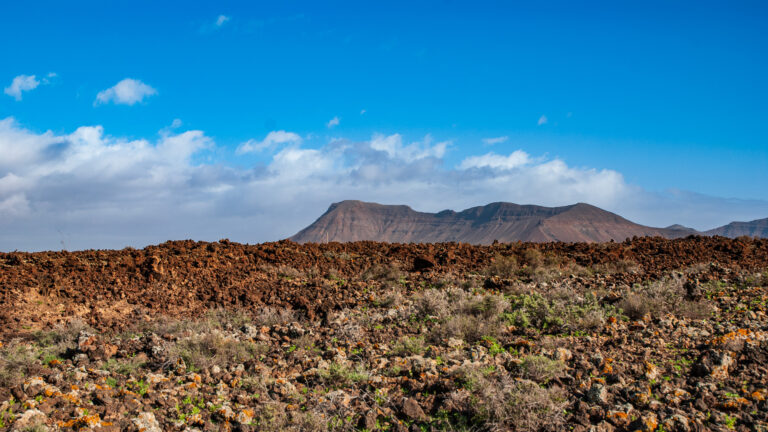
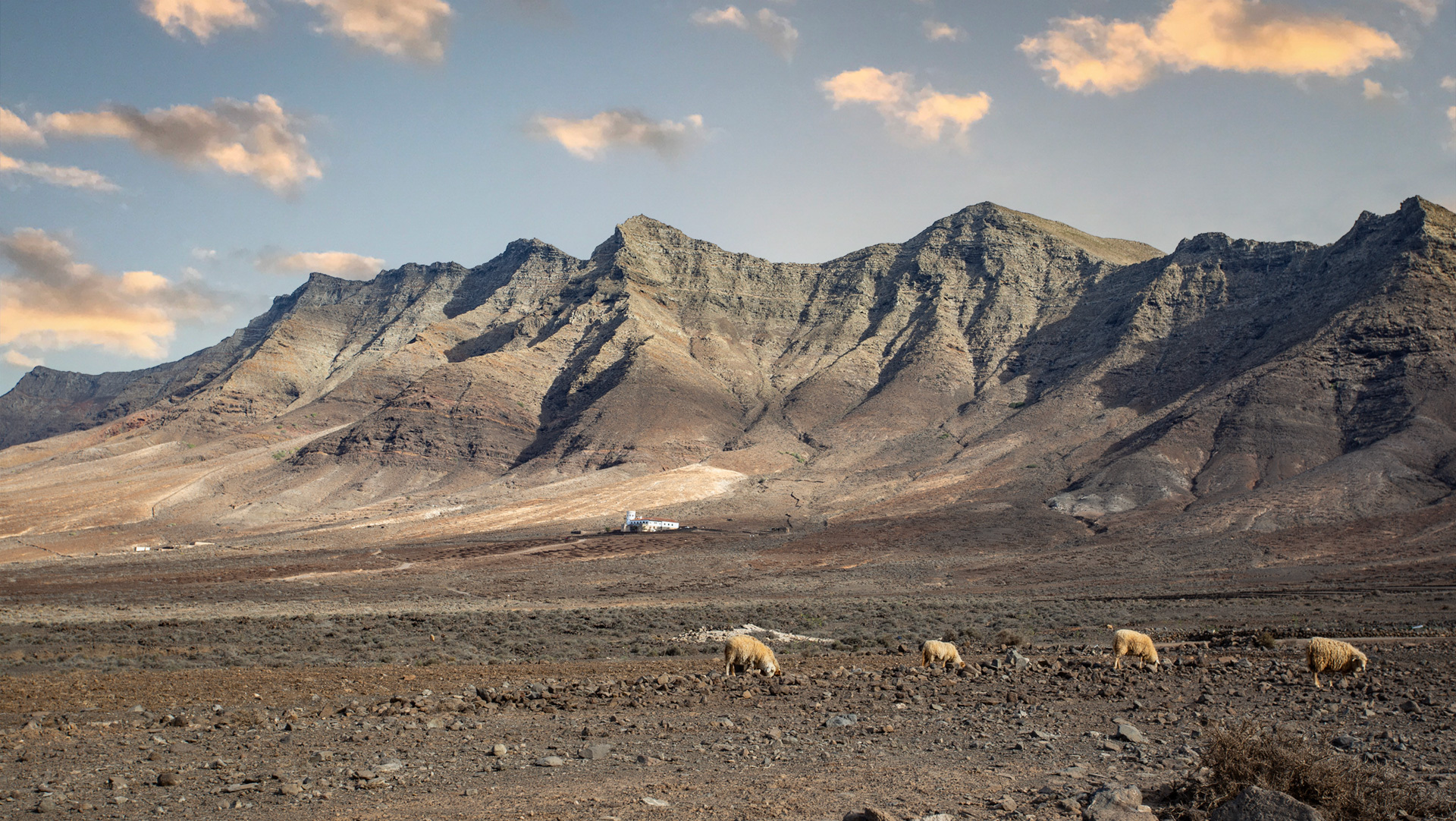
The Parque Natural de Jandía in the south is the heart of wild Fuerteventura. Endless gravel tracks, thorny plants, goats, the occasional donkey giving you a shrug-shouldered look. The landscape is barren yet so incredibly cinematic that you constantly feel as though you’re driving through a Western film.
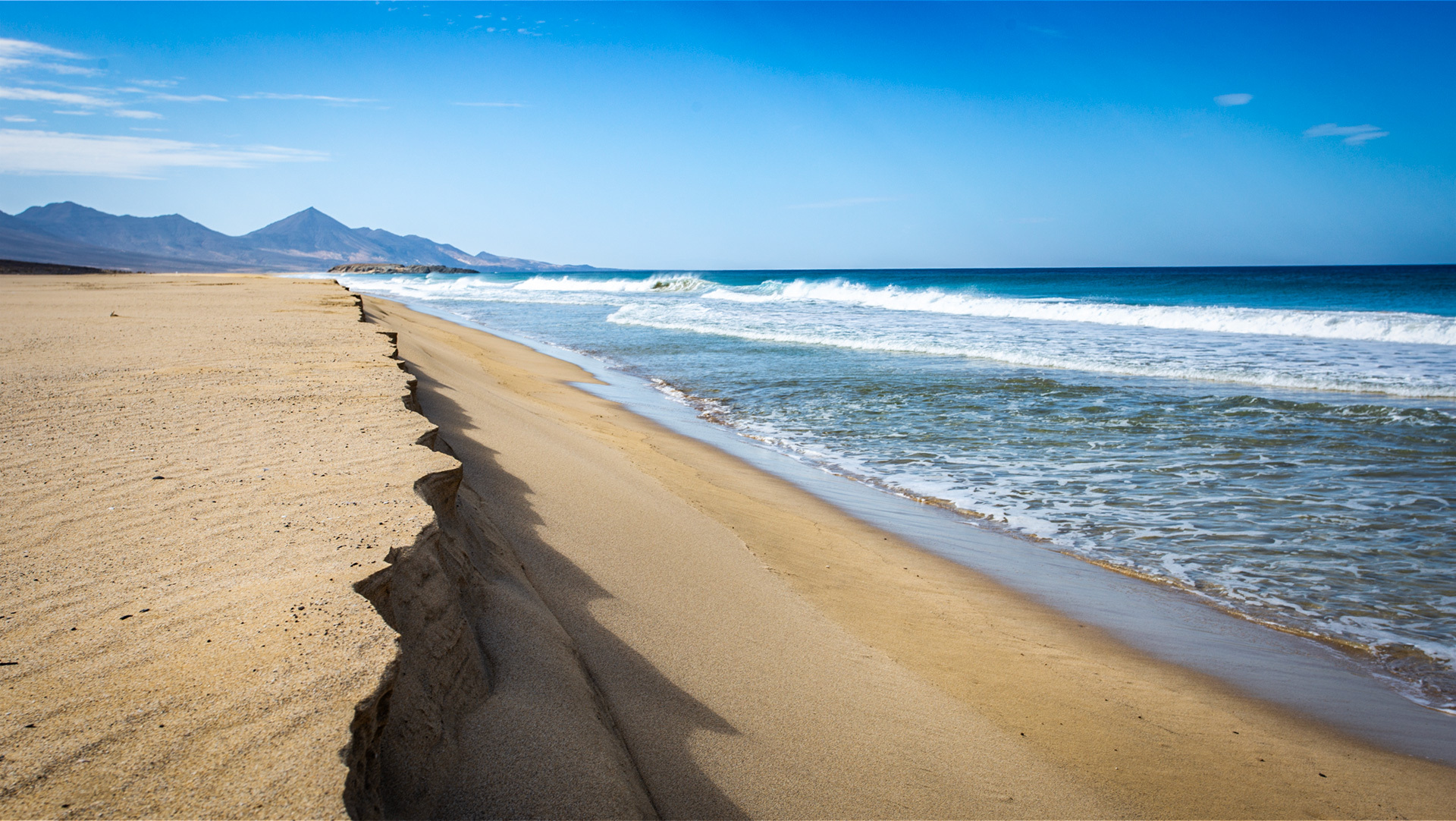
At the end of one of these tracks lies Playa de Cofete. Kilometres of fine sand, roaring surf, no kiosk, no parasol hire, no crowds. Sometimes you really are alone here. Completely.
You can’t go for a swim – the currents are too dangerous. But that’s not what this is about anyway.
Car hire tip: Many tracks in the nature reserve are only open to off-road vehicles. Before setting off, check what’s permitted with your hire car.
Villa Winter – the island’s most mysterious house
It appears near Cofete: Villa Winter. All on its own. In the middle of nowhere. A two-storey building, constructed in 1936 by the German engineer Gustav Winter – and ever since the focus of some rather wild speculation.
A secret submarine harbour beneath the foundations? Visits from Nazi bigwigs? Hitler in exile? None of this has been proven. But when you stand in front of this house, in this silence, with this view – your mind starts to invent stories all by itself.
Part of the villa is open to visitors. The rest remains a mystery. And that’s how it should be.
Corralejo Nature Park: Dunes, lava and a Caribbean vibe
The Parque Natural de Corralejo is one of those places you actually intend to visit briefly – and then suddenly find you’ve been there for three hours.
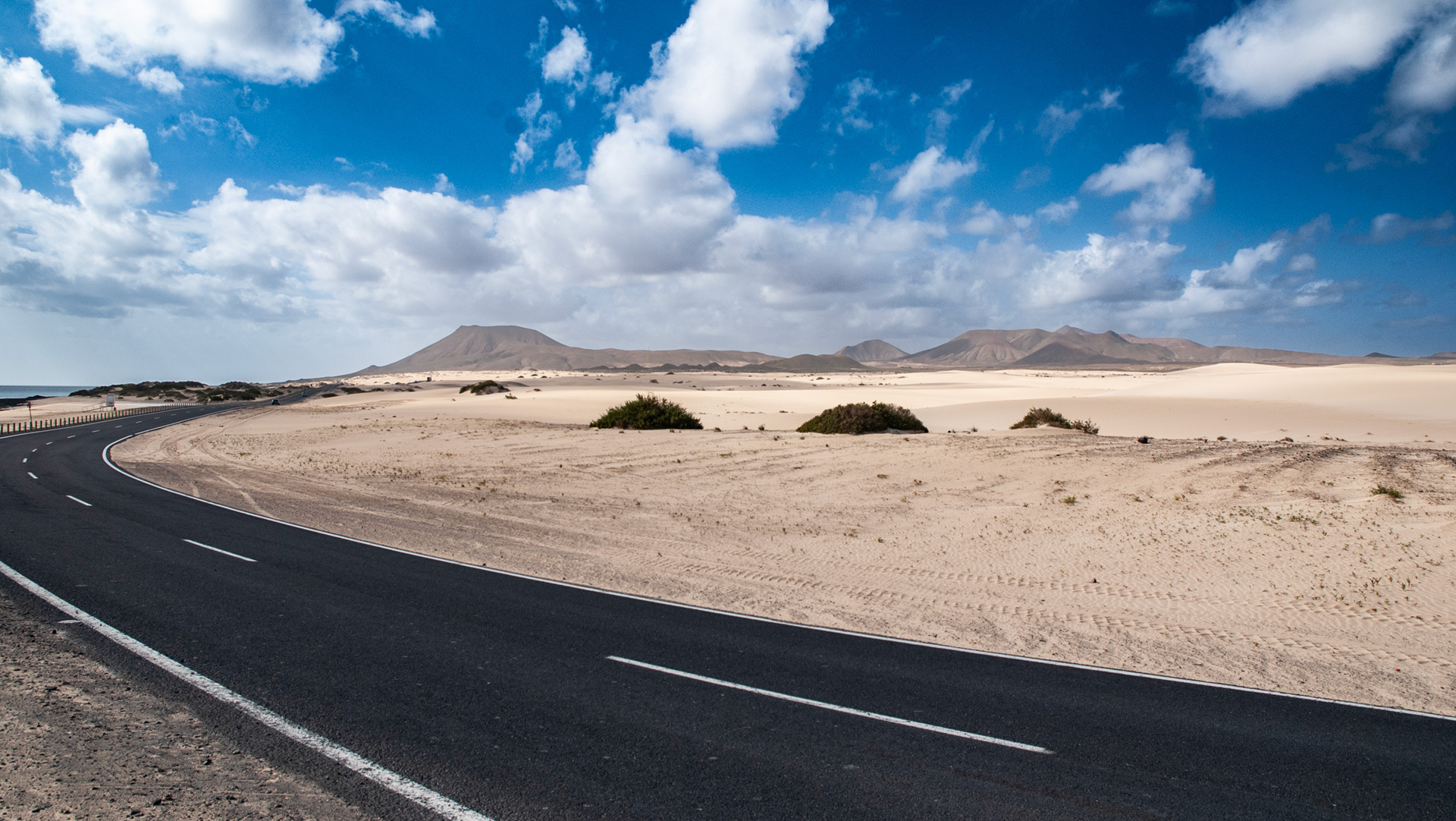
The El Jable dune landscape stretches for almost 11 kilometres; the shifting dunes really do move, and where they meet the turquoise water, you find yourself thinking for a moment: ‘Have I somehow ended up in the Caribbean?
Anyone who tackles the climb up the Montaña Roja volcanic cone – around 40 minutes – is rewarded with a panorama you won’t forget in a hurry. Volcanic rock, sea, dunes, the horizon. That’s it. That’s enough.
Ajuy – pirates, black sand and the best fish on the route
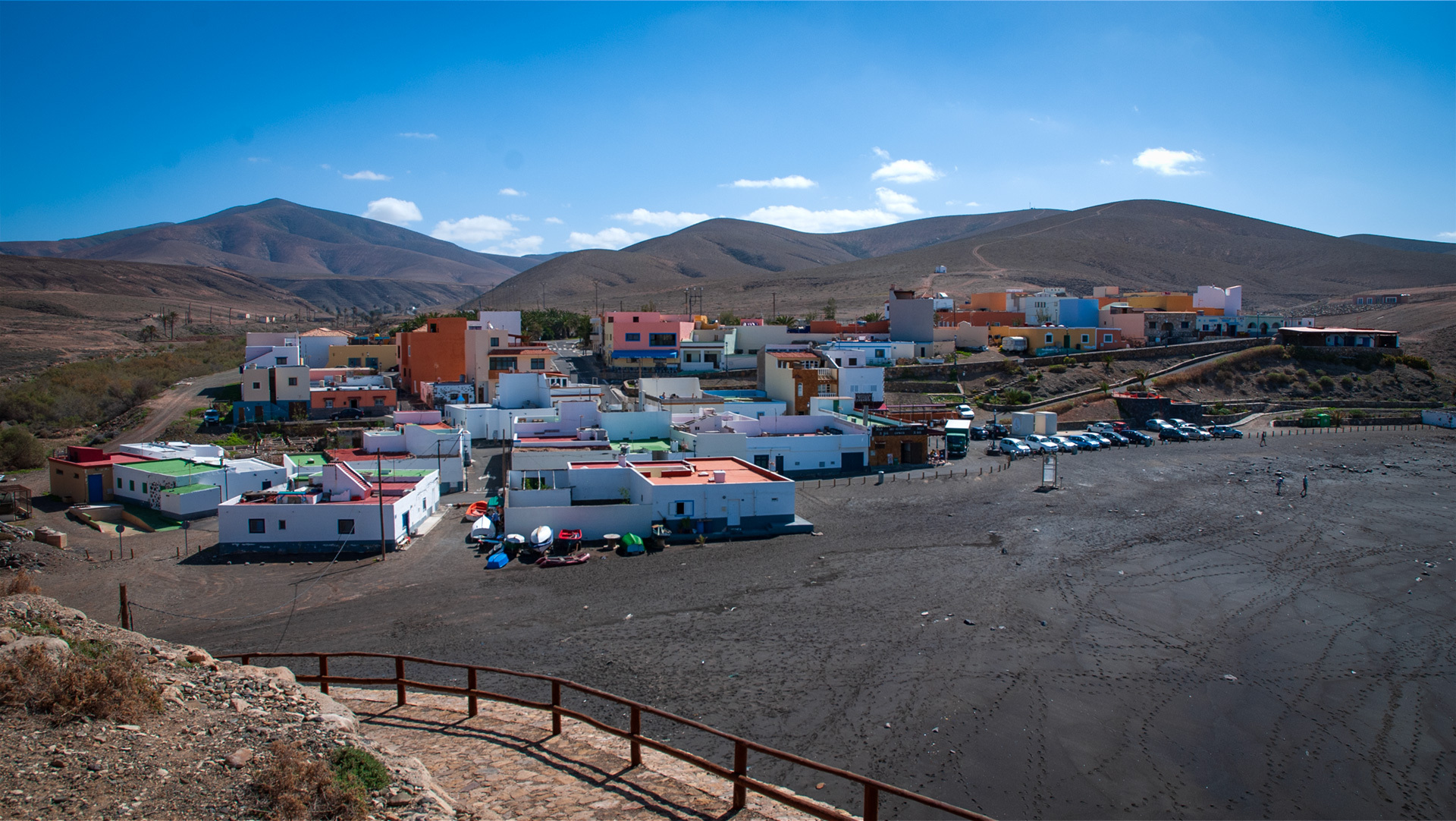
The small village of Ajuy lies on the west coast. You don’t end up here by chance – you have to make a point of coming. And it’s well worth it.
Playa de Ajuy is a black lava beach whose history dates back to the age of pirates: it was right here that buccaneers landed on several occasions. A path continues on to Playa de los Muertos, where a steep staircase leads down into Caleta Negra – an ancient cave system that once served as a hideout for corsairs.
Sturdy footwear is essential. Flip-flops are a bad idea. Don’t ask.
Afterwards: a table at La Jaula de Oro right by the water’s edge (Av. de los Barqueros 17, Ajuy). Fresh fish. A sea view. The sun is slowly setting. And you think: we really ought to be on our way back by now.
You stay for one more round.
When to set off?
April to November are the best months for road trips on Fuerteventura. If you prefer it quieter – fewer tourists, empty roads, mild temperatures – come during the winter months. The island is worth driving around all year round.
Quick facts for driving: The speed limit in built-up areas is 50 – 30 km/h on single-lane roads, 90 km/h on country roads, 100 km/h on expressways and 120 km/h on motorways. If you leave your car outside built-up areas, put on a high-visibility vest.
Conclusion: This island won’t let you get home on time
Exploring Fuerteventura by hire car isn’t just a day out – it’s a way of life. You plan three stops and end up making five. You want to be back by 4 pm and set off at 6 pm. You think you know the island after a day – and realise you’ve only just begun.
That’s exactly how it should be. Wind down the windows. Turn on the music. And always get back a little later than planned.
Windows down. Music on. And always back a little later than planned.