Casa de los Coroneles – The Most Powerful Manor House on Fuerteventura
Anyone exploring the northern tip of Fuerteventura will eventually come across a building that stands out from the island’s austere barrenness like a memory of long-distant times: the Casa de los Coroneles in La Oliva. The House of the Colonels – the literal translation – stands slightly away from the village centre, and this is precisely what lends it an aura of quiet grandeur.
Colonial Splendour in the North of the Island
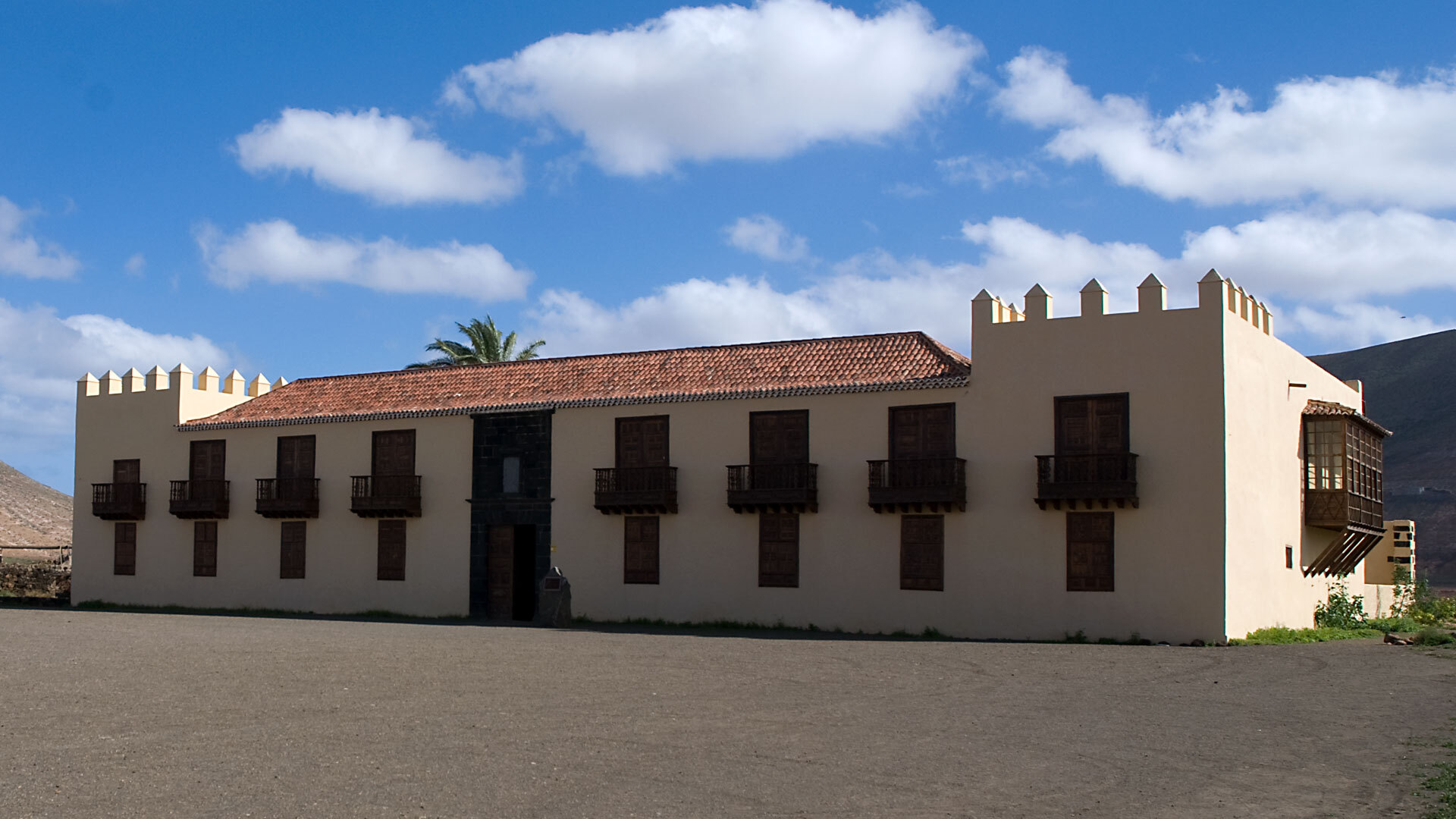
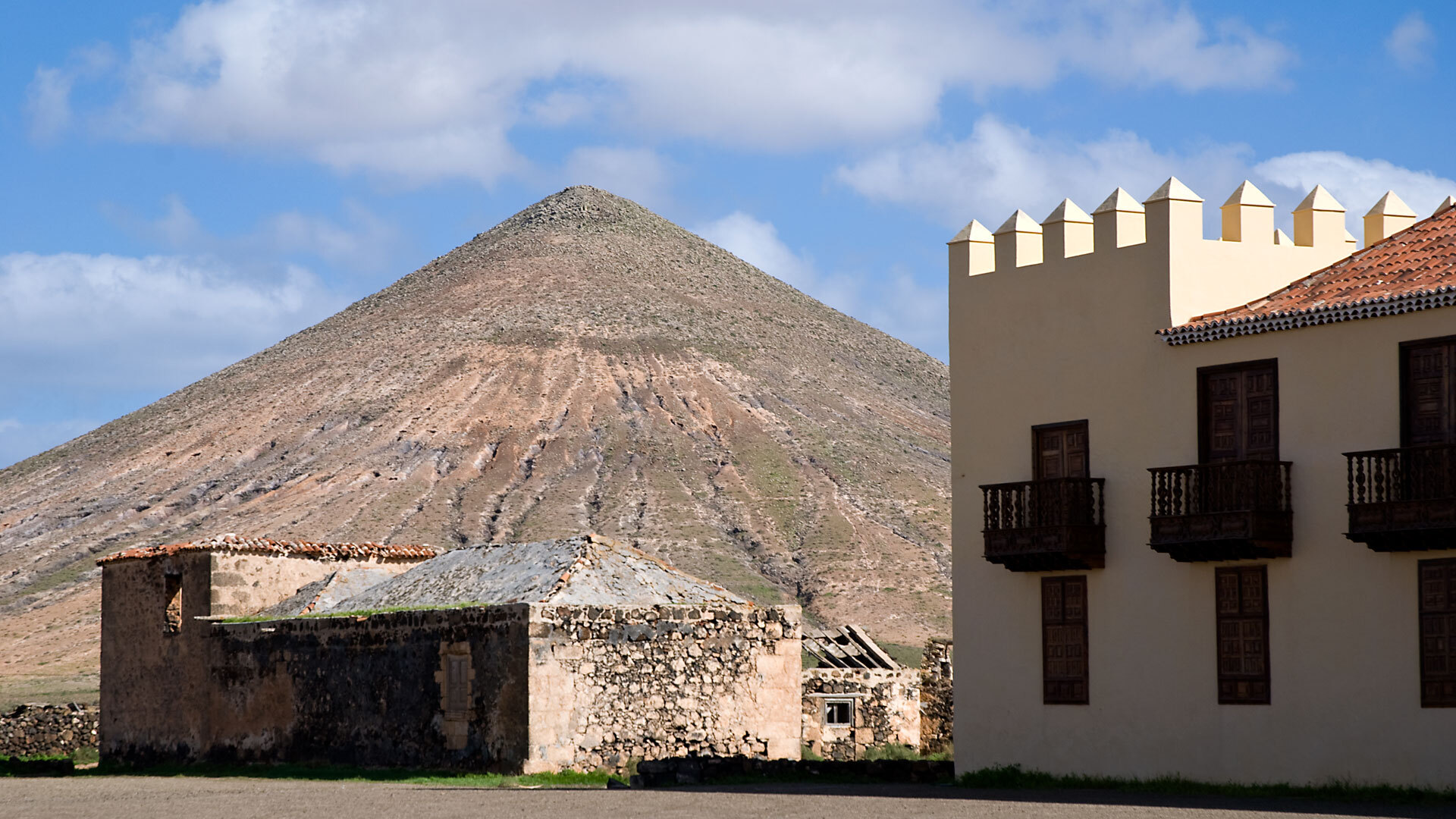
Approaching the estate along a quiet side road, the Calle Salvador Manrique de Lara, one suddenly finds oneself before it: a sprawling manor house in the quintessentially Spanish colonial style, built in the mid-17th century. The façade tells centuries at a glance – four Mudéjar-style wooden balconies, intricately carved, flank the imposing entrance gate, above which the coat of arms of the Coroneles clan presides. Rectangular towers with battlements on the front faces are a reminder that this building was not merely a residence, but also a fortified stronghold.
365 Windows – Legend and Reality
One of the most famous mysteries surrounding the manor house of Fuerteventura is the question of the windows. A persistent legend holds that the estate has exactly 365 windows – one for every day of the year. Estimates suggest no more than around 100, and reliable figures have never been established. Yet it is precisely this uncertainty that makes the attraction in La Oliva so appealing: you count, look, lose your thread and start again.
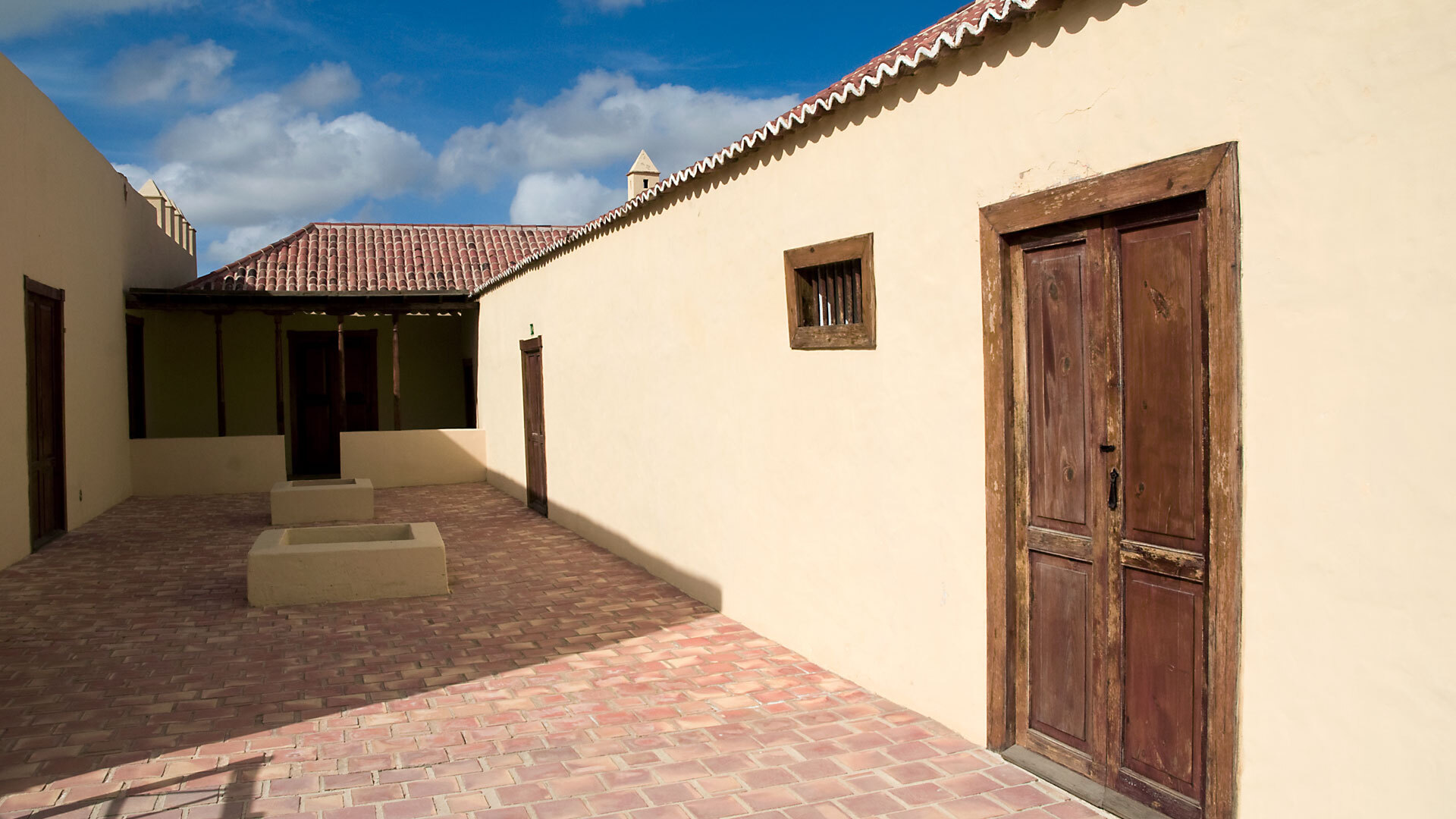
From Military Seat to Cultural Centre
The history of the Casa de los Coroneles is the history of Fuerteventura in miniature. The building was commissioned by the Cabrera Béthencourt family – descendants of the Norman conqueror Jean de Béthencourt. In 1708, the first Coronel moved into the estate, and from then on the military administration of the island resided here. The office of Colonel was hereditary, always held by a member of the same family, who gradually acquired most of Fuerteventura through shrewd marriage alliances.
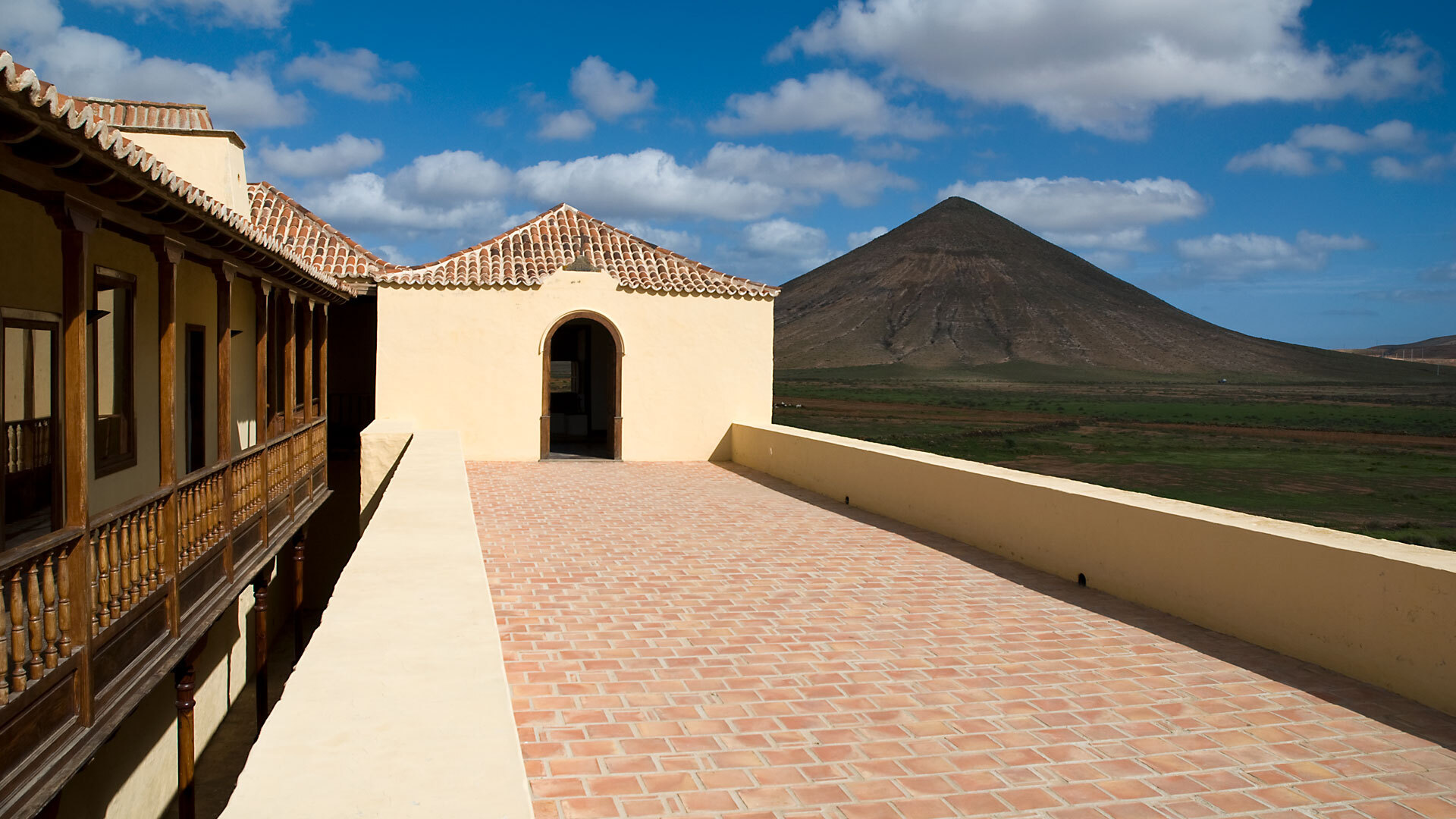
The ground floor housed stables, storage rooms, grain stores and the kitchen. On the upper floor, the Coronel lived, prayed in the small private chapel, and governed the destiny of the island from here. The largest manor estate in the entire Canarian archipelago grew over generations – architecturally as well as politically.
1859 saw the dissolution of the military regiment of La Oliva. The Colonel lost his powers, and the house fell silent. According to rumour, the building eventually came into the ownership of around 300 people – a testament to its wide-ranging significance across the centuries.
Listed Status, Restoration and Royal Opening
In 1979, the Spanish Minister of Culture declared the building a historic-artistic monument. In 1985 it was further designated as an Asset of Cultural Interest. In 1994, the island government purchased the dilapidated estate and launched an extensive restoration. On 26 November 2006, King Juan Carlos and Queen Sofía finally inaugurated the building with great ceremony – a historic moment for the cultural history of Fuerteventura.
Exhibition: Art, Society and Power
Today the Casa de los Coroneles is a vibrant cultural centre and one of the most significant attractions in the north of Fuerteventura. Across eleven rooms, the exhibition “Art, Society and Power: the Casa de Los Coroneles” unfolds – a journey through centuries of Canarian history through art objects, documents, photographs and original household items.
Silver tableware, crockery, books, weapons – all of this provides an authentic insight into the lives of those who resided and ruled here. Six portraits of former Colonels look out at the visitor from past centuries, including the likeness of Don Cristóbal Manrique de Lara y Cabrera, who held the greatest influence over the island’s affairs in the 19th century.
One leaves the house with the feeling of having visited a time that is actually long past – and yet somehow continues, in the walls, the windows, the balconies.
Visitor Information
Adresse: La Casa de los Coroneles Calle los Coroneles, 28 E-35640 La Oliva Tel.: +34 928 868 280 Web: www.lacasadeloscoroneles.org (in Spanish only)
Opening hours: Tuesday to Saturday, 10:00 – 18:00
Admission: General: 3 € | Groups of 15 or more: 2 € Free: 18 May (International Museum Day) & 30 May (Canary Islands Day)
Getting there from Puerto del Rosario: Take the FV-10 towards Tetir and La Matilla to La Oliva – approx. 22 km, about 25 minutes’ drive. The manor house is located east of the village centre, directly on Calle Salvador Manrique de Lara.