Road Trip in the North of Fuerteventura – Through Dunes, Tracks and the Silent Heart of the Island
Some islands reveal everything at once. Fuerteventura does not. To truly get to know the north, you need to take the wheel yourself, leave the main road behind at some point – and be open to what lies off the beaten track. A road trip through the north of Fuerteventura is not a guided excursion. It is an exploration. With all your senses.
The circular drive through northern Fuerteventura starts and ends in Corralejo, passing villages that barely feature on anyone’s radar, skirting a west coast that shows no mercy, and finally returning through one of the Atlantic’s most spectacular dune landscapes. Around 130 kilometres, a full day – and the feeling of having truly seen the island.
For the adventurous, there is more than tarmac along the way: unpaved tracks on Fuerteventura branch off into nothingness, to where the map ends and the adventure begins. Those with a suitable off-road vehicle will be rewarded.
And: pack your swimwear. The sandy beaches along El Jable are simply irresistible.
Corralejo – Where the Road Trip Begins
The engine is running. The sun is still low. Corralejo, the second-largest tourist town on Fuerteventura, lies in the morning light – loud, lively, smelling of the sea. Surfers lug their boards down to the water, the first cafés are opening their doors.
One last espresso, an empanada, a glance at the map. Then: FV-101, heading south. The Fuerteventura north road trip begins.
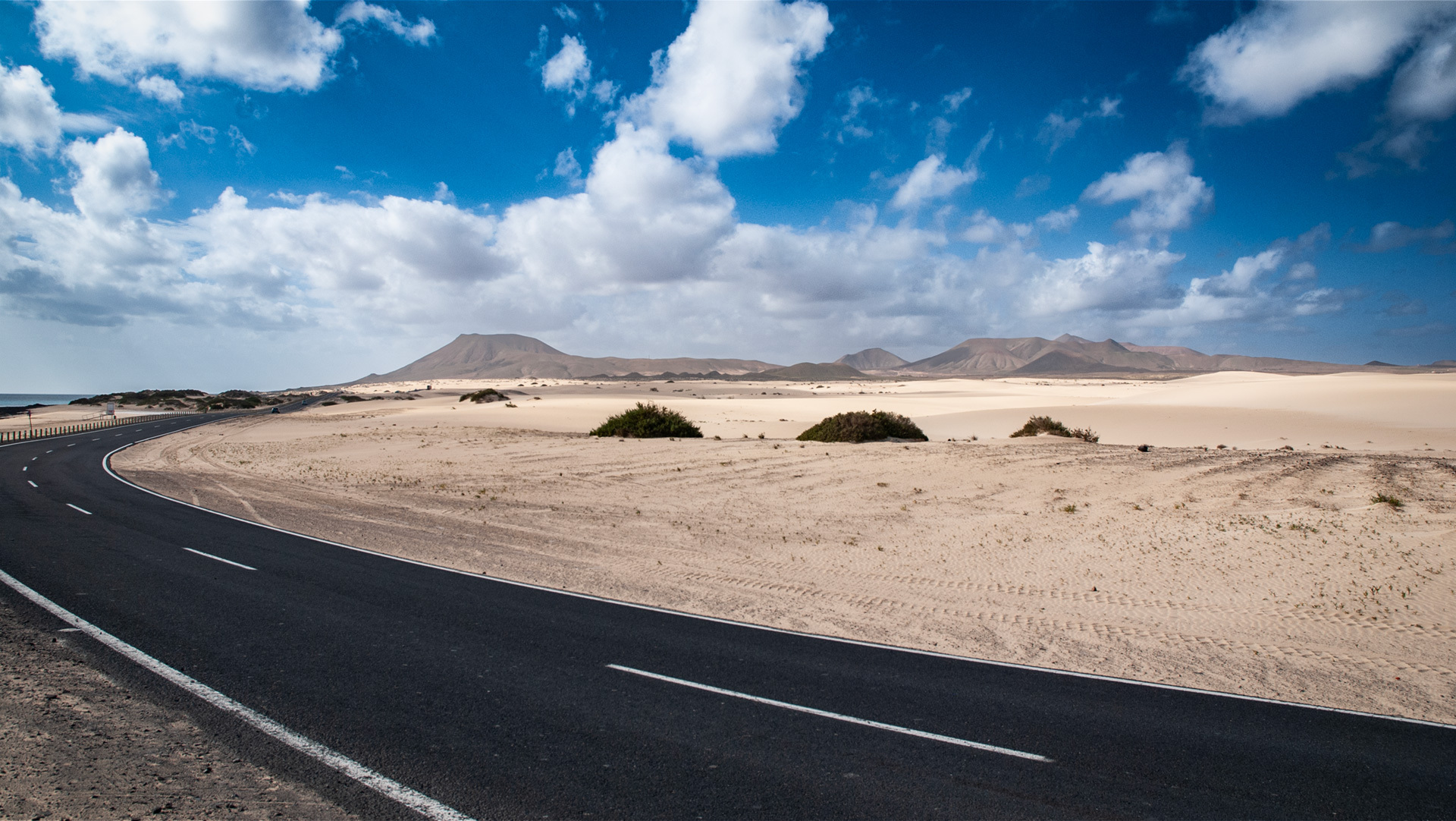
Lajares – Quiet Craft in the Lee of the Mills
After six kilometres, the road to Lajares branches off to the right. Five kilometres of sparse hinterland – and then the village appears, heralded by an old windmill on Fuerteventura standing like a sentinel at the village edge.
Lajares is the centre of needlework craft on Fuerteventura. At the Escuela de Artesanía Canaria, an ancient craft that nearly died out is passed on. Those who step inside are not buying a souvenir – they are taking home a piece of history. A brief stop with a lasting impression.
For those with a spirit of adventure: Around Lajares, scattered gravel tracks branch off into the hinterland. Dusty, unmarked, wonderfully remote. For suitable vehicles only – but those who dare will gain views that no tour bus ever reaches.
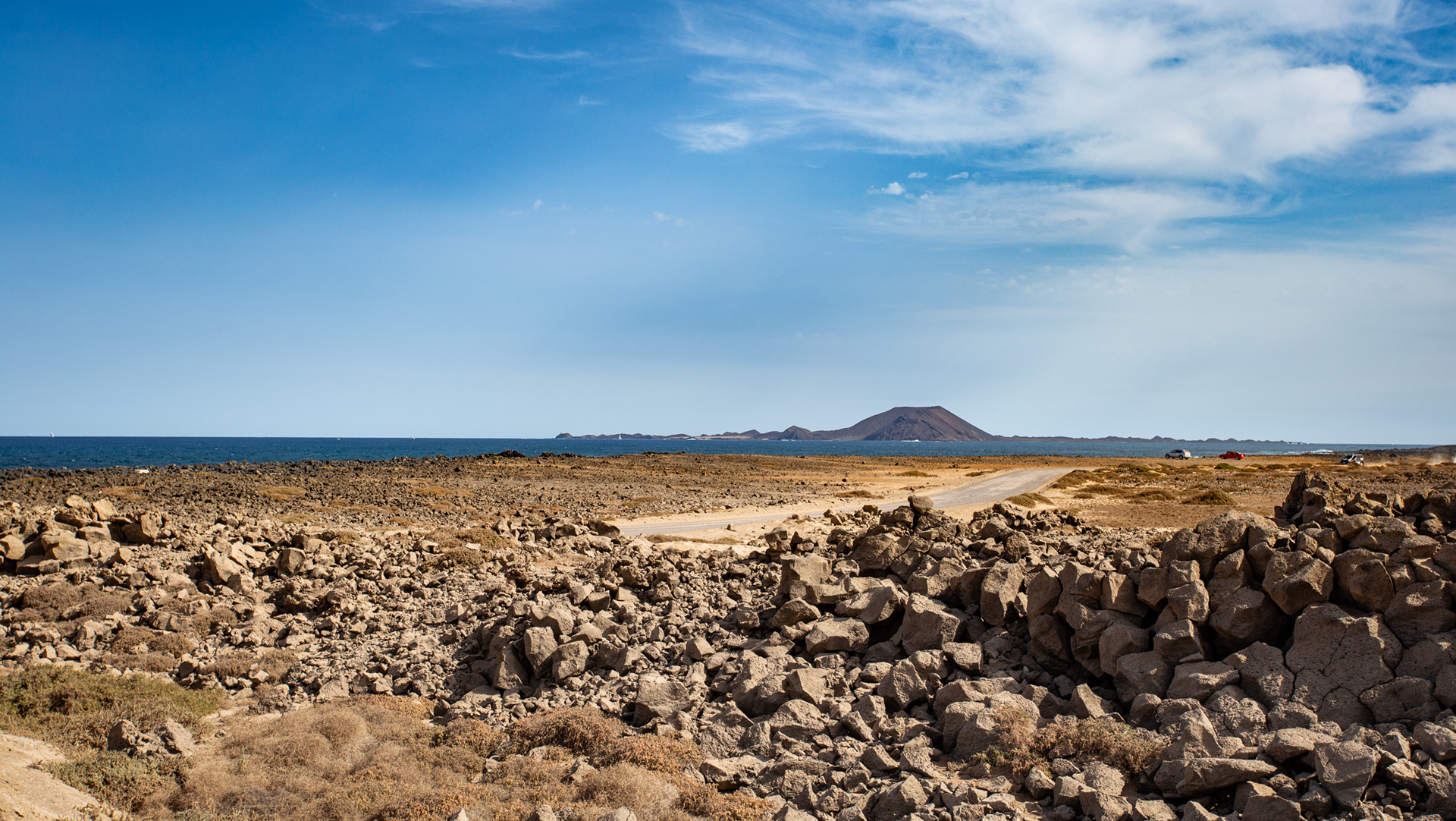
El Cotillo – Where the Atlantic Shows No Mercy
Continue on the FV-10 until the sea comes into view again. El Cotillo – a former fishing harbour, once one of the most important on the island – greets you with powerful waves and a wind that makes perfectly clear who is in charge here.
The west coast of Fuerteventura is not for those seeking a gentle swim. But for everyone who prefers to see the sea unfiltered – raw, powerful, unpredictable. The rocky coastline invites long coastal walks near El Cotillo, past crashing surf, gulls and an overwhelming sense of open space.
To the north of the village: the Faro de El Tostón lighthouse. Reached via a side road – and an absolute must for explorers. The view from there across the cliffs? Unforgettable.
At lunchtime, a stop at one of the fish restaurants in El Cotillo is well worth it: fresh catch, local cuisine, fork in hand and the sea outside the window. This is what Fuerteventura tastes like.
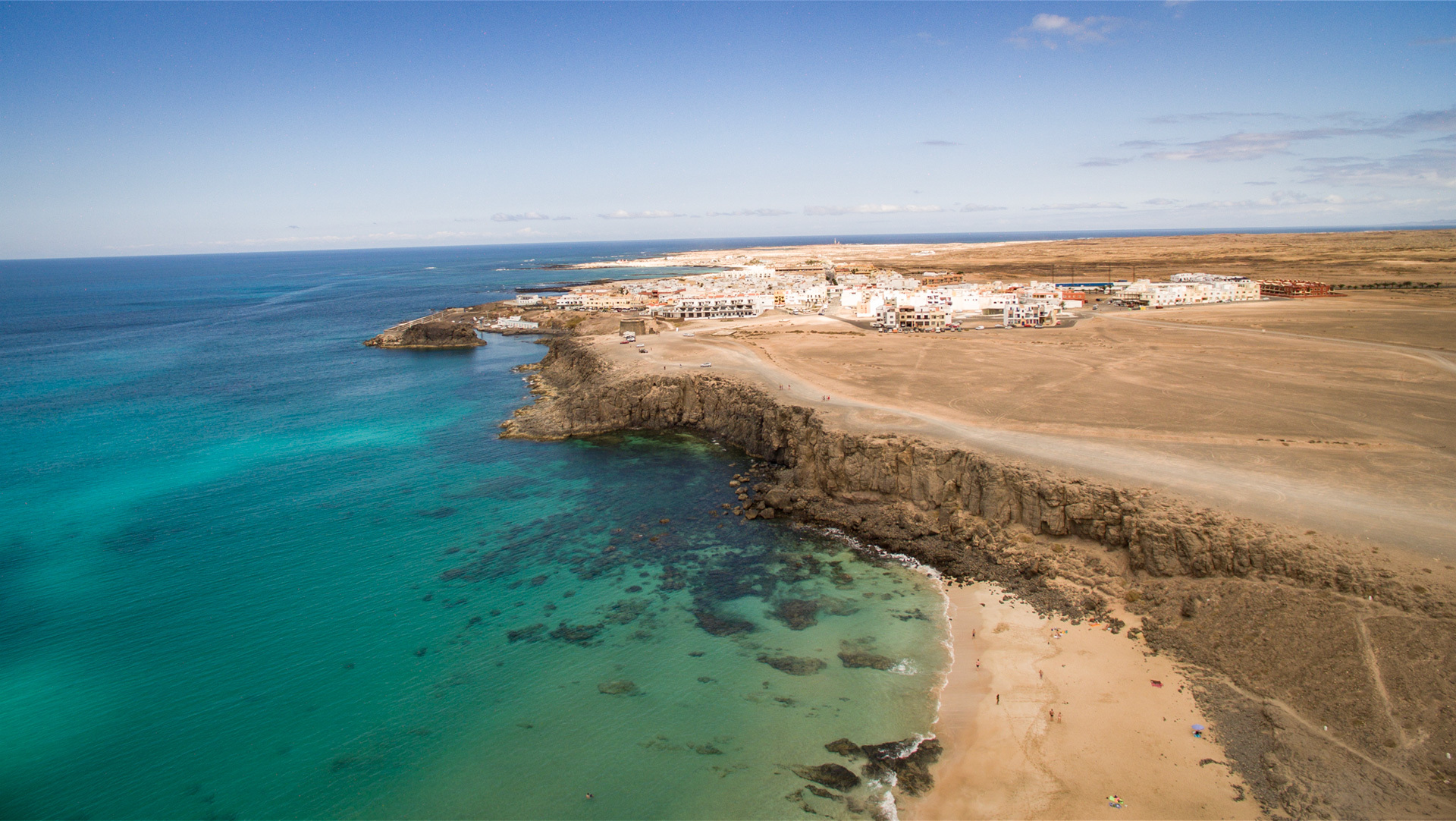
La Oliva – Power, History and Quiet Alleyways
Back on the FV-10, continuing towards La Oliva – and suddenly history is in the air. For around 150 years, a military government was based here, and the restored manor house Casa de los Coroneles gives a sense of what power once meant on a small island. Today you can wander through the rooms once occupied by colonels.
The parish church of Nuestra Señora de Candelaria with its fortress-like tower, the Casa Mané arts centre with its contemporary works – La Oliva is the most beautiful and significant village in the island’s north. Do not rush. Stroll through the alleyways. Pause.
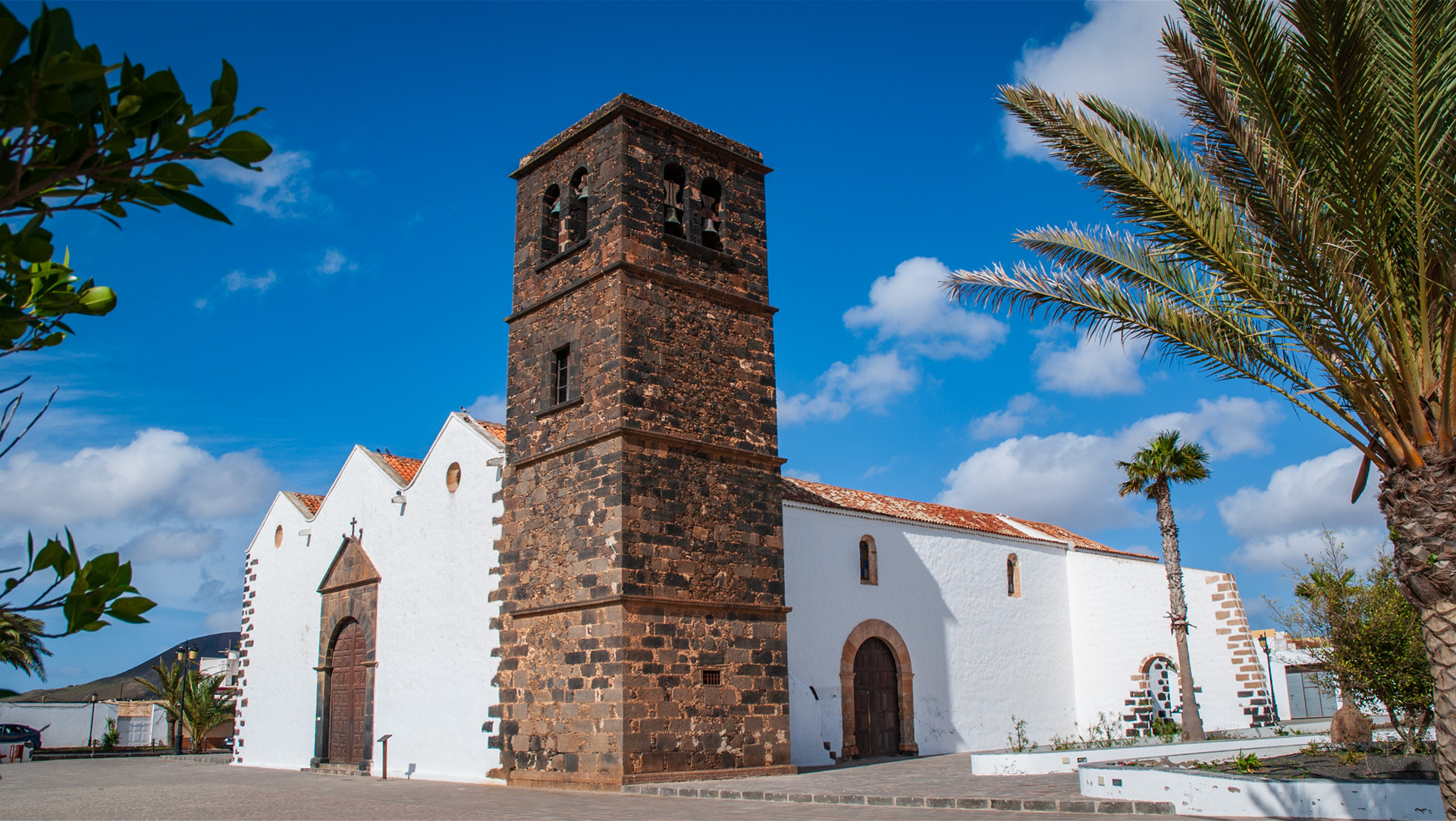
Tefia – Open-Air Museum at the Edge of Time
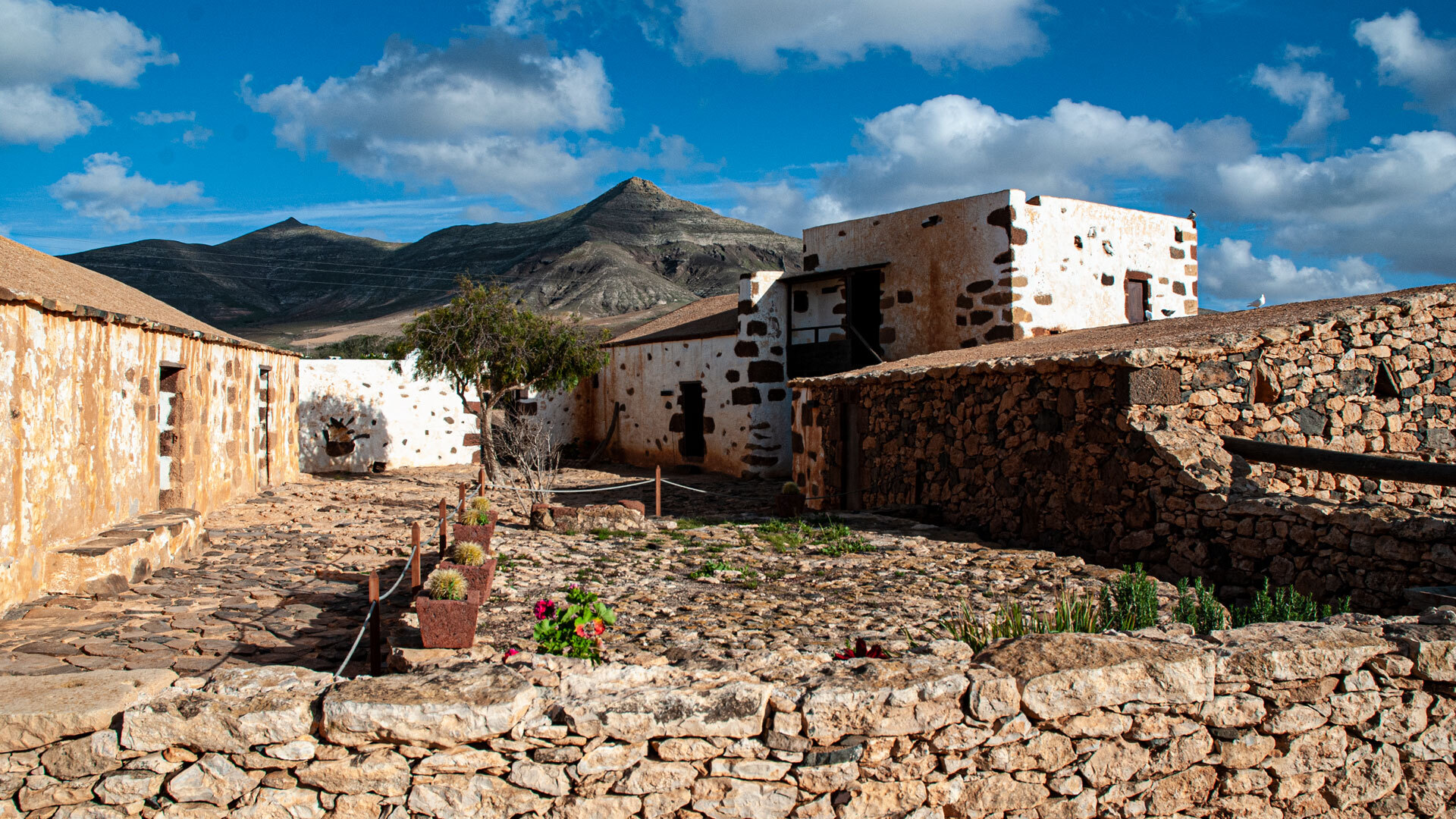
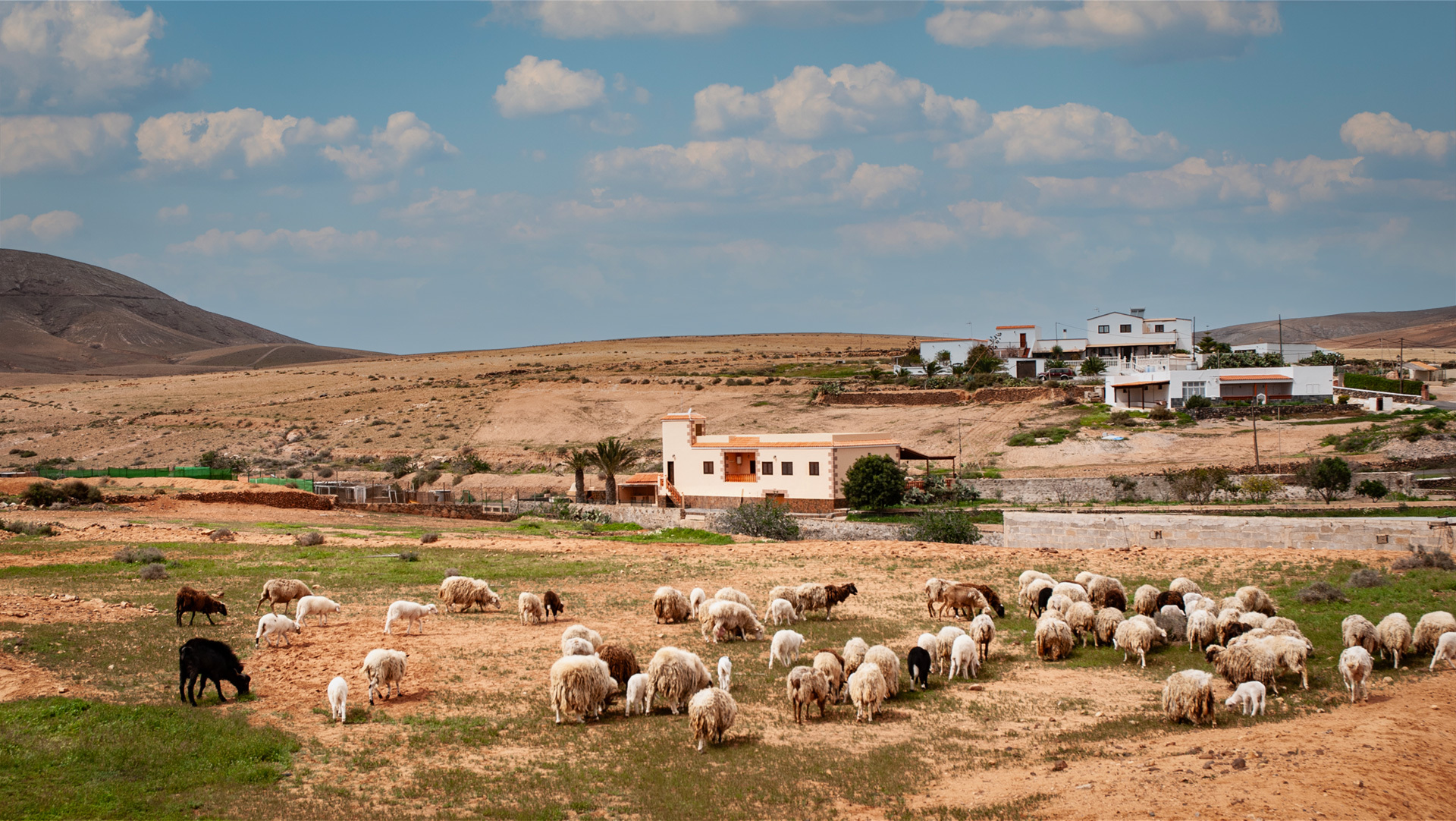
Eight kilometres south-west on the FV-10, then right – and the world grows quieter still. Tefia consists of widely scattered farmsteads that look as though time built around them.
The Ecomuseo La Alcogida is an open-air museum on Fuerteventura that is not an Instagram backdrop but genuine living heritage: restored mills, old tools, the life of the rural population – close enough to touch.
Those who look carefully here understand what this island carries beneath the surface.
Puertito de los Molinos – A Detour for Real Explorers
Now comes the part of the tour that features on no postcard.
The FV-221 leads into the Parque Rural Betancuria nature reserve – a landscape of deep gorges, dark volcanic cones and vegetation that nobody expects to find here. The road winds its way along, the air smells of earth and wind.
At the end of the route: Puertito de los Molinos. A handful of houses. A small harbour. The sea. In one of the simple restaurants here, you sit at the edge of the world and gaze out at the water. No Wi-Fi. No hurry. Just open space.
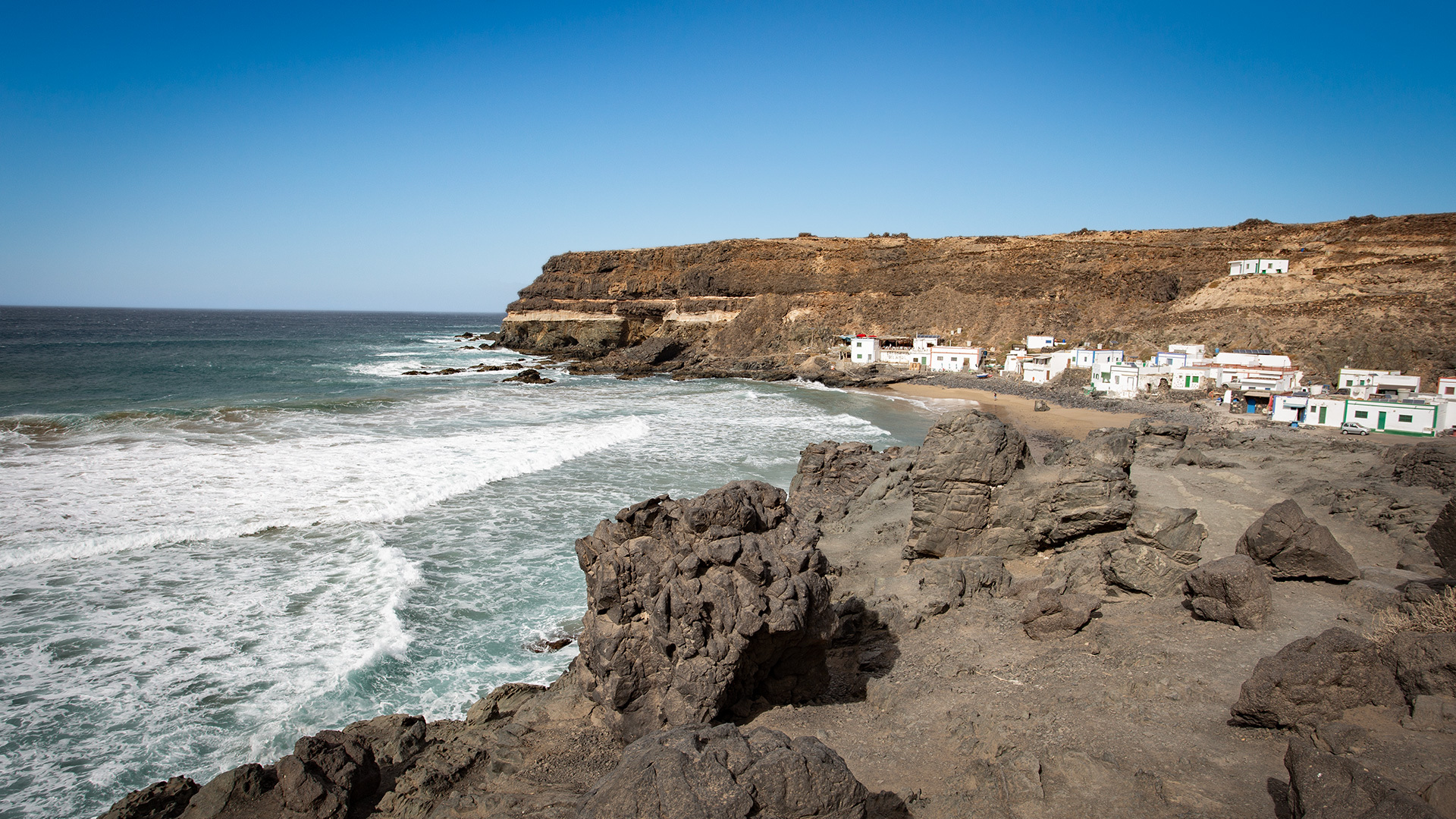
Tip for adventurers: Those with a suitable off-road vehicle can venture further along gravel tracks along the west coast – to secluded coves and cliffs that barely any tourist ever reaches. Not for rental car terms and conditions, but ideal for true explorers.
La Ampuyenta – Baroque in Hiding
Back on the route, a few kilometres further south on the FV-20 – and La Ampuyenta appears almost unnoticed. Ochre-coloured farmsteads, a dusty road, absolute silence.
And in the middle of it all: a church that astonishes. The church of San Pedro de Alcántara conceals baroque wall paintings that you would never expect to find here. Beauty on Fuerteventura often hides behind unassuming facades.
Casillas del Ángel – The Village of Angels in Bloom
A bell tower appears on the horizon. Casillas del Ángel – the ‘Village of Angels’ – announces itself as a good village should: quietly, with dignity, and a hint of mystique.
The church of Santa Ana dates from the 18th century; the key is sometimes kept at the neighbour’s house, No. 20. In spring, blossoming almond trees on Fuerteventura transform the streets into a delicate pink – one of the island’s most beautiful, little-known moments.
Puerto del Rosario – The Capital in Passing
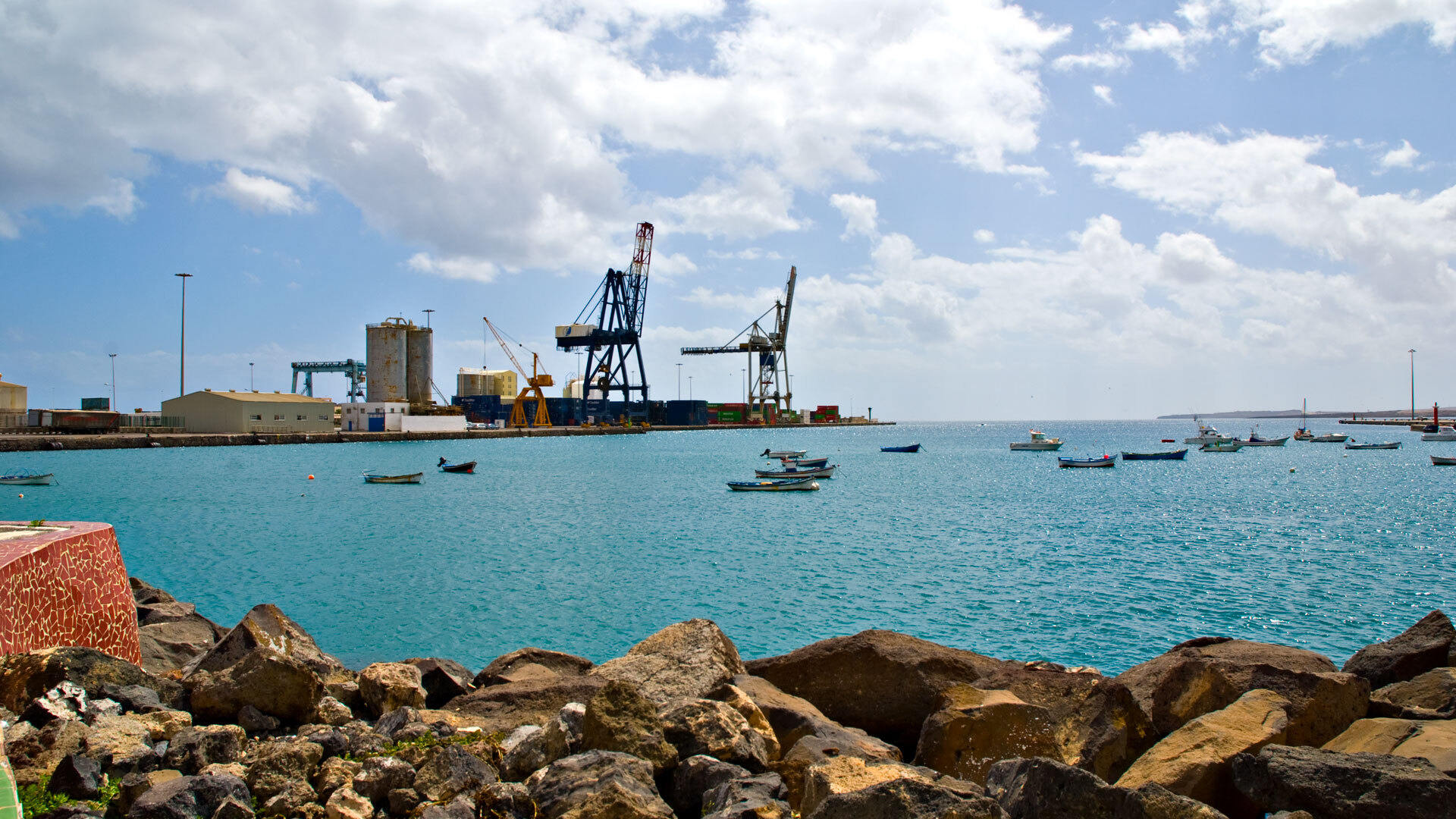
Puerto del Rosario is not a classic holiday destination. The island capital has no picture-postcard backdrop – but it has substance. The Puerto del Rosario seafront promenade invites a stroll along which real island life is palpable, away from tourism and hotel zones.
Culturally, the Casa Museo Unamuno is well worth a visit: the Spanish writer and philosopher Miguel de Unamuno lived here in exile during the 1920s. An exhibition preserves his legacy. A quiet place – made for reflection.
El Jable – Dunes, Dream Beaches and Strict Nature Protection
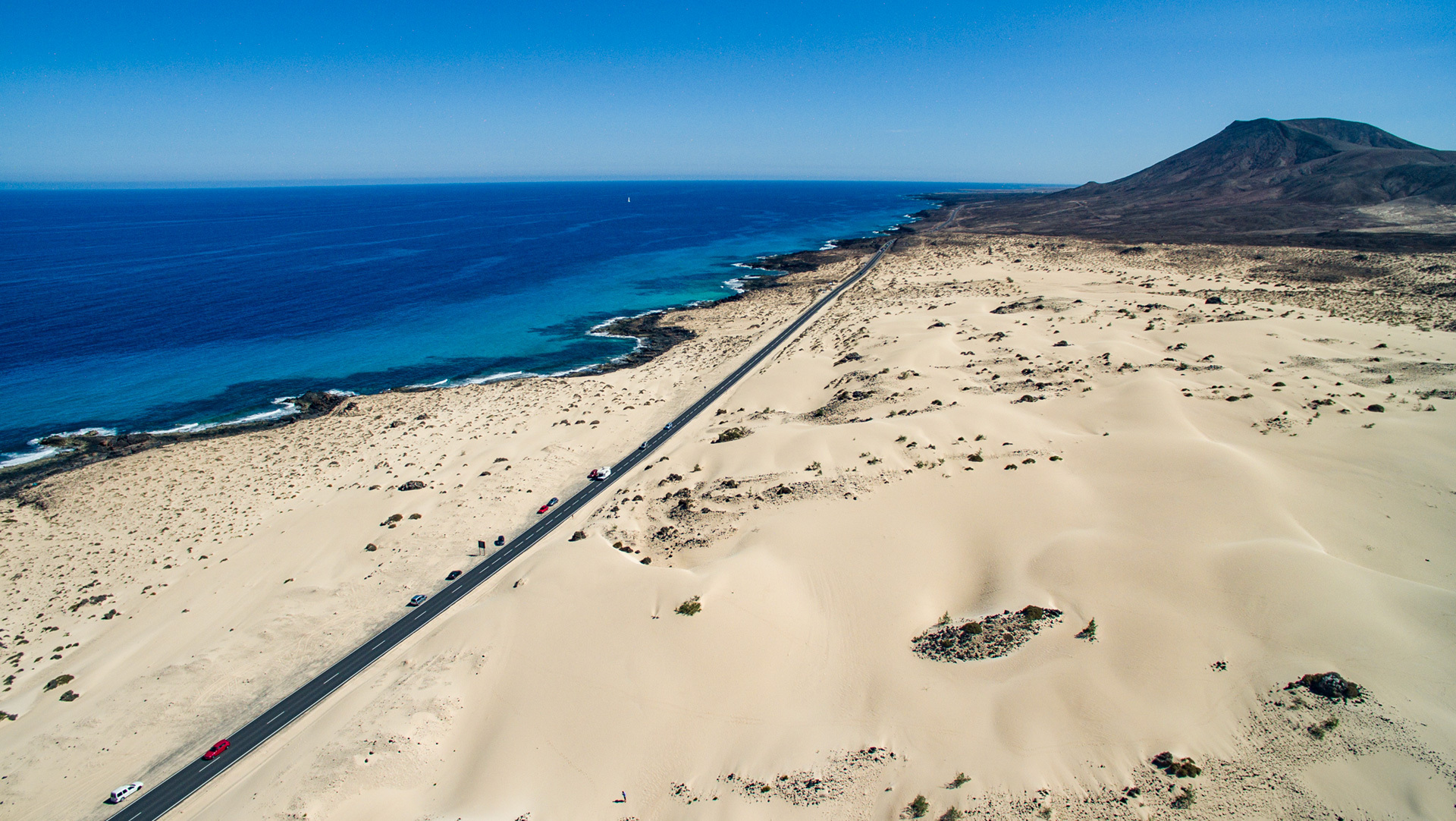
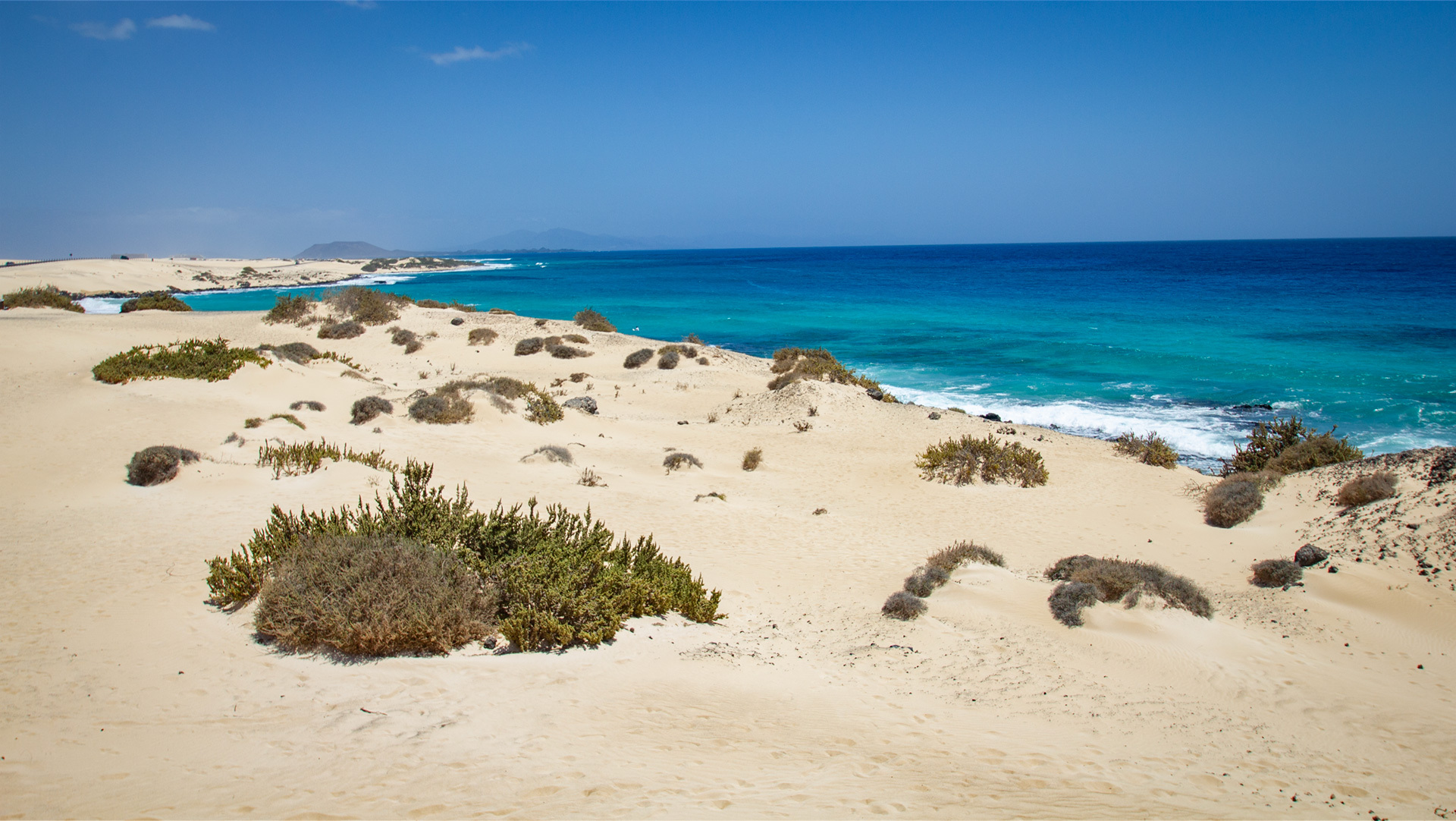
Heading north on the FV-1, along the east coast – and then the north’s most iconic scenery opens up. The El Jable dune landscape, protected since 1982 as the Parque Natural de las Dunas de Corralejo, is no ordinary landscape. It is a Sahara on the Atlantic.
The shifting dunes of Fuerteventura really do shift: slowly, steadily, inexorably. Nestled between them are the sandy beaches of Corralejo – expansive, calm, with clear views of Los Lobos and Lanzarote on the horizon in fine weather.
Swimming? Absolutely. The beaches along the nature reserve are among the finest dream beaches on Fuerteventura.
However: Driving is permitted exclusively on the FV-1. Park at the roadside and walk the rest. Environmental violations are consistently penalised – and rightly so. Those who enter the dunes enter a world heritage site.
Back in Corralejo – The Map is Full
The dunes gently guide you back to Corralejo, where this day began. The engine falls silent. 130 kilometres, a full day, countless impressions.
Rugged coasts. Quiet villages. Tracks that lead to nowhere – and to something greater. Baroque behind weathered facades. Fish with a sea view. Dunes in the last light.
The north of Fuerteventura is no spectacle for the impatient. It is a reward for the curious. For all those willing to drive a little slower – and look a little closer.