Monumento Natural de Ajuy: Where Fuerteventura’s Ancient Rock Rises from the Sea
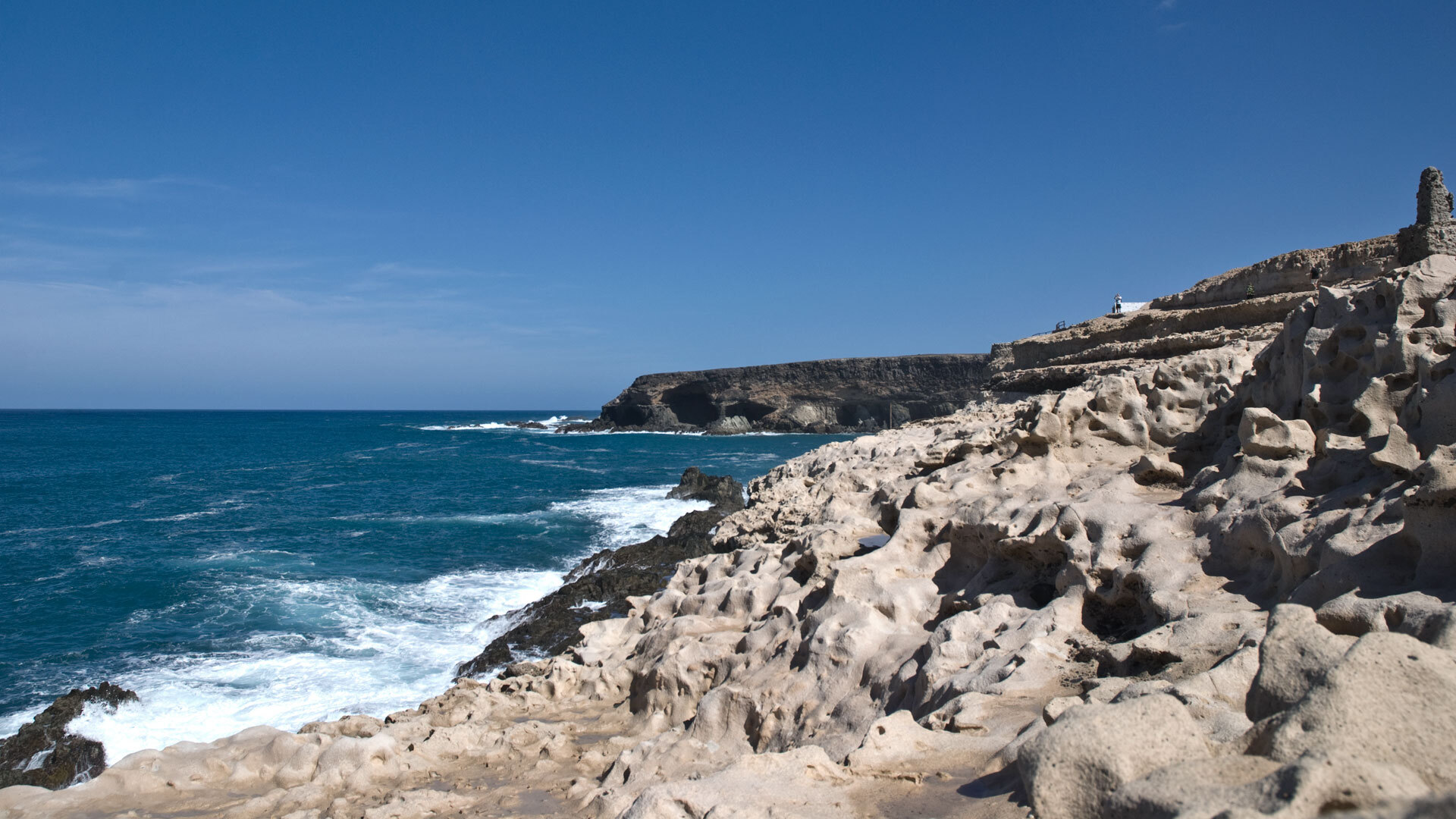
On the central west coast of Fuerteventura, where a broad valley opens out towards the Atlantic, lies a place whose significance is not immediately apparent. Ajuy – a handful of fishermen’s cottages, black sand, the roar of the surf. But those who pause here and turn their gaze to the cliffs are looking at something older than the island itself. Older than the entire Canary Islands. The Monumento Natural de Ajuy is no ordinary nature reserve. It is a window into an Earth history that began some 120 million years ago.
A Village Between Fishing and Eternity
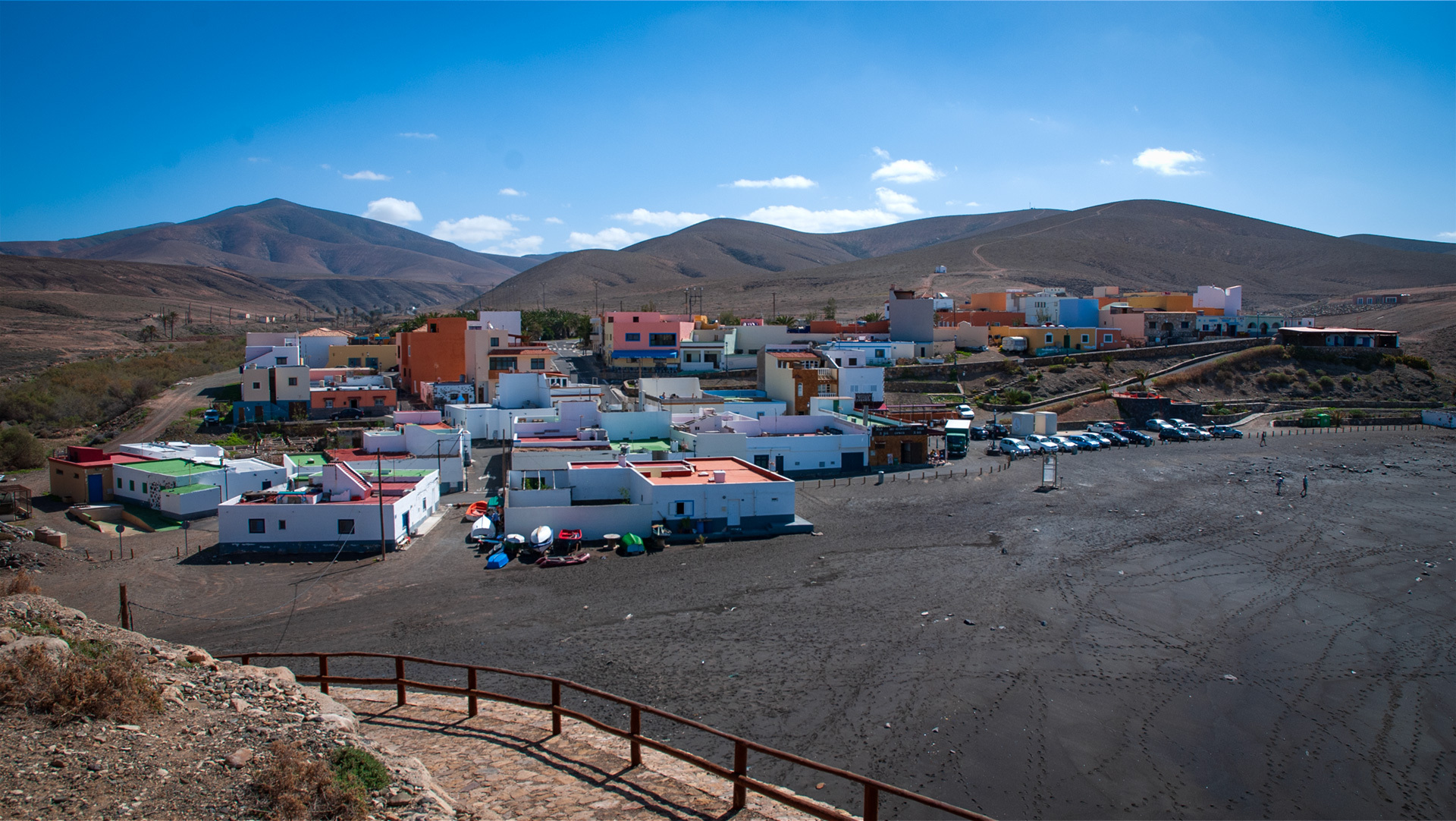
Ajuy belongs to the municipality of Pájara and is reached via the FV-621 road. Those visiting the village for the first time immediately sense the calm that belongs to places the sea and time have gently taken out of service. The small whitewashed fishermen’s cottages still stand just as they always have. And the fishermen are still active – especially during the summer months, when the Atlantic breathes more gently and the boats rest on the beach or rock on the water.
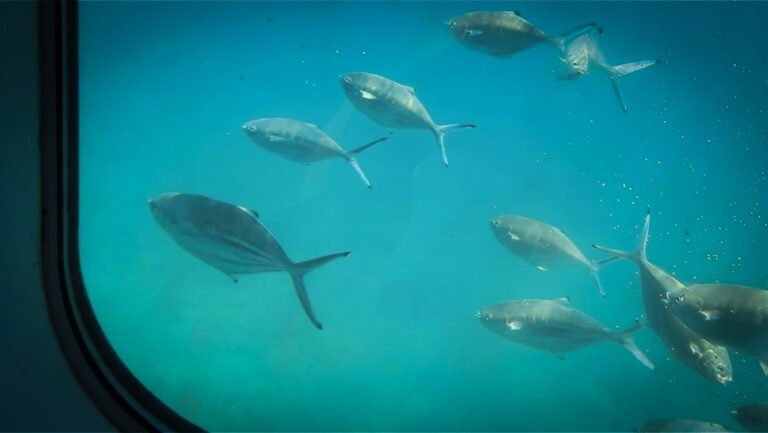
The coastline off Ajuy is considered exceptionally rich in fish. The abundant marine fauna along Fuerteventura’s west coast draws anglers from across the island. What is today a quiet fishing village was once of considerable strategic importance: Ajuy served as Puerto de La Peña, the harbour of the old island capital Betancuria. The place was the gateway to the island – and the limestone quarried here was its most significant export.
Doubly Protected: Natural Monument and Nature Park
The Monumento Natural de Ajuy is a protected natural landscape that simultaneously forms part of the Parque Natural de Betancuria – giving the region a double layer of protection. And rightly so. What erosion has laid bare here is geologically unique: a complex of sedimentary, igneous and volcanic materials that is rarely observable in such completeness.
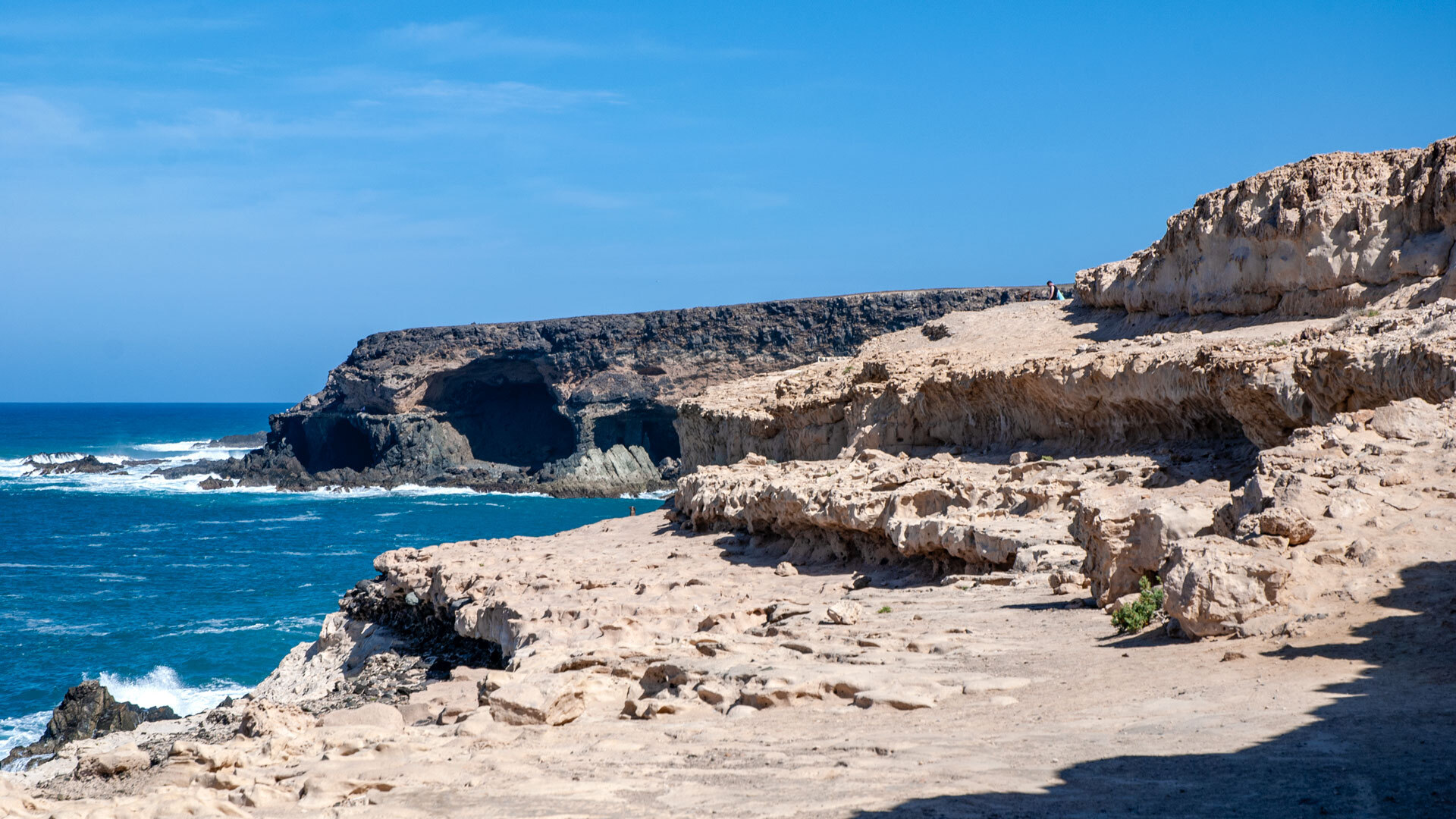
The limestone sediments of Ajuy date from the Cretaceous period. This means: the rock is at least 65 million, and in some places up to 120 million years old – formed long before the Canary Islands themselves came into being. These rocks are not Fuerteventura. They are older than Fuerteventura.
How the Ancient Rock Rose from the Sea
The fact that this rock, millions of years old, can be observed at the surface today is thanks to a geological process that is just as dramatic in its silence as a volcanic eruption – only slower. Beneath the seabed exist salt-bearing layers which are pushed upward by tectonic pressure. They force their way through cracks in the rock, lifting the layers above them as they rise.
Over the course of Earth’s history, the sedimentary rocks of Ajuy were thus raised above the waterline through tectonic uplift processes. What was once the ocean floor became cliff. What lay in darkness was given over to the light. Wind, waves and salt did the rest – and created the landscape one gazes upon in wonder today from the Mirador de Ajuy.
The Caves of Ajuy: Sculptures Carved by Surf and Time
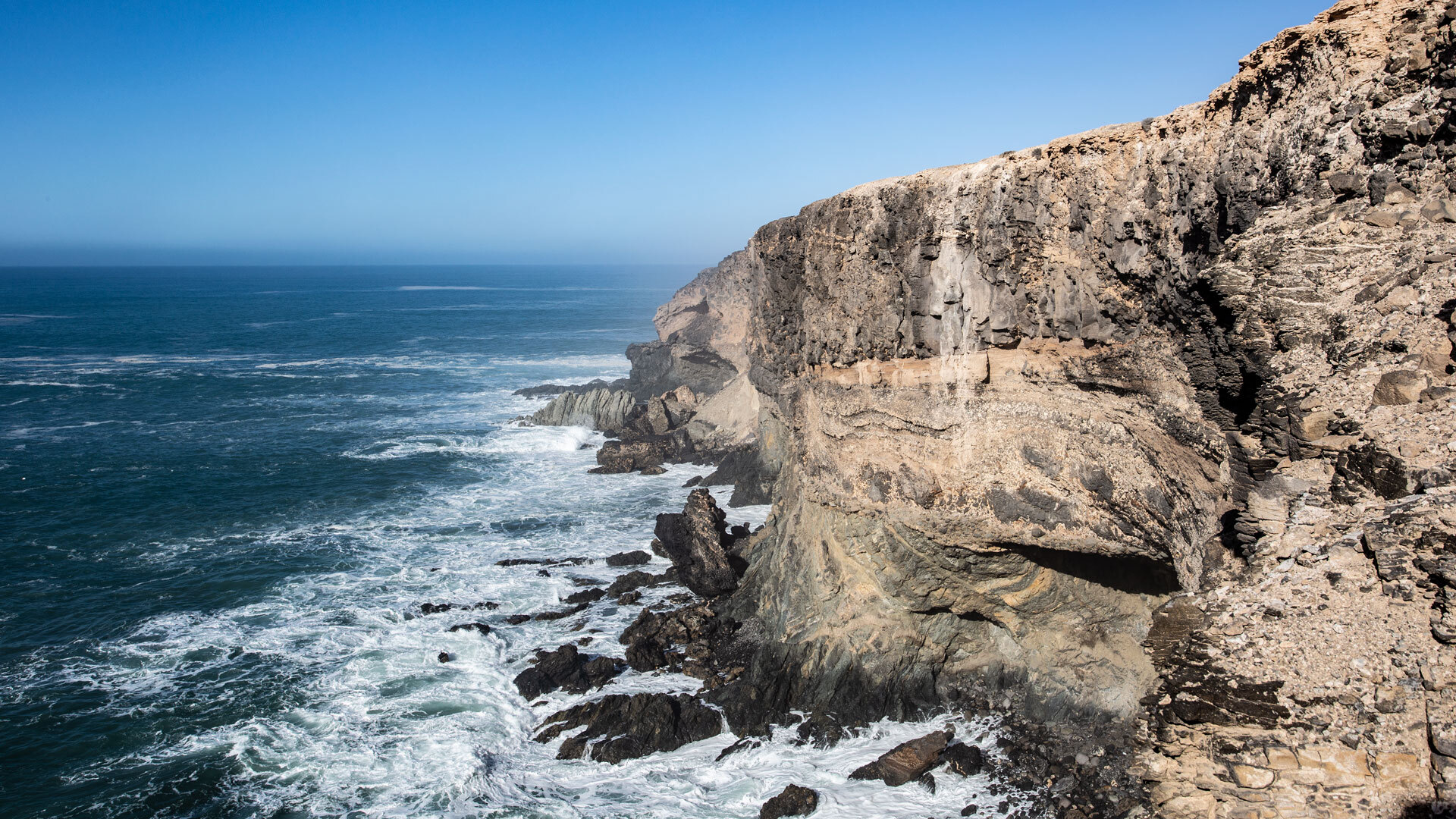
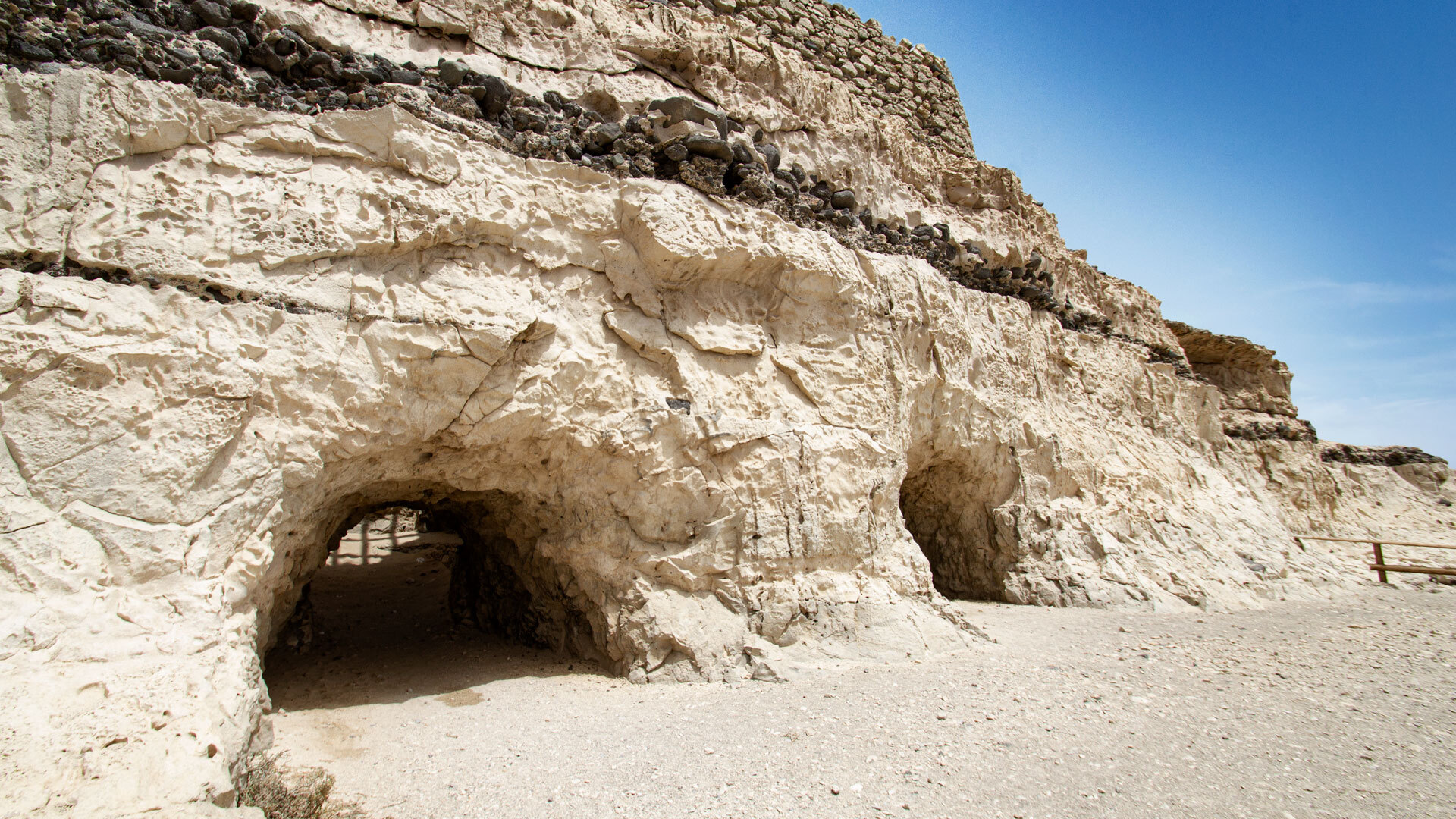
To the north of the village, at the black-sand Caleta Negra, the surf has over millennia accomplished work that no sculptor could surpass. The Cuevas de Ajuy – the caves of Ajuy – are bizarre, fascinating cavities carved by erosion and sea combined. They form part of the Ajuy Natural Monument and some of them can be entered and explored.
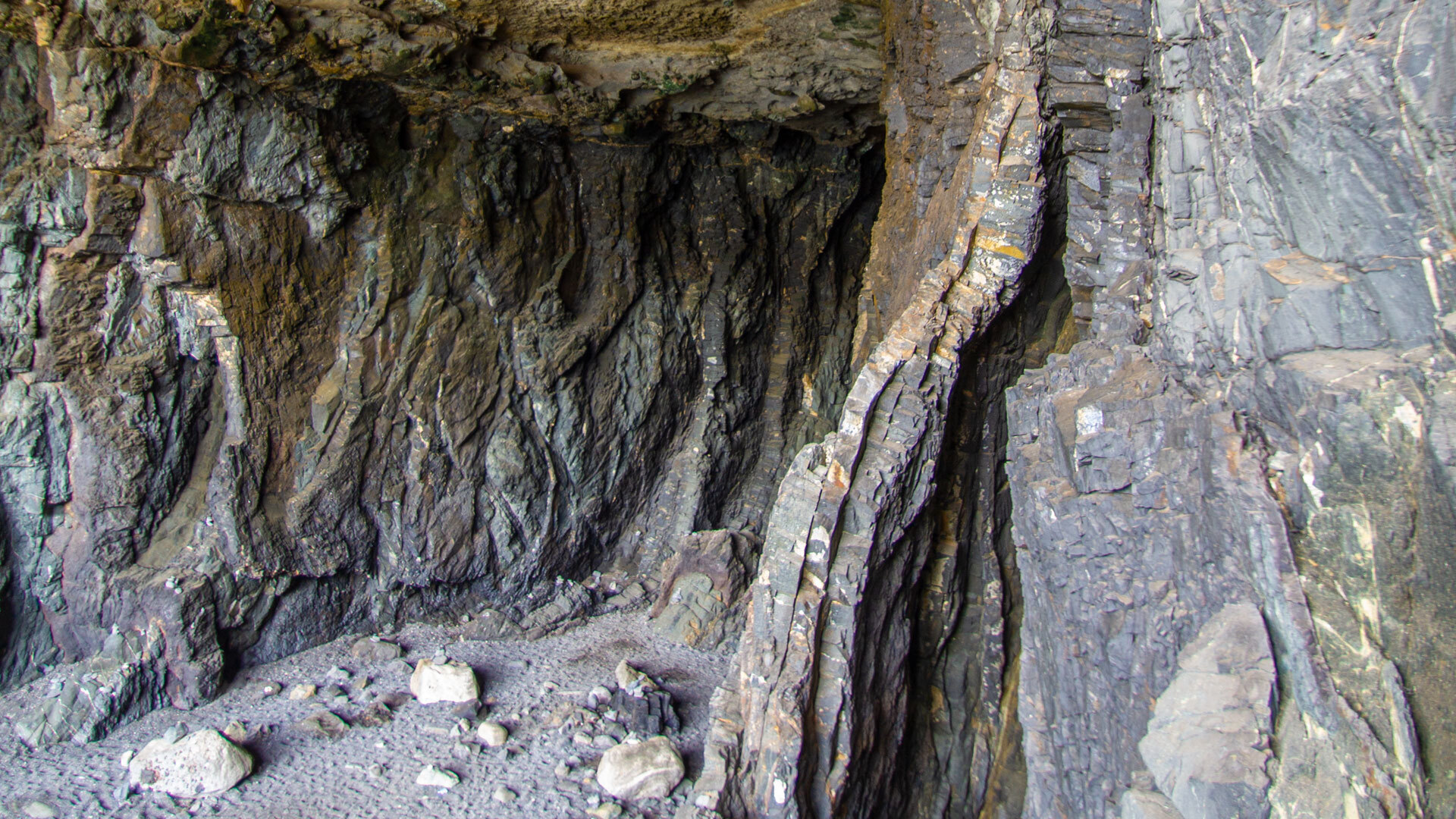
You step inside and find yourself in the interior of the island – in rock older than most living creatures on this planet. The walls glisten with moisture, and outside the surf thunders. It is an experience not easily put into words.
Limestone as a Commodity: The Old Lime Kilns of Ajuy
Until the 19th century, the limestone of Ajuy was not only a geological wonder but a tangible economic commodity. Owing to its purity, it was quarried, burnt on site and shipped to neighbouring islands. In the 18th century, the harbour facility El Puertito was constructed next to the quarry to enable the prized lime to be transported by sea.
The old lime kilns to the north of Ajuy are still visible today – as shafts sunk into the ground, silent and unassuming, yet rich in history. One of them was still in operation at the beginning of the 20th century. From the Mirador de Ajuy, a multi-tiered rock terrace above the cliffs, one can survey the remains of this former industrial and harbour facility.
From the middle level of the viewpoint, lateral openings in the rock face are visible on the shafts – through these the kiln was fired and through these the finished burnt lime was removed. A simple, archaic technique that endured for centuries.
Hiking in the Natural Monument: Two Coastal Routes You Will Never Forget
Ajuy is not merely a destination – it is also a starting point. For walkers, two of the finest coastal walks on Fuerteventura begin here.
Coastal circular walk Ajuy – Playa de la Solapa This moderate circuit covers around 11.5 kilometres and leads along breathtaking cliff scenery. You walk along rocky paths, look down into coves and caves, and feel the Atlantic wind on your face. The coastal walk at Ajuy is among the most impressive experiences the west coast of Fuerteventura has to offer.
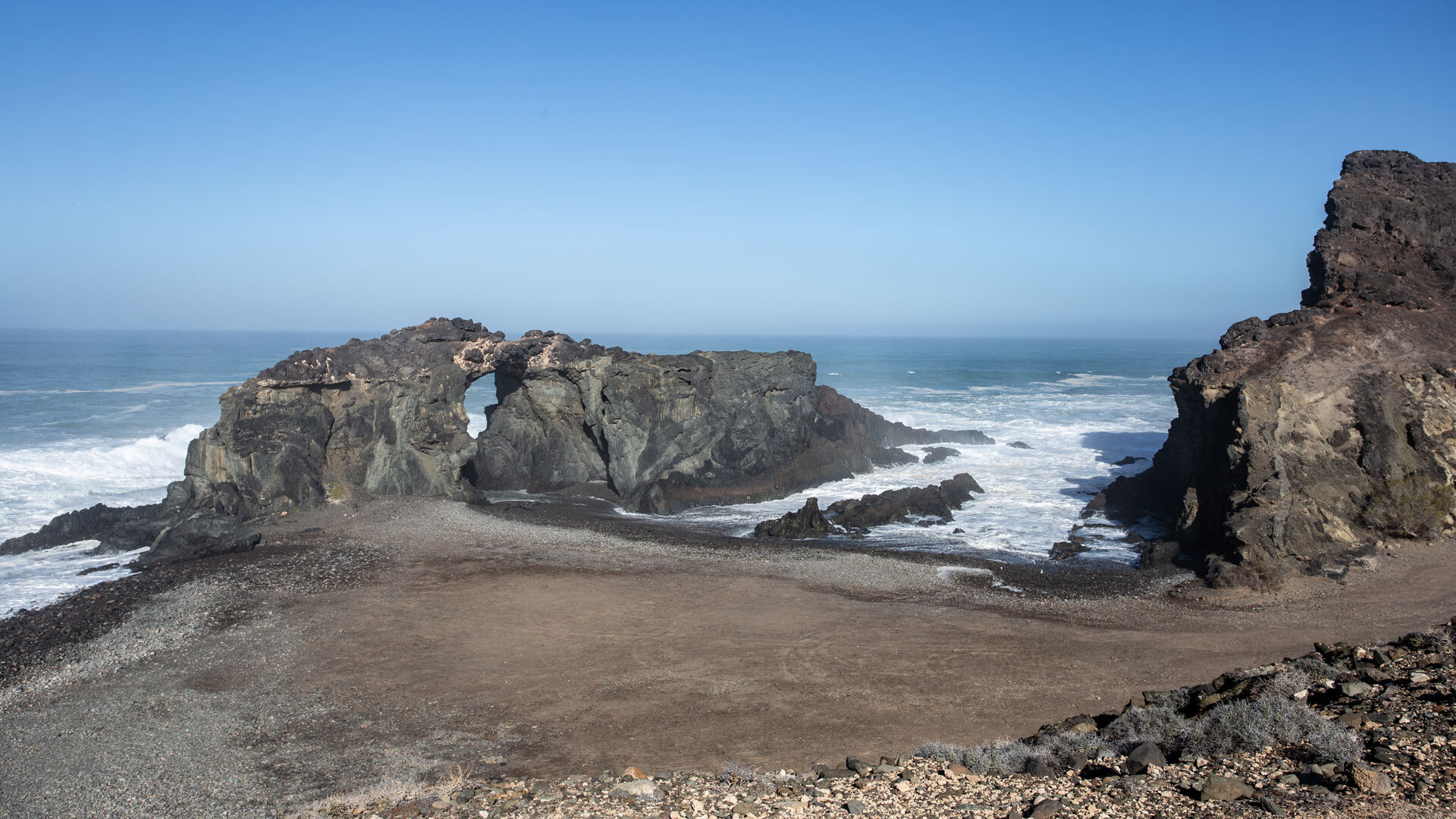
Walk to the Arco del Jurado Those wishing to explore the Monumento Natural de Ajuy over approximately five kilometres should take the path to the rock arch Arco del Jurado. This route is shorter, but no less impressive. The natural rock arch at the end of the trail is an image you will not forget – as though nature had set a frame here to direct the eye towards the open sea.
Playa de los Muertos: Black Sand at the Edge of Time
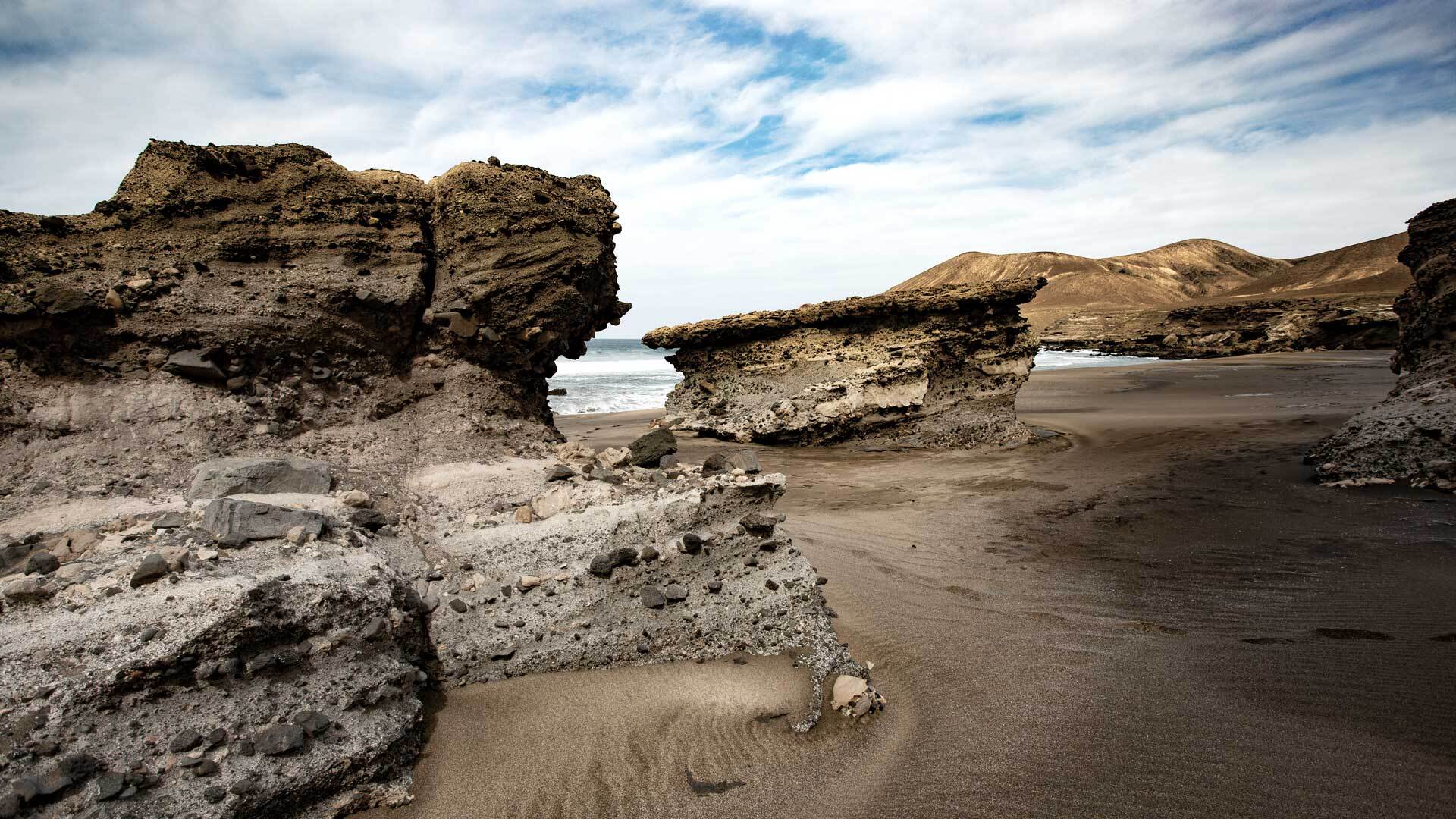
To the north of the Playa de los Muertos lies the unique rock formation that has given the natural monument its reputation. The black sand, the dark cliffs, the waves – the beach has something primeval about it that befits the geological character of the entire region. It is not a bathing beach for leisurely holidaymakers. It is a place for wonder, for reflection, for understanding just how young we are as a species on this planet.
Conclusion: Ajuy – A Place That Shifts Your Perspective
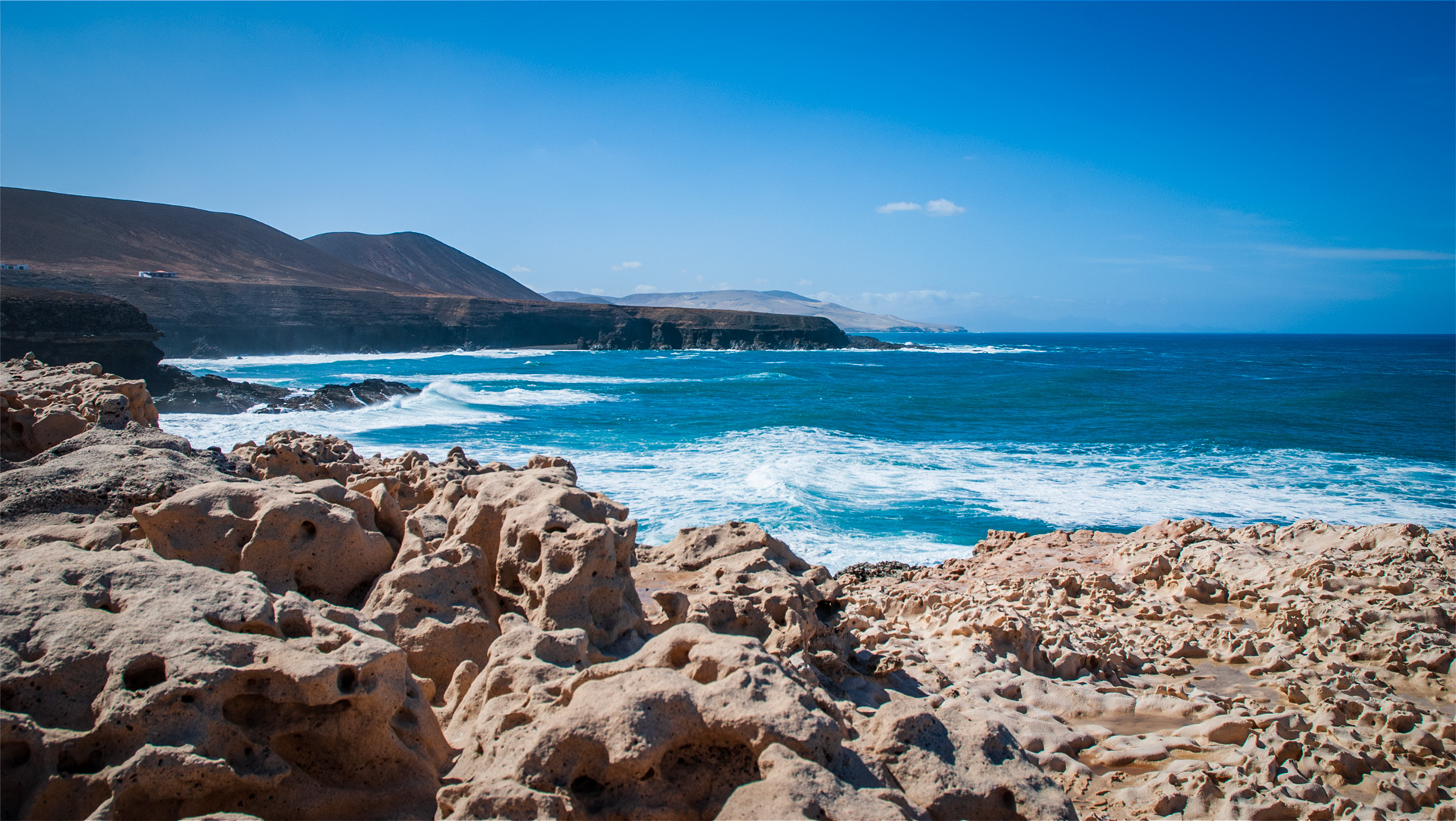
Those who know Fuerteventura only as an island of white sandy beaches should make the trip to Ajuy. Here the island is different – rawer, quieter, deeper. The Monumento Natural de Ajuy is no tourist spectacle, but a genuine encounter with Earth’s history. You stand before rocks older than anything we know, and understand: this island has layers that cannot be unlocked in a single day at the beach.
The double protected status as a natural monument and part of the Parque Natural de Betancuria is no bureaucratic act – it is a promise. A promise that this place will remain as it is. Ancient. Steadfast. Unforgettable.