Parque Natural Islote de Lobos – Where Time Stands Still at the Edge of the Atlantic
There are places that stubbornly resist the world. Places that know no hotel lobby, no beach bar, no noise. The Islote de Lobos – officially known as the Parque Natural Islote de Lobos – is one such place. A small, almost forgotten islet in the La Bocaina Strait between Fuerteventura and Lanzarote, barely larger than the reach of a long walk, yet possessed of a vastness that takes your breath away.
Those who arrive here breathe differently. Slower. Deeper.
An Island on the Edge of Two Worlds
The island of Los Lobos lies at 28° 45’ 0 N and 13° 49’ 16 W, just two kilometres from the northern coast of Fuerteventura, yet it feels like another dimension entirely. With an area of 4.679 square kilometres and a coastline of 13.7 kilometres, it is small enough to explore in a single day – and large enough to get lost in.
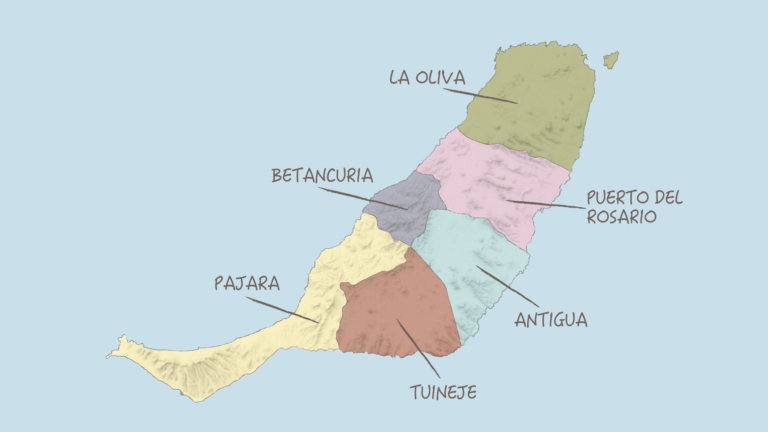
The nature reserve is administered by the municipality of La Oliva (Fuerteventura). The island has been under nature protection since 1982; since 1994 it has officially carried the designation Parque Natural del Islote de Lobos. The European Union has since also designated the islet as a Special Protection Area for Birds – an accolade as unassuming as the island itself.
There are no cars here. No roads, no engines, no tarmac. Only wind, lava rock and the sound of the Atlantic.
Volcanic Origins: How Los Lobos Was Formed
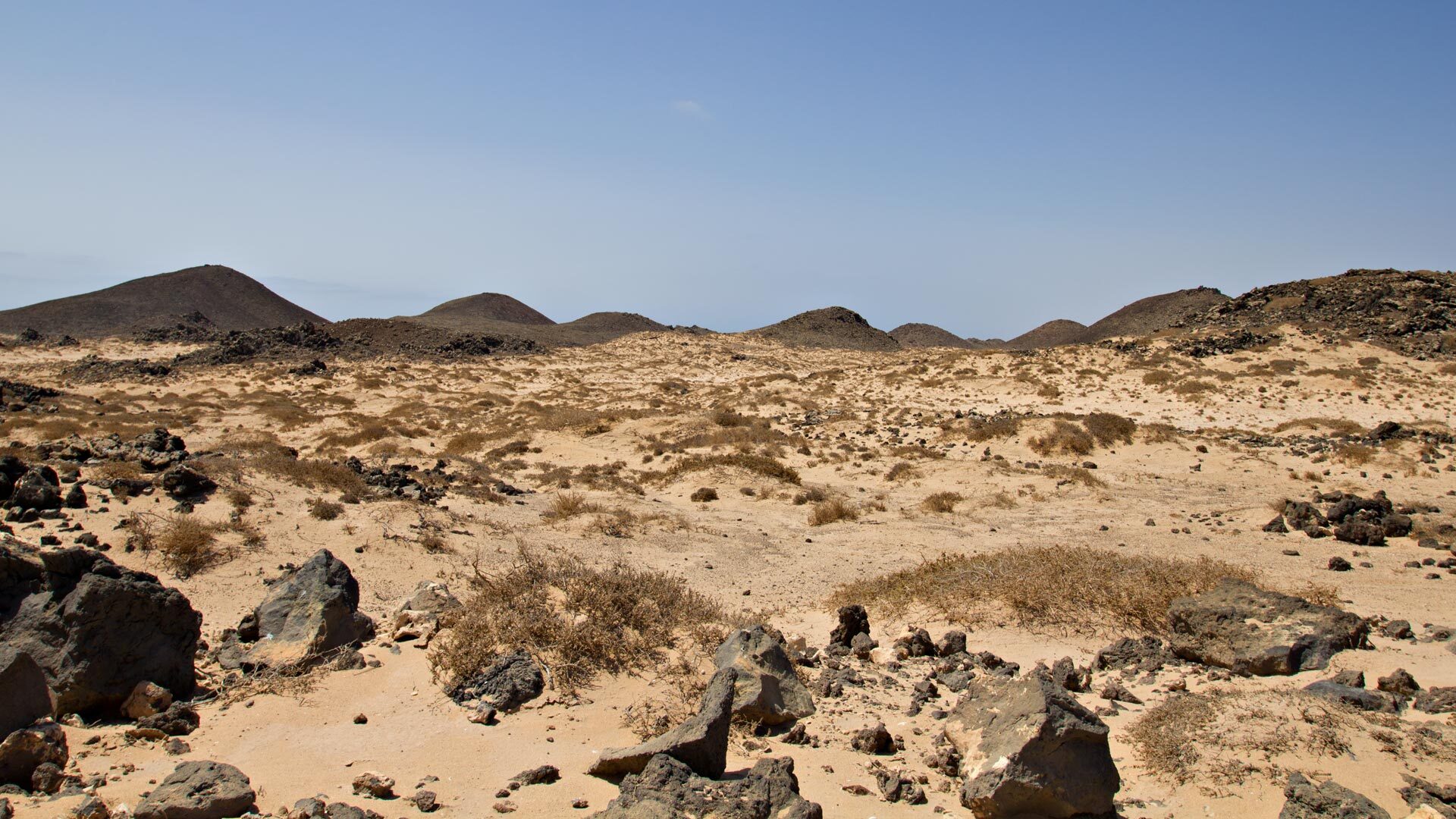
Geologists agree: Los Lobos was once part of Fuerteventura. Around 6,000 to 8,000 years ago, a volcanic-driven rise in sea level submerged the land, separating the small islet from its large neighbour for ever. What remained is a volcanic landscape of solidified lava, flat plains and a few distinctive peaks.
The most striking testimony to this ancient past is the volcanic crater Montaña de Lobos, rising to 130 metres – a silent giant amid a silent island. Those who climb it look out upon a world that seems barely to have changed.
The Name and Its History: Between Seals and Pirates
Los Lobos means ‘wolves’ – though these were not land predators. The name derives from the monk seals that once lived on the islet in great numbers. In the 15th century, these rare creatures were plentiful along the island’s rocky shores. Yet within roughly 100 years of its naming, the species had been wiped out on Los Lobos: the seals’ precious pelts were used for making shoes – a sad chapter shared by many coastal islands.
Yet Los Lobos knew more than seals. The islet also served as a hideout for pirates who lay in wait for prey in the treacherous La Bocaina Strait. Between lava and surf lies a history you cannot see – but can feel.
Getting There: By Boat from Corralejo to Los Lobos
Those wishing to visit the Parque Natural Islote de Lobos begin their journey in Corralejo in the north of Fuerteventura. From there, boats run daily to the island’s harbour – the crossing takes around 20 minutes and usually departs in the morning. The return trip typically runs in the late afternoon.
Those lucky enough to catch a glass-bottomed boat will experience the crossing as a foretaste of what the island has in store: for even on the way over, the underwater world of the La Bocaina Strait reveals itself in all its beauty – crystal-clear water, fish, silence beneath the surface.
Nature at Its Purest: Flora, Fauna and the Island’s Climate
The Los Lobos nature reserve is no museum. It is alive. Around 130 plant species defy the dry, windy climate of the islet – a climate classified as semi-arid, with average annual temperatures of around 18°C. The trade wind is a constant companion, and from November to January rain is by no means unusual.
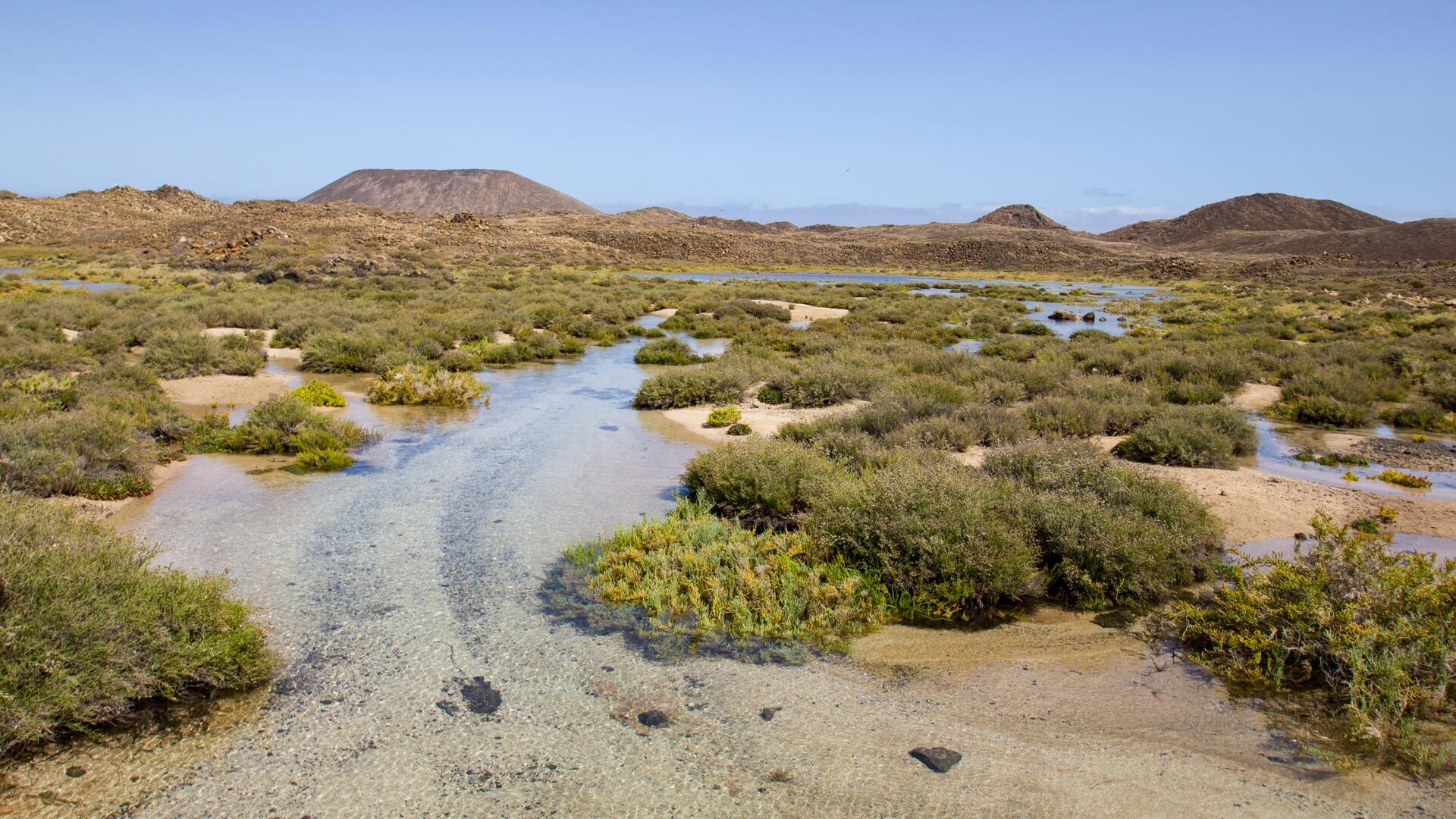
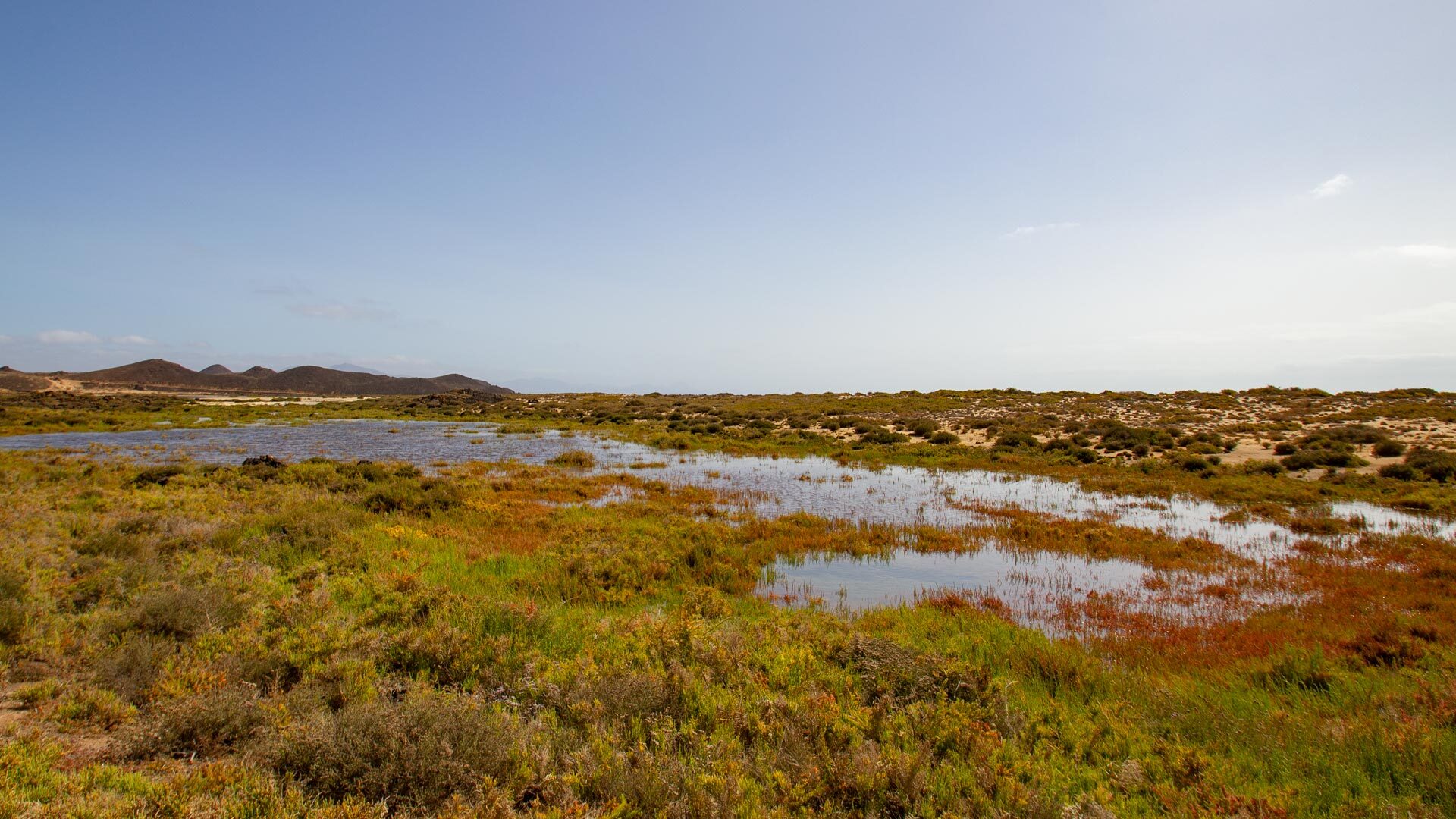
Yet the true residents of the islet are its birds. Los Lobos is a significant bird sanctuary in the Canary Islands. Along the Las Lagunas salt marshes on the western side of the island, you may encounter Cory’s shearwaters, storm petrels, Bulwer’s petrels and occasionally the osprey – species that make the islet a paradise for birdwatchers.
Those who wander attentively through the lava fields may also encounter one of the shy lizards or geckos basking on the rocks. Or a rabbit slipping silently into the undergrowth.
The Fishing Village of El Puertito: Where Time Has Stopped Counting
In the 1980s, the last permanent residents left Los Lobos. What remained is El Puertito – the island’s only village, a handful of old fishing huts that come back to life on some weekends. Fishermen who once lived here have turned their homes into small holiday cottages and return when everyday life allows.
El Puertito has a small bar-restaurant that caters to day visitors – the only place on the island where you can get something to eat or drink. The food is simple, the atmosphere relaxed, the view over the bay unforgettable.
El Puertito, the former fishing village on Los Lobos
The Circular Walk on Los Lobos
Los Lobos is best explored on foot. The circular route covers approximately 14 kilometres and can be completed in around 3.5 to 4 hours – depending on pace and the inclination to linger. It begins at the harbour, the small jetty on the eastern side of the island.
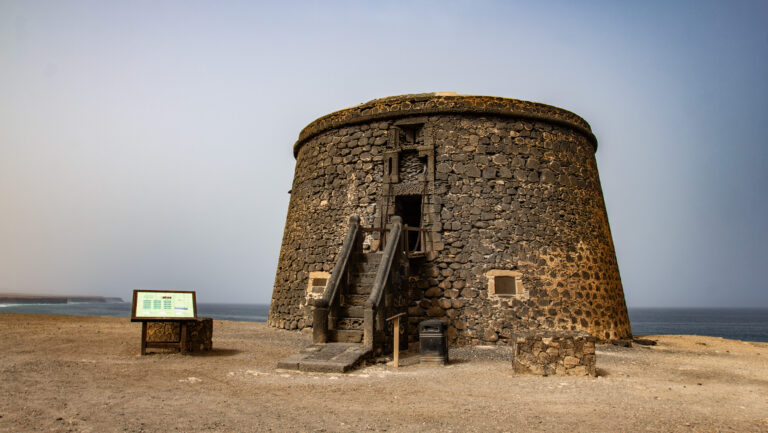
The first stage passes the lighthouse (Faro de Mariano Lobos), which has been in operation since 1865 – a quiet symbol of the long history of this coastline. The route continues along the north-west coast, where Atlantic waves strike the black lava unimpeded.
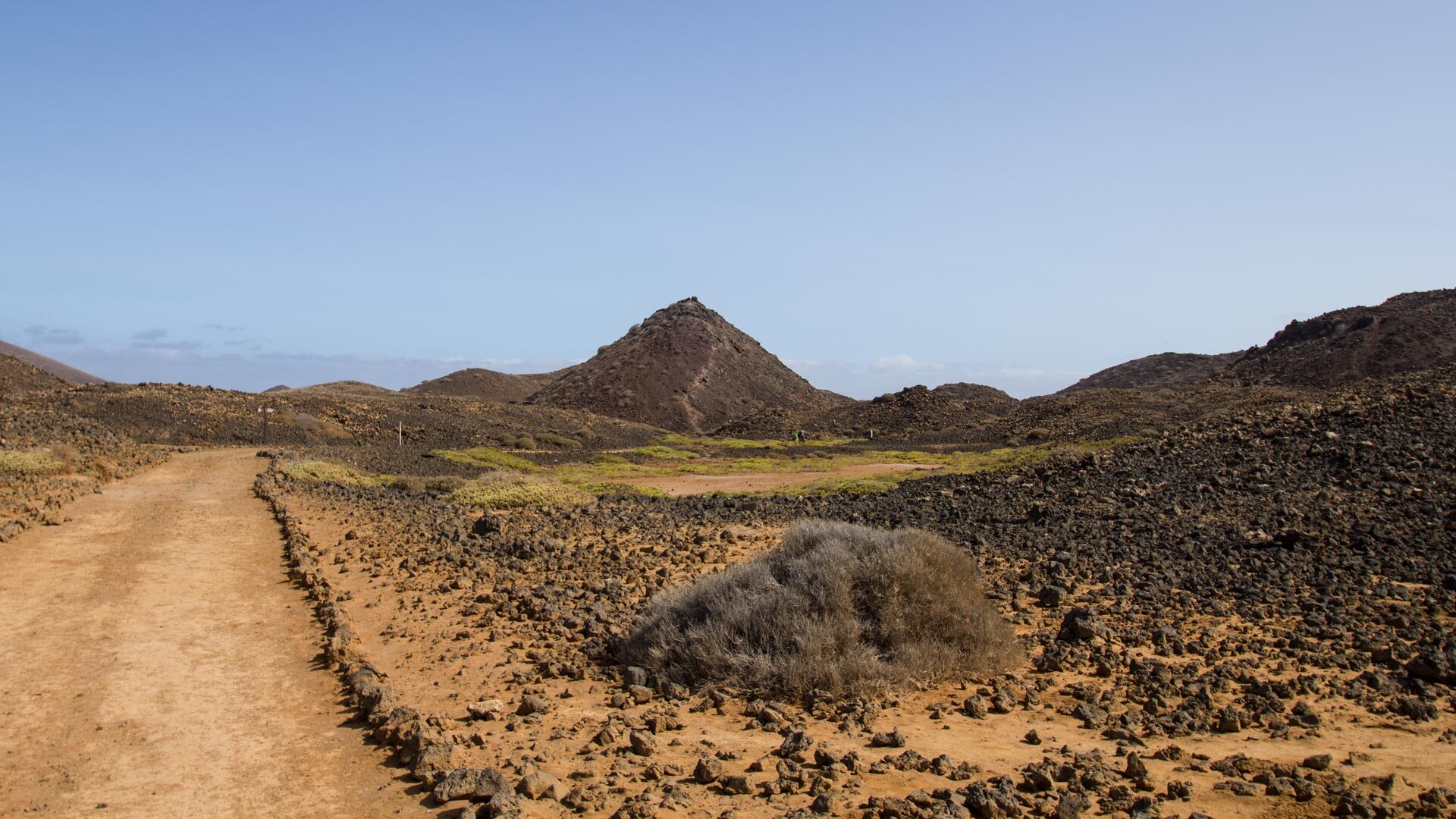
After a further 30 minutes, the ascent of the volcanic crater Montaña de Lobos begins. The roughly 15-minute climb rewards with a panoramic view that burns itself into the memory: lava, sea, islands – a silence that is somehow loud.
The descent continues to Playa Las Conchas, one of the most beautiful and unspoilt beaches in the Canary Islands, before the route ends back at the harbour after roughly a kilometre.
Important: Sturdy footwear and sufficient water and provisions are essential for this walk.
Playa Las Conchas: Swimming Between Lava and the Atlantic
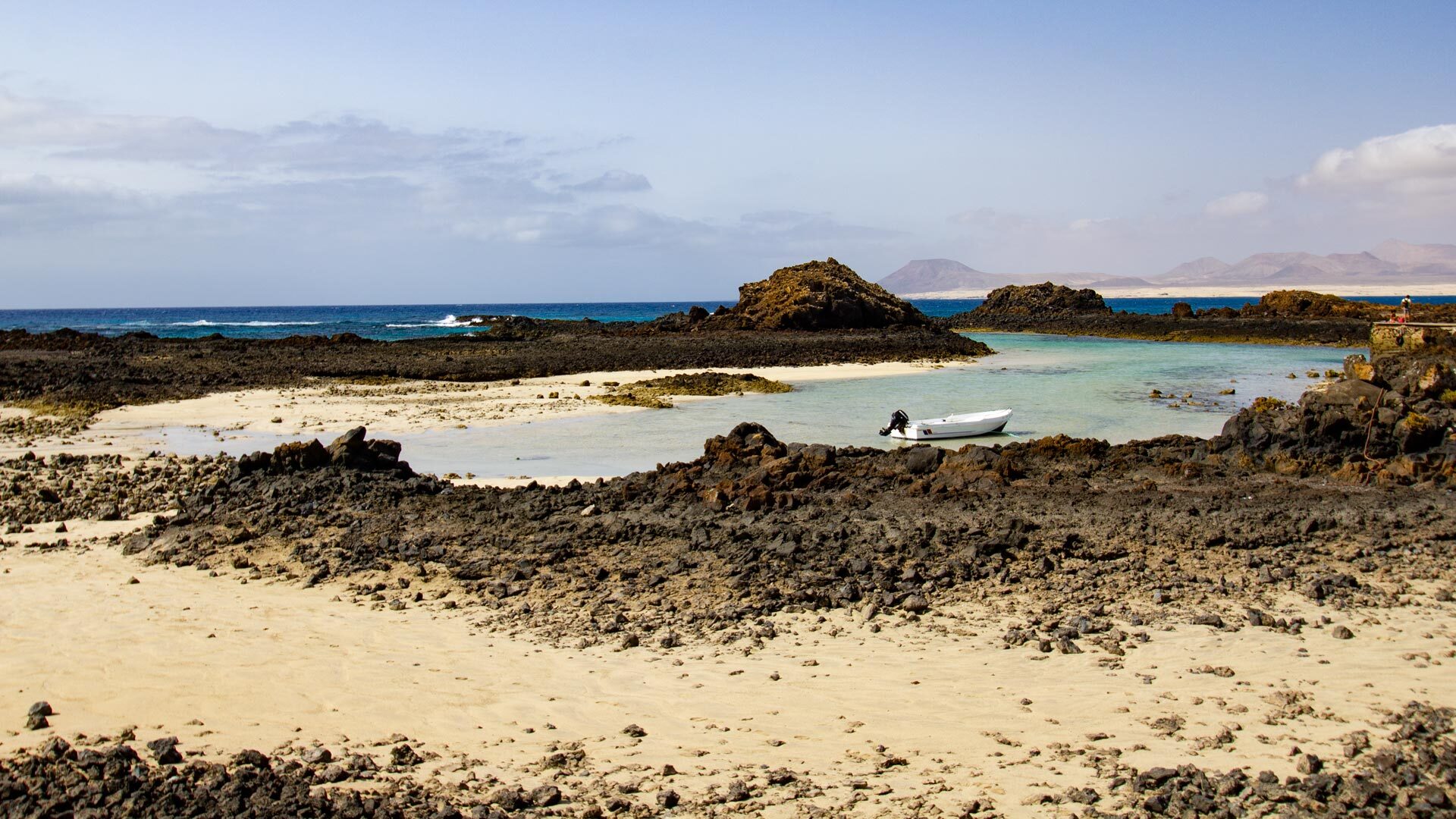
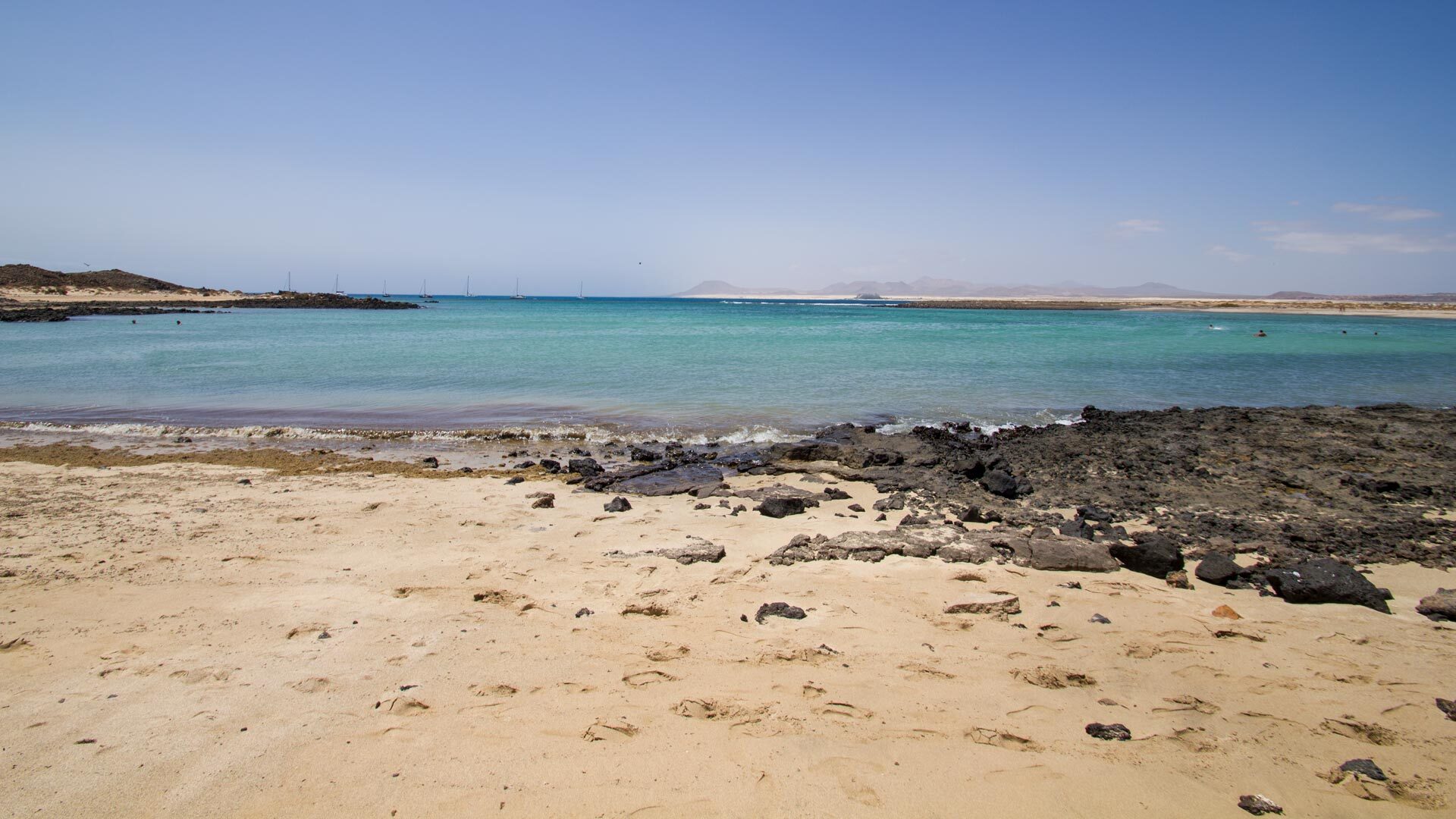
Playa Las Conchas is regarded as one of the most spectacular bays in the entire region. Nestled in volcanic rock and framed by black lava and turquoise water, it invites a swim quite unlike any other beach experience. The atmosphere is pristine, the scenery dramatically beautiful.
Lying in the water here and closing your eyes, you hear only the sea. No music, no laughter from a pool bar, no announcements. Just wind and waves.
Diving in the La Bocaina Strait
Beneath the surface of the La Bocaina Strait lies another world. The waters around Los Lobos are considered a premier diving destination in the Canary Islands. Barracudas, dusky groupers and colourful parrotfish glide through the blue – and those who dive deeper discover intricate cave systems that never cease to astonish even experienced divers.
The nature reserve protects this abundance. And that is precisely why it still exists.
Camping on Los Lobos
Anyone wishing to experience the sunset on Los Lobos can spend the night on the island. Near the harbour there is a designated camping area where tents may be pitched freely. Camping outside this area is strictly prohibited – the natural park tolerates no exceptions.
Those who stay experience how the island transforms once the day visitors have left: emptier, quieter, more primal. The night sky over Los Lobos then belongs to you alone.
Conservation First: Respect for the Ecosystem
Parts of the island are nature reserve and may not be entered. Those visiting the Parque Natural Islote de Lobos would do well to follow the rules – not out of obligation, but out of an understanding that this unspoilt world exists only because people respect it.
Los Lobos is not a leisure park. It is a place that wants to be preserved.
Conclusion: Why the Islote de Lobos Is a Must
Anyone who travels to Fuerteventura and skips Los Lobos misses the quietest, most unspoilt and perhaps most honest thing this region has to offer. An island without cars, without bustle, without mass tourism – instead with volcanic craters, pristine beaches, seabirds and a lighthouse that has gazed out to sea for over 160 years.
You do not need to be a nature enthusiast to find happiness here. You only need to be willing to slow down.