Fuerteventura: More Than Sand & Surf – The Island Nobody Really Knows
The Island Behind the Hype
Fuerteventura is far more than a postcard subject. Those who look deeper than the horizon discover a cosmopolitan, growing community – with a clear structure, a diverse population and an economy that is reinventing itself.
Administration: Six Municipalities, One Island
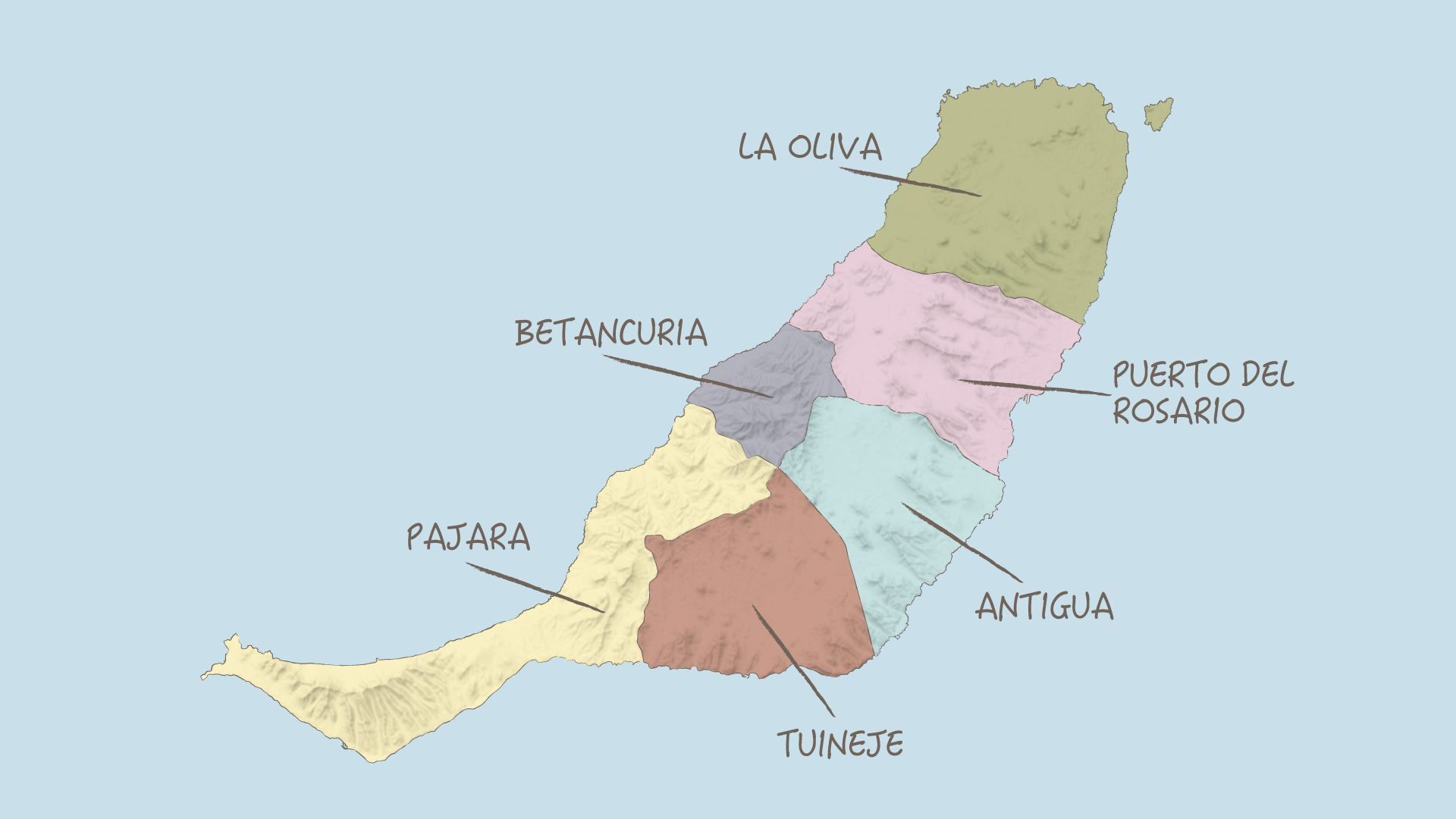
The political centre is Puerto del Rosario – home of the Cabildo Insular, the island government, and with approximately 43,000 inhabitants the undisputed largest city. Fuerteventura belongs to the Spanish province of Las Palmas, is part of the Comunidad Autónoma de Canarias – and therefore right in the middle of the EU.
The island is divided into six municipalities, from urban to tiny:
| Municipality | Inhabitants (approx.) | Highlights |
|---|---|---|
| Puerto del Rosario | 43,000 | Capital, Cabildo Insular |
| La Oliva | 29,000 | Corralejo, Los Lobos Island |
| Pájara | 21,000 | Costa Calma, Morro Jable |
| Tuineje | 16,000 | Gran Tarajal |
| Antigua | 13,000 | Caleta de Fuste |
| Betancuria | 800 | Oldest town, almost an open-air museum |
Population: 127,000 People – and Hardly Anyone Is from Here
At the turn of 2024/2025, an official 127,043 people were living on the island – a figure that has been rising sharply for decades. Since 1980, Fuerteventura’s population has simply quadrupled. With only 62 inhabitants per square kilometre, the second-largest Canary Island nonetheless remains vast, open and uncrowded.
The surprising fact: According to ISTAC (the Canarian Institute of Statistics), only 33.4% of residents were actually born on Fuerteventura. The rest? Newcomers – from Spain, Europe, Latin America and beyond.
70.4% hold Spanish citizenship. ~90% identify as Roman Catholic – visible in the vibrant festival culture surrounding the local patron saints.
The Largest Foreign Communities (2024)
| Nationality | Share (approx.) | Where They Live |
|---|---|---|
| 🇮🇹 Italy | 19–22 % | Corralejo, Puerto del Rosario |
| 🇩🇪 Germany | 12–15 % | Pájara, Costa Calma, Morro Jable |
| 🇬🇧 United Kingdom | 10–12 % | Caleta de Fuste, Corralejo |
| 🇲🇦 Morocco | 8–10 % | Puerto del Rosario, Gran Tarajal |
| 🇨🇴 Colombia | 5–7 % | Growing, island-wide |
| 🇻🇪 Venezuela | 4–6 % | Strong historical ties to the Canary Islands |
Trend Check 2026: Italians are the new number 1 – they have overtaken Germans and Britons on the eastern Canary Islands. Latin American communities are growing rapidly.
Infrastructure: Getting There Is Easier Than You Think
Fuerteventura Airport
As early as 2015, over 5 million passengers passed through Aeropuerto de Fuerteventura in Puerto del Rosario. Today, Ryanair, TUI, Condor & Co. fly to the island year-round. Regional connections maintain links to the other Canary Islands.
Ports & Ferries
Three main ports: Corralejo, Puerto del Rosario, Morro Jable (+ Gran Tarajal). The most important connections:
| Route | Company | Frequency | Price (approx.) |
|---|---|---|---|
| Cádiz → Las Palmas (Gran Canaria) | Acciona Trasmediterránea | 1× / week | — |
| Las Palmas → Morro Jable | Naviera Armas | daily | — |
| Morro Jable ↔︎ Santa Cruz de Tenerife | Naviera Armas | daily | — |
| Playa Blanca (Lanzarote) ↔︎ Corralejo | Naviera Armas / Fred. Olsen | several times daily | ~€20 p.p. / ~€47 with car |
For a day trip to the island of Los Lobos, there are boat tours – some in glass-bottomed boats through the fascinating underwater world. Departure in the morning, return in the afternoon.
Roads: FV-1 & FV-2
From Puerto del Rosario, two coastal motorways open up the island: the FV-1 heading north to Corralejo, the FV-2 heading south to Jandía. Both offer breathtaking coastal panoramas – road-trip feeling guaranteed.
Economy: Tourism Monoculture with a Green Twist
Over 80% of the island’s GDP depends directly or indirectly on tourism. With 2.2 to 2.5 million visitors per year and currently on course for records, this is no surprise.
Who Comes – and Why
| Country | Market Share | Number/Year (approx.) | Favourite Region |
|---|---|---|---|
| 🇩🇪 Germany | 38–42 % | ~950,000 | South (Jandía, Costa Calma) |
| 🇬🇧 United Kingdom | 25–28 % | ~630,000 | Centre/North (Caleta de Fuste, Corralejo) |
| 🇪🇸 Spain (Mainland) | 10–12 % | ~250,000 | Puerto del Rosario, Corralejo |
| 🇮🇹 Italy | 5–7 % | ~140,000 | North (Corralejo) |
| 🇫🇷 France | 4–5 % | ~100,000 | Costa Calma, Corralejo |
| 🇳🇱🇧🇪 Netherlands/Belgium | 3–4 % | ~80,000 | Island-wide |
| 🇵🇱 Poland / Nordics | ~3 % | ~70,000 | Large hotel complexes in the south |
Fuerteventura is and remains the “most German” of all the Canary Islands – in Pájara, Germans account for over 60% of hotel guests in some cases.
What Tourists Spend (2026)
| Origin | Avg. Daily Spend | Avg. Stay |
|---|---|---|
| 🇩🇪 Germany | ~€155 | 10–11 days |
| 🇬🇧 UK | ~€185 | 7 days |
| 🇸🇪 Scandinavia | >€190 | variable |
| Avg. total | €165–180 | — |
Of this, €50–55 per day goes directly into the local economy – in restaurants, hire cars, surf lessons and souvenir shops.
Insider tip: May, June and November are the quietest months – less hustle, better prices, the same sunshine.
Further Economic Sectors
Construction – Hotel renovations, holiday apartments, public infrastructure projects (roads, desalination plants).
Renewable Energy – Constant trade winds power numerous wind farms. High solar radiation makes photovoltaics a logical complement – including for the energy-hungry desalination plants.
Agriculture & Niche Products – The world-famous Queso Majorero (goat’s cheese, PDO), Aloe Vera for the cosmetics industry and increasingly premium olive oil from Antigua and Tuineje.
Seawater Desalination – No rivers, no lakes. Without desalination technology, life on Fuerteventura would simply not be possible. A quiet yet indispensable economic factor.
In a Nutshell
Fuerteventura is an island caught between tradition and modernity, solitude and openness to the world. The numbers tell a story of rapid change – but behind the statistics lies an island that has found its own rhythm. Between trade winds, herds of goats and kitesurfers.