Playa de Garcey on Fuerteventura – Where the Sea Writes History
There are places that elude the fleeting glance. Places you have to earn – through bumpy tracks, dusty kilometres and the willingness to leave the well-trodden tourist paths far behind. The Playa de Garcey on Fuerteventura is one such place. A beach that is at once a dreamlike backdrop and a wild spectacle of nature, carrying in its silence a story that even the sea could not entirely swallow.
Getting to Playa de Garcey – the Adventure Begins on the Gravel Track
Anyone wanting to visit Playa de Garcey beach should know: it does not give itself up easily. Between La Pared and Ajuy, an unsurfaced gravel track branches off from the coastal route – uneven, dusty, in places barely more than a trail through the scree. Ideally, you travel with a four-wheel-drive vehicle, as ordinary hire cars quickly reach their limits here.
Anyone driving along the track will encounter, at certain junctions, signs and fences pointing eastward – clear indications of a military exclusion zone that extends in that direction. You keep to the designated paths and let your curiosity rest at that point. But then, after one final bend, the bay opens up – and you understand immediately why the journey was worth the effort.
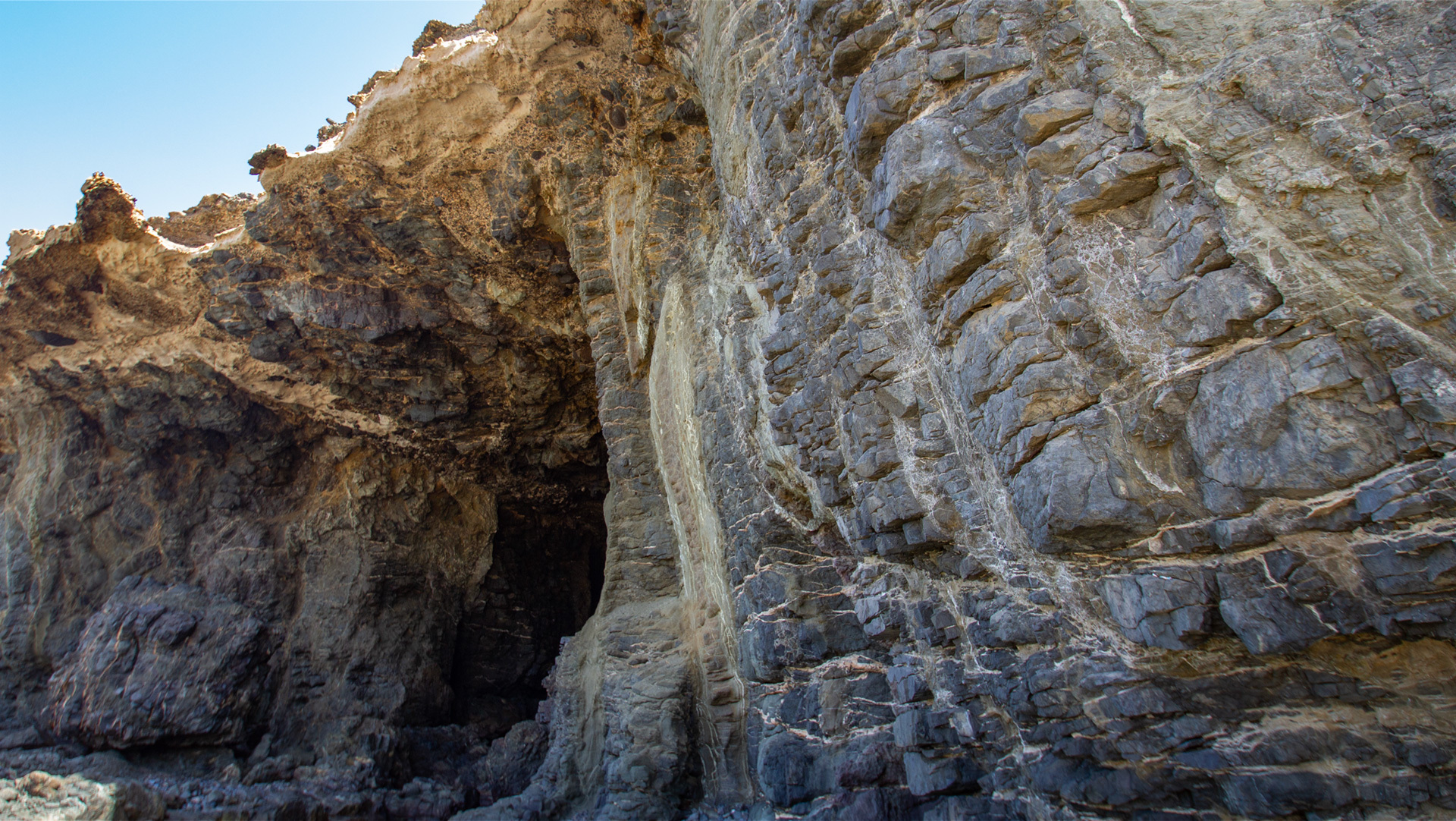
A Bay From Another Age
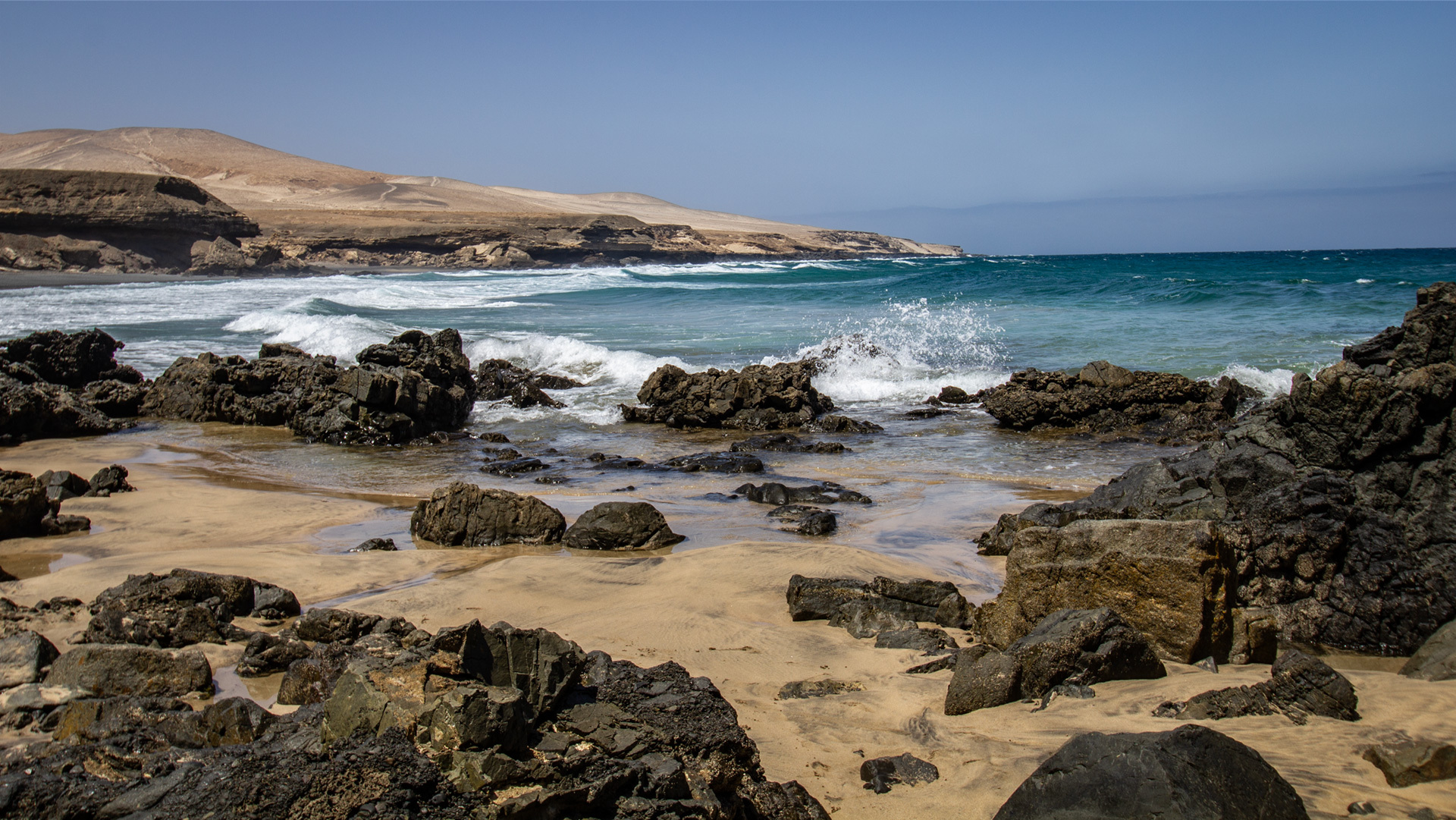
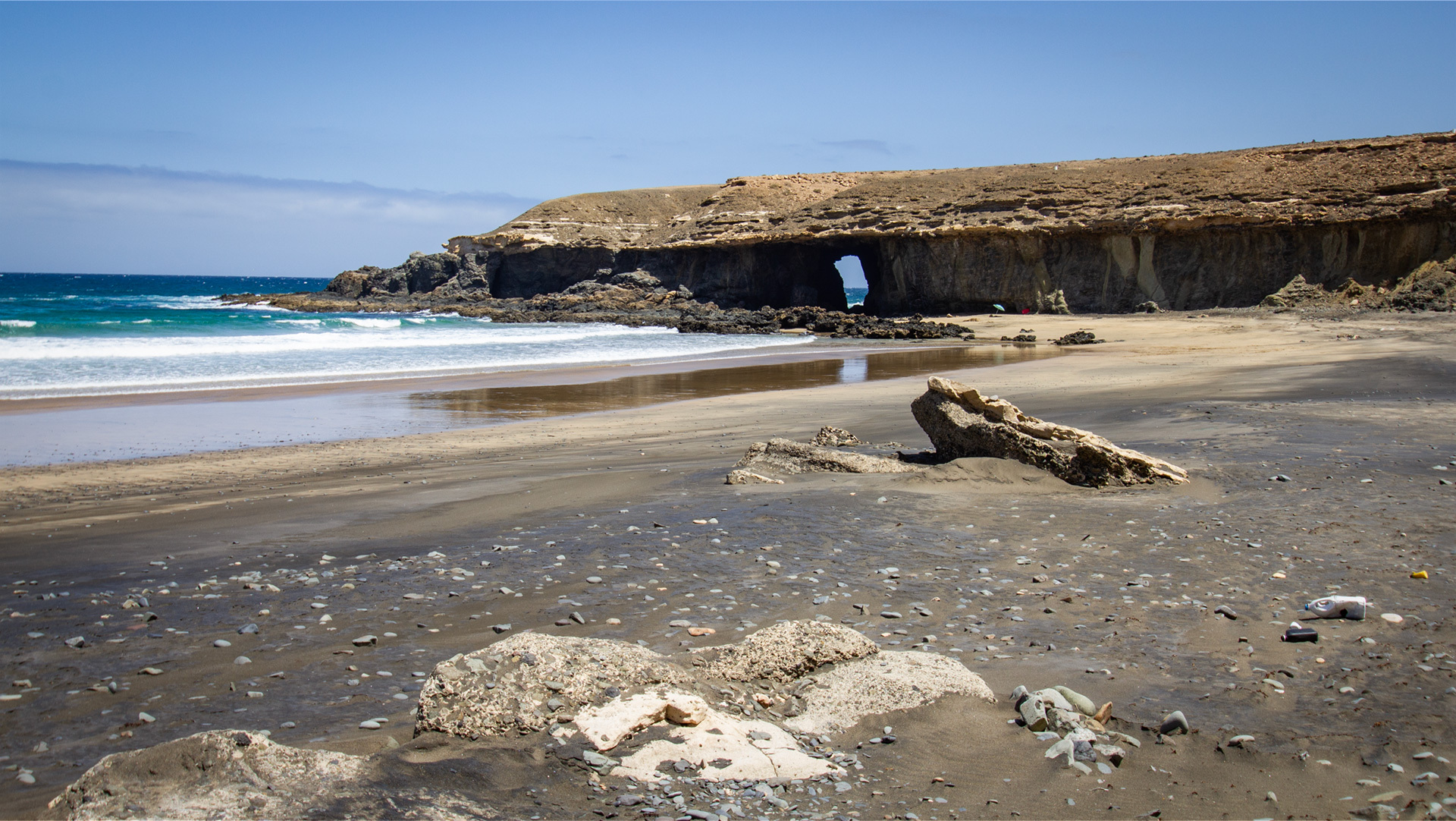
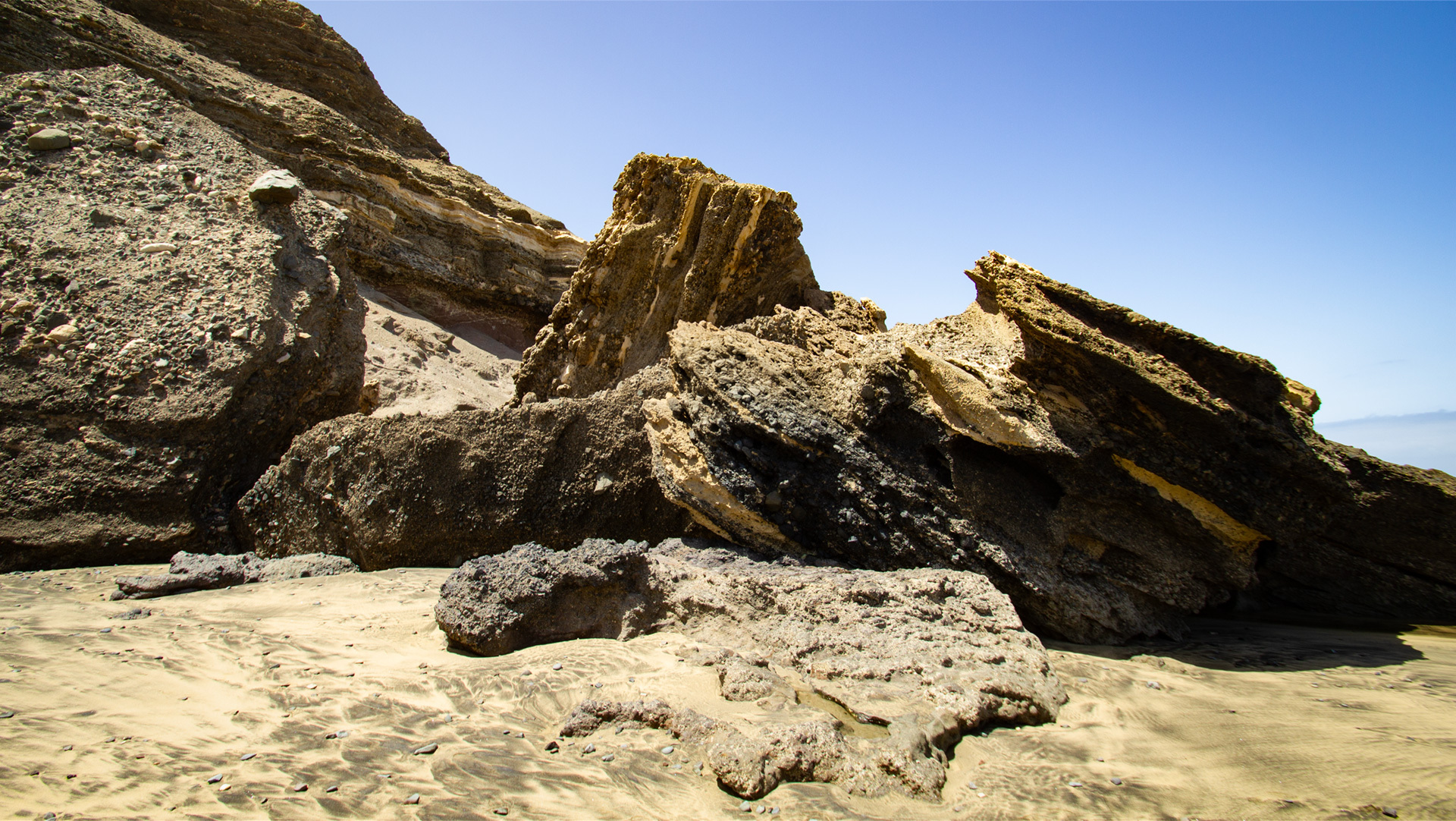
The Playa de Garcey lies nestled between high rocky cliffs that loom over the bay like primordial sentinels. The volcanic rock glows in earthy shades of red and ochre, the sand below is dark and coarse, and the sea meets the coast with an energy you feel in your body. In one of the towering cliff faces, the sea has carved out, over thousands of years, a striking rock arch – a natural gateway through which the wind whistles and light falls as if through a cathedral window.
This secluded beach on Fuerteventura’s west coast is not a beach for gentle drifting. It is a beach for marvelling, for listening, for standing still. Swimmers hoping for a calm paddling experience should be aware, however: swimming at Playa de Garcey is only suitable in very limited circumstances due to dangerous undercurrents – and in the immediate vicinity of the former wreck it is even life-threatening, as past tragic accidents have shown.
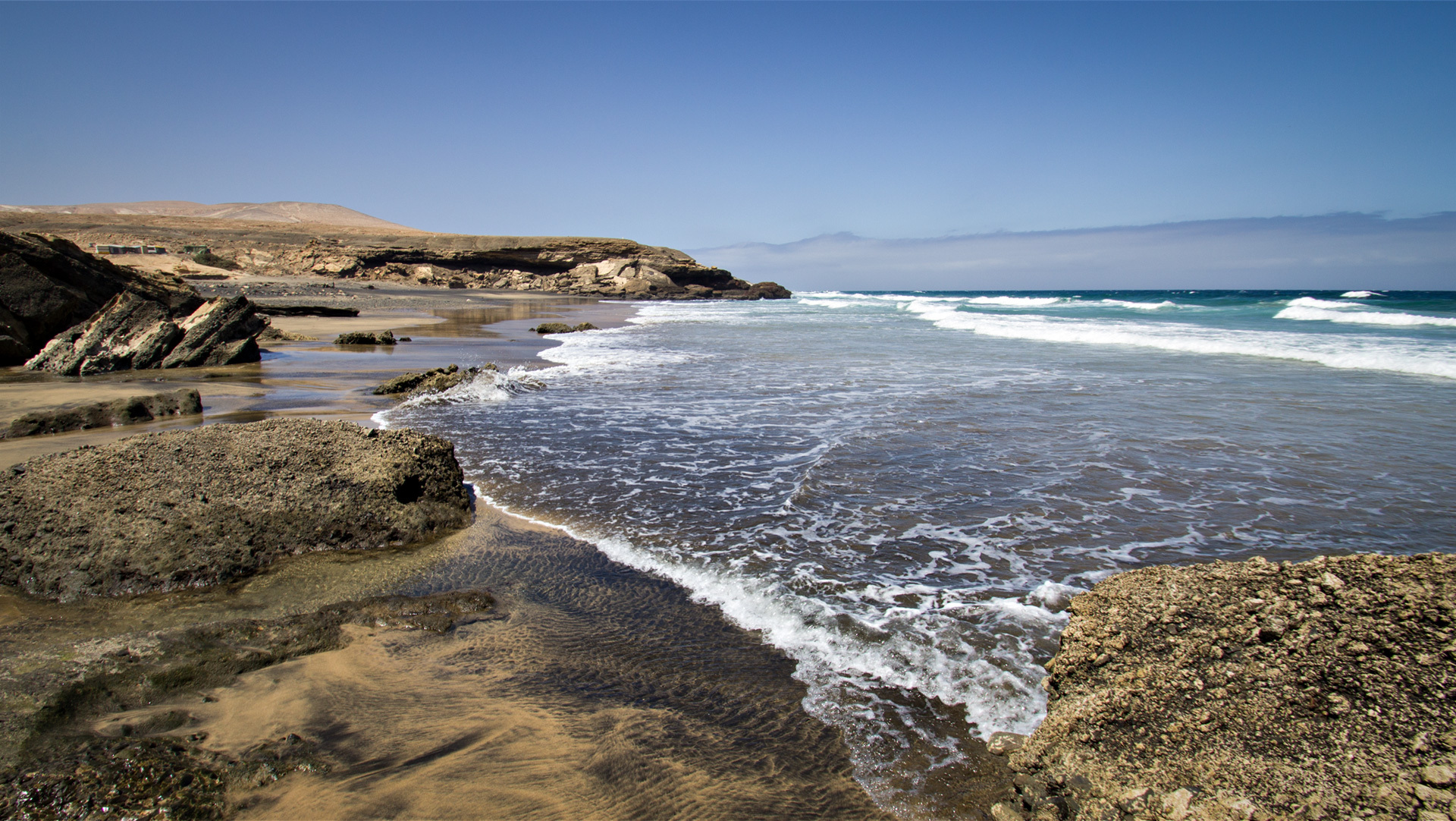
Surfing Paradise on the West Coast – Waves for Experienced Surfers
From October to February, the Playa de Garcey transforms into one of the most exciting surf spots on Fuerteventura’s west coast. The Atlantic swells roll into the bay with tremendous force, built up by the unimpeded fetch of the open ocean. The powerful waves offer excellent conditions for experienced surfers – a well-kept secret among connoisseurs, far from the crowded breaks around Corralejo or Cotillo.
Those venturing onto a board for the first time have no business being here. But those who know and respect the power of the Atlantic will find at Playa de Garcey beach a surfing experience that is virtually impossible to surpass in terms of scenery.
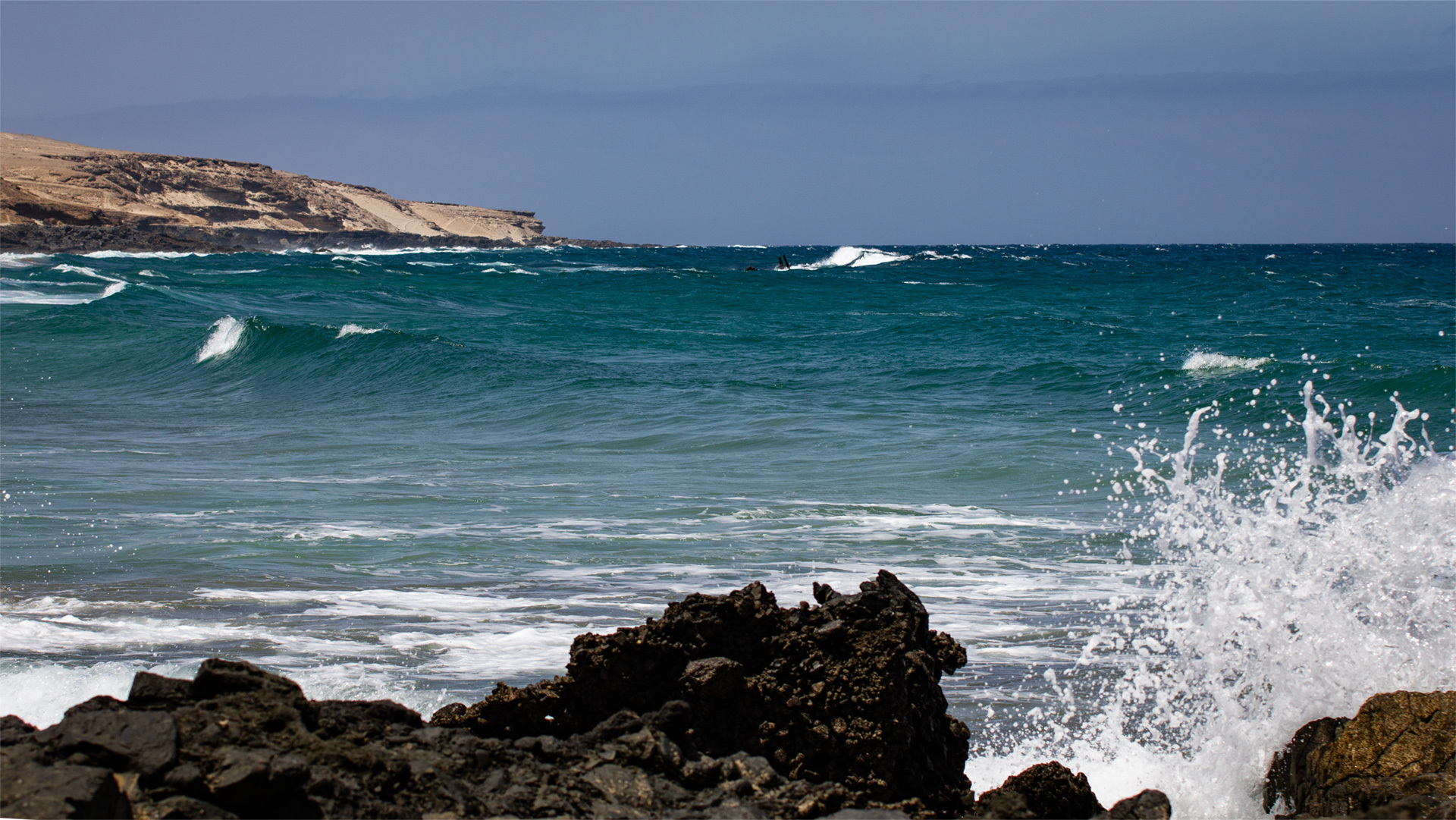
The Wreck of the American Star – A Legend in the Sand
No visit to Playa de Garcey is complete without knowing about the ship that made this bay famous for decades: the American Star, once known as the SS America, one of the most elegant ocean liners of the 20th century.
In January 1994, the ship broke free from its tug during a severe storm. It drifted helplessly towards Fuerteventura’s west coast and eventually ran aground in the bay of Playa de Garcey – a spectacle that the islanders watched with a mixture of horror and fascination. Within just 48 hours, the tremendous surf broke the hull into two pieces. The stern sank into the depths of the Atlantic just two years later.
What remained was a ghost ship – the distinctive bow of the American Star, which for years jutted from the sea like a rusting memorial to past voyages. In the months following the grounding, local people risked their lives going aboard to salvage ship relics: portholes, furniture, fittings. Many of these original pieces are still held in private collections on the island today – or adorn the Restaurant El Peñón in Ajuy, where, over a meal, you can sense the turbulent history behind the weathered metal.
Between 2007 and 2012, the bow finally collapsed entirely and sank almost completely into the sea. What was once the main attraction for coachloads of sightseers is now history.
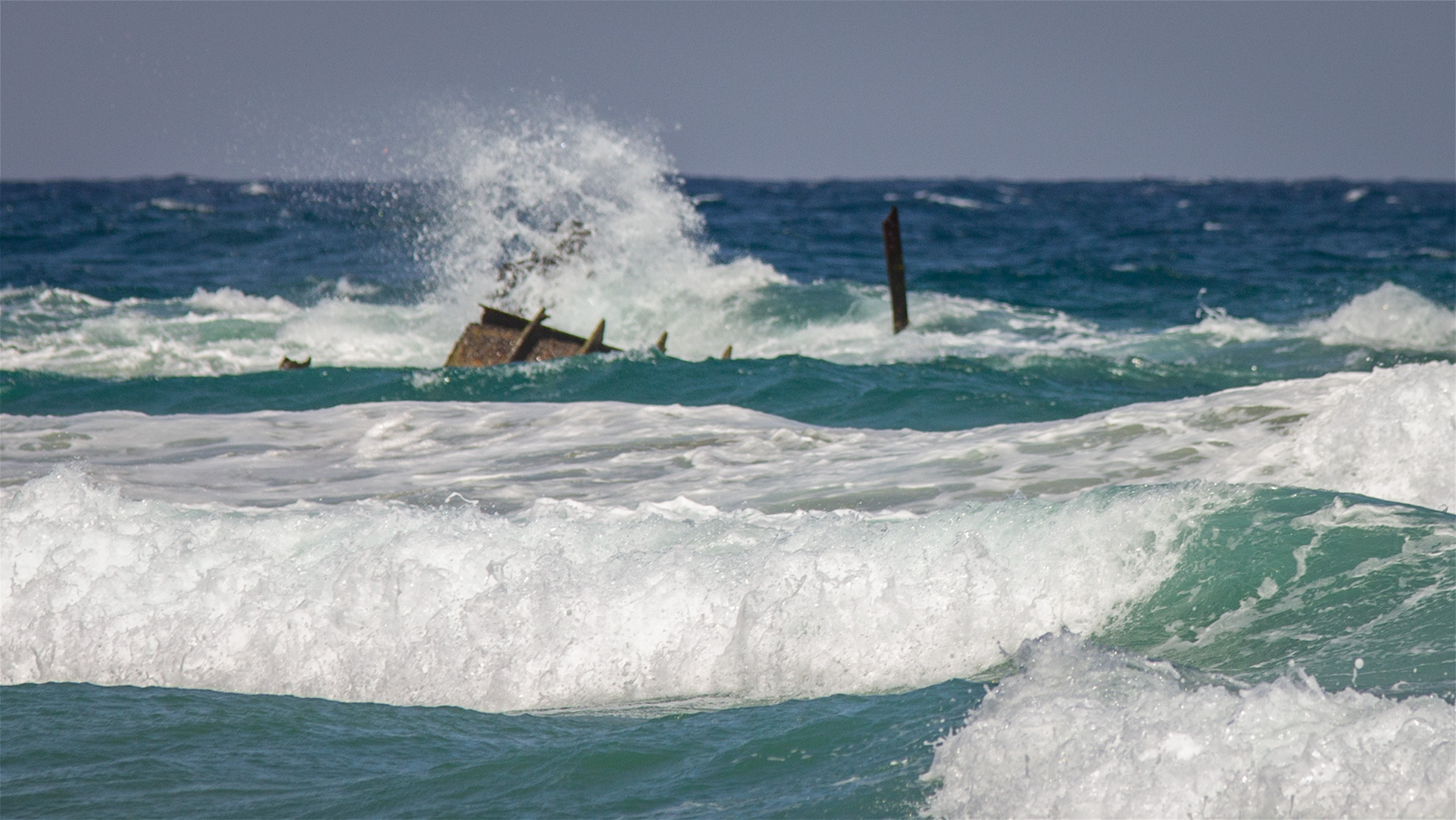
The Wreck in 2026 – What Remains of the Ship
Anyone visiting Playa de Garcey today in search of the wreck of the American Star will need patience – and perhaps a little luck. Only at extreme low tide do a few rusted metal parts occasionally still protrude from the surf, barely more than hints of a silhouette that once was.
Beneath the surface of the water, however, the sea has fashioned something new from the wreck of the American Star on Fuerteventura: the remains of the ship now serve as an artificial reef, colonised by marine life, draped in algae, visited by divers searching in the depths for what time has left behind.
The Fuerteventura shipwreck has not disappeared – it has simply taken on a different form. A quieter, hidden form that now belongs to the sea.
Pure Nature – Why the Visit is Worth It
Even without a visible wreck, Playa de Garcey is a place that sears itself into the memory. It is the combination of wild nature, dramatic coastal scenery and palpable history that makes this hidden gem on Fuerteventura so special.
You stand on this beach and gaze out to sea – to where an ocean giant once drifted, where waves have overcome both people and metal alike – and you understand: this place belongs to the Atlantic. Not to tourists, not to surfers, not to sightseers. The Atlantic tolerates guests here. Respectful, attentive, quiet ones.
Those who bear that in mind will be rewarded with an experience no glossy brochure can promise: the west coast of Fuerteventura in its most elemental, most powerful form.
Practical Tips for Your Visit
Playa de Garcey on Fuerteventura is not a beach for everyone. It is a beach for those who seek – and who are prepared to find something unexpected.