The Most Beautiful Places on Fuerteventura – Where the Island Shows Its True Face
Fuerteventura: an island you feel before you understand it
First-time visitors taxiing along Fuerteventura’s runway, gazing at the endless ochre-brown of the plains, might wonder what makes this island so special. Barely any green, barely any shade – and yet people from all over the world keep coming back. The answer is not found in glossy brochures, but in the most beautiful places on Fuerteventura, which you only truly understand once you have strolled through their alleyways, eaten in their small tavernas, and watched the light of the setting sun over the Atlantic in the evening.
Fuerteventura stretches more than 100 kilometres from north to south and offers an impressive variety: storm-lashed Atlantic coastlines in the west, calm bathing coves in the east, barren volcanic landscapes inland, and historic villages that look as though time forgot to pass by. Accommodation for every budget can be found here – from rustic holiday houses with views of the Atlantic to sprawling beach hotels. And in almost every village there stands a church that served not only for prayer but, with its thick walls and tall towers, also offered protection against pirate raids. The deep Roman Catholic roots of the Canarian soul can nowhere be felt so immediately as here, where the church squares still form the heart of everyday life.
The Most Beautiful Places in the North of Fuerteventura
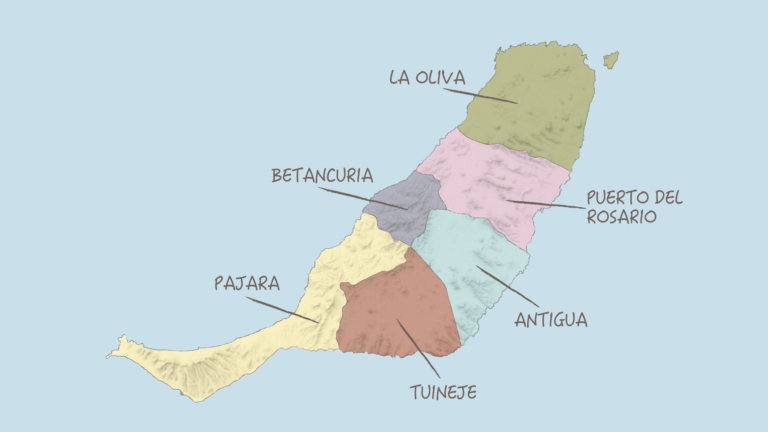
The north is regarded by connoisseurs as the most beautiful corner of the island. Here, unspoilt authenticity and genuine hospitality blend in a way that has long since been lost in the large tourist centres. The five most beautiful places in the north of Fuerteventura show exactly what that means.
El Cotillo – White Sand, Black Lava, Blue Water
White-painted houses glow in the intense sunlight as you roll down from the main road towards El Cotillo. You see the surf before you hear it. This village on the north-west of the island is what many associate with the term ‘surfer village on Fuerteventura’ – and it is so much more than that.
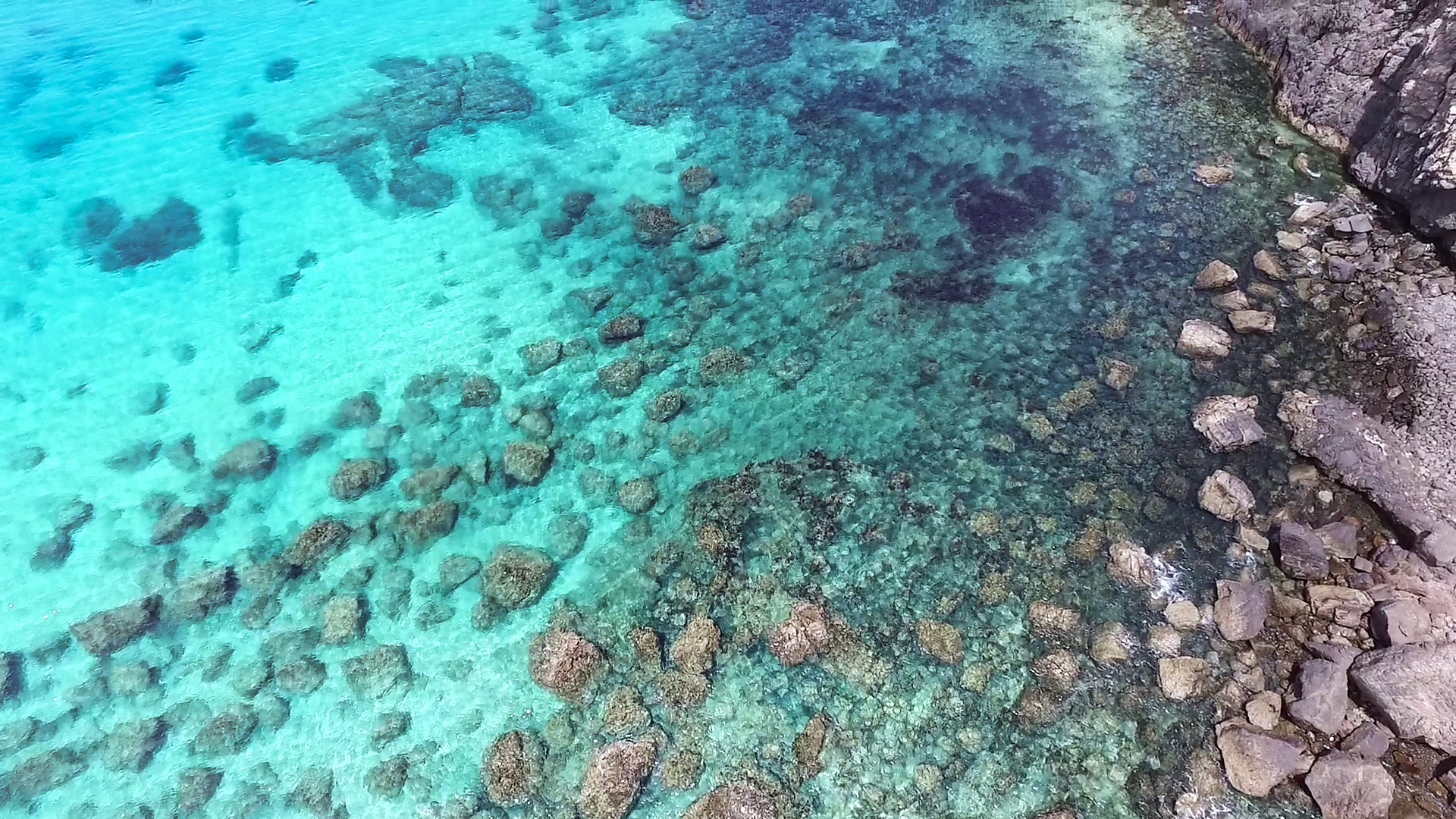
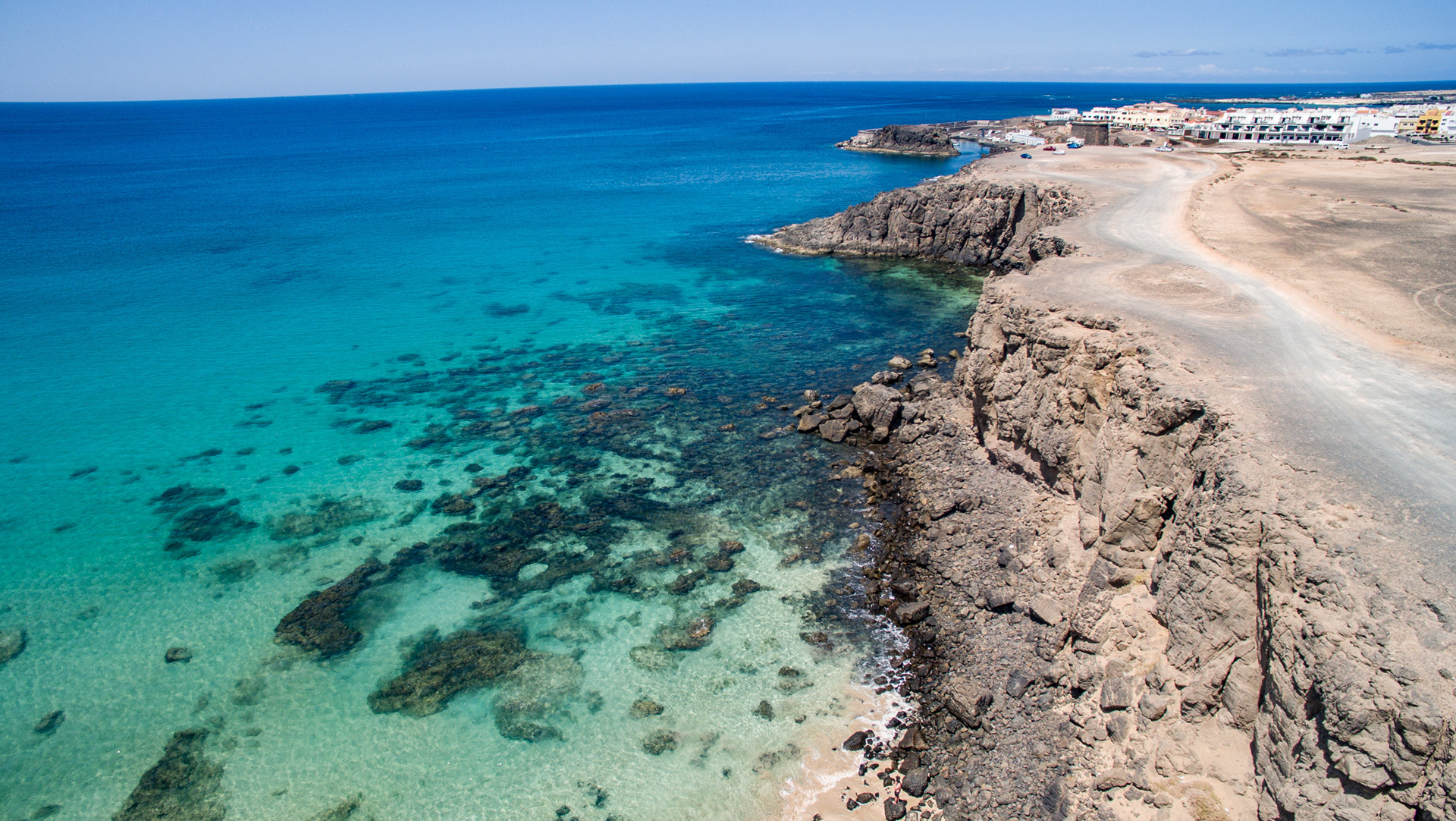
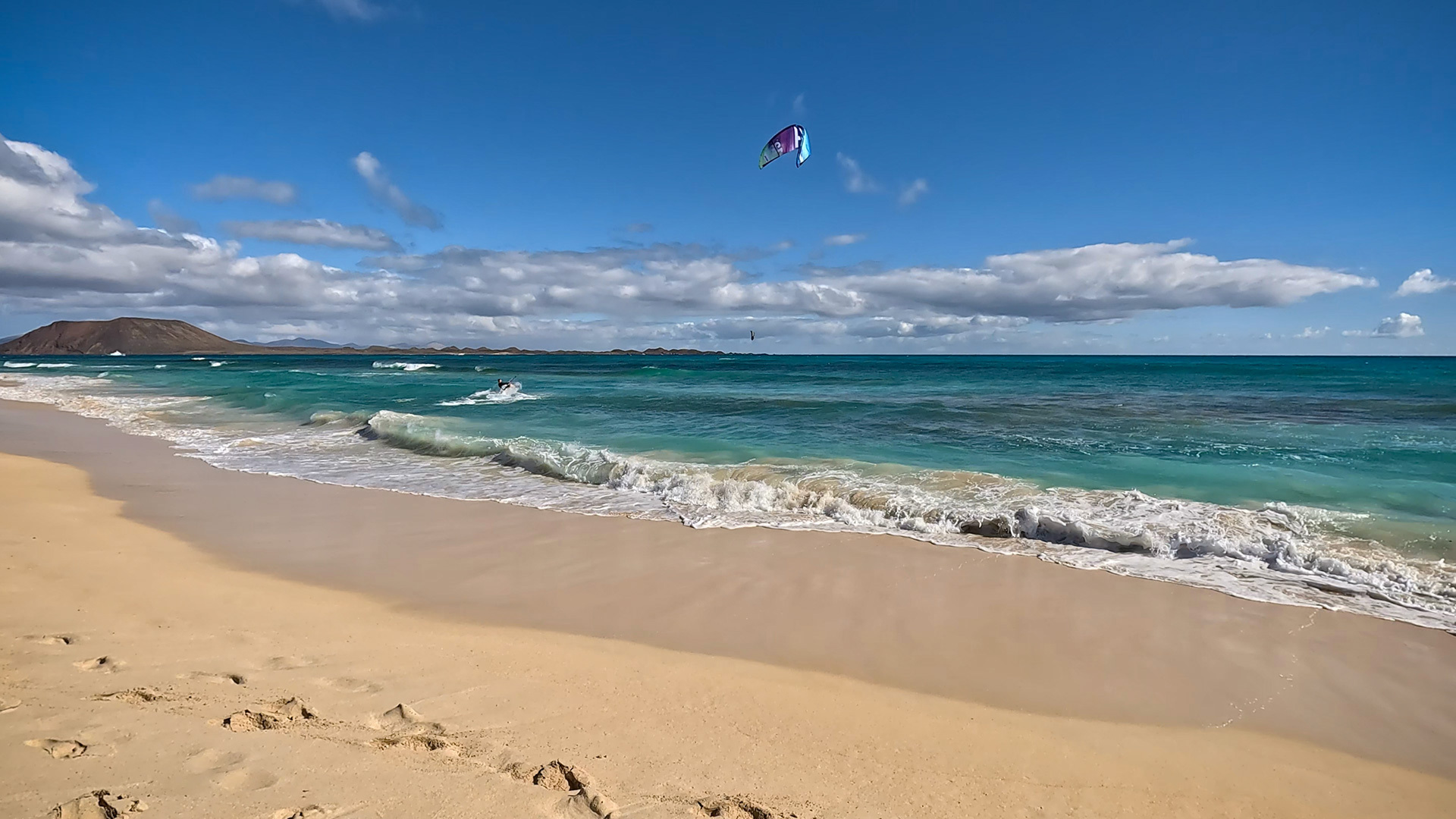
The beaches of El Cotillo are among the finest on the island. To the north of the village, coves of snow-white, fine-grained sand stretch out, the water shimmering in a turquoise that no photograph ever quite captures. Black lava rocks frame the scene, forming natural barriers against the waves and creating sheltered bathing zones where families with children can play without a care. Further south, the coastline opens up into more exposed bays, flanked by cliffs – the surfers’ domain.
Surfing in El Cotillo is no passing trend but a decades-long tradition. Magnificent waves roll into the north-west coast all year round, making El Cotillo the best surf spot on Fuerteventura. Those wishing to learn to surf will find numerous surf schools in El Cotillo that serve the surrounding beaches. The beach of La Escalera is considered by those in the know to be one of the most beautiful beaches in the world – and anyone who has seen it at high tide would not disagree.
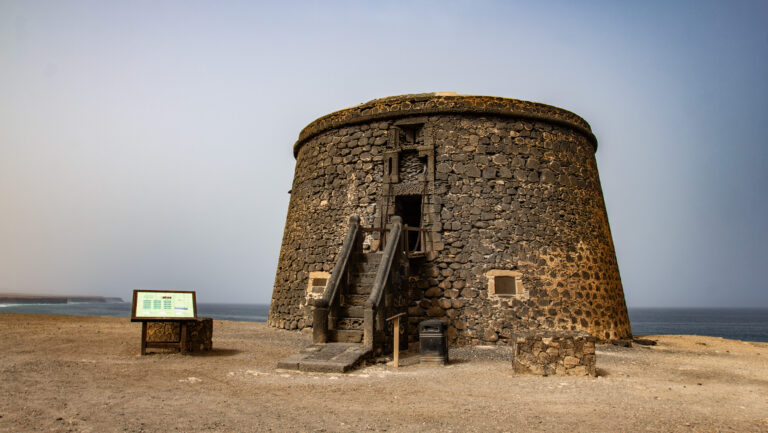
An evening in El Cotillo without a visit to the old harbour would be incomplete. On Friday evenings, the area near the Torre del Tostón, the historic watchtower, transforms into a small weekly market: handmade jewellery, clothing, decorative one-of-a-kinds. Restaurant La Ballena serves fresh fish specialities with a view of the sea, while Santa Ana del Cotillo is the address for authentic Canarian cuisine at a fair price. Those looking for plant-based food will find what they need at Happy Cactus.
Who is El Cotillo suited for? For anyone who wants to try surfing on Fuerteventura, for beach holidaymakers who value quiet over crowds, and for walkers who seek, along the worn paths of the rocky coastline to Piedra Playa, the feeling of having reached the end of the world.
Lajares – Volcanoes, Coffee and Digital Nomads
Lajares sits in the interior of the northern island, and first-time visitors briefly wonder why there is no beach. Then you sit in one of the small, hip cafés, gaze out at the barren, endlessly wide landscape, and you understand immediately.
This place on Fuerteventura has become a hotspot for digital nomads – not because it has beautiful beaches, but because it radiates a calm that clears the mind. The landscape is rugged and soothing in equal measure. On Saturdays, the village square transforms into a small arts and crafts market in Lajares, where you can strike up conversations with locals and expats over hand-rolled jewellery and hand-knotted textiles.
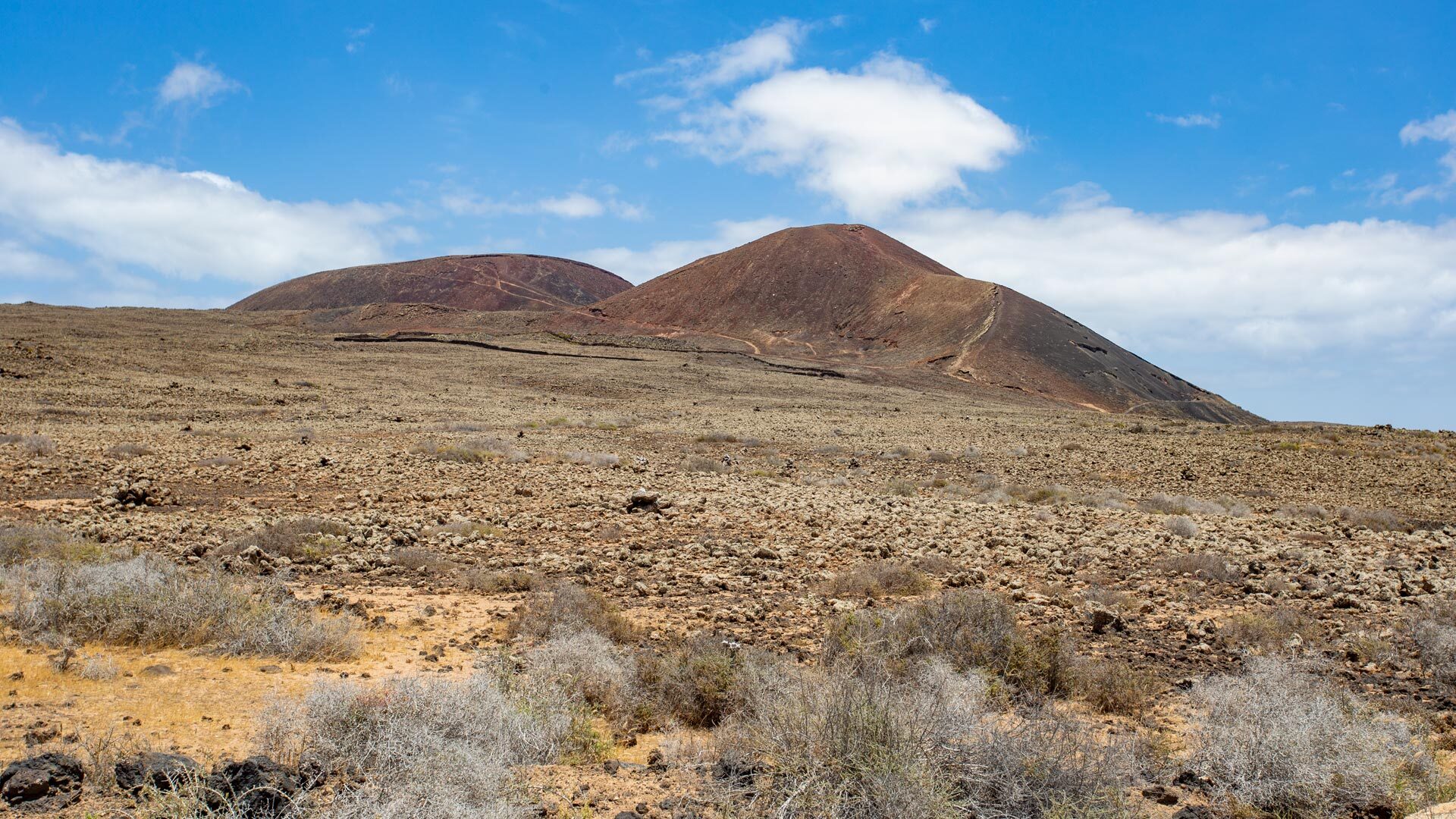
The real highlight lies outside the village: the Calderón Hondo volcano, which seems to transform into another world at sunrise. Lajares is the natural starting point for this hike and for further tours along the volcanic chain. Those who wish can visit the nearby museum village of Ecomuseo de La Alcogida in Tefía to learn more about the island’s history and everyday culture – a genuine hidden gem off the tourist trail.
Who is Lajares suited for? For anyone seeking authentic Fuerteventura, who loves hiking and feels at ease in an island community made up of Canarians, surfers and laptop nomads.
La Oliva – The Cultural Heart of the North
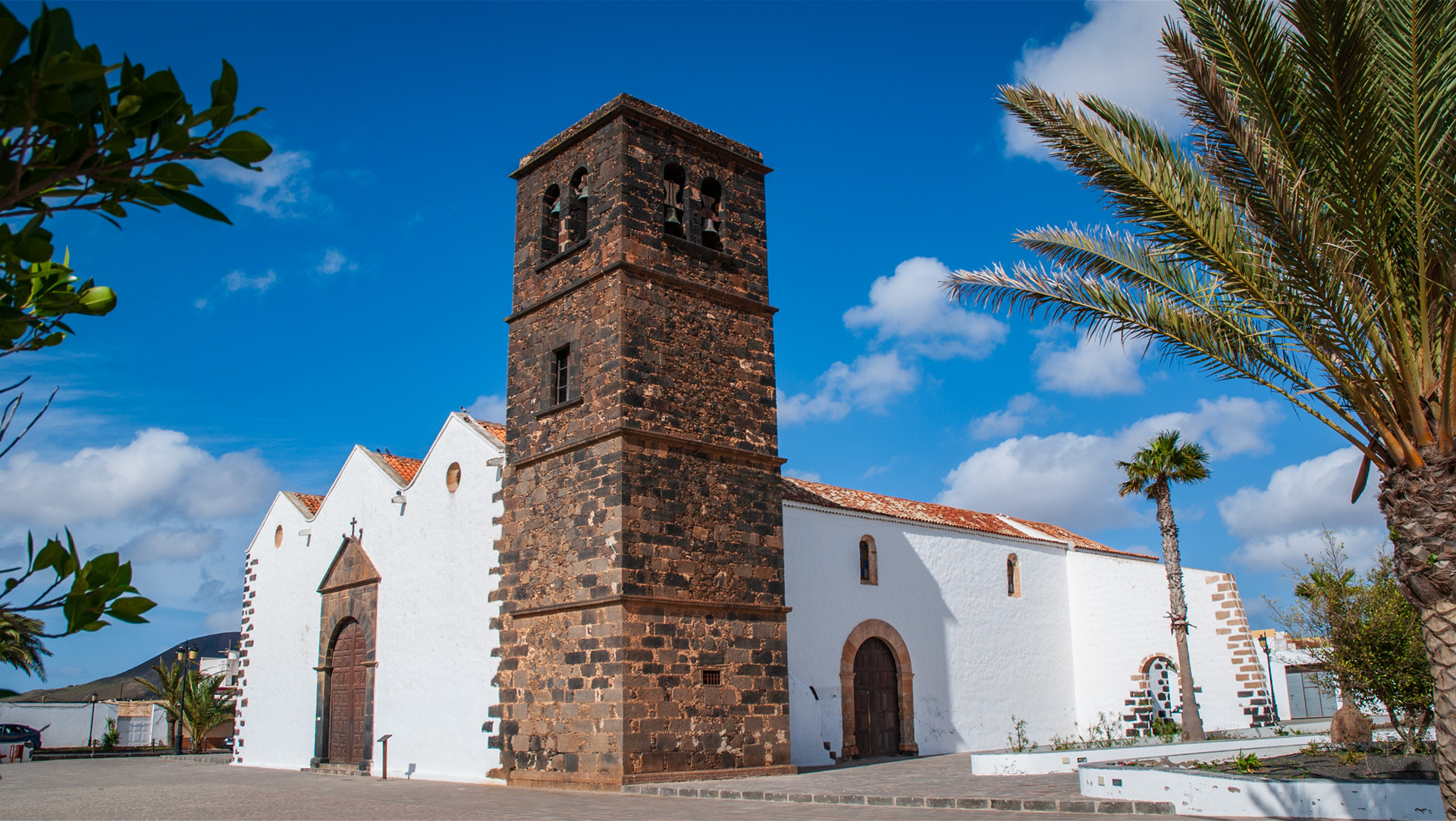
When you think of the cultural centre of Fuerteventura, you think of La Oliva. The village sits at the foot of a volcano on a fertile plain where wild olive trees once grew – hence the name. Even the island’s indigenous population, the Majos, settled here.
Today, La Oliva is defined by a distinctive mix of colonial heritage and quiet village life. The historic buildings in La Oliva from the 16th and 17th centuries still stand, including the stately Casa de Los Coroneles, the seat of the military governors, whose architecture stands out from its modest surroundings like an eagle among pigeons. The Ruta de los Coroneles – a guided tour through the most significant buildings – brings history to life when actors in period costumes re-enact the village’s past.
The grain museum Casa de la Cilla tells the story of the village’s agricultural soul, and at the plaza a small café awaits where you can study Canarian composure over a coffee.
Who is La Oliva suited for? As a day-trip destination, La Oliva is one of the most beautiful villages in the north of Fuerteventura. As a base for a longer stay, it suits those who seek absolute peace and can do without tourist infrastructure.
Corralejo – Old Town, Dunes and Vibrant Northern Life
Corralejo is the urban counterpart to the quiet villages of the north – and yet it has its own charm. The old town of Corralejo displays Canarian architecture in which Andalusian and Portuguese stylistic elements combine to form a colourful ensemble. Thick natural stone walls, brightly painted façades, decorative wooden balconies. At the harbour, small fishing boats form a picturesque contrast to sleek yachts.
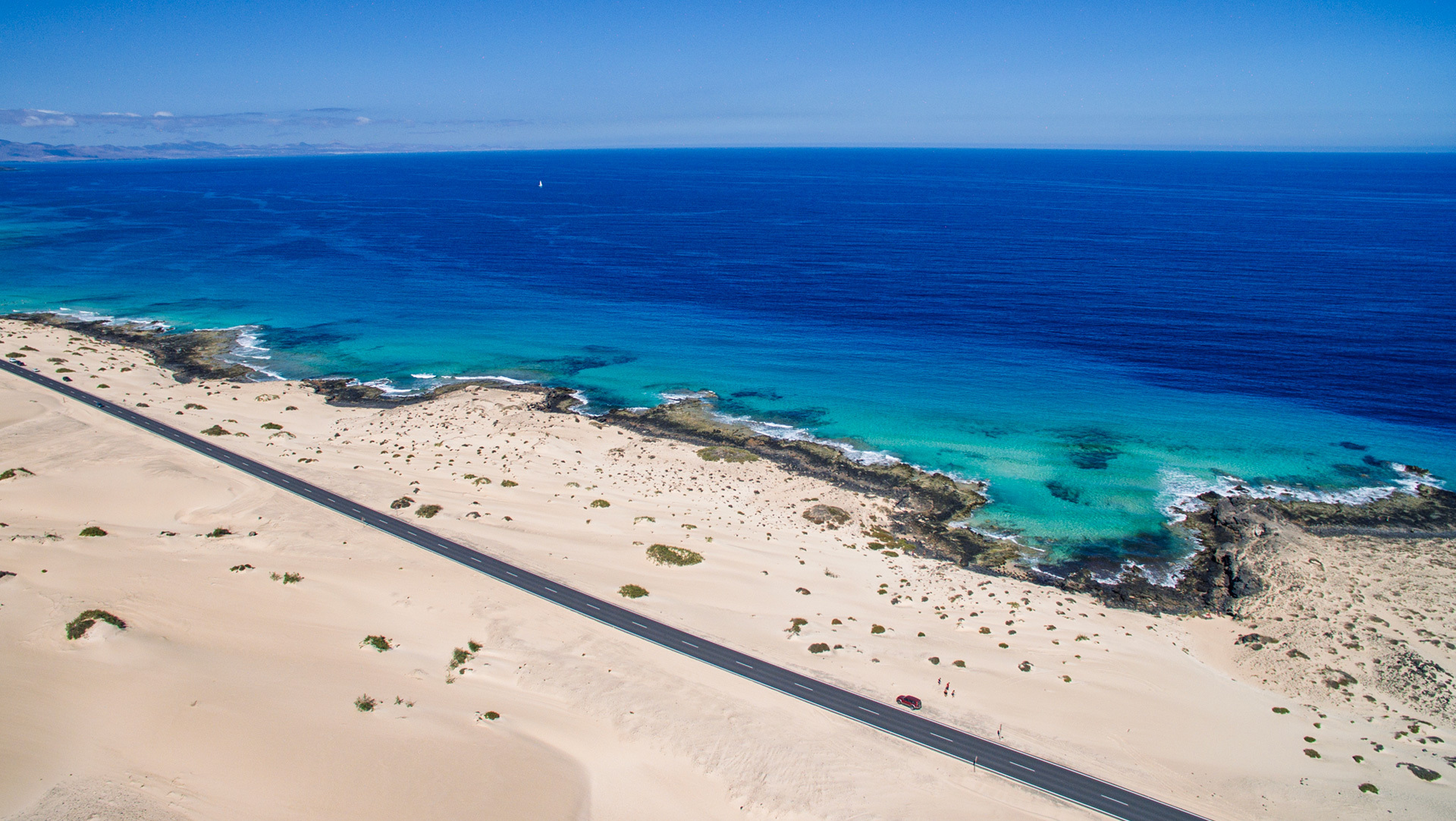
The real natural wonder lies on the outskirts of town: the Corralejo Natural Park with the legendary dune field of El Jable – eleven kilometres of white sand that spreads out like a Saharan backdrop before the Atlantic. It is one of the most visited attractions on the island, and rightly so.
Fish and Canarian cuisine can be found in the restaurants around the market square, while in the evenings beach bars and nightclubs invite you to unwind after an active day. In November, the kite festival in Corralejo draws locals and tourists alike.
Who is Corralejo suited for? Corralejo is the ideal base in the north for those who want to make day trips to Los Lobos or Lanzarote, who appreciate a wide range of accommodation, and who like a bit of town life alongside the beach. For an authentic island experience, however, you need to explore the side streets – or better still, travel further afield.
The Most Beautiful Places in the Centre of the Island
The centre of Fuerteventura is not a classic holiday destination – and that is precisely what makes it so special. Those who stop here or venture out on excursions will find historic villages on Fuerteventura, rugged natural parks and a stillness that you would seek in vain at the coastal resorts.
Betancuria – The Most Beautiful Place on Fuerteventura
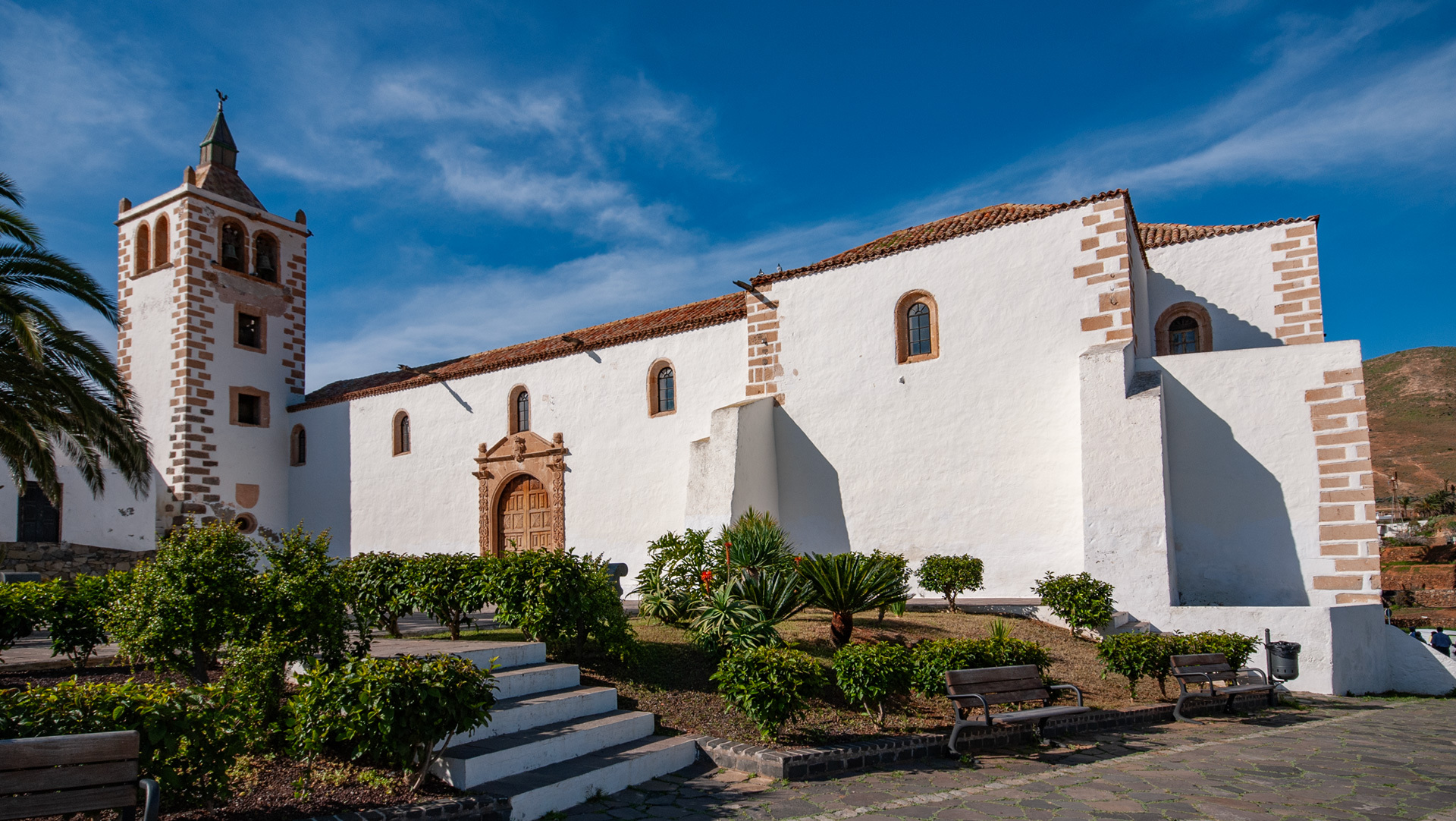
There are places you first know from pictures – and are still overwhelmed when you arrive in person. Betancuria is one such place. The oldest village on the island lies idyllically in a green valley, surrounded by the mountains of the eponymous Betancuria Natural Park – a sight that seems almost unreal on this barren island.
Whitewashed houses with traditional wooden balconies, lush planting, the scent of goat meat from the small restaurants – Betancuria is the most picturesque village on the island. The village centre with the Church of Santa María de Betancuria is considered the historic heart of Fuerteventura. The village was founded shortly after the Conquista in 1404 and was the island’s capital for many decades.
Today, Betancuria is an ideal base for hikes in the Betancuria Natural Park as well as for trips to the coast at Ajuy, to the stone arches of Arco de las Peñitas and Arco del Jurado, and to the mighty rock fissures of Arco del Jurado. The restored manor houses form the perfect scenic backdrop, with the greenery of the surroundings offering a soothing contrast to the island’s barrenness.
Who is Betancuria suited for? As a day-trip destination, Betancuria is a must – for anyone visiting Fuerteventura. As a holiday base, it is best suited to hikers who wish to stay in one of the few charming holiday houses in the area and explore new routes each day.
Pájara – A Church with Aztec Motifs and Canarian Stillness
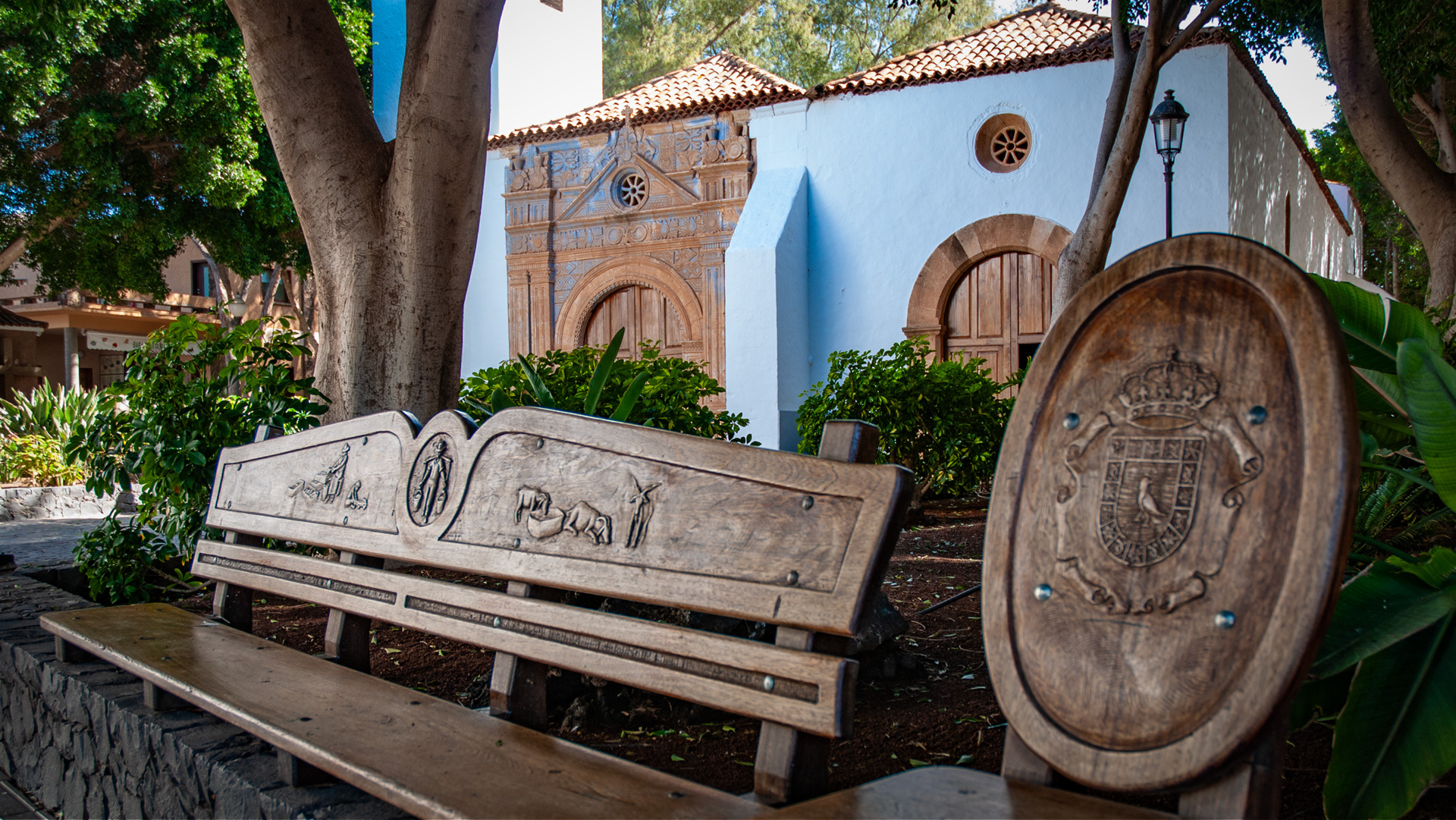
Pájara nestles in a mountain ridge around 600 metres high at the geographical centre of the island and surprises every visitor who does not know what to expect. Prosperous from the tax revenues of the tourist centres in the south, the village presents itself with well-kept town palaces, ornate wooden balconies and the island’s unexpected gem: the Iglesia Virgen de la Regla.
The place of worship, completed in the 18th century, bears a baroque church portal with Aztec motifs – created not by a Mexican artist but by an Italian working from a template. Inside, a Mudéjar-style ceiling and a richly gilded altar housing the patron saint Virgen de la Regla impress all who enter. Every year on 2 July, the procession in her honour takes place.
In front of the town hall stands an old water-drawing wheel – a Noria – once driven by dromedaries and still occasionally set in motion for tourist groups. It is the quietly absurd charm of Canarian contemporary life.
Pájara lies on the long-distance footpath GR 131 and is the perfect starting point for hikes to Betancuria, Ajuy, Agua Liques and the stone arches. Beautiful, secluded holiday houses can be found in the immediate surroundings.
Ajuy – Black Cliffs, Pirate Caves and the Primordial Sea
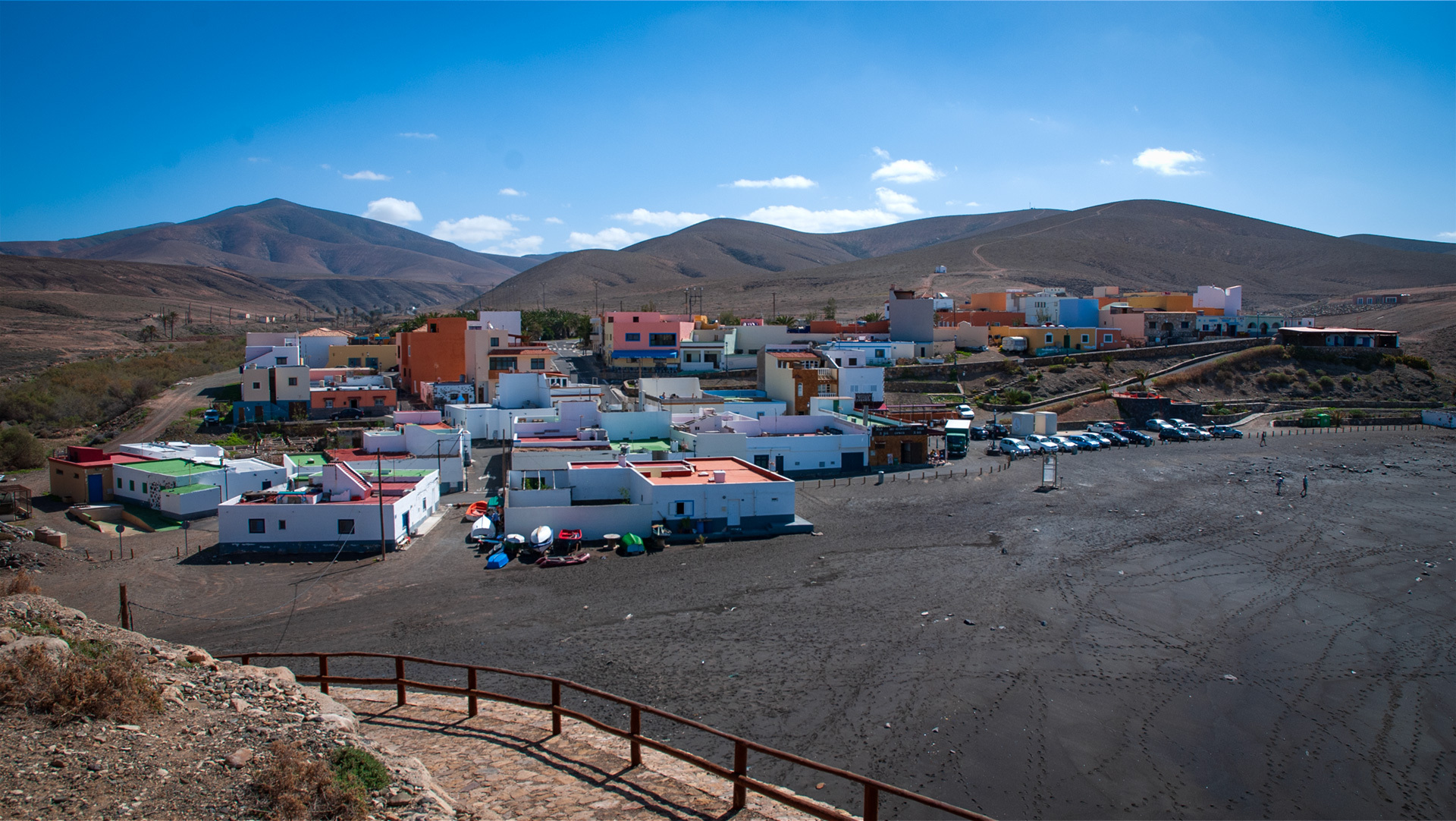
Arriving on the west coast and setting eyes on the black beach of Ajuy for the first time, you understand why Fuerteventura sometimes feels like another planet. Black lava beach, rugged cliffs, the roaring sea – and in the rocks, the famous Ajuy caves, which are among the geologically oldest spots in the entire Canary Islands.
The village itself is small, almost understated. A few fishermen’s cottages, some cafés and restaurants serving local cuisine, a handful of shops. But the atmosphere is unparalleled. The short coastal path along the cliffs leads to the Cuevas de Ajuy and offers views that make the word ‘backdrop’ seem inadequate – this is nature in its unedited version.
Ajuy also lies on the GR 131 and is the starting point for hikes to the stone arches and into the Betancuria Natural Park. A hidden gem that is slowly being discovered – but has not yet attracted too many explorers.
Valle de Santa Inés and Aguas Verdes – The Quiet Hidden Gem
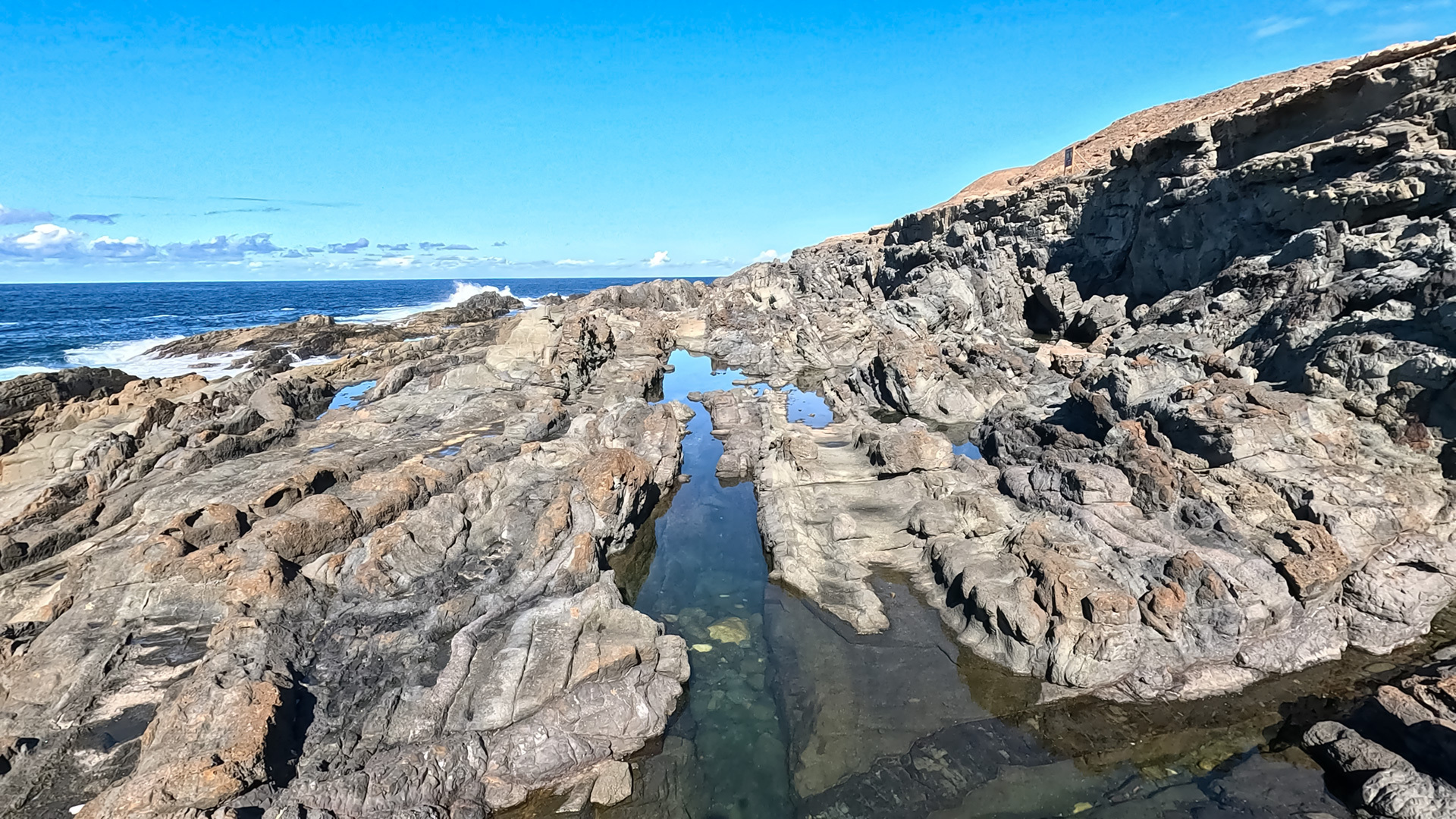
Those who truly want to be alone head to Aguas Verdes. The coastline between Valle de Santa Inés and this almost nameless patch of earth is among the most impressive on the entire island. Natural tidal seawater pools in black rock, the sea in motion, cliffs as old as time itself.
There are no cafés, no hotels – only in the nearby Valle de Santa Inés will you find a restaurant serving local cuisine. In return, the hike along the coast towards Betancuria from here is short and rewarding.
Who is this area suited for? For hikers and anyone who wants to discover Fuerteventura off the beaten track.
The Most Beautiful Places in the South of Fuerteventura
The south is the island’s tourist heavyweight – sprawling hotels, apartment complexes, all-inclusive resorts. Those who look closely, however, will find places with soul and beaches here too that drive any advertising photographer to despair, because the real light is always more beautiful than any edited image.
Costa Calma – Long Beach, Calm Water, Canarian Sun
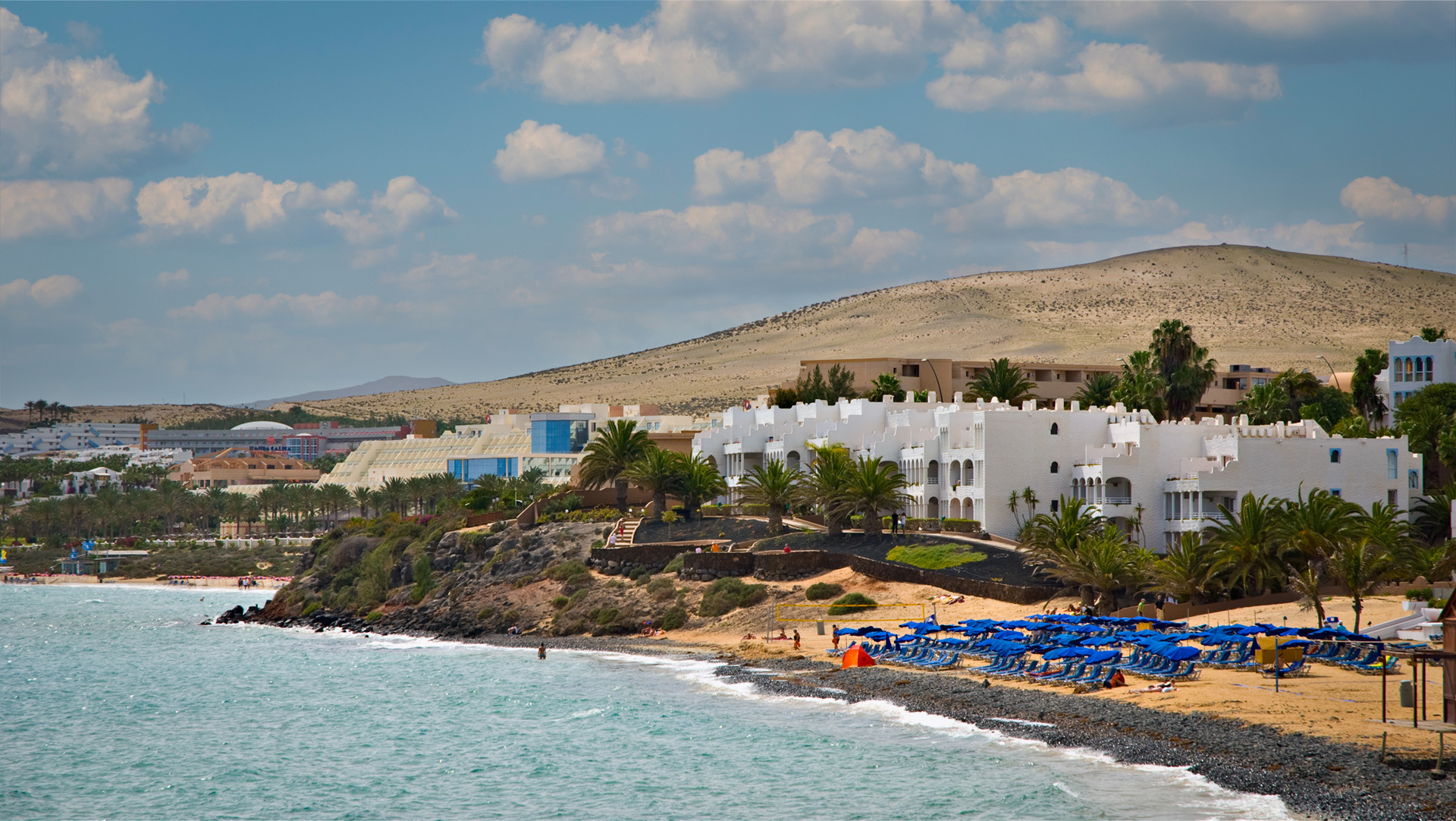
Costa Calma on the Jandía peninsula was developed as a tourist destination in the 1970s – and it shows. Hotels and apartment complexes dominate the scene. What remains, however, and disarms every critic, is the Playa de Costa Calma: around two kilometres of fine, pale sand and turquoise water with an exceptionally shallow bathing zone.
The desert landscape all around, threaded with impressive dunes, lends the place a backdrop that would impress even without the sea. Costa Calma is one of the most popular holiday destinations on Fuerteventura for German travellers – the tourist infrastructure is comprehensive, with restaurants and bars in abundance.
Morro Jable – Where the Beach Never Ends
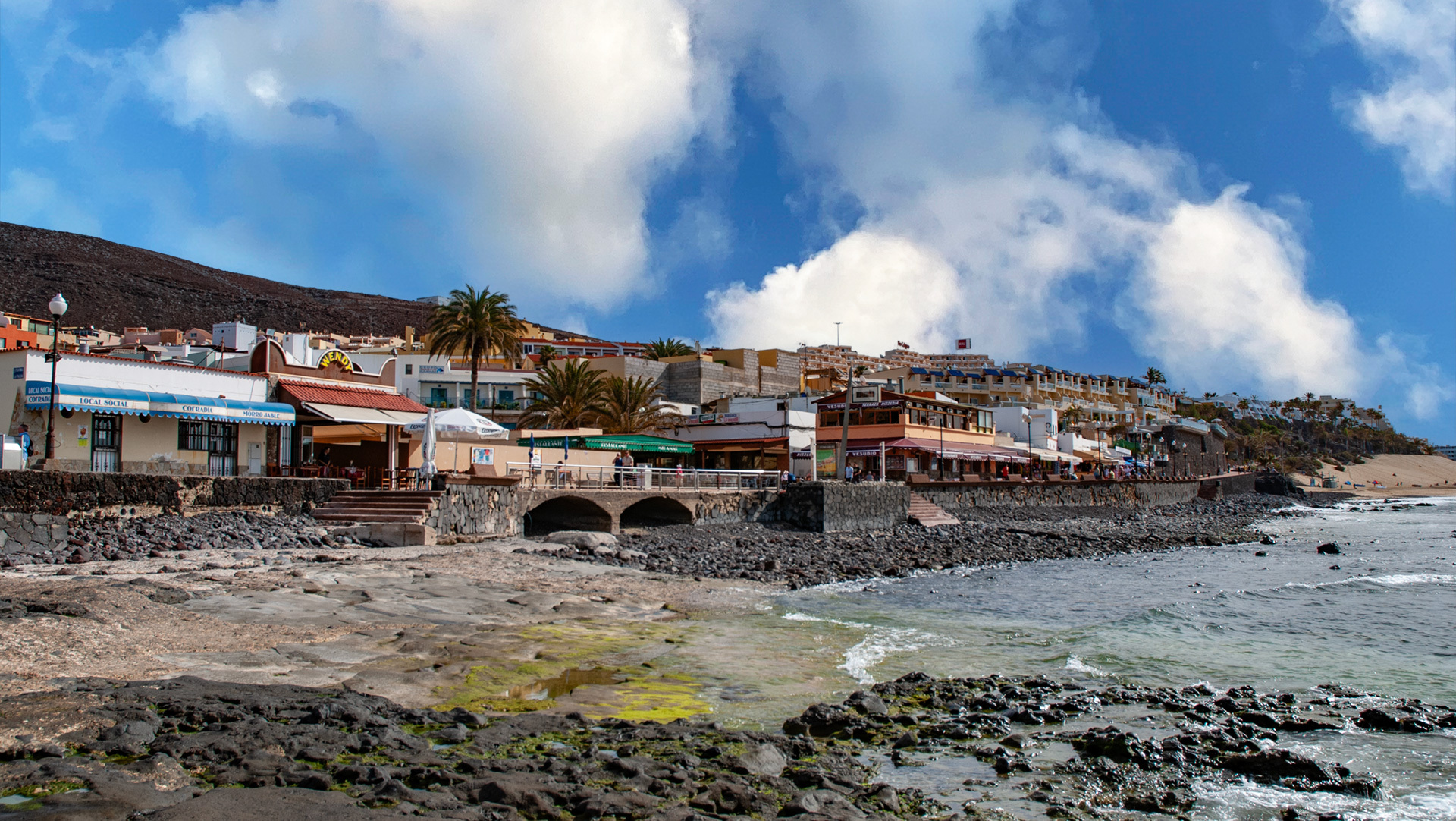
At the southern tip of the island, just before the Jandía Natural Park returns everything to nature, lies Morro Jable. The small town and the directly adjacent Jandía Playa together form the tourist centre of the south – with everything that entails: a kilometre-long promenade, hotels, restaurants, shops and a beach whose sheer size dispels any thought of overcrowding.
The sunsets in Morro Jable are regarded on the island as particularly spectacular – the warm light over the Atlantic, the sky in orange and pink, the broad beach silhouette. From here, the gravel track leads directly to the famous Cofete, one of the wildest and most solitary beaches on the island, and on to the cape of Punta de Jandía.
Who is Morro Jable suited for? For anyone who values beach, comfort and nature in equal measure. The small town has retained a Canarian heart despite its tourist nature, particularly around the old harbour.
Tarajalejo and Giniginamar – Black Beach, Quiet South
Between the bustling south and the quiet centre lies Tarajalejo, a small fishing village with a promenade along a black beach, lined with sculptures, coconut palms and the old jetty. The water in the sheltered bay is calm, ideal for families.
The nearby Giniginamar is quieter still. The coastal walks from Giniginamar are among the finest on the island – the combination of mountain backdrop and Atlantic views is unique. Both places offer authentic Canarian cuisine, tranquillity and the feeling of having arrived before you even know what you were looking for.
La Lajita – Small Village, Black Beach, Wildlife Park
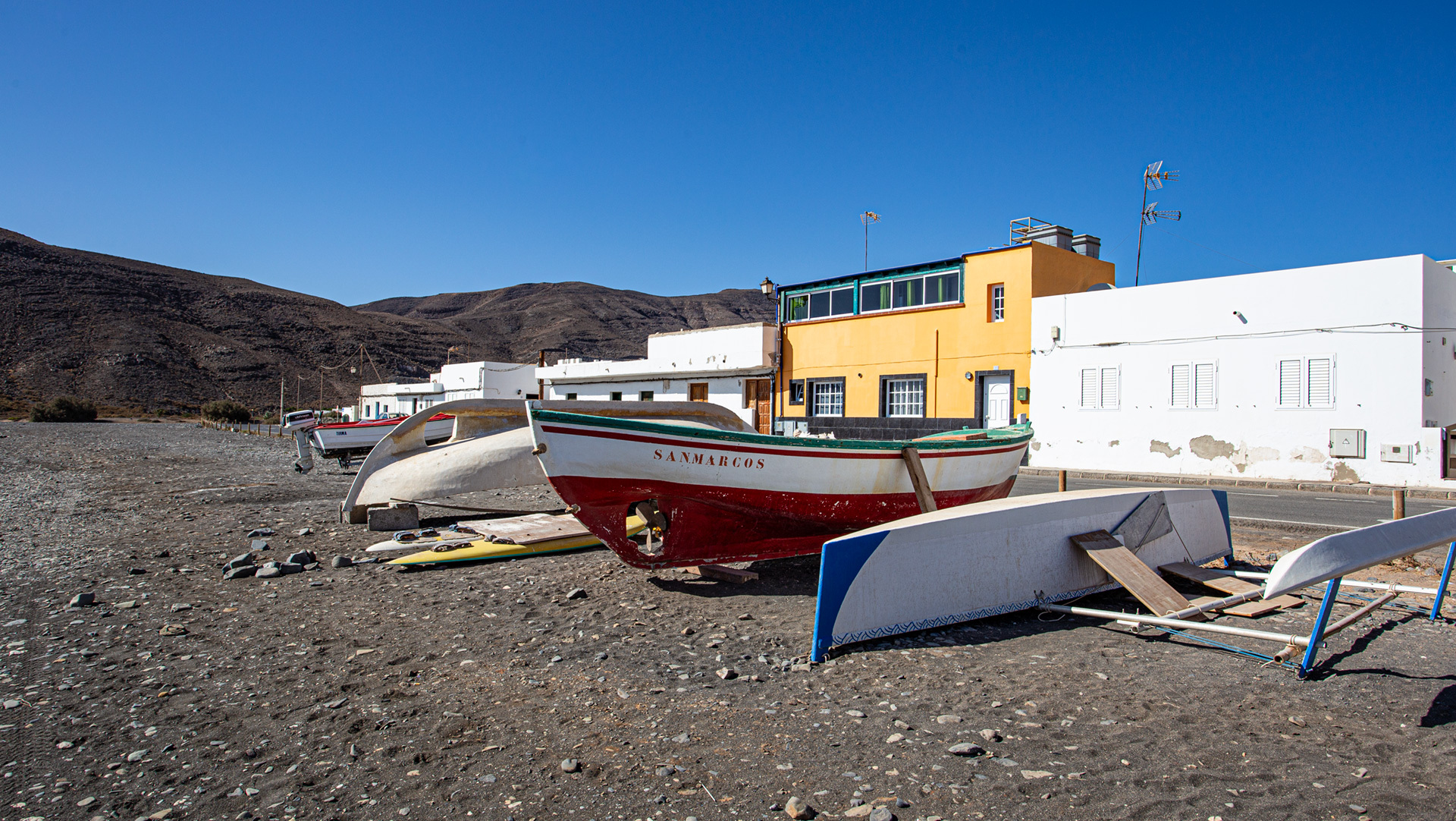
Just five kilometres south of Tarajalejo lies La Lajita, another small fishing village with a striking black beach and a handful of charming restaurants and cafés. The village is also well known for the Oasis Wildlife Park La Lajita, which is particularly popular with families with children on Fuerteventura.
La Lajita is a quiet hidden gem for anyone wishing to stay on the south-eastern coast – far from mass tourism, but close enough to the rest of the island.
Las Playitas – Sports Resort at the End of the World
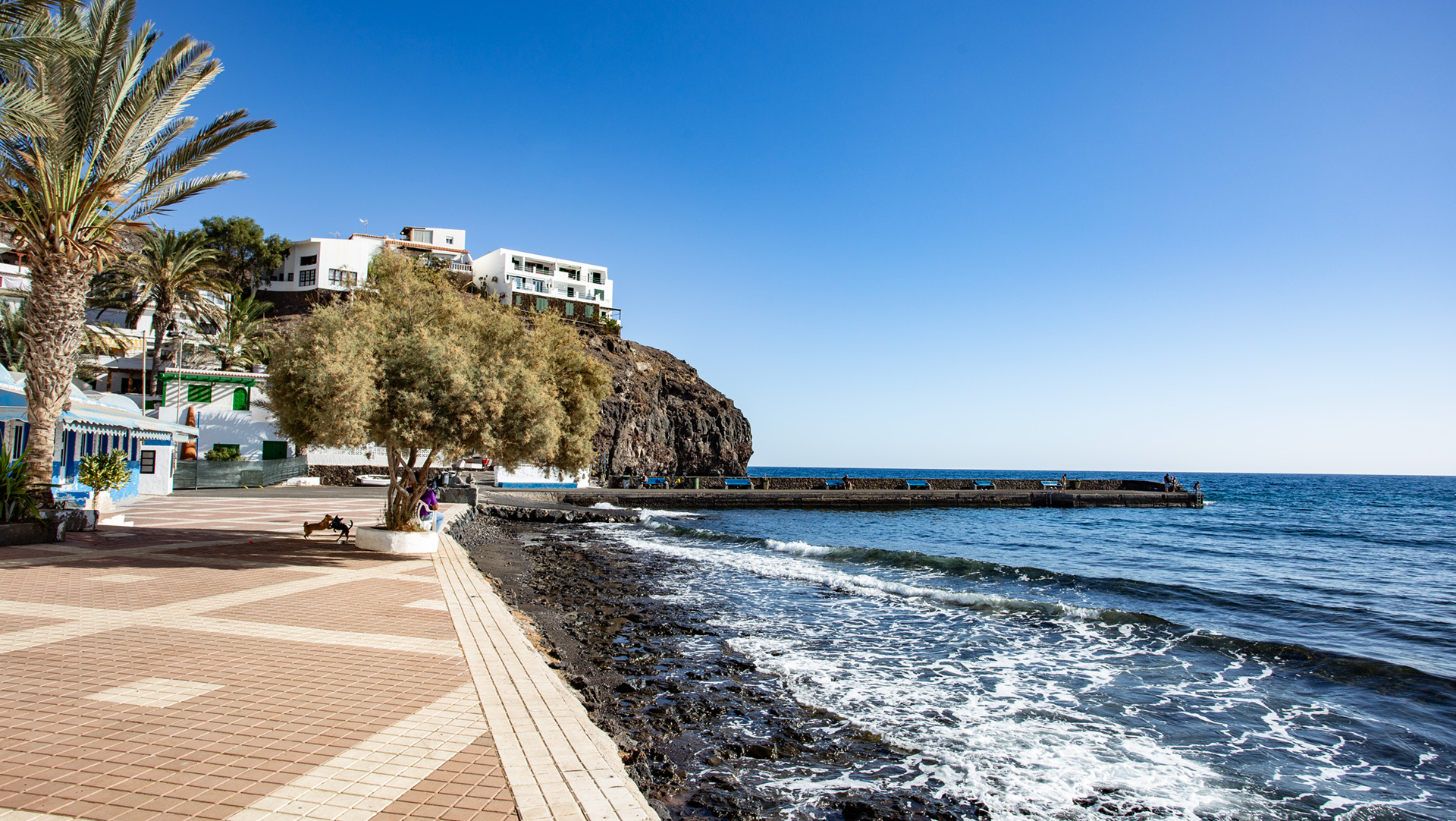
Las Playitas in the south-east of the island is a small fishing village with a relaxed island feel, white houses, narrow alleyways and a quiet harbour promenade. The volcanic beach of Las Playitas with crystal-clear water is a real gem – you climb down steps and ladders into the sea, which lends the whole experience a touch of adventure.
The Playitas Resort makes the village one of the largest sports resorts in Europe, with an offering that covers everything from triathlon to cycling. Those looking for an active holiday combined with authentic coastal character will find exactly what they need here.
Conclusion: The Most Beautiful Places on Fuerteventura – the Right One for Everyone
Fuerteventura is not an island that exhausts itself in a single holiday destination. It is a mosaic of quiet villages, rugged coastlines, gentle sand dunes and exciting surf beaches. Those who truly want to experience the most beautiful places on Fuerteventura must be willing to drive, to hike and sometimes to forgo the comfortable poolside holiday.
But then – somewhere between the church tower of Betancuria and the black beach of Ajuy, between the dunes of El Jable and the volcano above Lajares – you understand why this island is a secret you would rather keep to yourself.