Malpaís Grande: Where Fuerteventura Has Carried Silence for 10,000 Years
There are landscapes you never forget. Not because they are beautiful in the classical sense – with gentle hills, lush greenery or sparkling water – but because they do something entirely different: they force you to stop. Malpaís Grande on Fuerteventura is one such landscape. Those who stand here feel the weight of time. Dark, jagged, almost hostile in appearance – and yet possessed of a beauty that only reveals itself to those willing to look more closely.
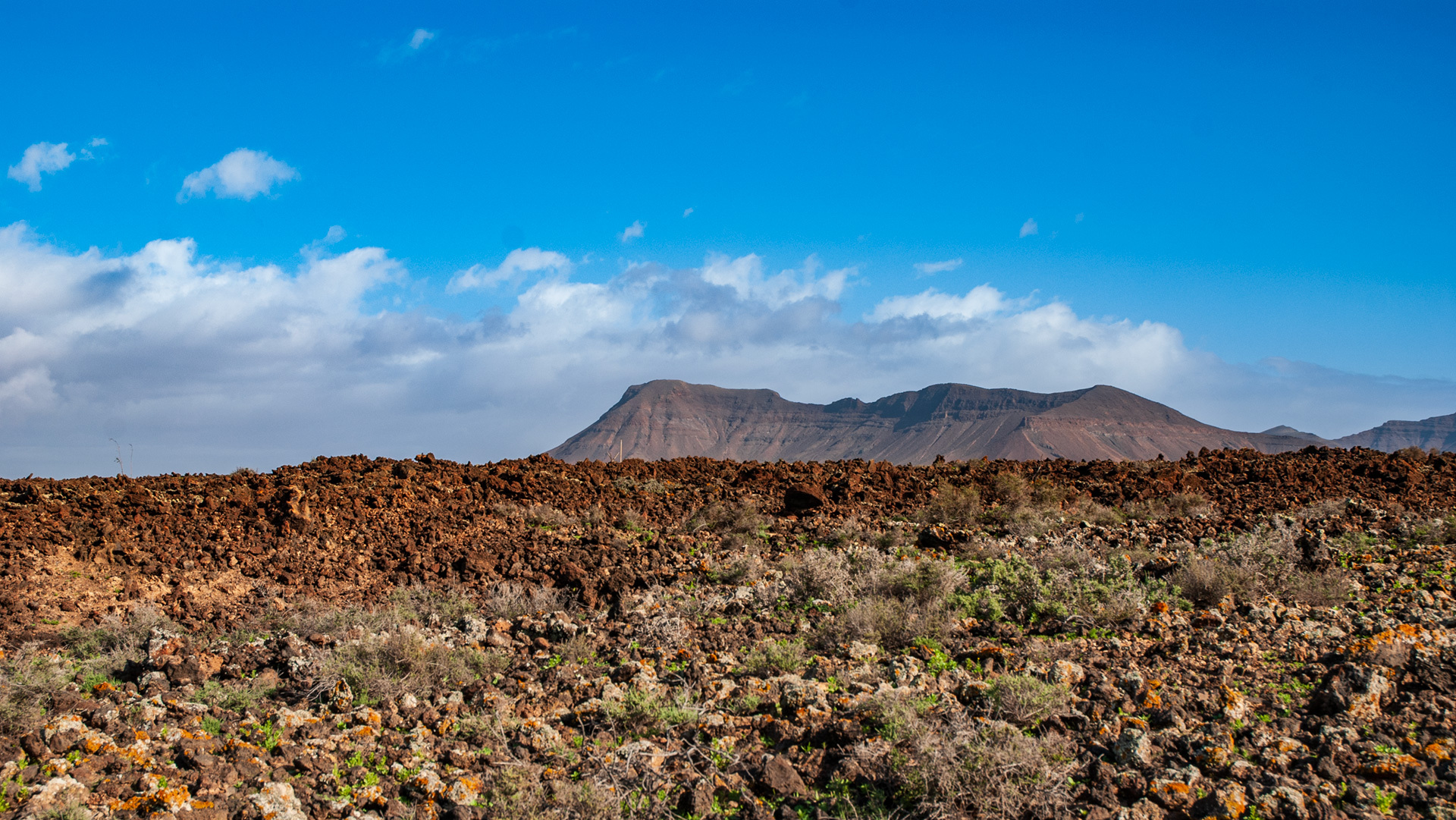
The name says it plainly: Malpaís means ‘bad land’ in Spanish. And indeed, this designation has a long history – it comes from the farmers and settlers who found no yield in this inhospitable terrain, no foothold for their roots, no reason for hope. Yet anyone visiting the Fuerteventura lava field today will recognise: what was once bad land is now one of the most fascinating nature reserves across the entire Canary Islands.
3,000 Hectares of Solidified Earth History
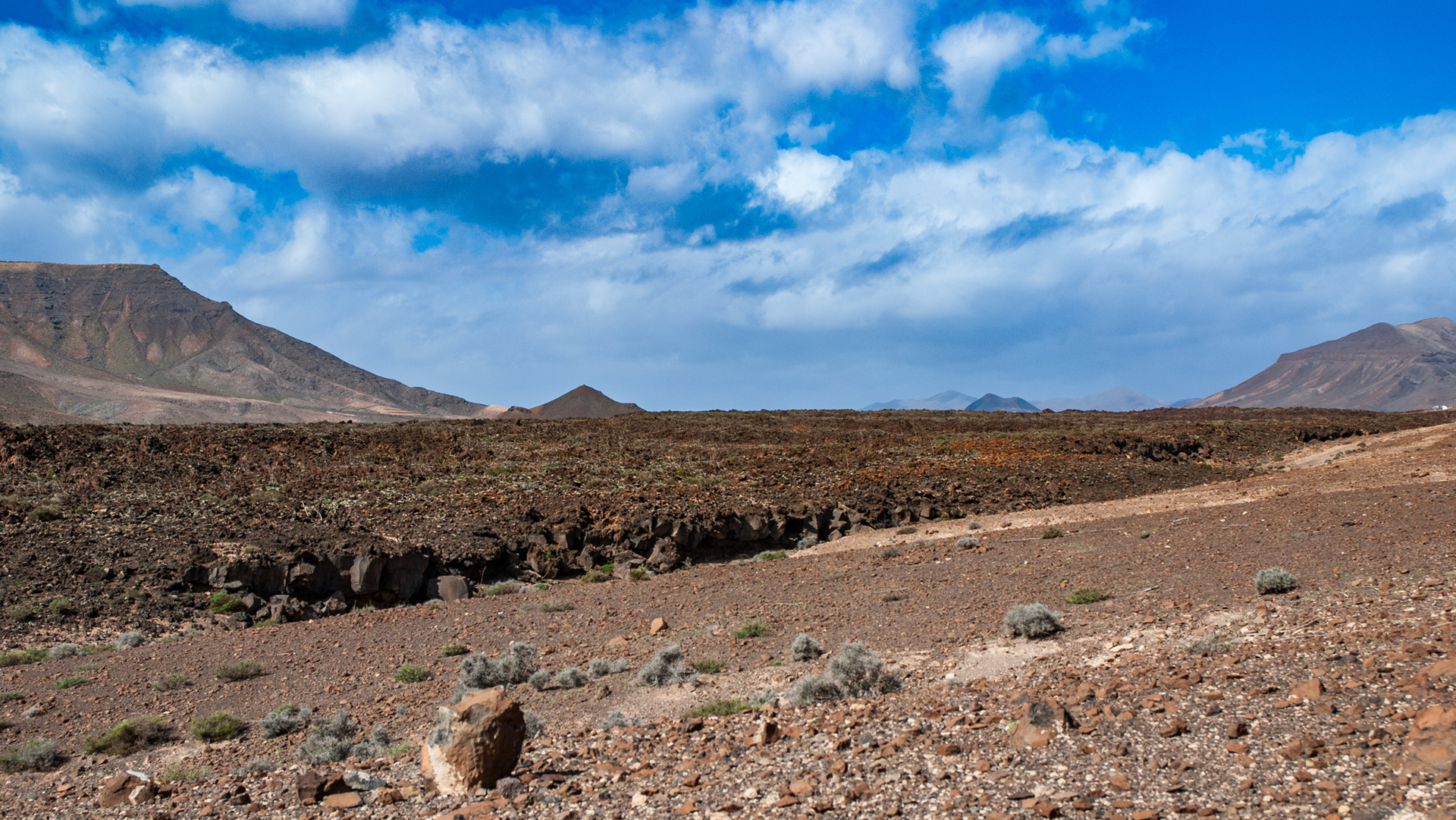
Malpaís Grande stretches across roughly 3,000 hectares in the eastern heart of Fuerteventura – a vast area spanning between Tuineje in the west and Gran Tarajal in the east. Seen from the air, it looks like an enormous dark wound in the island’s bright, ochre-coloured landscape. Standing on the ground, however, a panorama of almost surreal intensity unfolds.
The formation of the Fuerteventura lava field dates back around 10,000 years. Back then, the Caldera de la Laguna volcano erupted – an event that would transform the entire region for ever. Vast masses of lava poured across the land, flowing like a sluggish, glowing sea across the plain before finally solidifying into the rock now known as aa lava: sharp-edged, porous, chaotic in structure, as though the earth itself had turned its innards outward in a moment of rage.
What remained is a landscape that resembles no other place on earth – and yet somehow feels universal. As though you had stepped onto another planet.
The Caldera de la Laguna – Heart of the Volcanic Activity
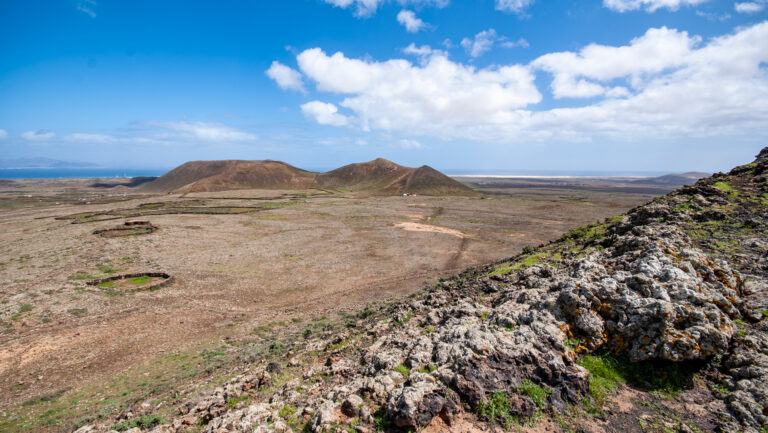
In the northern part of Malpaís Grande, the Caldera de la Laguna volcanic crater presides like a silent guardian over the solidified lava sea. Those wishing to explore the crater should approach via Tiscamanita – an unpaved road leads up, rough and dusty, just as one would expect of a volcanic landscape.
An important note for anyone wishing to climb the Fuerteventura volcanic crater: on weekdays, a quarry operates there, which makes the ascent more difficult and considerably disrupts the atmosphere of the place. Sunday is therefore the ideal day to visit – the area lies in complete silence, and you can climb the crater rim at your own pace. The view from the top rewards the effort: Malpaís Grande extends far in every direction, a black sea of solidified history.
In the immediate vicinity lies the striking Caldera de la Gairía – another volcanic crater that adds a further dramatic dimension to the backdrop of this lunar landscape.
A World of Lava – Rock Formations and Bizarre Beauty
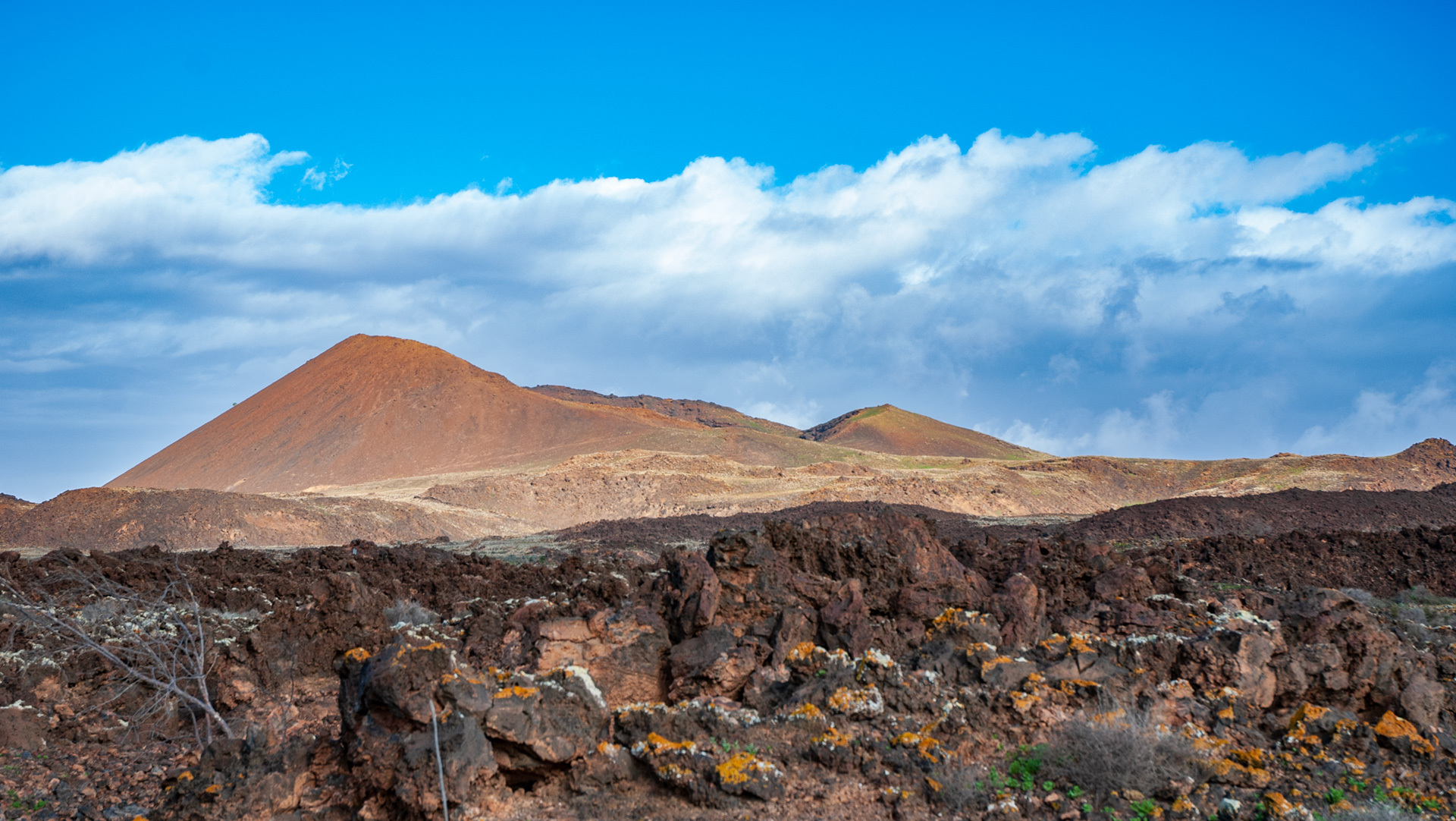
What makes Malpaís Grande Fuerteventura so visually distinctive are the countless bizarre rock formations scattered across the entire area. Light plays a decisive role: in the early morning hours, when the sun skims low across the horizon, the lava chunks cast long, dramatic shadows. The surface of the field seems to move, to breathe.
No path through this rock is safe without care. Aa lava is razor-sharp and unstable – anyone moving carelessly risks not only a fall but serious injury. The Malpaís demands respect. It is not a leisure park, but a piece of primordial earth that has retained its wildness.
And yet: those who pause and look carefully will discover life in the wasteland. Isolated plants have adapted to the extreme arid conditions and grow from cracks in the rock, tenacious and defiant. Sparse shrubs, dry bushes – every little plant here is a small miracle of evolution.
Fauna in the Lava Field: Birds, Goats and the Silence Between
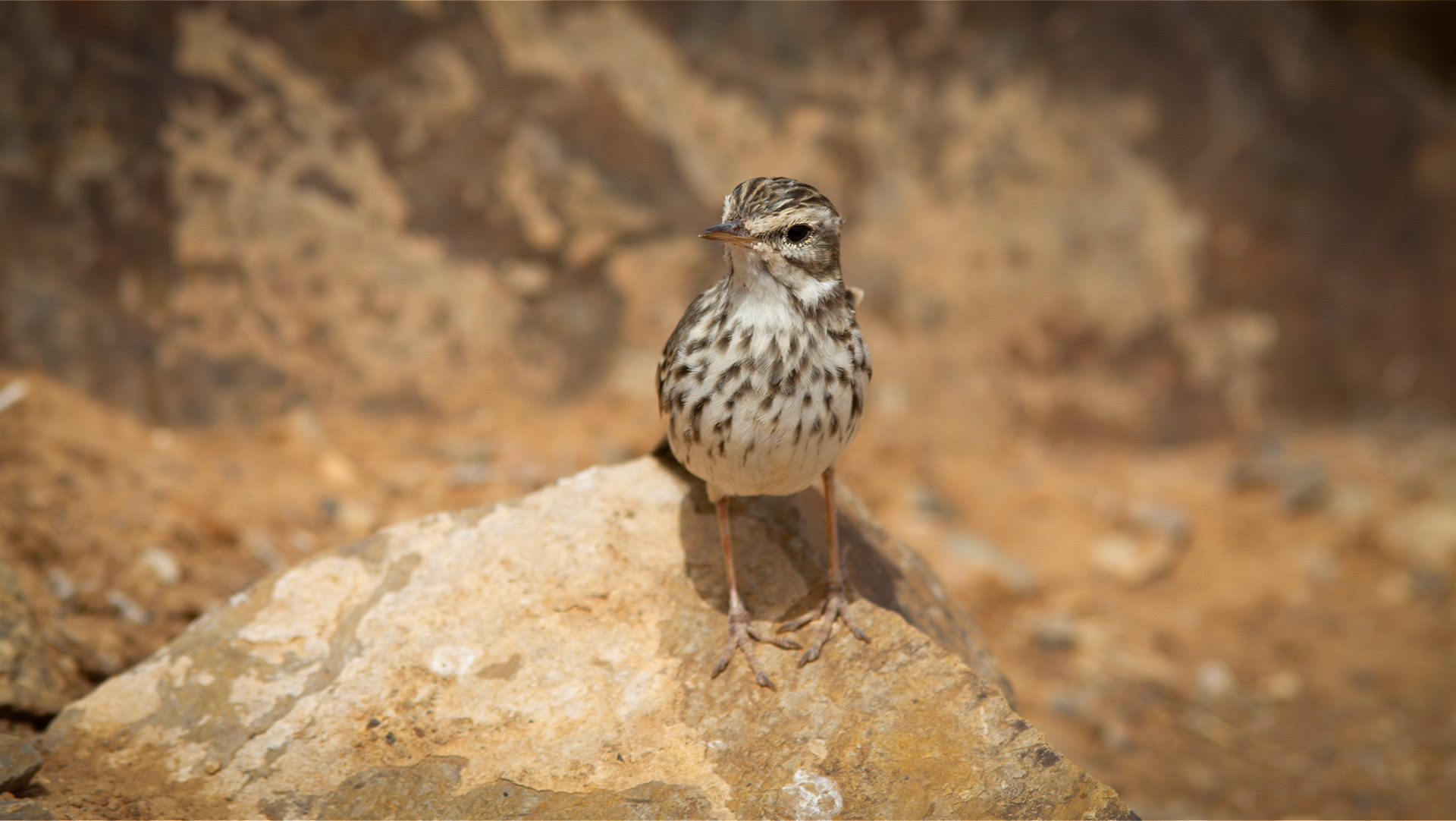
The Fuerteventura nature reserve around Malpaís Grande is also a refuge for wildlife. The fauna may seem modest, but it is present – those who are quiet and patient will be rewarded.
Various bird species have discovered the lava field and use the isolation of the terrain as a breeding ground and hunting territory. Occasionally you can see them gliding over the black rock, as though setting the silence vibrating.
And then there are the goats. They roam the lava field again and again – some feral, some from small farms in the surrounding area – leaping over rocks no human would attempt to climb, and gazing at visitors with that typically indifferent goat stare. They seem completely out of place in this lunar landscape. And at the same time, completely right.
Agriculture at the Edge of the Possible
Malpaís Grande is virtually unusable for conventional agriculture. No plough can penetrate this rock, no root finds enough purchase. And yet the inhabitants of the region have found, over generations, a remarkable way of making the land work for them.
The mineral-rich extrusive rock – rich in trace elements and volcanic minerals – is removed by farmers and brought to their fields as natural fertiliser. Volcanic ash as fertiliser is nothing unusual on the Canary Islands: on Lanzarote, for instance, this knowledge has been practised for centuries. It is a quiet form of symbiosis between human and nature – the earth gives back what it once expelled in flames.
This extraction leaves its mark on the landscape: lorries travel along unmade tracks through the lava field, loaded with slag and rock. Anyone wishing to explore these tracks in their own vehicle should bring a suitable off-road vehicle – ordinary cars have little business on these gravel roads.
Exploring the Malpaís Grande: Hiking, Driving, Observing
For visitors, Malpaís Grande Fuerteventura offers various ways to explore – depending on preference and fitness level.
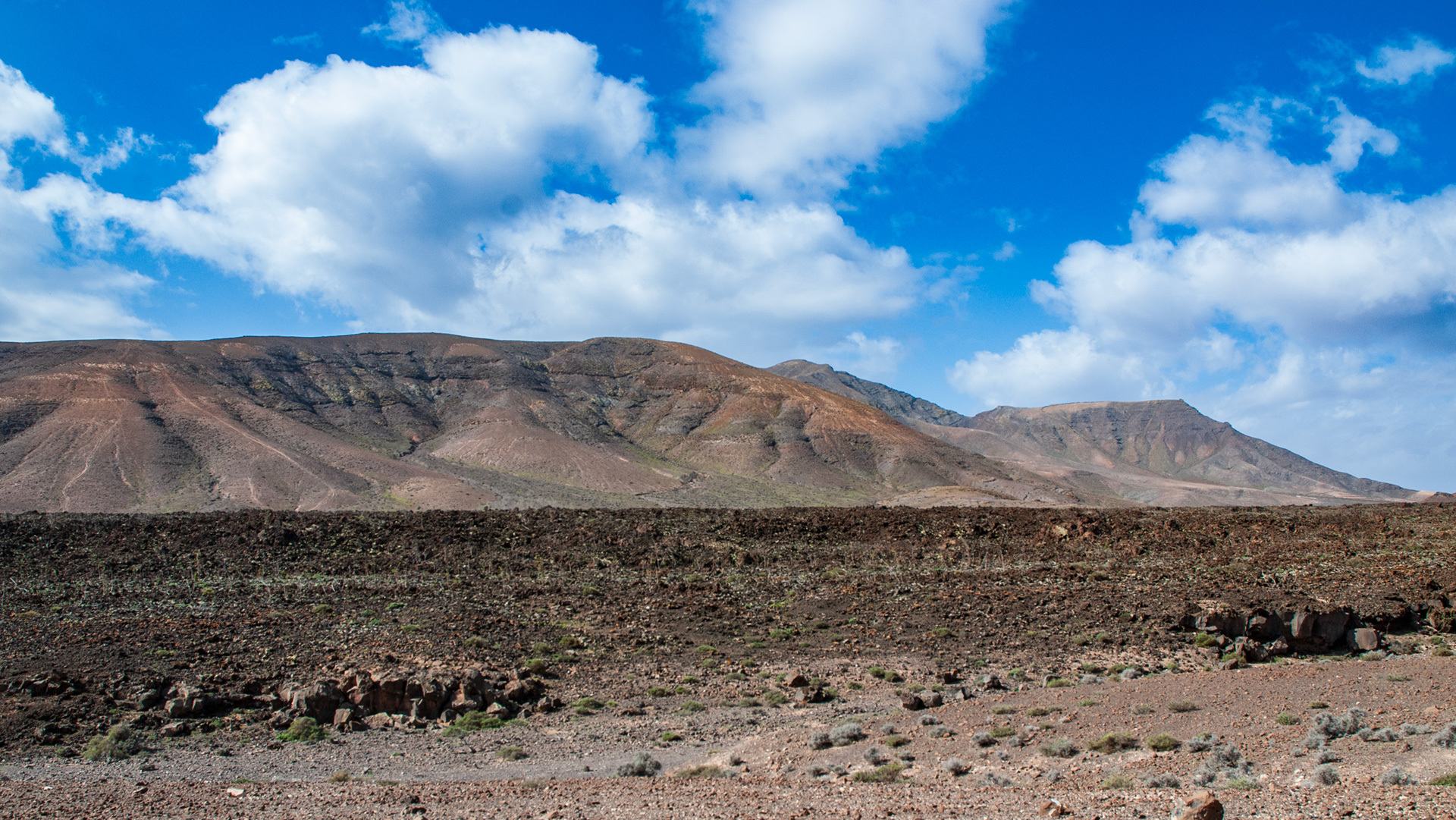
By car, the landscape can already be experienced from the FV-2 road, which crosses the eastern edge of the lava field. At several points along this stretch, lay-bys are marked out, from which the terrain can be viewed in peace. Anyone who simply pulls over, steps out and lets their gaze drift across the fields will understand within minutes why this place is under nature protection.
Hiking in Malpaís Grande is entirely possible, but requires sturdy footwear and attention. The sharp-edged lava rock has no mercy on light trainers. The best hiking season in Fuerteventura is between October and May – temperatures are pleasantly mild, and the midday heat of summer places no limits on endurance.
Those who wish to venture deeper into the terrain follow the unmade tracks – but as noted: only with a suitable vehicle and preferably with company. The Malpaís is vast, and mobile phone reception in this wilderness is not to be taken for granted.
Excursion Tips Around the Malpaís Grande
Those visiting the area around Malpaís Grande should allow themselves a little more time – for the surroundings have much to offer.
La Atalayita – an ancient Canarian ruin site nearby – combines excellently with a visit to the lava field. The remains of the pre-Spanish settlement tell of the island’s first inhabitants, the Mahos, who lived here long before Europeans set foot on the Canary Islands. Those with an interest in history will find a quiet, impressive testament to times gone by.
Also worth a detour is the fishing village of Pozo Negro, which lies on the coast to the east of the Malpaís. A small, almost sleepy village with colourful boats, a calm black-sand beach and restaurants serving fresh fish – a welcome contrast to the raw wildness of the lava field.
Anyone in the area should not miss nearby Tiscamanita – a quiet village with a small windmill museum that offers an authentic glimpse into the island’s rural life.
Getting to Malpaís Grande Fuerteventura
Malpaís Grande is easily reached by car. The FV-2 country road runs directly along the eastern edge of the lava field, connecting Tuineje with Gran Tarajal. Along this route there are several lay-bys from which the terrain can be explored on foot.
The Caldera de la Laguna volcano in the northern part of the area is most conveniently reached via Tiscamanita – a gravel road leads up to the crater rim. A suitable off-road vehicle is recommended for this route, particularly after rainfall.
There is no public bus connection into the heart of the Malpaís – the car is the only option here.
Conclusion: Malpaís Grande – Fuerteventura’s Dark Soul
Malpaís Grande Fuerteventura is not a place for quick photographs. It is a place for those willing to engage with something unfamiliar – with a silence that is almost physically tangible, with a beauty that knows no desire to please. Those who stand here understand why this place was placed under nature protection. Not because it is pleasant. But because it is irreplaceable.
The black lava field tells of a time when this earth was still in motion. And sometimes, when the wind sweeps across the sharp edges and not another soul is to be seen for miles, you almost believe you can still feel that movement.
Malpaís. Bad land. And yet: one of the most impressive places in the Canary Islands.