At the northern edge of Betancuria, the historic heart of Fuerteventura, you begin to sense that time flows differently here. Between pale yellow walls and the silence of ancient stones rises the ruin of the Convento de San Buenaventura – the first monastery of the Canary Islands. Approaching it, you are not entering an ordinary place. You are entering a history carved deep into the rock of this island.
The Oldest Monastery in the Canary Islands – Founded in 1416
It was the year 1416 when seven Franciscan monks, who had arrived on the island with the Norman conquerors, began to build the first monastery on Canarian soil. From this place, the Christianisation of the ancient Canarians took its course – those indigenous inhabitants also known as the Guanches. In 1460, the Franciscan monastery of Fuerteventura was expanded and consolidated, as though to chisel in stone what had been intended for eternity.
For a time, it seemed as though the monastery might truly endure through the centuries.
Pirates, Secularisation and the End of an Era
But history had other plans. In 1593, pirates attacked Betancuria and burned the monastery to the ground – along with large parts of the town. One can imagine the smoke rising then, black and bitter, over the barren hills of the island.
What the fire did not finish, politics completed: in 1836, during the Spanish Secularisation, all monasteries in the country were dissolved and the complex was finally destroyed. The massive walls of the Convento de San Buenaventura were thereafter used as a quarry – a silent symbol of how power and history overwrite the traces of the past.
What the Centuries Left Behind – Gothic Remains in Betancuria
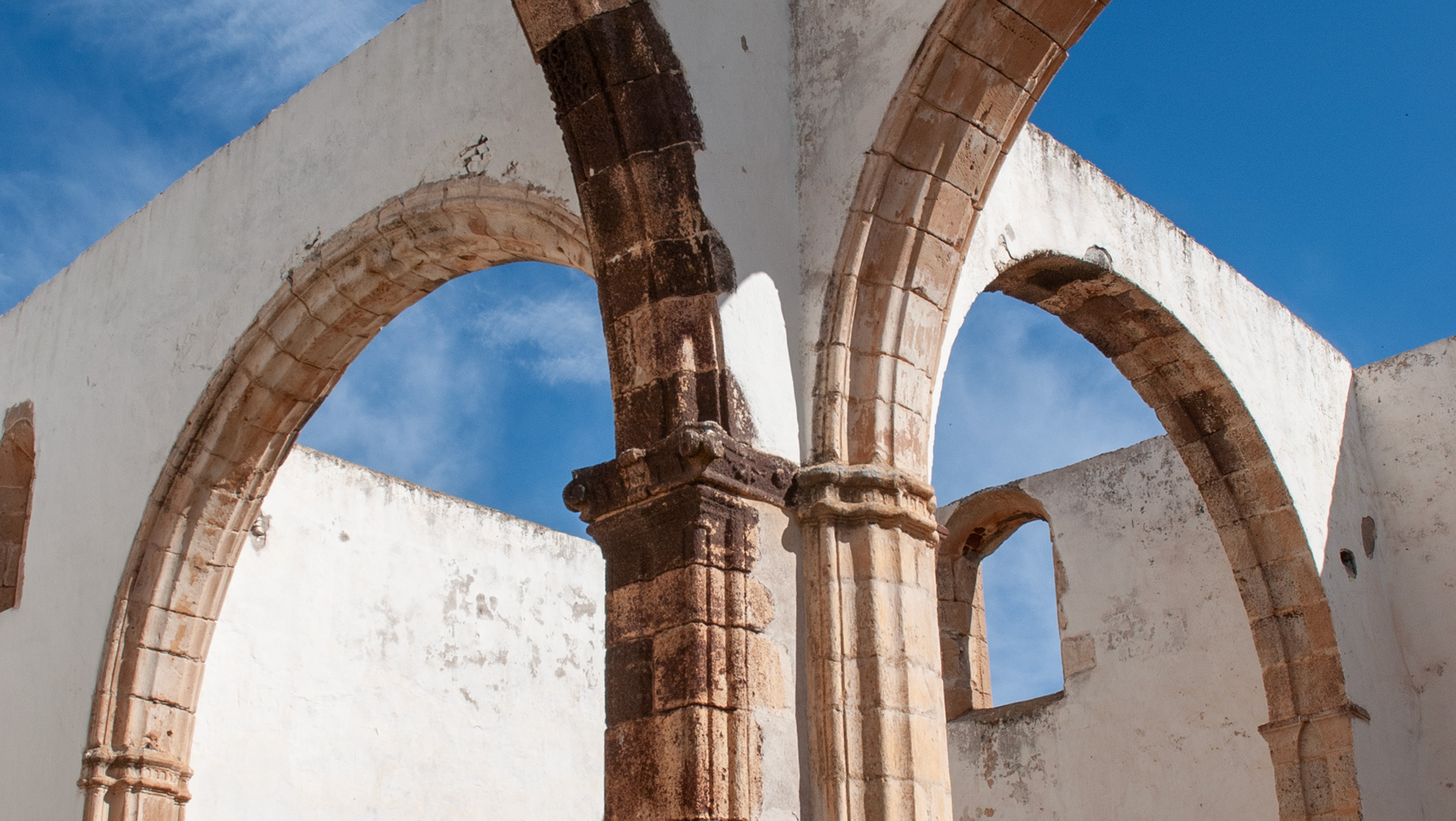
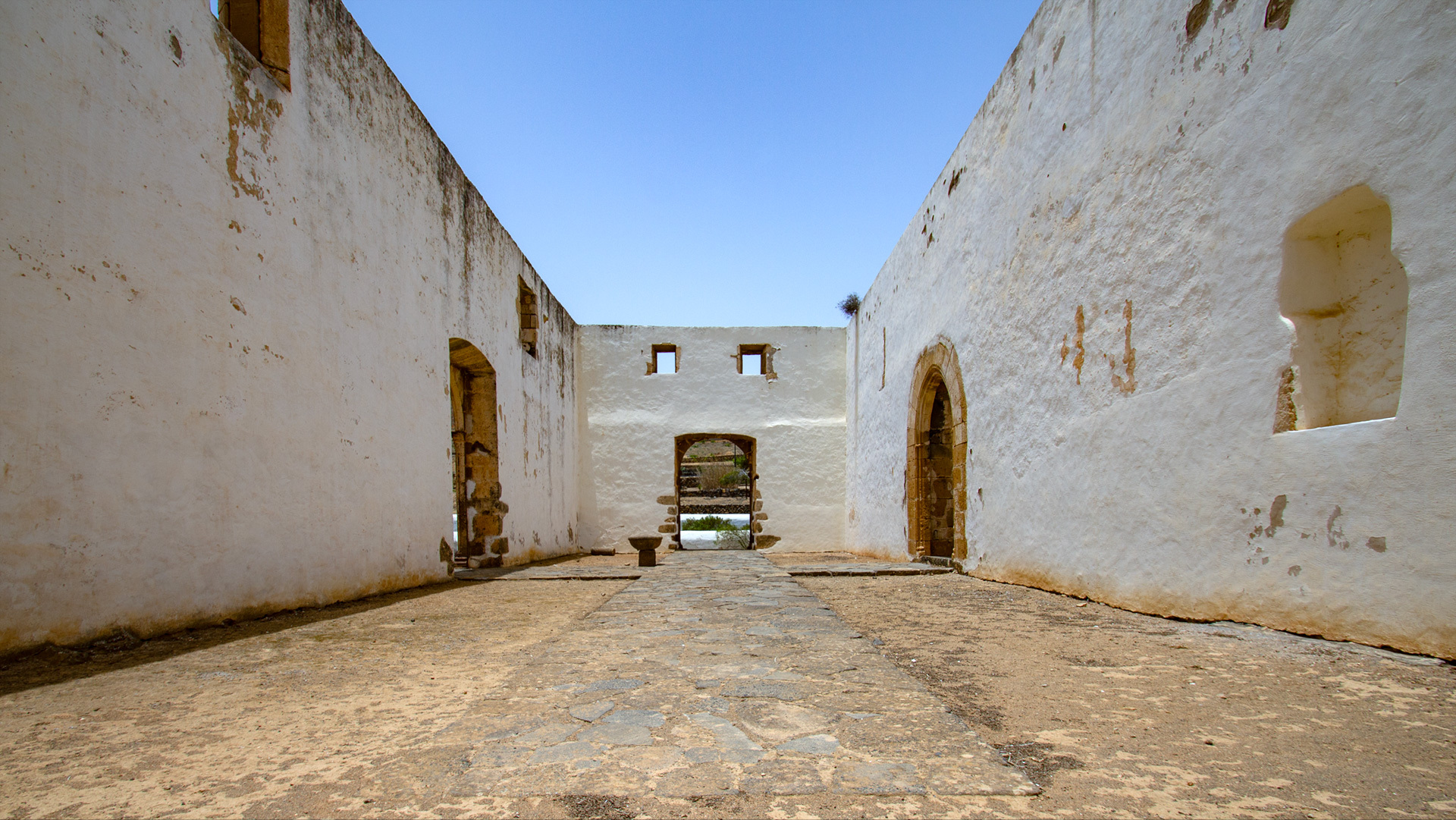
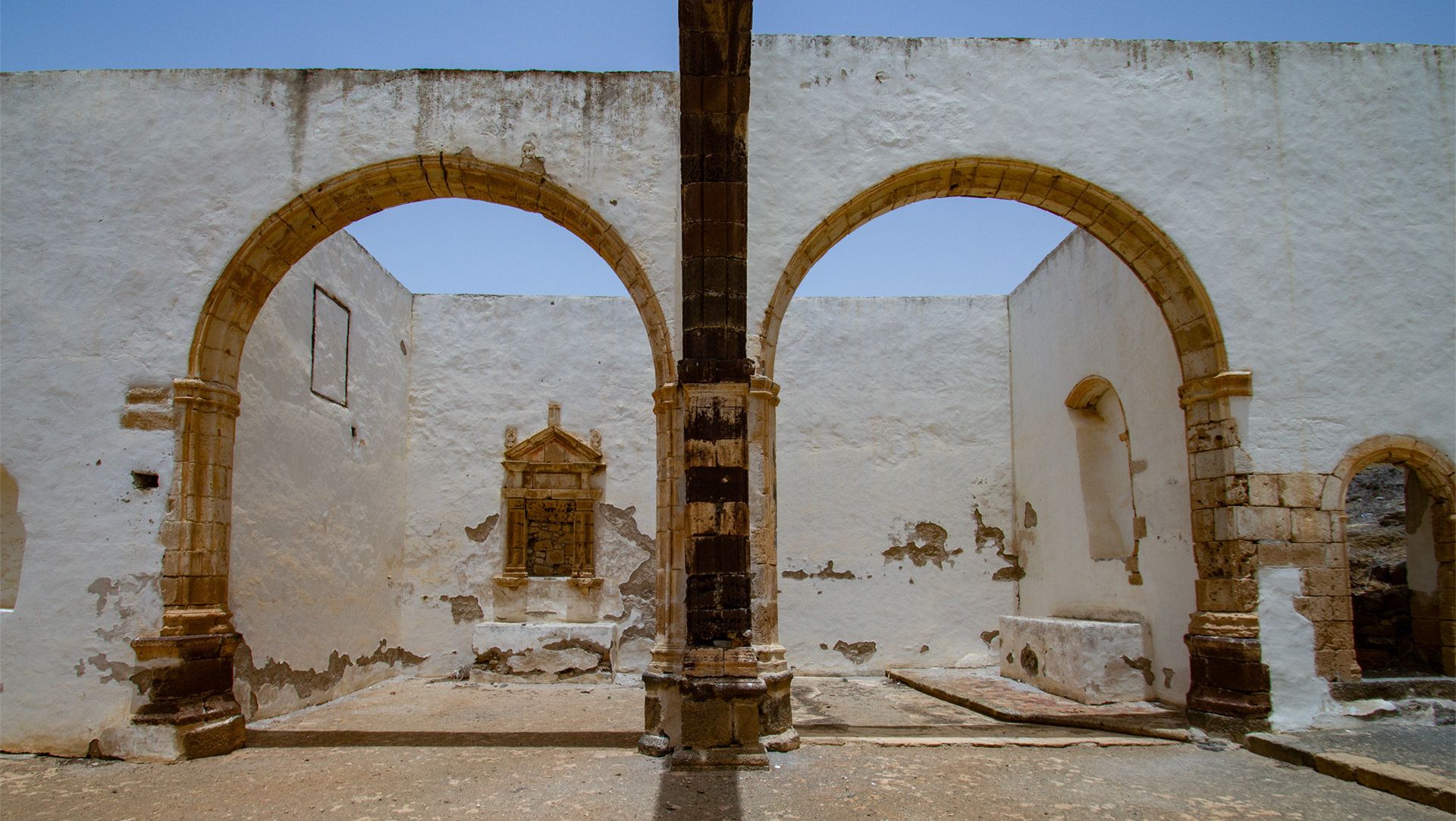
What remains still carries an unmistakable dignity: a pointed-arch portal, several rounded arches, fragments of the outer walls and a grave slab in front of the former chancel. All of them bear witness to the once Gothic architectural style of the monastery. Valuable objects were saved in churches and collections before the walls finally fell silent.
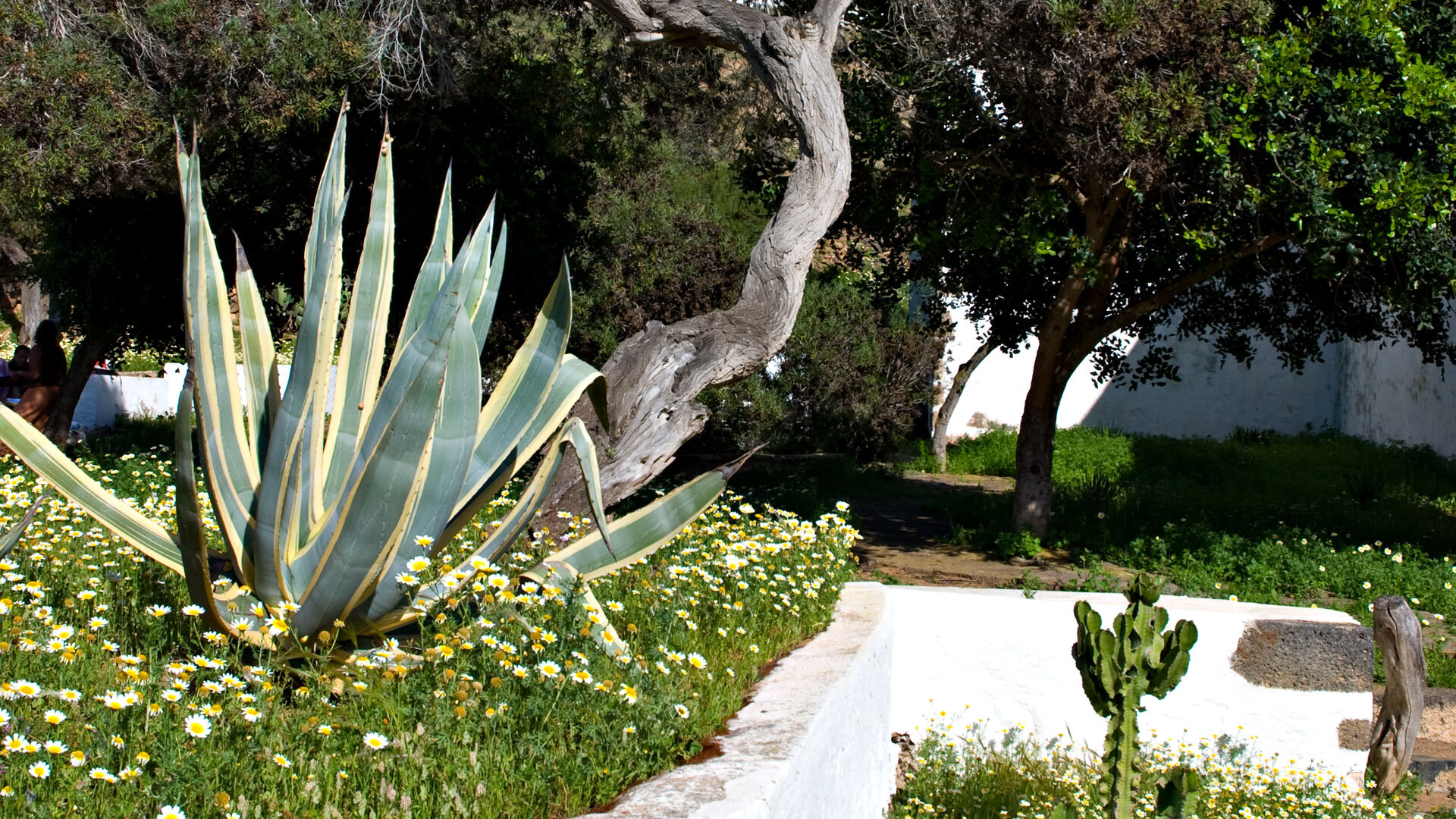
Today a lovingly restored garden surrounds the ruin – named after the conquistador Diego García de Herrera, who was once interred in the monastery. Among bougainvilleas and the sound of the nearby stream bed, it is easy to pause. And to reflect.
The Capilla San Diego de Alcalá – Miracles, Devils and a Saint
Beyond the stream bed that separates the monastery from its neighbour stands the Capilla San Diego de Alcalá – a chapel whose history is barely less dramatic than that of the Convento itself. The Franciscan monk Didacus, also known as San Diego de Alcalá, is said to have retreated to a cave at this spot to pray and – according to legend – to perform many miracles.
After his death, a chapel arose at this spot. And tradition has it that for its construction, the devil himself was summoned by conjuration. That said, “devil” was also a common term in the language of the time for stubborn camels – those obstinate beasts of burden without whom little would have been possible on Fuerteventura.
Mudéjar Style and Fertility Symbols – The Interior of the Chapel
The present church dates predominantly from the 17th century. Those who step inside encounter on the ceiling the unmistakable Mudéjar style – that artful blend of Moorish and Christian influences that recurs throughout the Canary Islands like an echo from al-Andalus.
On the walls there are also fertility symbols, possibly connected with the legendary deeds of Saint Didacus. The connection between faith, body and earth is palpable here – and it remains alive to this day.
A Living Custom – Earth for a Safe Birth
For a very special custom from Fuerteventura has survived into the present day: earth from around the former cave of Saint Didacus is sprinkled onto the belly of a pregnant woman – as protection, as a blessing, as a plea for a complication-free birth. A ritual that has endured through the centuries, quietly and persistently, like the island itself.
You need not be a believer to find something moving in this custom. It is proof that some places are more than stone and mortar. The Convento de San Buenaventura in Betancuria, Fuerteventura is one such place.
Visitor’s Tip: Worth Pausing
The entire complex of monastery ruin, garden and chapel invites you to linger – and in the best sense of the word. Anyone visiting Betancuria should take time for this place. Not to rush. Not just to photograph. But to stand still, listen, and perhaps understand why some ruins tell more than many an intact church.