La Atalayita – Where the Stillness of the Majos Can Still Be Felt Today
Anyone wishing to explore Fuerteventura beyond the beaches will eventually come across a landscape that takes your breath away – not because of its lushness, but because of its stark barrenness. About three kilometres west of the small coastal village of Pozo Negro, nestled amongst the dark lava rock, lies the La Atalayita archaeological site: one of the most significant and most carefully excavated settlements of the indigenous people of Fuerteventura.
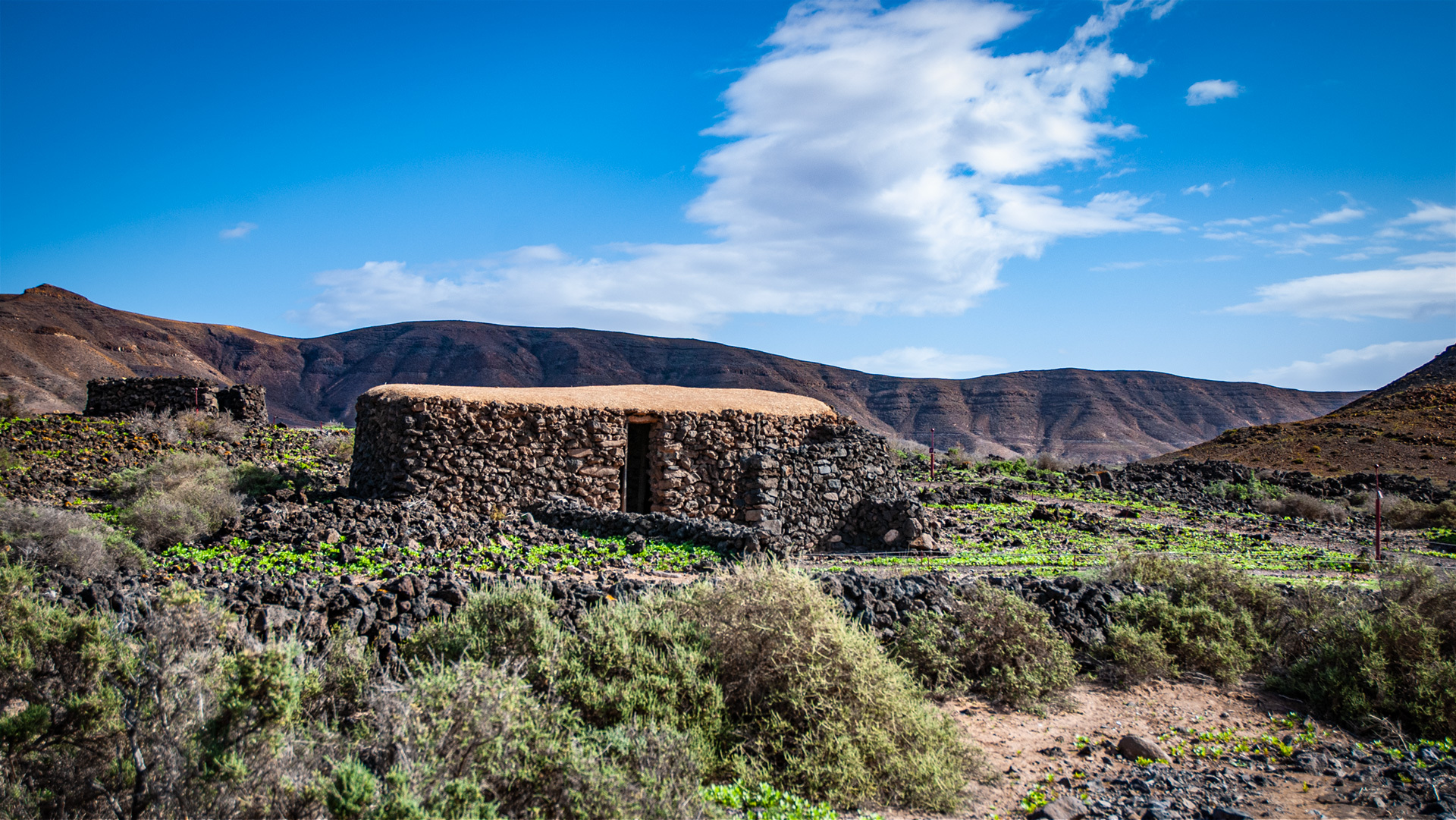
The Malpais Grande lava field – a landscape straight from another planet
You drive along the FV-420 through a landscape that, at first glance, appears inhospitable. The Malpais Grande – which translates as ‘big bad land’ – stretches out like a petrified sea of black and brown rock. Volcanic formations rise towards the sky in strange shapes, whilst low, arid vegetation braves the wind. And yet: within this barrenness lies a quiet beauty that reveals itself only to those who pause and look.
Right here, in the middle of this lava field on Fuerteventura, the Majos – the indigenous people of the island of Fuerteventura – once lived.
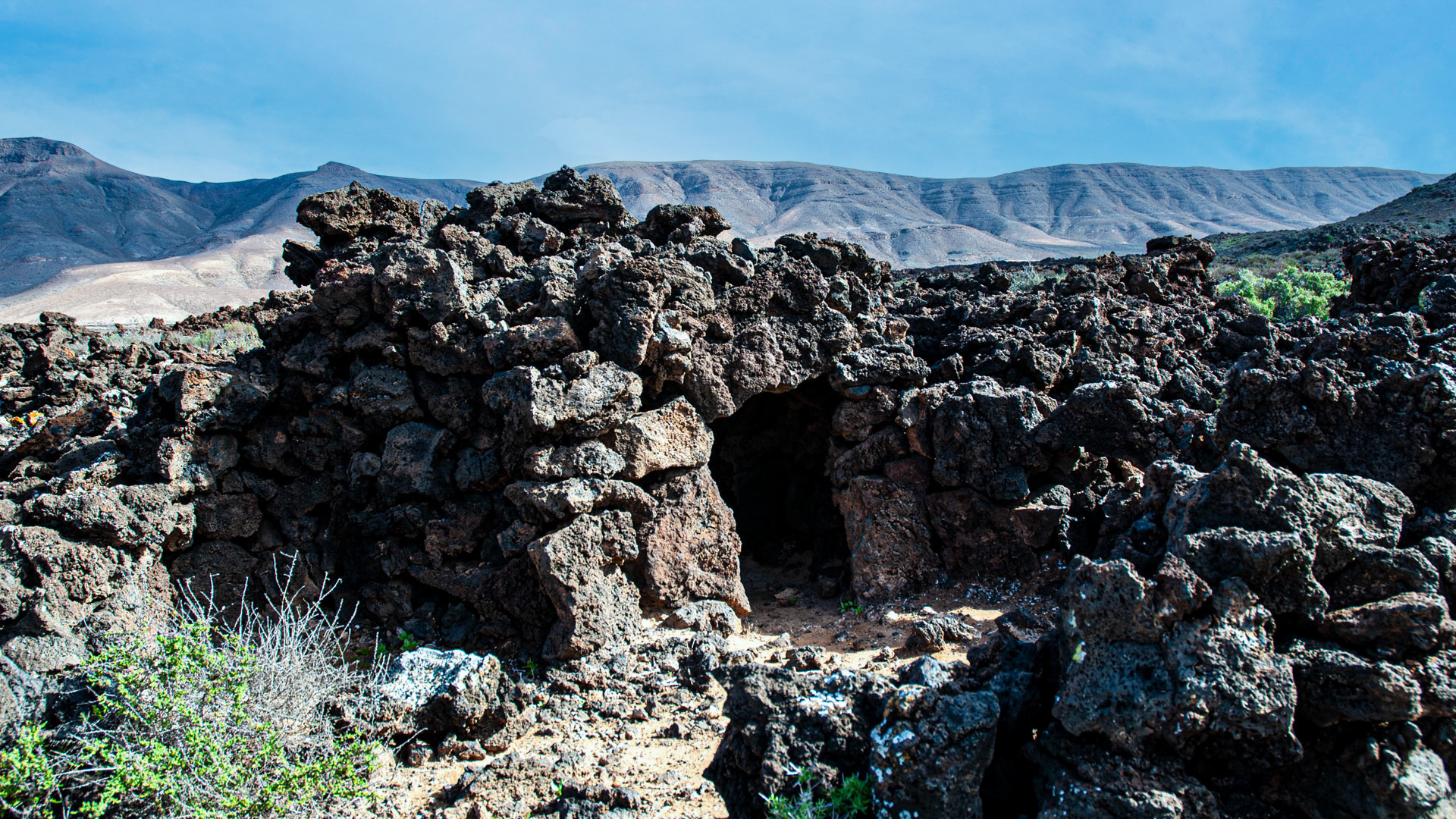
La Atalayita – a prehistoric settlement of the Majos
Covering an area of around 40,000 square metres, the La Atalayita settlement comprises a total of 115 structures dating from various periods. The oldest structures date back to pre-Christian times and bear witness to a society that managed the island’s resources wisely and pragmatically.
The houses were built from loosely stacked lava rock – no mortar, no cement, just stone upon stone. Anyone wandering through the ruins of the Majos will quickly spot a pattern: round and oval floor plans betray great age, whilst rectangular buildings point to the period following the Spanish conquest of Fuerteventura. A distinctive architectural form is the so-called Casa Honda, in which the interior lies lower than the entrance – a clever adaptation to the climate, as the porous volcanic rock provides excellent natural insulation.
Some dwellings were built directly into naturally formed lava bubbles. In this way, what the earth provided became a living space.
Life in La Atalayita – more than just stones and rubble
The archaeological finds from La Atalayita tell stories. Polished stones, bones, shells and the shells of limpets – known as concheras – provide insights into the diet and everyday life of the Majos on Fuerteventura. The settlement served not only as a place of residence, but also as a stable and storehouse. Right up until the 1950s, locals continued to use individual buildings as cattle pens – living proof that these sites were never completely lost to time.
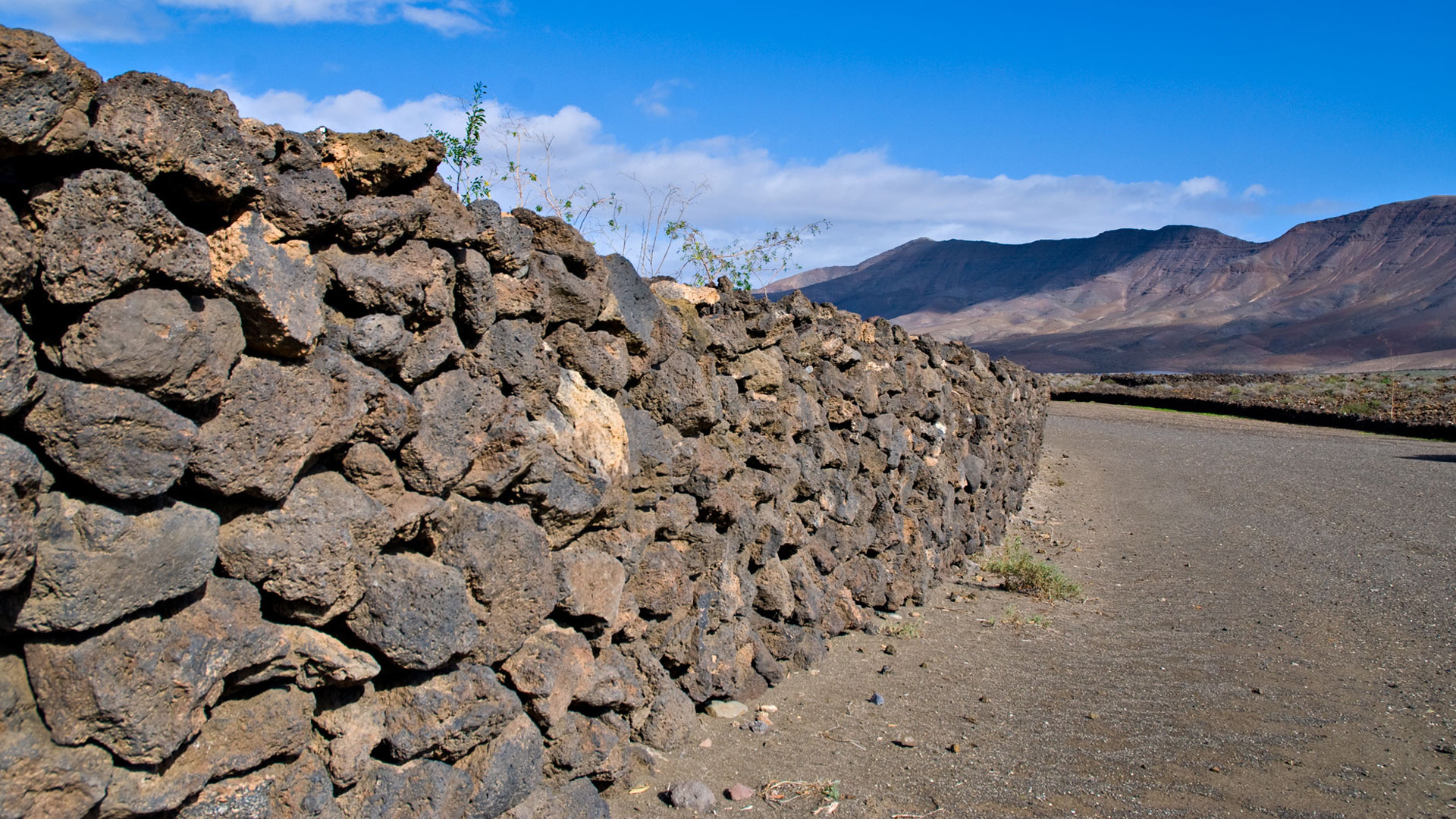
The Lomo de la Atalayita volcanic cone – a watchtower of the past
Towering above the settlement stands the Lomo de la Atalayita volcanic cone. For the Majos, it was more than just a geological curiosity: it provided cover from pirates who landed on the nearby coast. Today, a marked path leads up the hill – and anyone who ventures up the short climb is rewarded with a magnificent panoramic view over the lava fields, the settlement and the sea. A view that stays etched in your memory.
The Information Centre – history you can touch
Right next to the car park stands the Centro de Interpretación, La Atalayita’s information centre. Its architecture alone is a tribute: the traditional circular building is modelled on the prehistoric dwellings of the Majos. Inside, visitors will find an informative exhibition about the archaeological site, with multilingual leaflets available free of charge (as of 2009). Entry to the entire site is free of charge.
Information Centre opening hours: Tuesday to Saturday, 10:00 – 18:00 | Closed on Sunday & Monday (occasionally closed at other times as well)
Visitor tip: As the information centre is not always staffed, a visit is definitely worthwhile – because the outdoor area, with its more than 115 historic stone buildings of the Mahos, is usually freely accessible. The climb to the top of the hill and the walk through the Malpaís Grande are a delight even when the museum is closed.
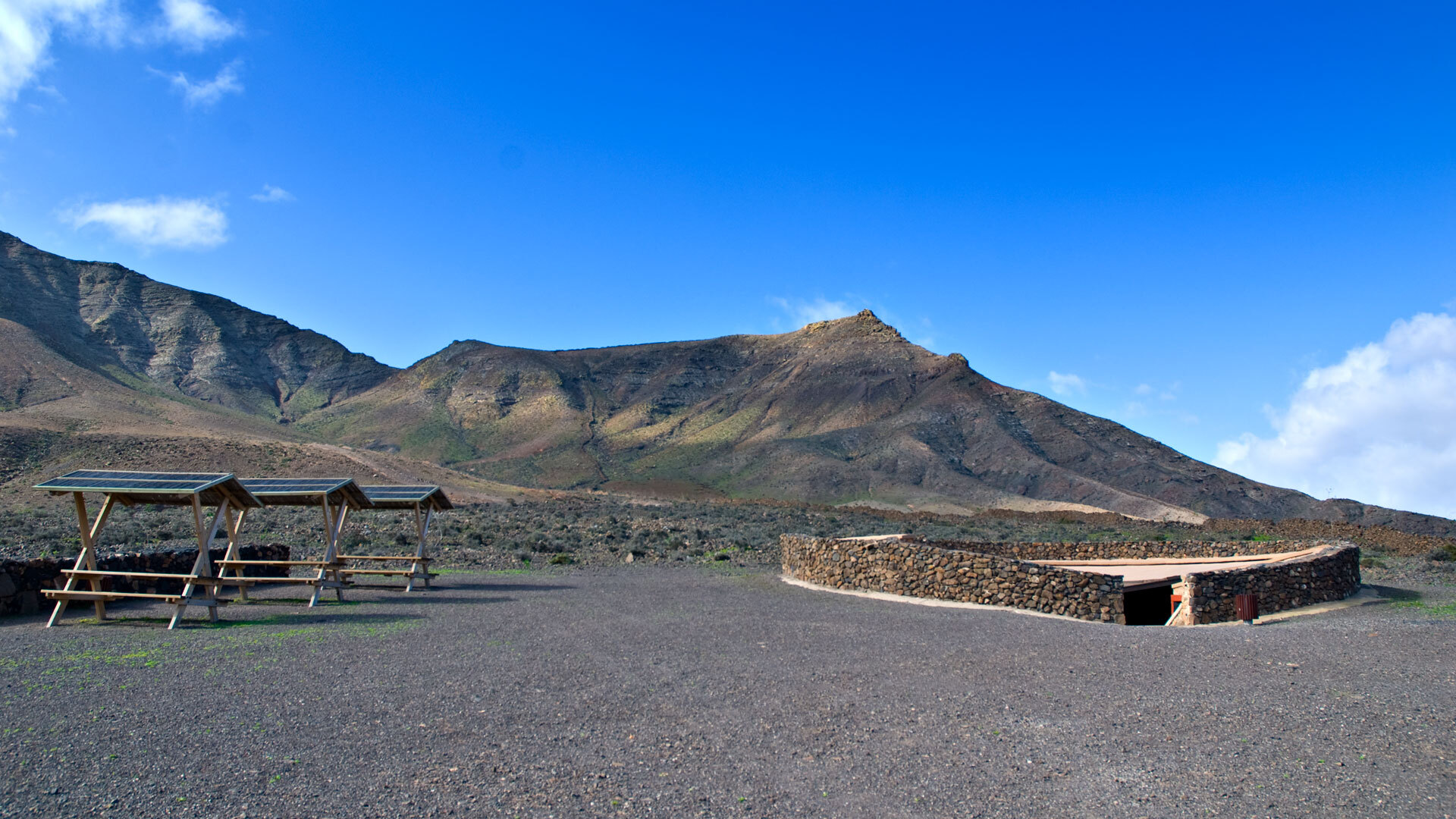
Visiting & getting there – practical information
From Caleta de Fuste, drive for about 14.5 kilometres, turn left onto the FV-420 and, after about 3 kilometres, follow a signpost onto a small side road on the right. There is plenty of parking available.
The La Atalayita archaeological site is accessible at all times via marked paths. Please stay on the paths, take nothing away and leave no trace – the site is monitored by security staff.
Contact (as of 2026): Carretera General del Pozo Negro, 35630 Valle del Pozo Negro, Antigua Tel.: +34 928 17 65 86 or +34 928 85 89 98 (central island administration for guided tours/museums)
Conclusion – a must-visit for history enthusiasts
La Atalayita on Fuerteventura is more than just a collection of old stones. It is a place where you can sense how people created a home for themselves under extreme conditions. Anyone who wants to really get to know the island cannot miss this unique testament to the Majo culture.