Traditional Fish Dishes on Fuerteventura – When the Sea Arrives on Your Plate
The Atlantic stretches out before you like a silver-grey curtain, restless and endless. On Fuerteventura, the sea is no mere backdrop – it is farmer, larder and soul all at once. Anyone who visits the coastal villages on a calm morning and watches the fishermen moor their boats and carry their silvery baskets ashore will understand at once: the traditional fish dishes of Fuerteventura are not culinary folklore. They are living history.
Why Fuerteventura Has One of the Canaries’ Finest Fish Cuisines
The Canarian fish cuisine owes its uniqueness to the interplay of Atlantic currents, artisan tradition and a philosophy of simplicity. Nothing is covered up here. Nothing is hidden. Olive oil, sea salt, garlic – and a fish so fresh it outshines everything else. The freshly caught Atlantic fish needs no distraction.
A visit to the coast in summer is particularly worthwhile, when the chances of enjoying a true Pescado del Día – the catch of the day – are greatest. What was swimming in the Atlantic that morning is on your plate by lunchtime. Hardly anywhere else do you experience this quite so directly as in the small fish restaurants on Fuerteventura in Ajuy, La Pared, Las Playitas or Puerto del Rosario.
The Atlantic as Larder – Abundance Without Limits
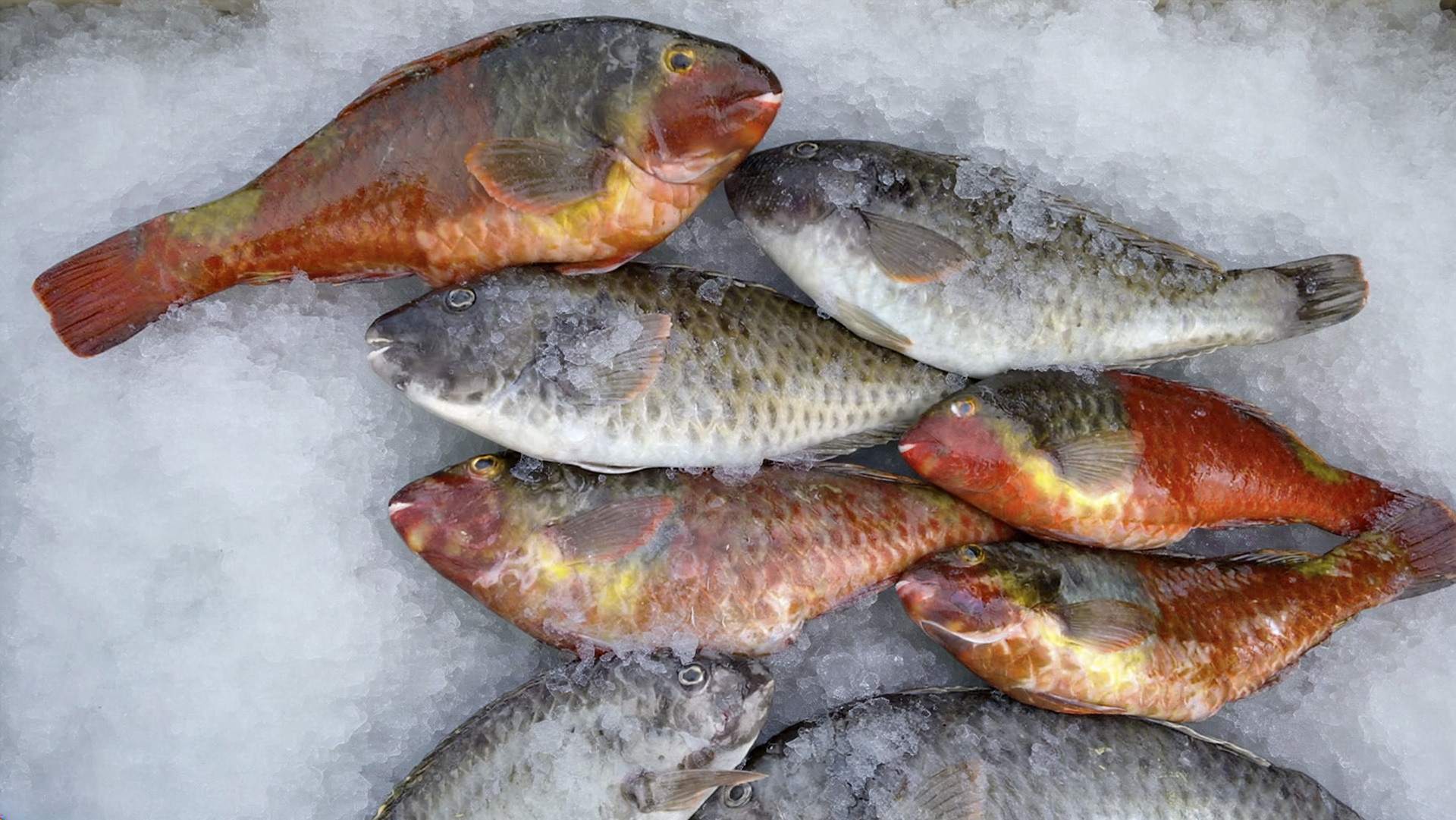
What the Atlantic off the West African coast yields is impressive. The menu features: Vieja (parrotfish), sole, tuna, mackerel, moray eel, grouper, wreckfish (Cherne), shark, cod and a variety of crustaceans such as fresh prawns. The cooking methods remain deliberately classical – grilled, fried or slow-cooked in a stew. For the quality lies in the ingredient, not the sophistication of the technique.
Vieja a la Espalda – the King of Grilled Fish on Fuerteventura
Anyone who has eaten Vieja a la Espalda once will never forget it. The Vieja, known in English as parrotfish, is considered the finest eating fish in the Canaries. Its flesh is white, firm, with a subtle sweetness that faintly recalls crabmeat. “A la espalda” means the fish is butterflied and placed skin-side down on the hot griddle.
Ingredients for 2 persons:
Preparation: Place the fish skin-side down on a hot griddle or frying pan and cook for 8–10 minutes. Meanwhile, heat olive oil in a small pan and fry the sliced garlic until golden. Pour the hot garlic together with the oil and chopped parsley over the finished fish – directly, hot, without delay. Serve with: Papas Arrugadas, the legendary wrinkled potatoes of the Canaries.
Calamares a la Romana – the Classic at Every Harbour
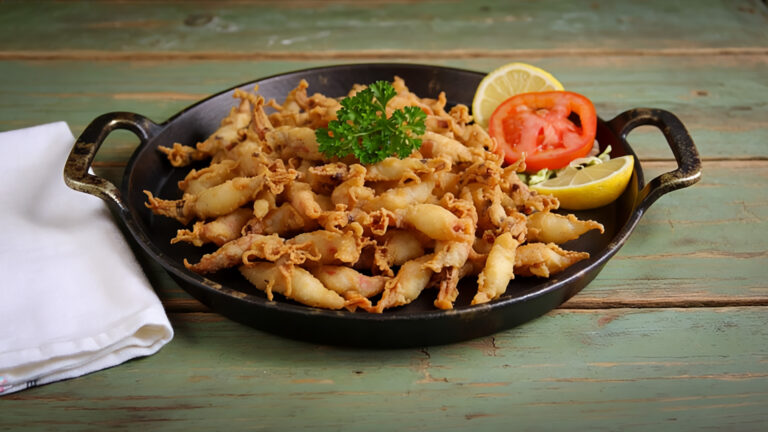
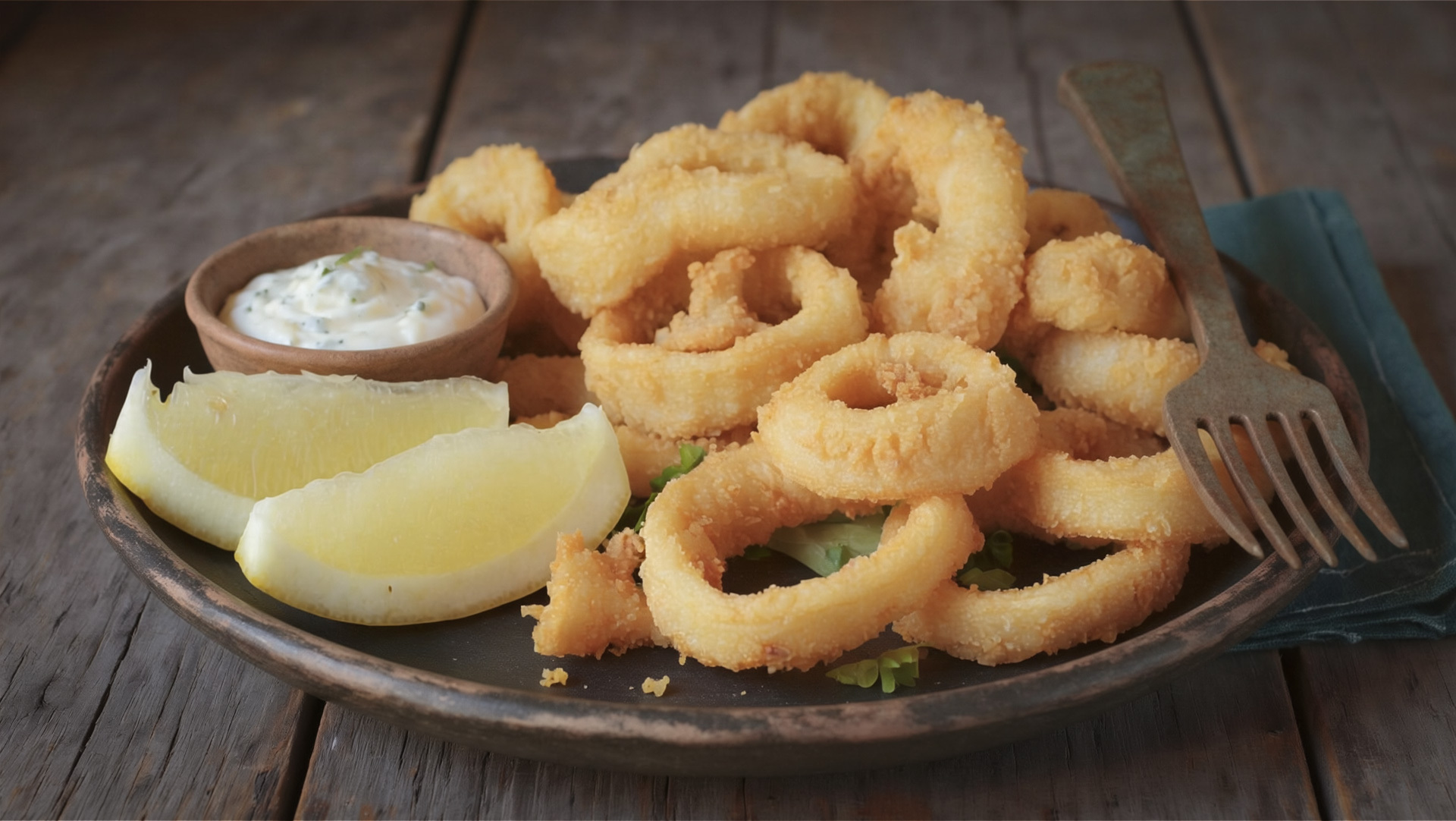
No harbour restaurant on Fuerteventura is complete without Calamares a la Romana. The crispy fried squid rings are as natural as the sound of the sea. The secret lies in the batter: a splash of sparkling mineral water makes it light and crisp, almost airy.
Ingredients for 4 persons:
Preparation: Cut the squid into even rings and pat thoroughly dry. Mix egg, flour and sparkling water into a thin batter. Coat the rings in the batter and deep-fry in hot olive oil until golden. Serve with fresh lemon and a good Mojo Verde.
At the Vaca Azul in El Cotillo, one of the most famous fish restaurants in the Canaries, you eat these croquettes gazing out at the surf. An experience that stays with you.
Pescado Salado con Gofio – Memories of Fishing Days
Some dishes tell history. Pescado Salado con Gofio is one of them. The salted and dried fish was once the fishermen’s preserve – durable, nourishing, honest. Today it is a piece of the island’s culinary memory.
Ingredients for 2–3 persons:
Preparation: Soak the fish for 24 hours (changing the water regularly), then cook in fresh water for 15 minutes. Slowly pour the hot cooking stock into a bowl of Gofio, stirring until a firm paste forms – the so-called Escaldón. Arrange the fish on this bed of Gofio, garnish with onion rings and serve.
Whoever eats this dish dines at the same table as the fishermen of the past.
Sancocho – the Traditional Canarian Fish Stew
The Sancocho Canario is one of the oldest stews in the island’s cuisine. Salted fish – usually Cherne – is served with sweet potatoes, potatoes and Mojo Rojo. No dish embodies the traditional fish cuisine of Fuerteventura better than this one: simple, hearty, unmistakeable. The Sancocho appears on many menus and is regarded as the soul of Canarian cooking.
Croquetas de Pescado – Fish Croquettes from the Tapas Bar
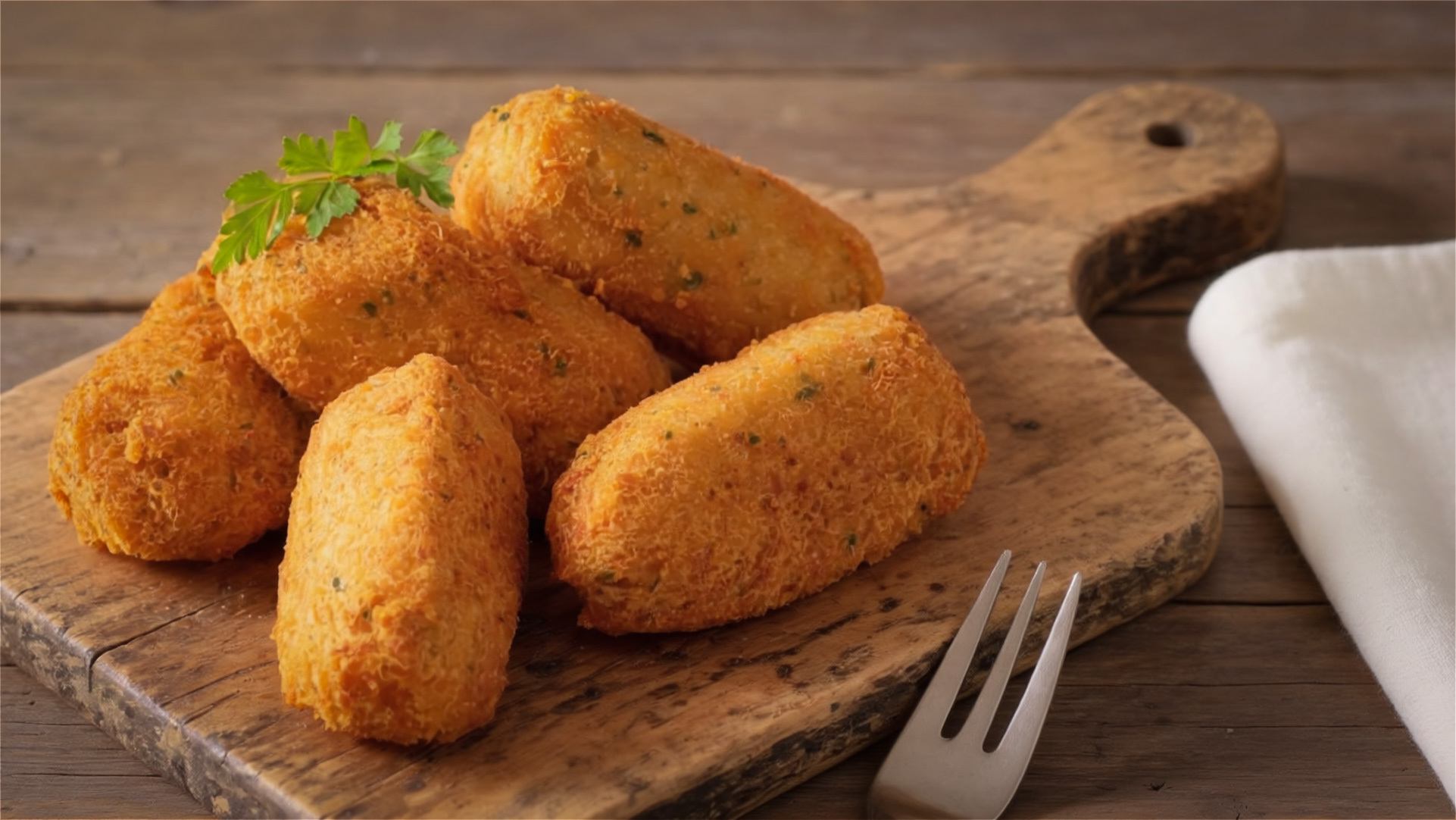
In the tapas bars on Fuerteventura there is one undisputed number one: the Croquetas de Pescado, crispy fish croquettes with a creamy béchamel base. They are the perfect way to elevate the finest leftover Cherne or Bacalao. The crust breaks open, the filling flows – and you understand why some people make a special trip to El Cotillo just for these croquettes.
Ingredients (for approx. 20 croquettes):
Preparation: Sweat the onions in butter until translucent. Add the flour and cook briefly. Gradually pour in the milk, stirring constantly, until a very thick, smooth béchamel forms. Fold in the flaked fish and parsley, season generously. Spread the mixture on a tray and chill for at least 4 hours – preferably overnight. Then shape into small ovals, coat in breadcrumbs and deep-fry in plenty of olive oil until golden brown.
Tip: An ice-cold Dorada beer or a dry white wine from Lanzarote pairs perfectly with this.
Mojo-Alioli – the Sauce That Brings It All Together
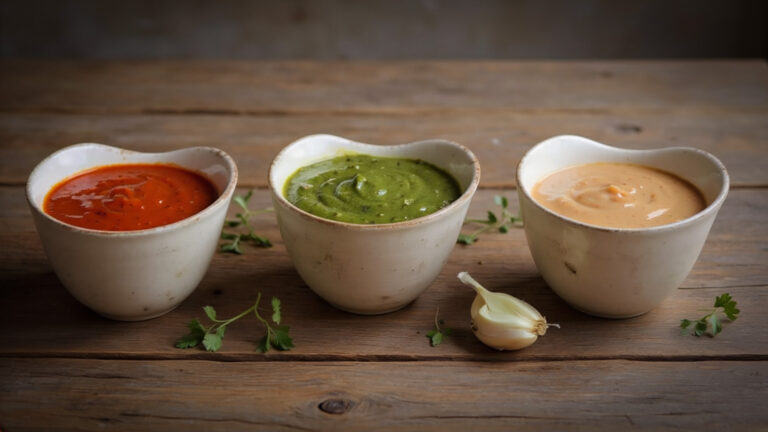
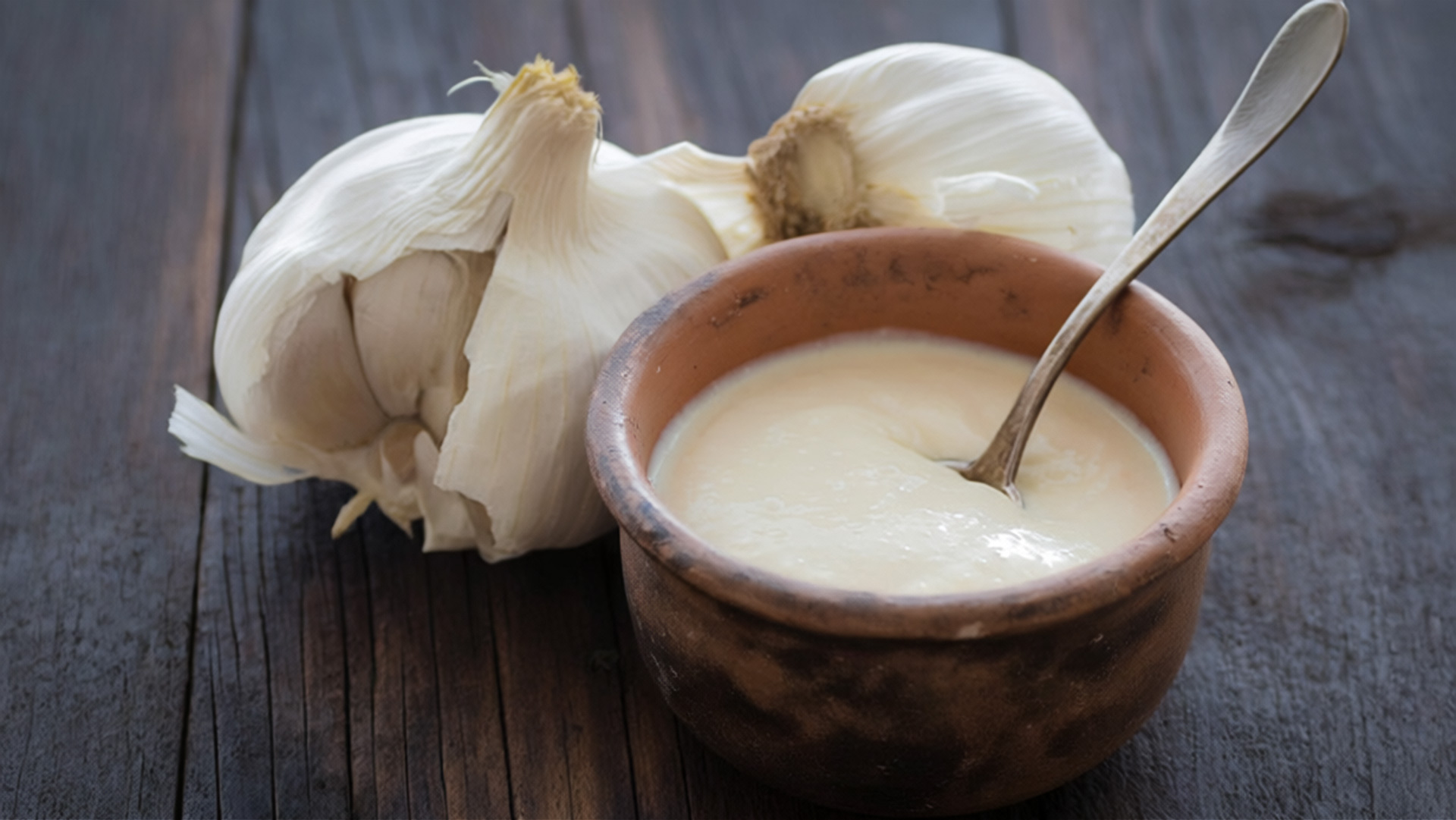
A good sauce belongs to Canarian fish dishes as naturally as salt belongs to the sea. The Mojo-Alioli combines the fiery red Mojo Rojo with the creamy mildness of a classic garlic aioli – a fusion that feels entirely at home on Fuerteventura.
Ingredients:
Preparation: Mix all ingredients thoroughly until the colour is an even salmon pink. Season to taste with lemon and salt. For the authentic finish: stir in a teaspoon of Gofio – this gives the sauce a nutty note and a firmer texture.
Churros de Pescado – Fish Bites in Batter
What sweet churros are in Spain, their savoury cousin is on Fuerteventura: Churros de Pescado, fried fish bites in a crispy batter. You find them as a tapa, as a starter, or simply at a beach bar at midday, gazing out to sea. Simple. Honest. Good.
Pescado a la Sal – Fish in a Salt Crust
The Pescado a la Sal is a method older than any culinary trend. The fish is completely encased in a layer of coarse sea salt and baked in the oven. The salt crust seals the fish airtight – the result is an incredibly moist, aromatic flesh that reveals itself almost ceremonially when the crust is broken. This dish epitomises the traditional cuisine of Fuerteventura: no distraction, just pure flavour.
The Best Fish Restaurants on Fuerteventura
Those who want not only to recreate these dishes at home but to experience them in genuine surroundings will find a number of special addresses on the island:
Eating traditional fish dishes on Fuerteventura is not a culinary event. It is a quiet bow to the sea, to the fishermen and to a cuisine that has never been bent out of shape. You sit, you eat, you listen to the Atlantic. And you understand: here, the food is not the decoration of the travel experience – it is the experience itself.
Fact Bubbles: Did You Know?
🐟 Not only here, but best here: The Vieja (Sparisoma cretense) is found throughout the eastern Atlantic – from Portugal via the Azores and Madeira to Senegal – and also in the Mediterranean. But on Fuerteventura it is the undisputed star of the fish counter. Why? Fishermen catch it traditionally using a rod and crab bait, and by grazing on volcanic algae, its flesh develops a distinctive aroma – subtly nutty, with a hint of lobster. A flavour you find like this nowhere else.
🧂 Ancient preservation: Pescado Salado – the salted dried fish – was for centuries the only way for Fuerteventura’s fishermen to preserve their catch. Refrigerators? Out of the question. Salt was gold.
🌊 The Atlantic current as farmer: The cold Canary Current, which flows directly past Fuerteventura, ensures particularly nutrient-rich waters – and therefore fish with exceptionally aromatic, firm flesh.
🫙 Gofio – older than any cuisine: The roasted grain Gofio was already eaten by the Guanches, the original inhabitants of the Canaries. Today it is an integral part of the fish kitchen – from Escaldón to Mojo-Alioli.
🍺 The islands’ beer: The Dorada brand has been brewed in Tenerife since 1924 and is the most widely drunk beer in the Canaries. With fish croquettes: absolutely essential.
🎣 Pescado del Día – the most honest phrase on the menu: When a restaurant on Fuerteventura offers “Pescado del Día”, it means quite literally: this fish was still in the sea this morning.
❓ FAQ – Frequently Asked Questions About Fish Dishes on Fuerteventura
Which fish dishes are typical on Fuerteventura? Among the best-known traditional dishes are Vieja a la Espalda (grilled parrotfish), Calamares a la Romana (fried squid rings), Sancocho Canario (fish stew with Mojo), Pescado a la Sal (fish in a salt crust), Croquetas de Pescado (fish croquettes) and Churros de Pescado (fish bites in batter).
When is the best time to eat fresh fish on Fuerteventura? In summer the chances are greatest of getting a true Pescado del Día – the catch of the day. The coastal restaurants in Ajuy, La Pared, Las Playitas and Puerto del Rosario offer a particularly rich selection at that time.
What is the Vieja and why is it considered a special fish? The Vieja (parrotfish, lat. Sparisoma cretense) is the finest eating fish in the Canaries. Its flesh is white, firm and has a subtle sweetness reminiscent of crab. It inhabits European waters almost exclusively around the Canary Islands – making it a true island privilege.
What does “a la espalda” mean in cooking? “A la espalda” literally means “on the back” – the fish is butterflied and placed skin-side down on the griddle. This allows it to cook evenly, stay moist and develop a lightly crispy skin.
What is Gofio and how is it used in fish cooking? Gofio is roasted, ground grain (usually wheat or maize) and a staple of Canarian cuisine since the time of the indigenous population. In fish cookery it is most commonly served as Escaldón – a thick paste of Gofio and hot fish stock on which the salted fish is arranged.
Which sauce goes best with fish dishes on Fuerteventura? Classic and unbeatable is Mojo Verde (herb sauce with coriander) with grilled fish, and Mojo Rojo (red pepper sauce) with more robust dishes. As a modern variation, the Mojo-Alioli is recommended – a creamy fusion of both worlds, optionally refined with a pinch of Gofio.
What is Sancocho Canario? The Sancocho Canario is a traditional Canarian fish stew made from salted fish (usually Cherne or Bacalao), potatoes and sweet potatoes. It is always served with Mojo Rojo and Gofio and is regarded as one of the oldest dishes in the island’s cuisine.
Which restaurants on Fuerteventura are particularly recommended for fish dishes? Among the most authentic addresses are La Cofradía de Pescadores in Corralejo (right at the fishing harbour), the Vaca Azul in El Cotillo (famous for croquettes and sea views) and the small local restaurants in the coastal villages of Ajuy and Las Playitas, where tourism has yet to take centre stage.