Weather in Fuerteventura – The Island of Eternal Spring
You might think that being on the same latitude as the Sahara would mean scorching heat. But anyone landing on Fuerteventura for the first time is in for a pleasant surprise: the climate on Fuerteventura is mild, dry, and remarkably stable – a gift of nature that makes the island one of Europe’s most popular travel destinations.
The Trade Wind – the Heart of Fuerteventura’s Climate
It is the north-east trade wind that sets the tone for the weather on Fuerteventura. It blows steadily in from the Atlantic, keeping the hot, dry desert air of the African coast at bay. At the same time, it ensures a pleasantly low humidity – breathing is easy, moving is easy.
Over the ocean, the trade wind picks up moisture. The rain-bearing clouds rise to around 800 metres in summer and around 1,400 metres in winter. As the highest point of Fuerteventura – the Pico de la Zarza – measures just 807 metres, the clouds glide over the island without releasing their load. The rain falls elsewhere.
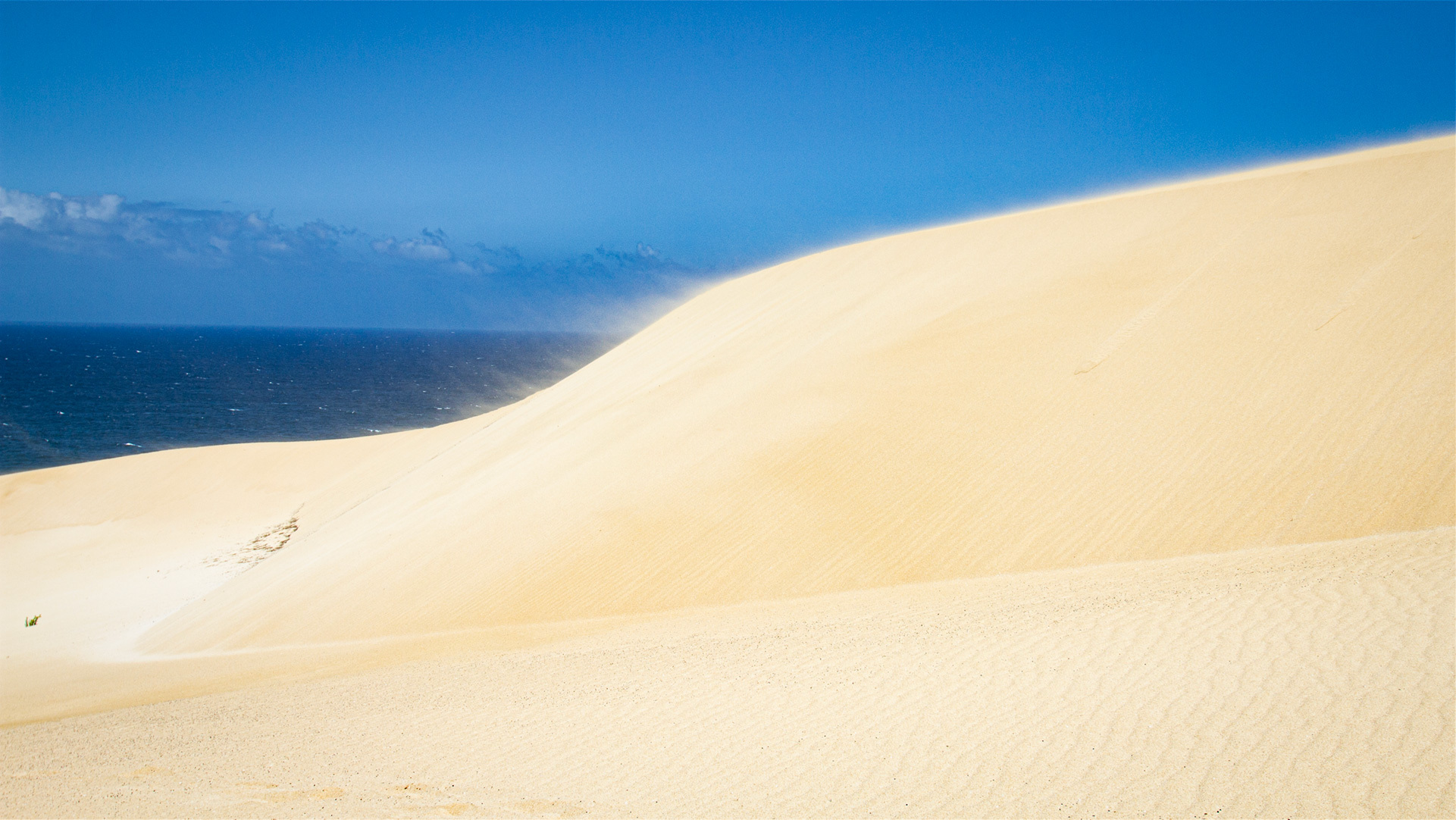
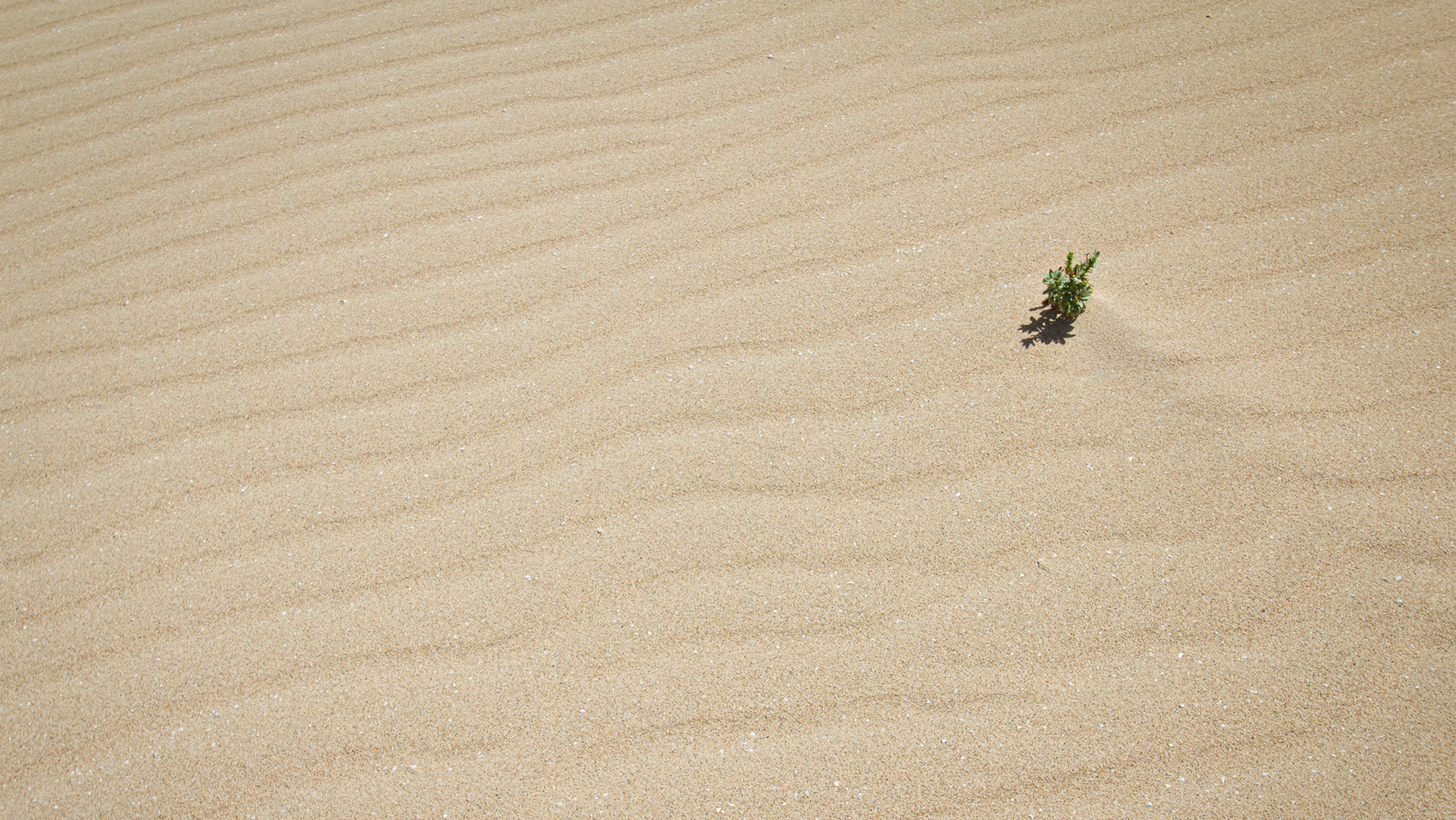
The result is that sparse, rocky landscape that fascinates so many: wide plains, reddish-brown lava, endless sand dunes. And alongside that: over 3,000 hours of sunshine a year.
The Azores High and the Canary Current
Two further forces shape the Canary Islands’ climate: the Azores High and the Canary Current.
The Azores High brings brilliantly sunny conditions across the entire archipelago, especially in spring and summer. You lie on the beach, gaze up at a flawless sky, and understand why this island was called the Land of the Blessed in antiquity.
The Canary Current, in turn – formed by the confluence of the cold Arctic Labrador Current and the warm Gulf Stream – passes the islands in a south-westerly direction and acts as a natural air conditioning system. It prevents temperatures from climbing to persistent extremes. Nonetheless: in the summer months of July and August, the thermometer on Fuerteventura can easily rise above 35 degrees Celsius – on such days, it is best to seek the shade.
Temperatures in Fuerteventura – Mild All Year Round
What makes the weather on Fuerteventura so special is its consistency. Fuerteventura temperatures barely fluctuate. Daytime temperatures remain in a pleasant range throughout the year – even in the winter months of December and January, the thermometer sits at an average of 21 to 22 degrees Celsius. Frost and snowfall? Unheard-of concepts on this island.
Night-time temperatures drop to 15 to 16 degrees in winter, rising to 20 to 21 degrees in midsummer. Anyone sitting on the beach in the evening watching the sun dip into the sea needs at most a light wrap around their shoulders.
Water temperatures are inviting for swimming all year round: in winter, the sea cools to around 18 to 19 degrees, while in late summer it reaches a pleasant 22 to 24 degrees Celsius. Even in December, many people are still drawn into the water.
Climate Table Fuerteventura
| Climate | Jan | Feb | Mar | Apr | May | Jun | Jul | Aug | Sep | Oct | Nov | Dec |
|---|---|---|---|---|---|---|---|---|---|---|---|---|
| Ø Daytime temp. °C | 21 | 21 | 22 | 24 | 24 | 25 | 28 | 29 | 27 | 26 | 24 | 22 |
| Ø Night-time temp. °C | 15 | 15 | 15 | 16 | 17 | 18 | 20 | 21 | 20 | 19 | 18 | 16 |
| Ø Water temp. °C | 19 | 18 | 18 | 18 | 19 | 20 | 21 | 22 | 23 | 23 | 21 | 20 |
| Ø Sunshine hrs/day | 6 | 7 | 7 | 8 | 9 | 10 | 11 | 11 | 8 | 7 | 6 | 5 |
| Ø Rainy days/month | 5 | 4 | 3 | 2 | 1 | 1 | 0 | 0 | 1 | 4 | 5 | 6 |
Rainfall on Fuerteventura – Desert Dryness on the Atlantic
Anyone looking to encounter rain has come to the wrong place in Fuerteventura. The total annual rainfall barely exceeds 150 millimetres per year – by comparison, Berlin receives over 570 millimetres. Even in the comparatively wet winter months, statistics record only 3 to 6 rainy days per month. In summer, that number approaches zero.
This dryness has consequences. The island seems sparse, almost lunar in character – and it suffers from chronic water scarcity. The island’s inhabitants have been tackling this problem for decades with seawater desalination plants, which produce the majority of the drinking water.
Occasionally, however – and this is the dramatic aspect of an otherwise so predictable climate – 10 to 20 per cent of the annual rainfall can fall within a single day. 15 to 30 millimetres in a matter of hours, sending torrents cascading through dried-up riverbeds known as Barrancos. Such events are rare, but remarkable.
Kalima – When the Sahara Comes to Visit
The most impressive and at the same time most challenging weather phenomenon on Fuerteventura carries a name you hear once and never forget: Kalima.
The Kalima is a hot, dry sandstorm from the Sahara that can be carried over the Atlantic during the summer months, bathing Fuerteventura in an orange-brown haze. It brings air that is around 10 degrees Celsius warmer than usual – and it brings fine desert sand that works its way into every crack and crevice.
Visibility drops to below 100 metres. The air tastes of earth. Children and people with breathing difficulties or asthma should not spend time outdoors during a Kalima event. Such a weather event can last up to four days.
Occasionally the wind also carries locust swarms over from the African mainland – a scene that could be from a biblical painting, one that is hard to imagine until you witness it yourself.
Best Time to Visit Fuerteventura
You can actually visit Fuerteventura all year round – that is the great promise of this climate. But depending on your preferences, there are clear recommendations.
The best time to visit Fuerteventura begins in March and extends through to November. During these months, temperatures are warm to hot, sunshine hours are plentiful, and the sea is inviting. The warm season on Fuerteventura and Lanzarote lasts on average one month longer than on the more westerly sister islands of Gran Canaria or Tenerife.
Those planning hiking on Fuerteventura or cycling tours should opt for spring. After the winter rains, the island shows its greenest face – a brief, magical interlude before the sun turns everything back to gold and brown.
For windsurfers and kitesurfers: Fuerteventura is a paradise at any time of year. The steady north-east trade wind makes spots such as Sotavento, Corralejo and Flag Beach into meccas of water sports.
Even in winter on Fuerteventura, the journey is worthwhile. Temperatures of around 20 degrees, few tourists, lower prices – and the quiet joy of standing alone on the beach in the morning, listening to the sea and realising that the eternal spring is not a promise, but a lived reality.