The Most Beautiful Places in the Heart of Fuerteventura – Where the Island Still Belongs to Itself
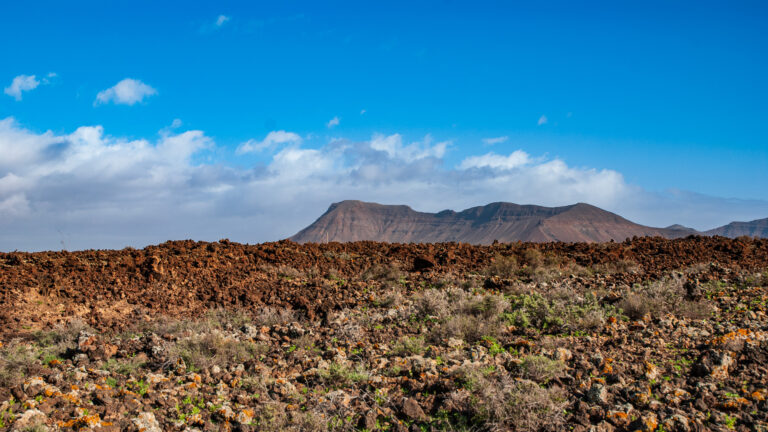
There are landscapes you cannot photograph without the photo lying. The interior of Fuerteventura is one of them. Anyone who arrives here – in a hire car, a dusty country road behind them and the gentle breath of the Vientos del Este in their ears – understands immediately why this island once drew poets and philosophers. Miguel de Unamuno called Fuerteventura “the bony skeleton of a world”. And nowhere does that skeleton show more clearly than in the heart of the island.
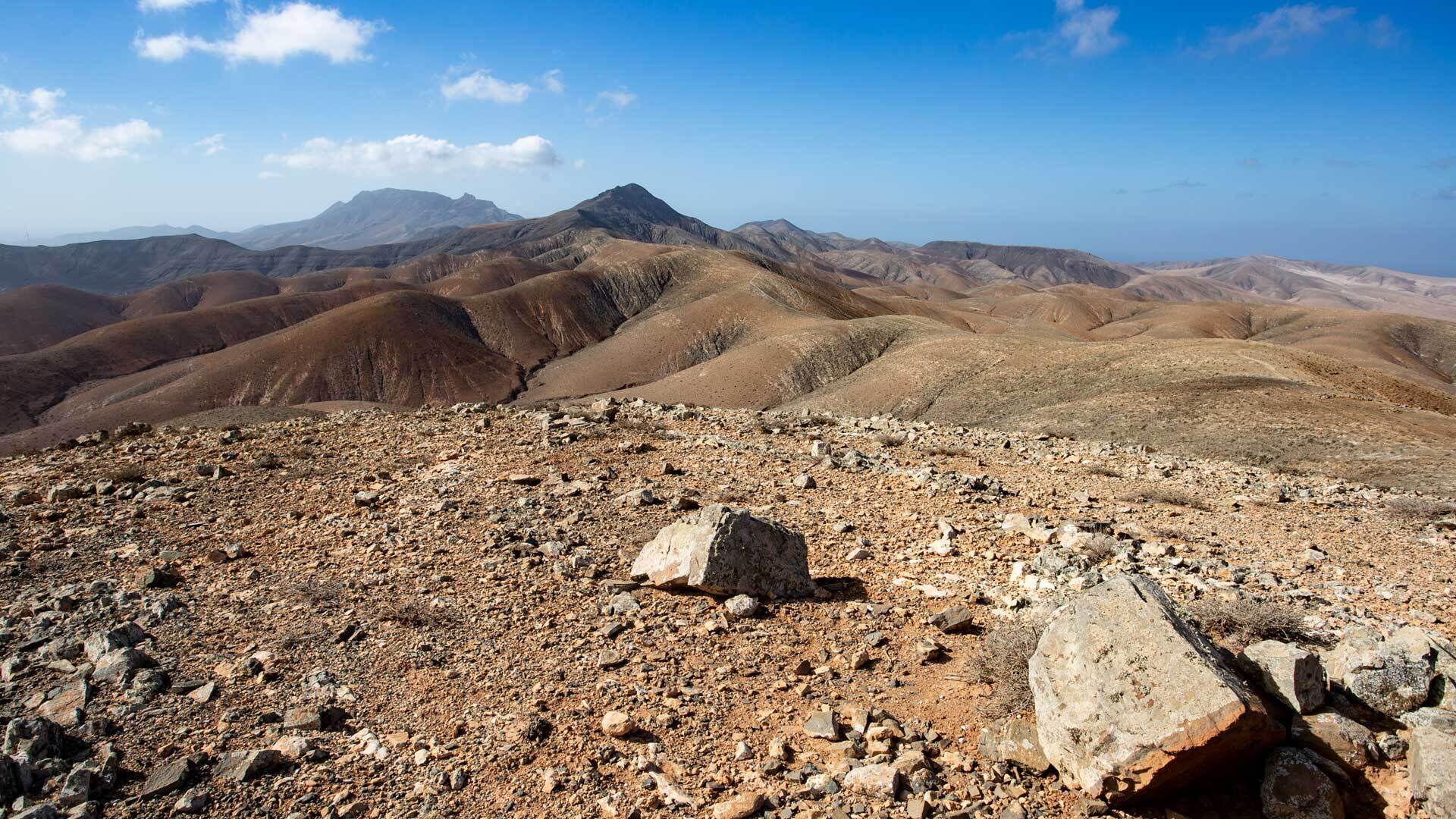
The most beautiful places on Fuerteventura often hide away from the large resorts. While the coastlines are populated by tourists and the dunes of Corralejo have long been world-famous, the island’s interior sleeps a different, deeper sleep. You don’t come here to lie around. You come to look, to walk, to marvel – and to experience a Fuerteventura that has not yet been entirely tamed.
The following journey takes you through five special places and regions that together tell the story of what this island truly is.
Betancuria – The Historic Heart of the Island
The Old Capital of Fuerteventura
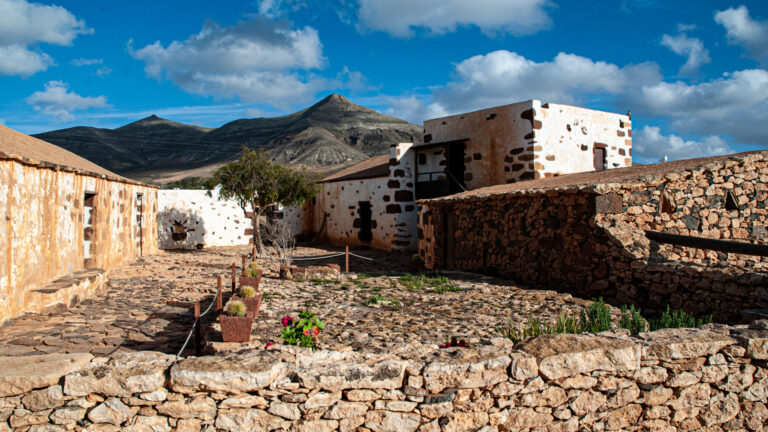
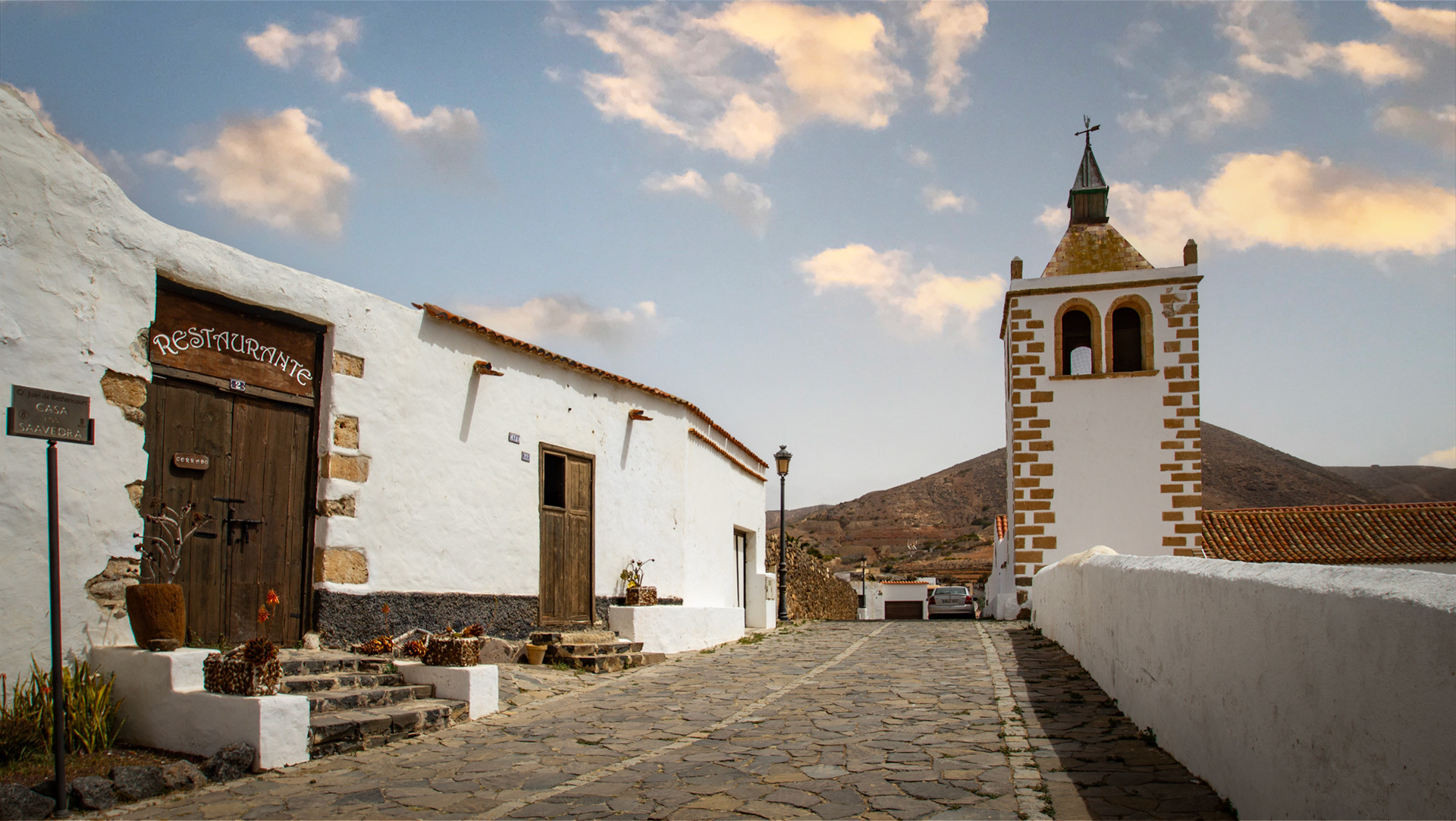
You approach Betancuria through a ravine, as though stepping into a book. The mountains stand close, the light falls at an angle, and suddenly the village appears: whitewashed houses, bougainvillea in purple and orange, wooden balconies that seem to lean slightly forward under the weight of the centuries.
Betancuria is considered by many to be the most beautiful place on Fuerteventura – and not without reason. Founded shortly after the conquest in 1404, the village served as the island’s capital for many decades. Its position in one of Fuerteventura’s most fertile and ancient regions shielded it from the pirate raids that plagued the coastlines at the time. Today, this natural mountain barrier is a gift for hikers and cultural travellers.
The Church of Santa María and the Village Centre
The village centre of Betancuria with the Church of Santa María is the architectural heart of this ancient world. Standing before it, you feel the weight of history – not as a burden, but as substance. The restored manor houses surrounding it form a backdrop that is hard to beat for holiday photographs on Fuerteventura. Gardens press against the façades, and breathtaking views of the mountain ranges open up around every other bend.
Hiking in the Betancuria Natural Park
Betancuria is the perfect starting point for hikes in the Betancuria Natural Park – one of the most impressive protected areas in the Canary Islands. From here you can walk to Ajuy, the spectacular stone arches of Arco de las Peñitas and Arco del Jurado, and the coast on short to medium-length routes. Supplies are readily available in the nearby villages of Antigua and Pájara; some accommodation in the area is affordable and beautifully situated.
Who is it suitable for? Betancuria is a must for every visitor to Fuerteventura – for a day trip, lunch at one of the small restaurants with local cuisine, a stroll through the lanes. As a holiday base for longer stays it is less suitable: beaches are far away, accommodation is scarce. But anyone seeking peace, walking routes and authenticity will find what they are looking for here.
Valle de Santa Inés and Aguas Verdes – The Quiet Hidden Gem
A Coast of Its Own
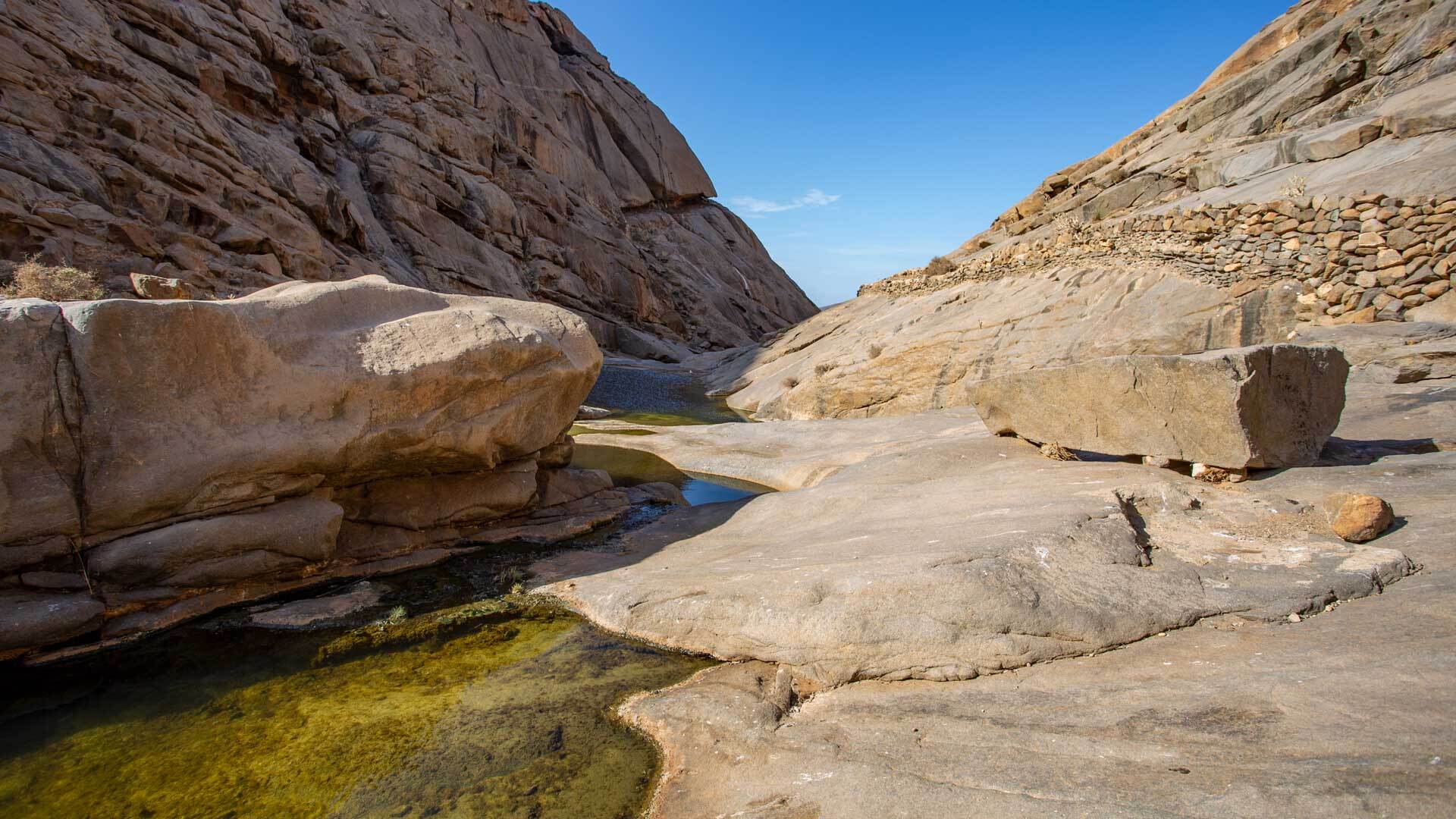
Not every hidden gem sounds mysterious. Some simply look as though someone forgot about them – and that is the best thing you can say about them. Aguas Verdes on Fuerteventura is one such place.
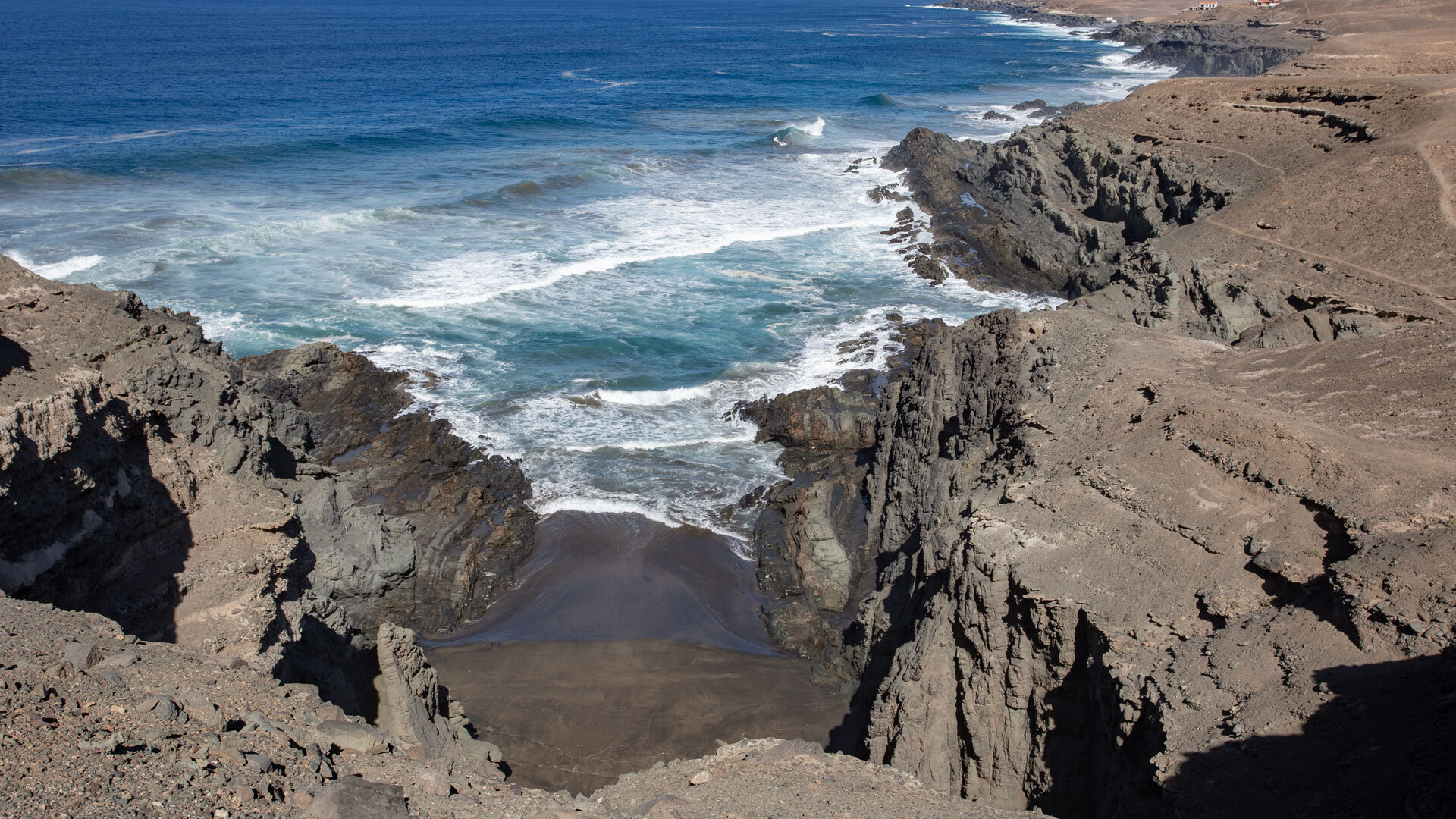
The Valle de Santa Inés lies within the area of the Betancuria Natural Park and is one of the quietest spots on the island. Those who walk to the coast from here encounter a world of cliffs, tidal rock pools and the endless blue of the Atlantic. The coastline of Aguas Verdes impresses not with fine sand but with a raw, honest beauty – the kind of landscape you cannot Google, because no photograph ever does it justice.
A Hiking Paradise Away from the Tourist Crowds
As a starting point for hikes along Fuerteventura’s west coast, this region is hard to beat. The paths are short, the scenery dramatic, encounters with other walkers rare. For supplies, you drive to Antigua – which is not a disadvantage but part of the experience.
In the Valle de Santa Inés itself you will find restaurants with local cuisine. In Aguas Verdes there are no cafés, no souvenir shops, no Wi-Fi sign on the door. Just rocks, water and horizon.
Who is it suitable for? For walkers, photographers and all those who understand that a holiday sometimes means doing nothing but looking. Beaches exist only here and there along the coast – anyone wanting to lie on the beach every day should look elsewhere.
Pájara – The Partridge in the Mountains
A Place with Character and History
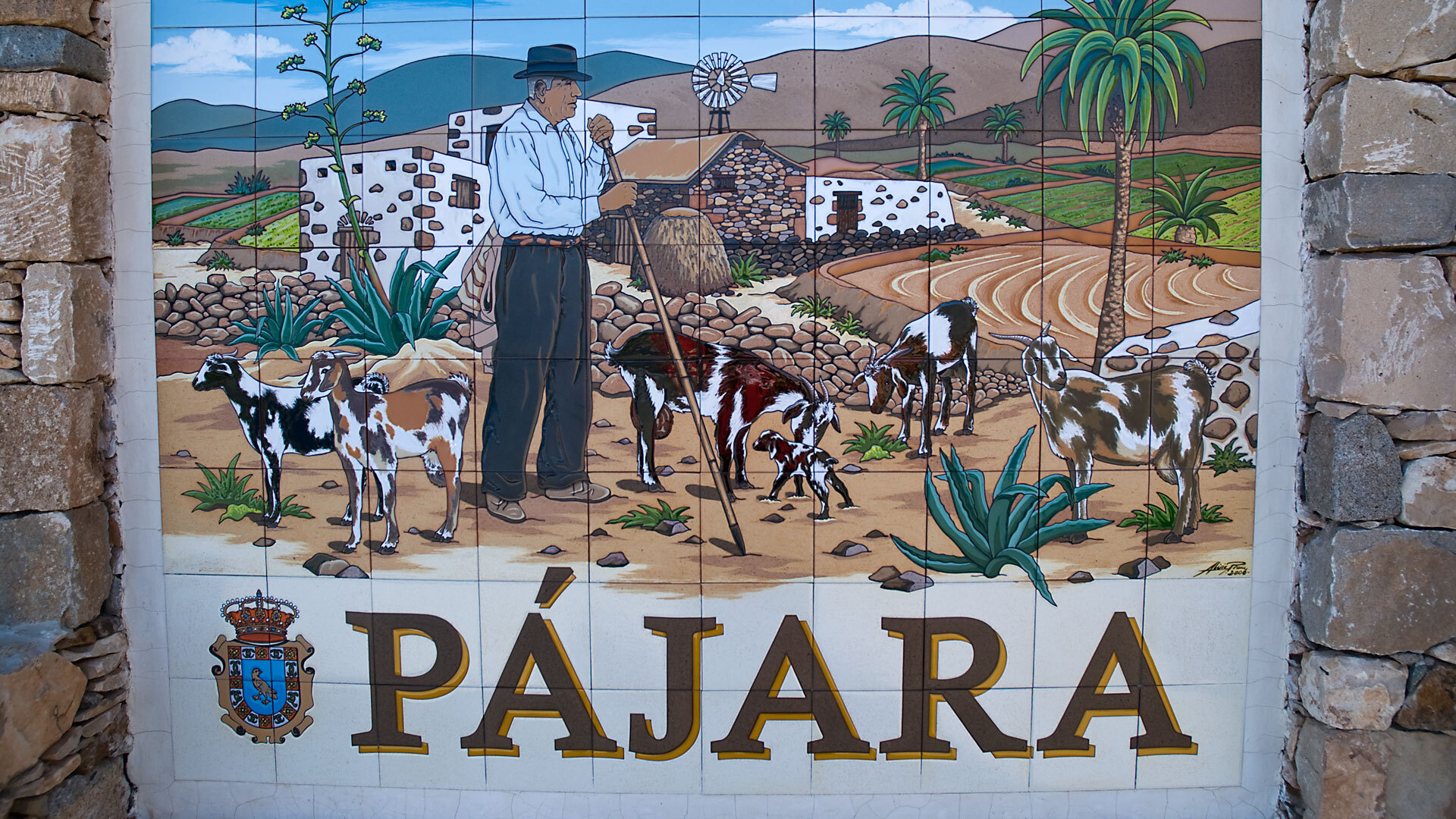
Nestled in a mountain ridge some 600 metres high, south-west of Antigua, lies Pájara – etymologically (Andalusian) for “partridge”, named after the birds that once populated this area. Today the well-kept lanes of the village are frequented by hikers, cultural travellers, and the occasional awestruck tourist.
Pájara is the administrative seat of a municipality that stretches all the way to the Jandía Peninsula, and counts among the wealthiest settlements on Fuerteventura. Tax revenues from the resort towns of Morro Jable and Costa Calma flow here – a fact that is clearly reflected in the well-maintained appearance of the townscape.
The Iglesia Virgen de la Regla – Aztec Heritage on Canarian Soil
The absolute gem of Pájara is the Iglesia Virgen de la Regla. This church, completed in the 18th century, has a baroque doorway decorated with Aztec motifs – a feature that makes it unique in the Canary Islands. For, contrary to what one might assume, these exotic ornaments were not created by a Mexican artist: an Italian crafted them from reference material. Alongside the Casa del Capellán in La Oliva, this is the only church in the Canaries to bear such a foreign-looking appearance.
The interior of the church impresses with Mudéjar-style wooden panelling and a richly gilded altar housing the patron saint Virgen de la Regla – whose origins are still believed to lie in Mexico. The church is open daily from 11 am to 1 pm and from 5 pm to 7 pm; Sunday Mass begins at 7 pm. Every year on 2 July, the procession in honour of the patron saint takes place.
Town Palaces, the Noria and the GR 131
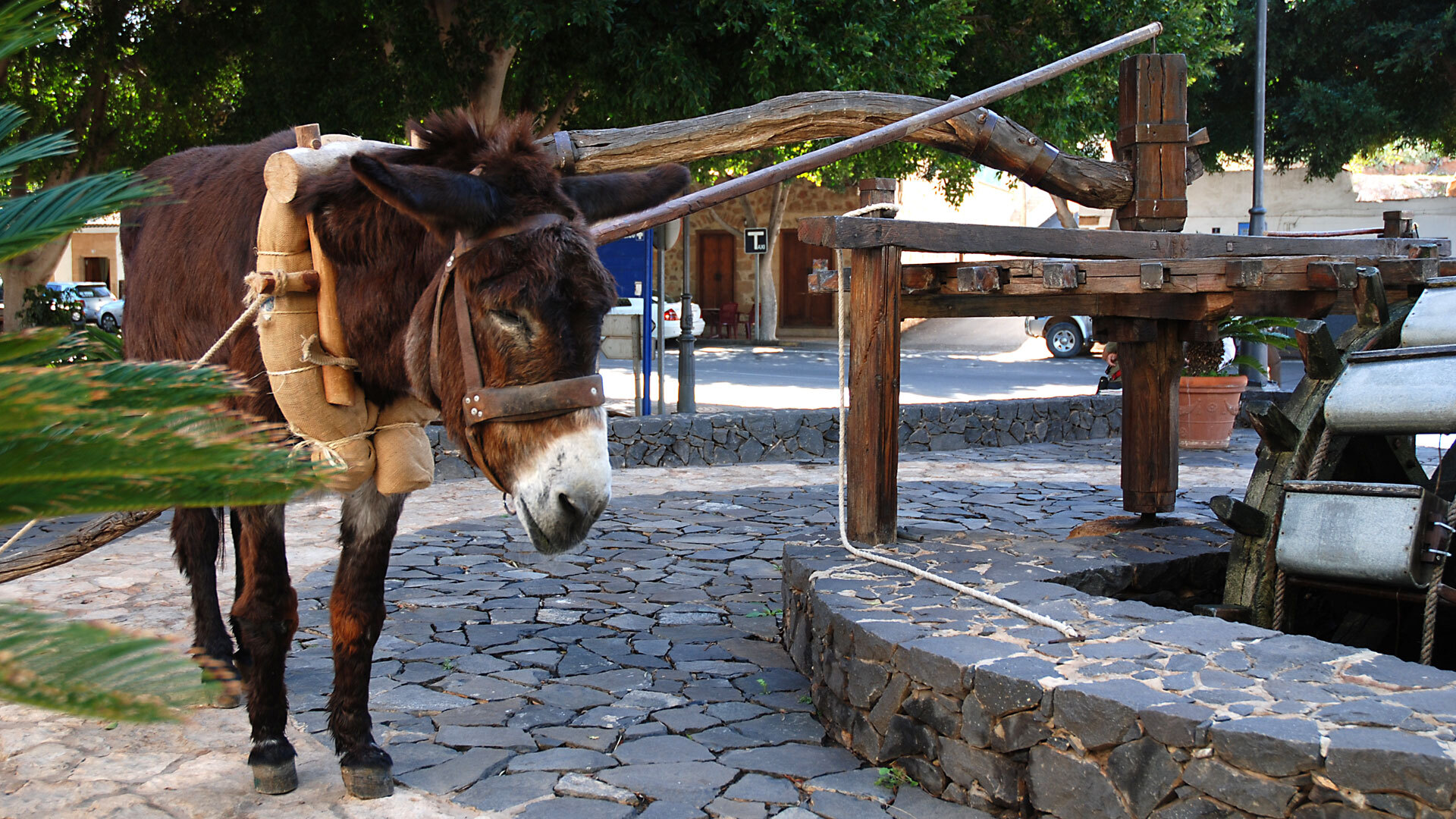
In front of the whitewashed town hall stands a Noria – an old water wheel once driven by dromedaries and donkeys. Still in operation until just a few years ago, it now serves as a living monument and is occasionally set in motion for visitor groups.
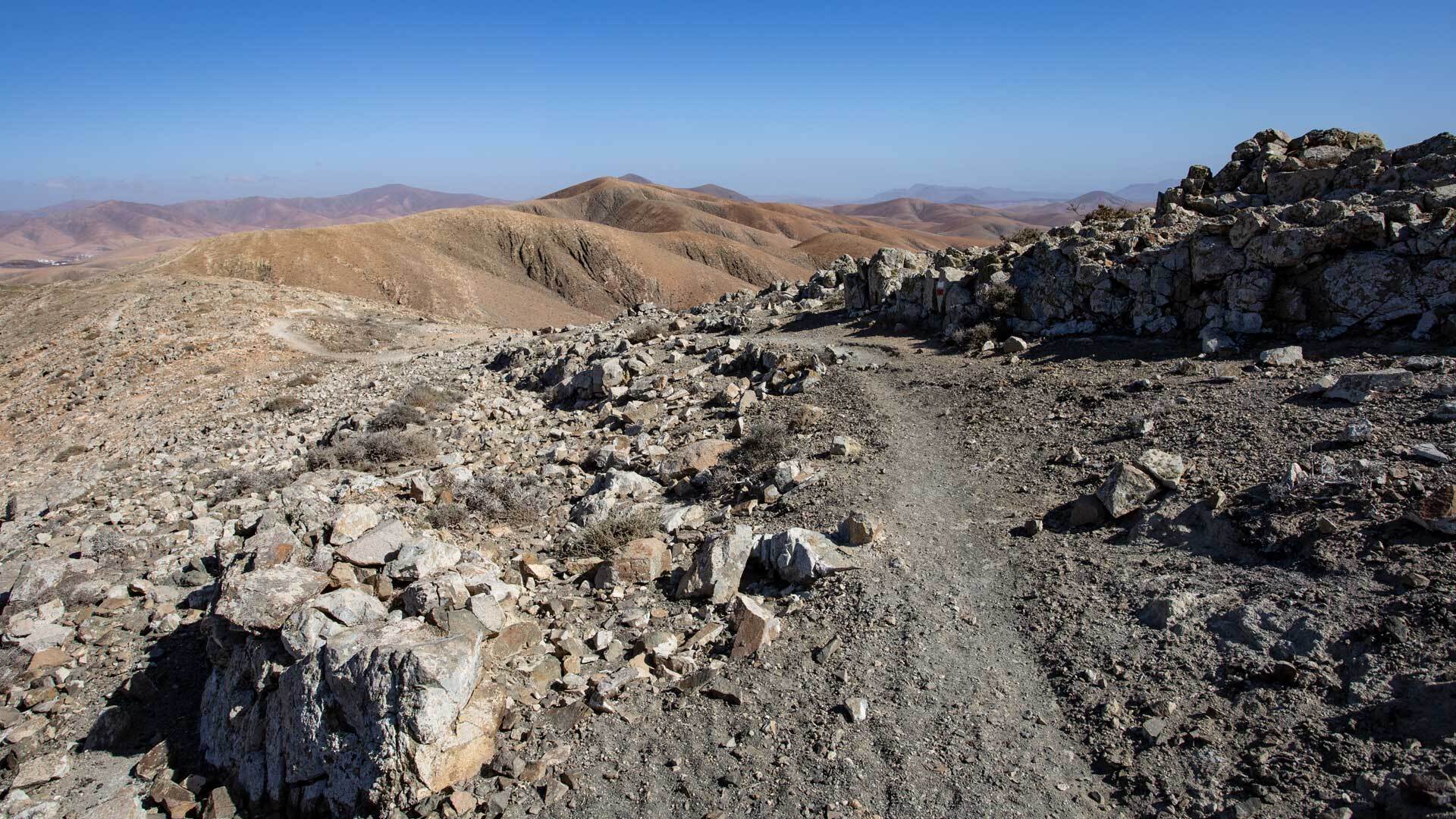
The town palaces with their ornate wooden balconies, commissioned by wealthy noble families in the 18th century, blend seamlessly into the well-maintained streetscape. Pájara also lies directly on the long-distance trail GR 131 and is therefore an ideal base for multi-day walks – including routes into the Betancuria Natural Park, to Ajuy and to the stone arches of Arco de las Peñitas and Arco del Jurado.
Access is via the country roads FV-20, FV-30 and FV-617, which intersect in the village – conveniently reachable from all directions.
Who is it suitable for? Pájara and the surrounding villages are excellent for walkers and those interested in culture. There are lovely holiday homes in Fuerteventura’s interior in truly remote locations, as well as cafés, restaurants with local cuisine, supermarkets and small shops. The beach is far away – but anyone coming here is not looking for a beach.
Ajuy and Cardón – Where the Atlantic Kisses the Cliffs
Ajuy: Black Sand and Ancient Sea Caves
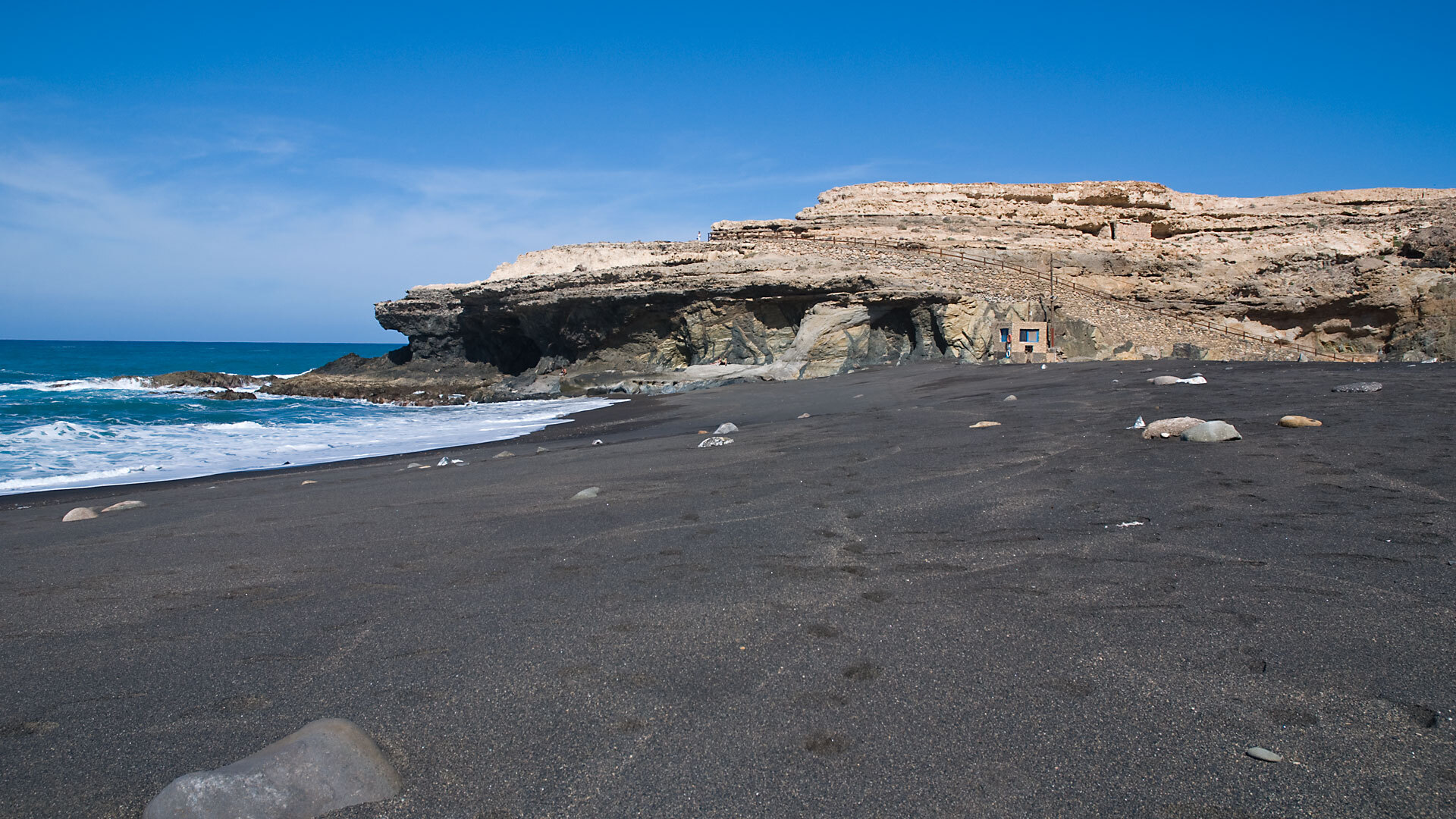
Ajuy lies on the west coast, where the Atlantic presses against the cliffs with particular determination. The small village with its black volcanic beach has been a gathering point for fishermen for centuries – and today for those travellers who seek what lies behind the façade of a typical Fuerteventura holiday.
The sea caves of Ajuy, the Cuevas de Ajuy, are among the oldest geological formations in the Canary Islands. You can walk into these limestone caves at low tide and watch time pass. From Ajuy, walking trails lead directly into the Betancuria Natural Park and to the stone arches of Arco de las Peñitas – one of the most beautiful and least-walked hiking routes on Fuerteventura.
The village also lies on the GR 131, but has remained modest in scale: a few restaurants, cafés, and small accommodation options in quiet locations. Supplies via Costa Calma are readily available.
Who is it suitable for? For beachgoers and walkers alike. Ajuy on Fuerteventura is one of those rare places that offer both: the unspoilt beach for a quiet afternoon and the walking trails for the morning before.
Cardón: Silence You Can Hear
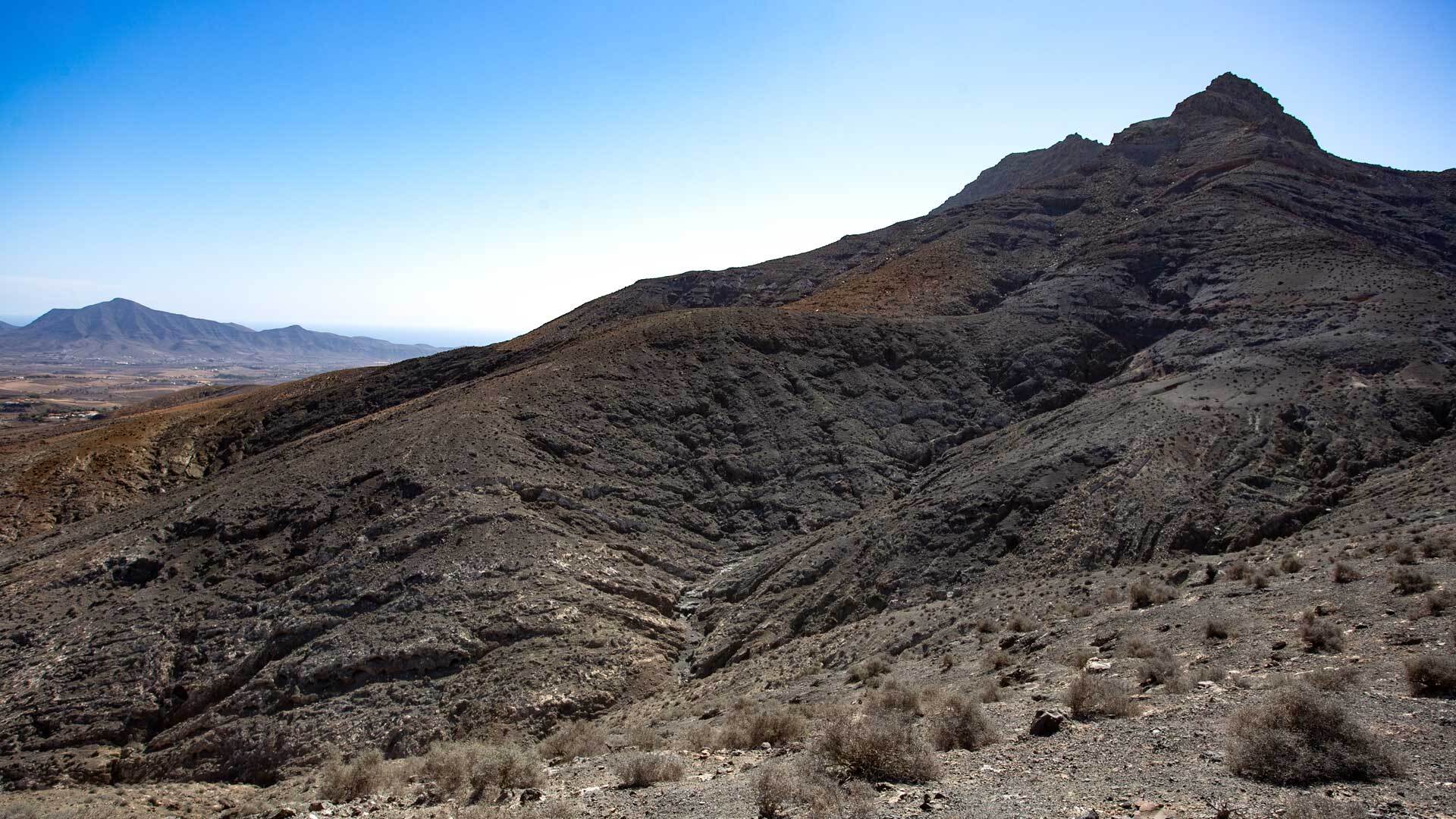
A few kilometres to the south lies Cardon – even smaller, even quieter, even more itself. The village is a starting point for walks to Ajuy, Betancuria and to Agua Liques, and also lies on the GR 131. There are no supplies available in the village itself; you bring what you need.
Cardon is not for impatient travellers. It is a place for those who understand that the absence of noise is a form of wealth in itself. Holiday homes away from mass tourism on Fuerteventura – you’ll find them here.
Caleta de Fuste – The Well-Kept Bay
Family Holidays with Infrastructure
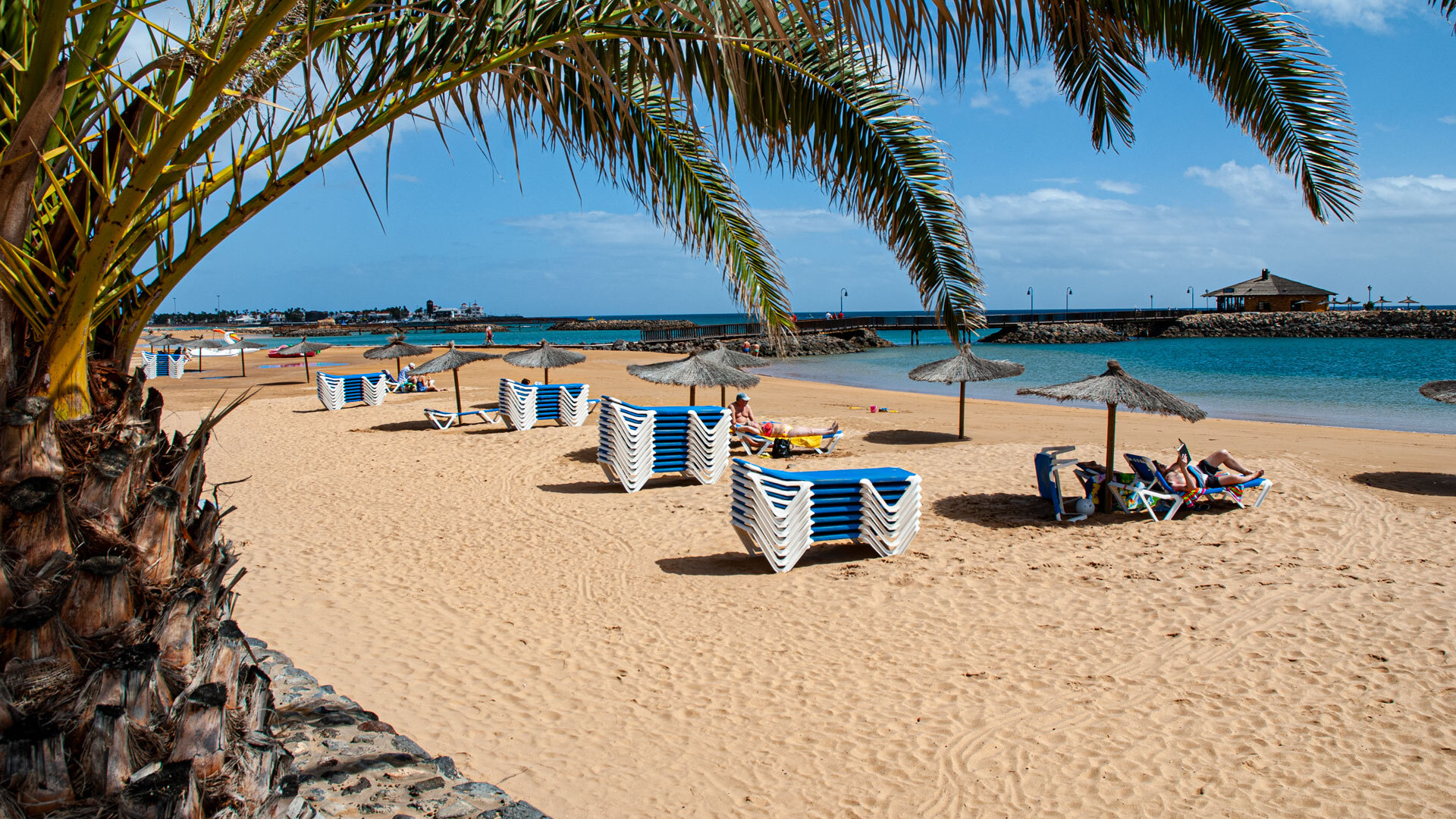
Anyone who needs a break from the rugged beauty of the interior will find the opposite in Caleta de Fuste. The gentle bay with its calm, turquoise water is ideal for families: the sea is shallow, the waves small, the infrastructure excellent.
Landscaped green spaces, restaurants with local and international cuisine, bars, cafés and numerous activities make Caleta de Fuste one of the most user-friendly holiday destinations on Fuerteventura. It is no surprise that the resort is particularly popular with British visitors.
A recommended hotel in Caleta de Fuste is the Barceló Fuerteventura Mar – one of the best family hotels on Fuerteventura, with elegant rooms, an excellent pool area and a wide range of activities.
Who is it suitable for? For families, first-time visitors and all those who like their creature comforts. The restaurants are touristy and the atmosphere is not exactly authentic – that is, frankly, the price of so much convenience. But the bay of Caleta de Fuste is undeniably beautiful.
Las Playitas – Europe’s Sports Resort on a Volcanic Beach
Crystal-Clear Water and a Sporting Spirit
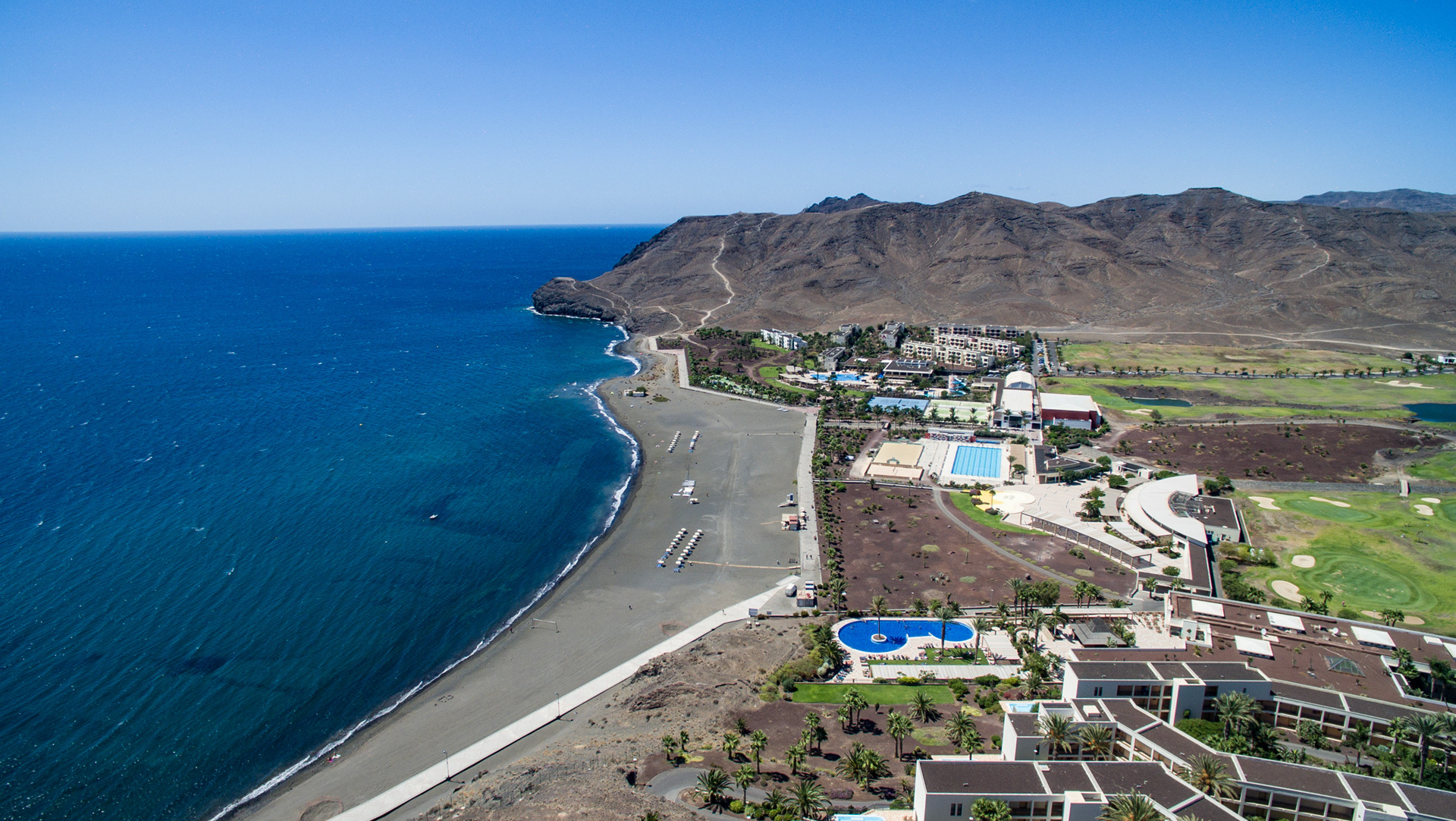
Las Playitas is a small village in the south-east of the island that at first glance looks like a sleepy fishing village – and at second glance like a European sports centre. For the Playitas Resort is one of the largest sports resorts on the continent, drawing triathletes, cyclists and endurance athletes from across Europe.
The whitewashed houses are stacked up a hillside, the promenade is quiet, the fishermen’s landing stage picturesque. Swimming and snorkelling take place mainly from the landing stage – steps and ladders lead down into crystal-clear water. The volcanic beach of Las Playitas lies just next door and is often characterised by waves, making it popular with surfers and kitesurfers.
Who is it suitable for? Athletes feel at home here. For everyone else, this is best treated as a day trip on Fuerteventura – the atmosphere is relaxed, the water beautiful, but without the resort the village lacks a little substance for a longer stay.
Giniginamar and Tarajalejo – Black Beaches and Fishing Village Romance
Tarajalejo: Authenticity Without a Stage Set
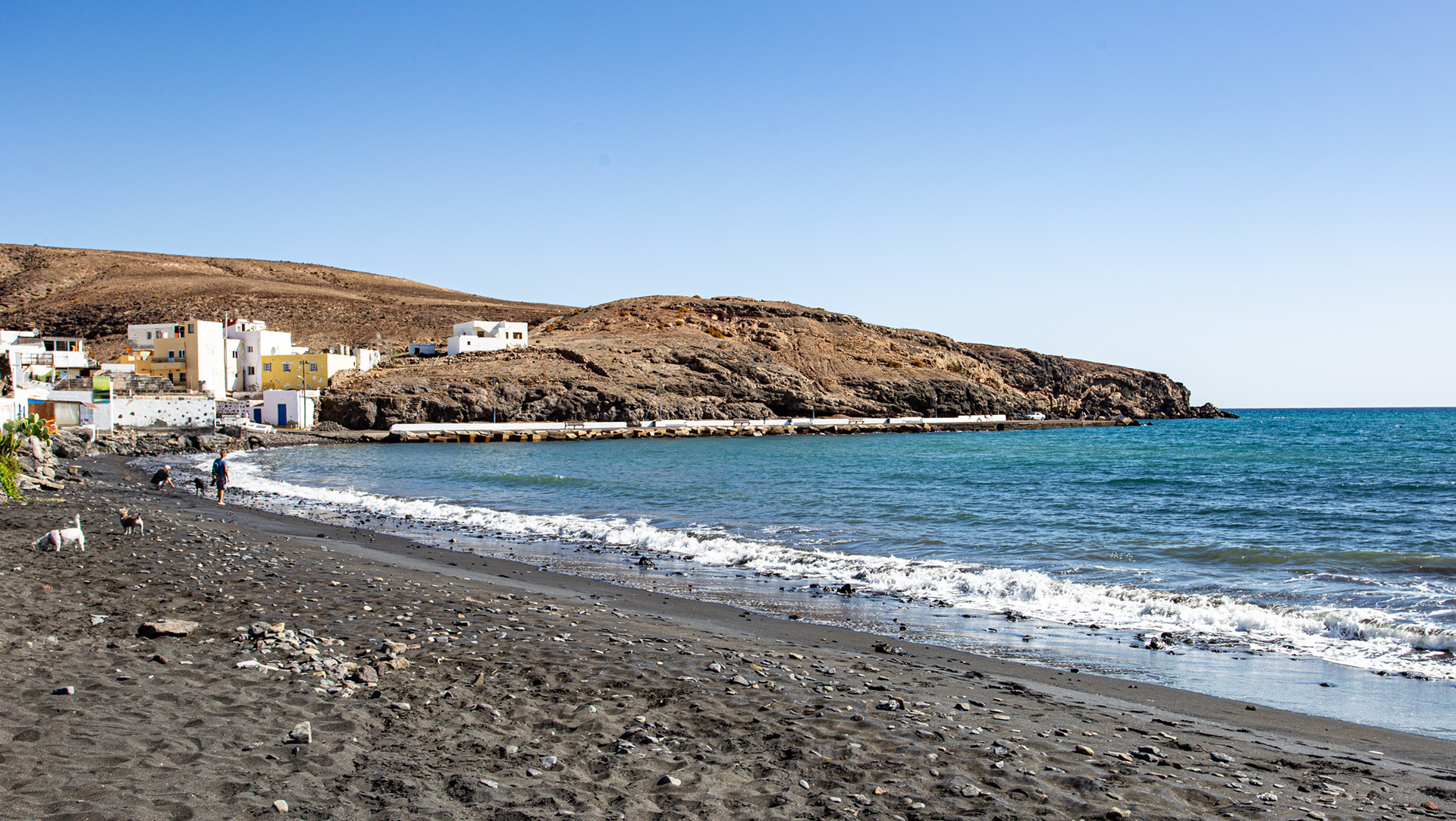
Anyone who walks along the promenade of Tarajalejo often does so almost alone. This is no accident: the small fishing village in the south-east has barely been touched by tourism. The long promenade along Tarajalejo’s black beach offers sculptures, coconut palms and the old landing stage – a scene with nothing forced about it.
The black volcanic beach lies in a sheltered bay with calm water – ideal for families wanting a quiet beach day on Fuerteventura. From the upper part of the village there are fine views over the coast, and if you are lucky you can watch the fishermen going about their morning routine.
Giniginamar: Hiking Between the Mountains and the Sea
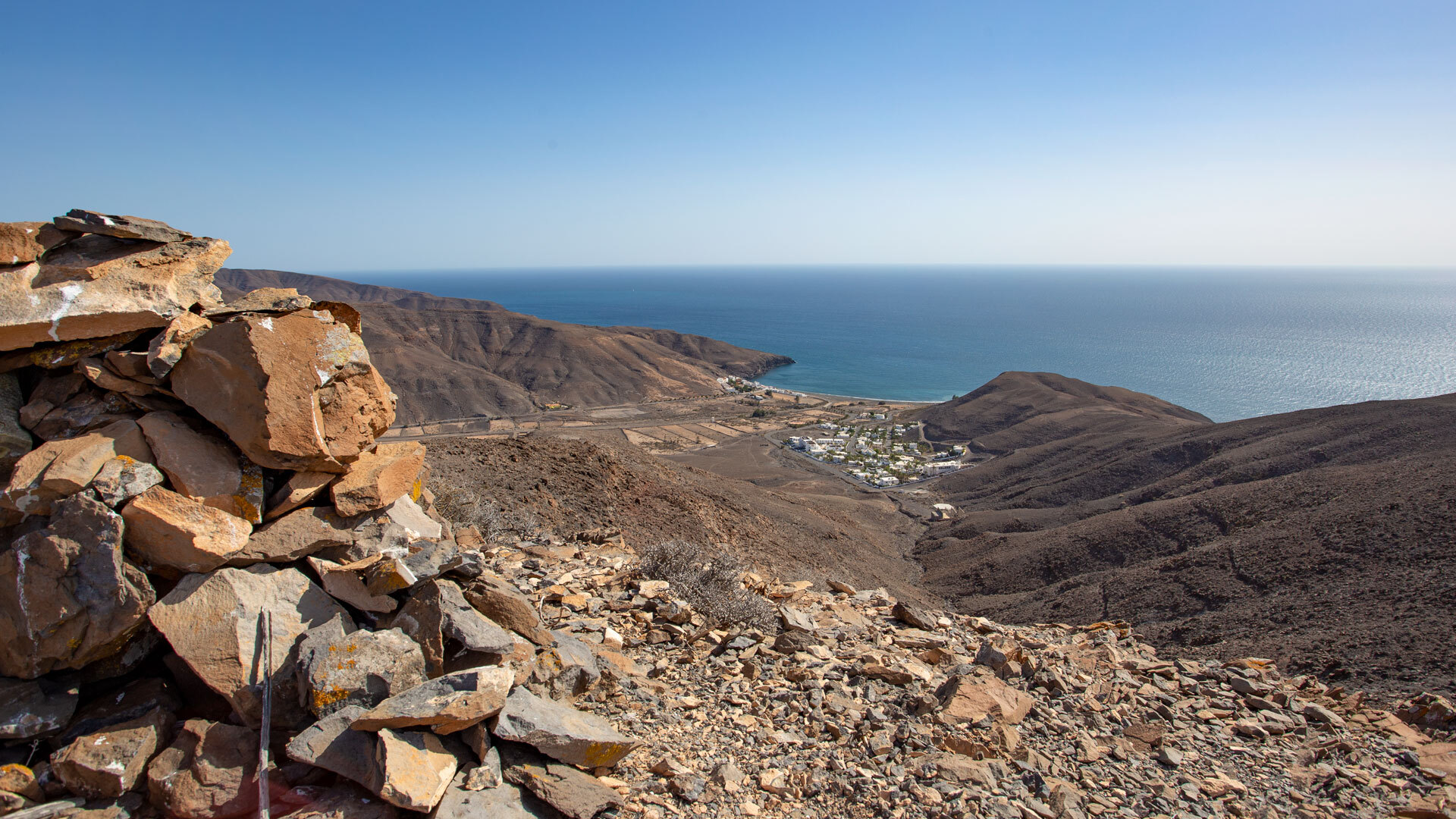
Even quieter than Tarajalejo is Giniginamar – a hamlet a little further north, nestled between the mountains and the Atlantic. The village offers spectacular mountain and coastal walks on Fuerteventura, a small beach and holiday homes in truly remote locations.
Who is it suitable for? Anyone seeking peace, authentic cuisine and the real Fuerteventura – far from the smell of sun cream and pool music – will find in both villages what many search for in vain along the coast.
Conclusion: Fuerteventura’s Interior – Well Worth the Journey
The most beautiful places in the interior of Fuerteventura are no insider tips for the initiated. They are open secrets for all who are willing to drive a little way from the coast. From the historic former capital Betancuria, past the Aztec-decorated church doorway in Pájara, to the quiet cliffs at Aguas Verdes – this region tells a story of Fuerteventura that no hotel brochure knows.
The interior is not a holiday destination in the conventional sense. It is a space for experience. And those who embrace it come back with images in their minds that last a long time – longer than the sunburn, longer than the cocktail on the beach.
Practical Tips: Most places in the interior are only easily accessible by hire car. Accommodation is available mainly in Pájara and the surrounding area, and here and there in Betancuria. For supplies, Antigua and Costa Calma are recommended as base points. Walking maps for the GR 131 and the natural parks are available at local tourist offices.