Drinking water on Fuerteventura – the island’s blue gold
There are places in this world where you can feel the value of water with every sip. Fuerteventura is one of them.
Anyone wandering across the island’s endless plains, with the reddish-brown volcanic rock beneath their feet, the wind at their back and the sun beating down relentlessly, quickly realises that water here is not something to be taken for granted. Here, drinking water on Fuerteventura has always been the most precious thing the island has to offer – its blue gold.
Why water is so valuable on Fuerteventura
The figures speak for themselves: annual rainfall on Fuerteventura is among the lowest in the whole of Europe. You’ll search in vain for rivers. There are no natural freshwater lakes. All that remains is the sea – endless, salty, undrinkable.
And yet: a way is found. As is so often the case on this barren, proud island.
The water supply on Fuerteventura now relies heavily on seawater desalination. The seawater is collected, filtered, desalinated, treated – and only then fed into the mains. The island’s largest and most important seawater desalination plant is located in Puerto del Rosario, the capital of Fuerteventura. Its capacity amounts to a remarkable 2,000 cubic metres per day – a technical feat in the midst of a desert landscape on the Atlantic coast.
The island has had such a plant in Puerto del Rosario since 1969. Since then, the network has expanded: further desalination plants were built, particularly in areas where tourism took hold on Fuerteventura – in Corralejo, Morro Jable and Costa Calma. Today, most large hotels have their own plants, which supply their buildings with treated water independently.
The cost of this is high: producing just 100 litres of fresh water requires around 6 litres of oil. This cost clearly underlines the value of this raw material. Desalination plants on Fuerteventura are currently still largely powered by electricity from fossil fuels, such as diesel generators at the Las Salinas power station. Although wind and sun are abundant, water desalination has so far been a predominantly energy-intensive process that impacts the environment through CO₂ emissions and brine effluent.
Tap water on Fuerteventura – to drink or not to drink?
You hold the glass under the tap and let the water run. It’s clear; it’s cool. But you hesitate.
And rightly so. Because even though the water supply on Fuerteventura meets European standards, the comparatively high chlorine and limescale content of the tap water on Fuerteventura makes it unsuitable for direct consumption. The distinct taste left by the necessary treatment is unappealing to unaccustomed palates – and simply not advisable for sensitive stomachs.
One thing is clear, however: Brushing your teeth with tap water is perfectly fine on Fuerteventura. But for everything else – drinking, cooking, making coffee – it’s better to use bottled water.
Buying mineral water on Fuerteventura – A practical tip
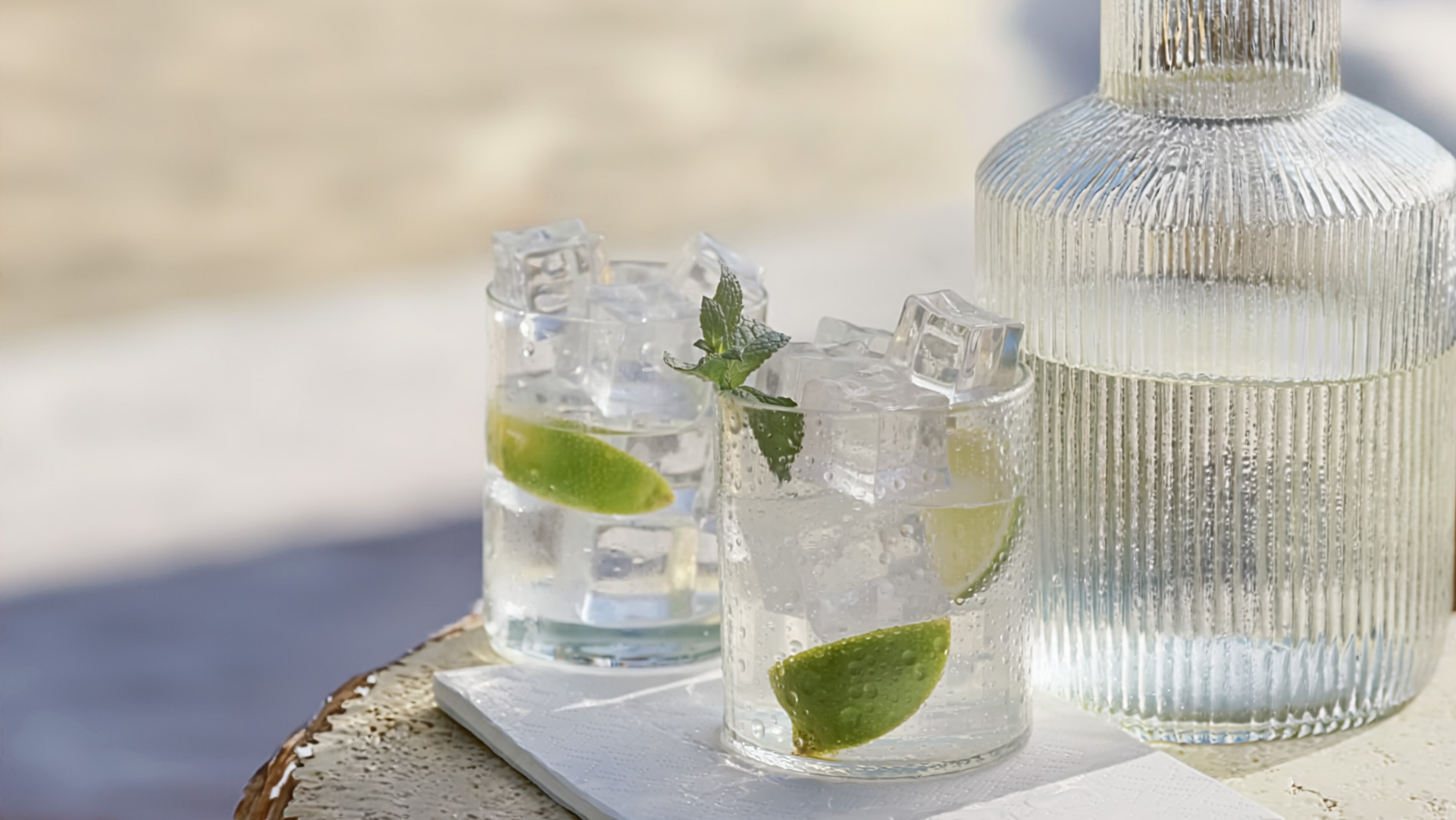
You’ll find them in every supermarket on the island: the large, bulky 5- or 10-litre canisters of mineral water. Choose between agua sin gas (still) or agua con gas (sparkling) – both are affordable and widely available.
Opting for a canister isn’t just good value for money, it’s also practical: you’ll always have enough water to hand to cook with mineral water – which is particularly recommended for those with sensitive stomachs and travellers with delicate digestion.
A small but important tip for eating out: ice cubes on Fuerteventura are usually made from drinking water and then delivered to restaurants and bars. So there’s no need to worry about this either.
Historical water scarcity – an island’s centuries-long struggle
To truly understand why water scarcity on Fuerteventura is so deeply ingrained in the islanders’ consciousness, one must look back in time.
Historical sources report that in the 18th century there were still springs and even flowing streams on Fuerteventura. However, with a growing population, rising tourist numbers and increasing water consumption, nature’s bounty dried up. Franco’s attempt in the 1940s to alleviate the water shortage by building three dams had virtually no effect – rainfall was simply too low to fill them.
Yet the people of Fuerteventura did not lose heart. They devised solutions that still impress today.
Gavias and aljibes – ancient engineering to combat drought
Just imagine: a rainy day on Fuerteventura. The clouds hang low, the ground steams, and the dry valleys fill for hours with a rare murmur.
It is at moments like these that the gavias spring into action. The gavias are traditional retaining walls that collect rainwater and allow it to seep slowly into the ground. The soil, thus moistened, can then be used for agriculture – a method that is as simple as it is ingenious for securing Fuerteventura’s water supply.
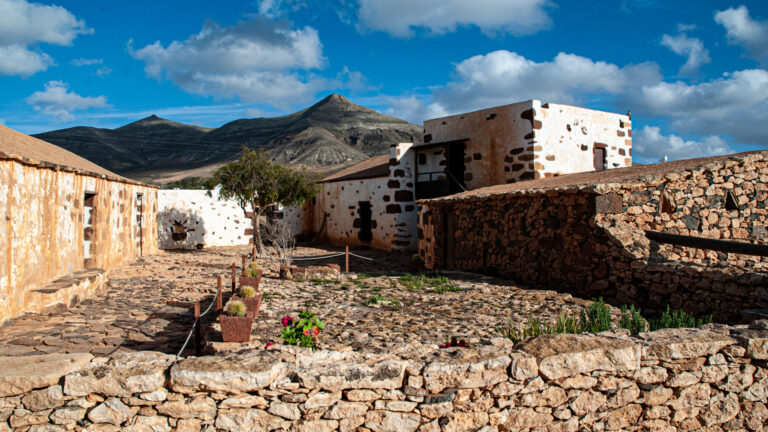
A complementary technique is provided by the aljibes. These reservoirs are built on stony or concrete-paved mountain slopes and collect water during heavy rainfall. Such structures are also frequently found right next to houses, where rainwater is channelled into a reservoir in the courtyard – a silent, centuries-old testament to human adaptability.
Heredades and Comunidades de Regantes – Water as a communal resource
Water is too precious on Fuerteventura to be left to chance. Consequently, its distribution has long been organised by local cooperatives: the heredades and comunidades de regantes.
These communities coordinate water consumption and water distribution with a diligence reminiscent of ancient guilds. Used water is consistently reused on Fuerteventura – for watering plants and mopping floors. Here, conserving resources is not a passing trend, but a necessity put into practice.
Water on Fuerteventura – A resource that brings people together
Anyone holidaying on Fuerteventura, visiting the white dunes of Corralejo, listening to the wind on Sotavento beach or strolling through the winding alleyways of Betancuria is part of this story.
You drink your mineral water straight from the canister. You put the bottle back. And perhaps you spare a brief thought for all those who lived on this island before you – and who regarded water not as something to be taken for granted, but as a gift.
That is what drinking water on Fuerteventura makes so special. It doesn’t just taste of chlorine and limescale. It tastes of history.