Parque Natural de Jandía: Where Fuerteventura’s Wild Soul Dwells
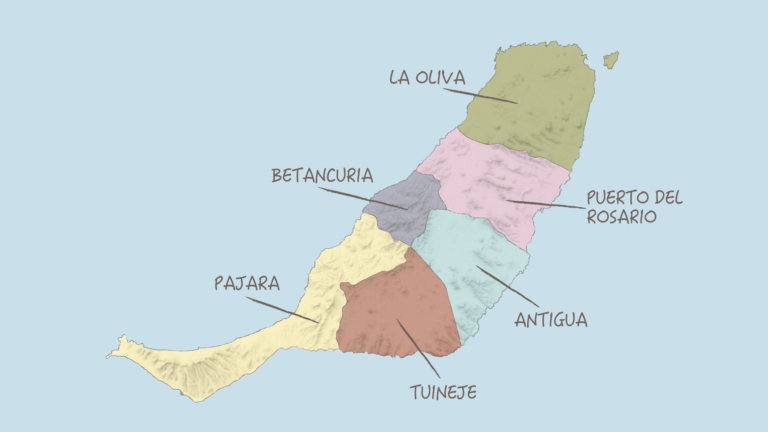
Anyone who sets foot on the Jandía Peninsula for the first time quickly senses that something extraordinary lies hidden here. The Parque Natural de Jandía, stretching across more than 14,900 hectares at the southern tip of Fuerteventura, is no ordinary nature reserve. It is a place where time seems to pass more slowly – where wind and lava and millions of years have together shaped a landscape that is truly one of a kind.
Protected as a nature park since 1987 and belonging to the municipality of Pájara, this area is considered the largest protected area in Fuerteventura by surface. And for good reason: the extraordinary diversity of the landscape led the Canarian government to designate it as a nature reserve in 1994.
The Formation of a Peninsula: Millions of Years in Stone
The history of the Jandía Peninsula reaches deep into geological time. Between 12 and 17 million years ago, this ancient mountain massif came into being – originally a separate island, rising from the sea at the same time as the rest of Fuerteventura. Today, only a narrow strip of land, the Istmo de la Pared, a mere six kilometres wide, connects the peninsula to the main island.
Scientists suspect that Jandía forms part of a half-submerged crater, as the geological characteristics of the northern part – Maxorata – differ fundamentally from the underlying rock core of the peninsula. The interior is traversed by so-called barrancos, deep ravines that cut through the heart of the peninsula like scars.
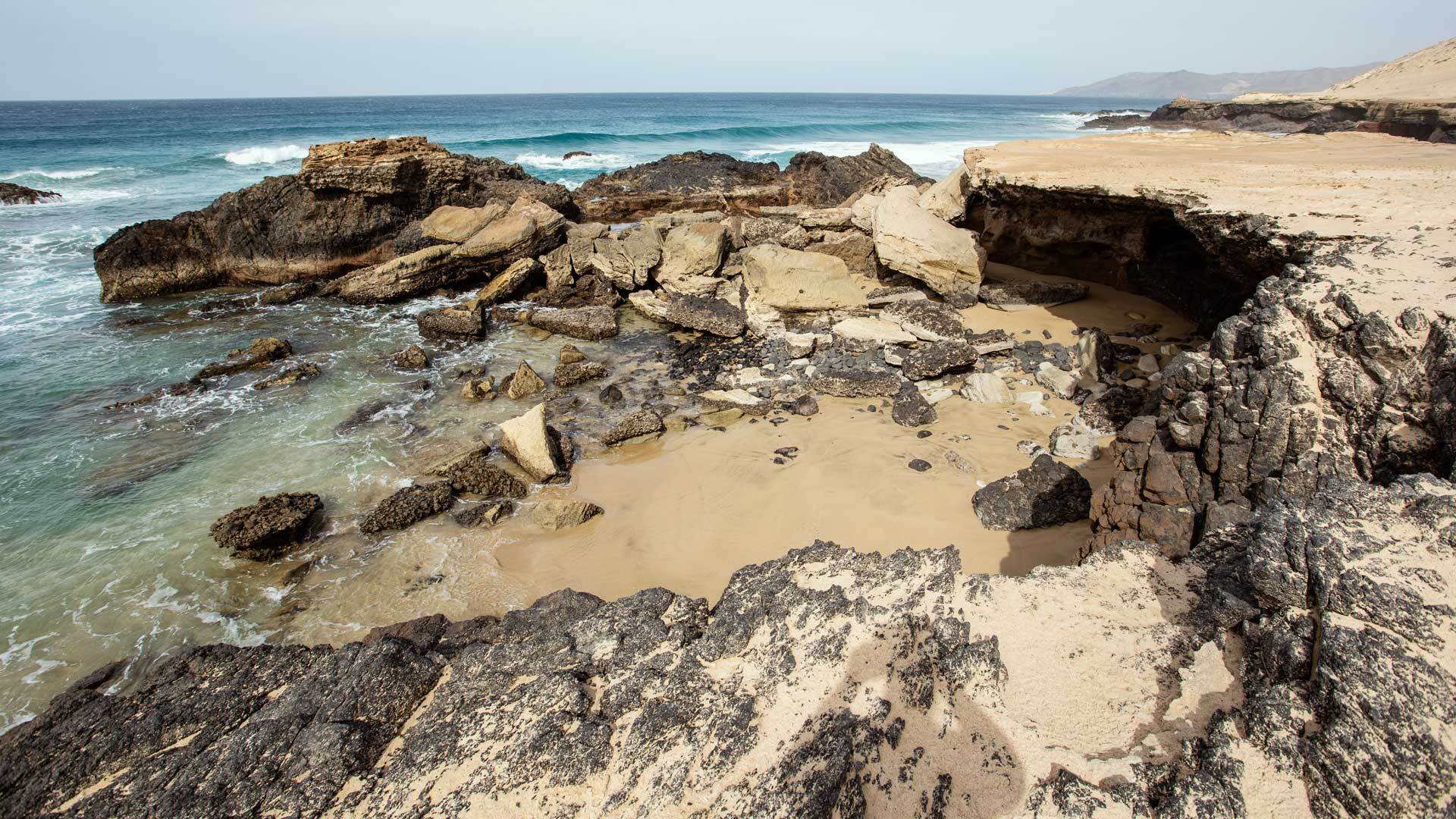
The dune landscape of the Istmo de la Pared
Crossing the isthmus means entering another world. The sand strip stretching from Playa de Barlovento crosses the La Pared isthmus and forms an expansive dune field that reaches all the way to the beaches of Sotavento. Apart from a few rocky ridges, this dune landscape consists almost entirely of sand – of organic and marine origin, in constant movement driven by the wind.
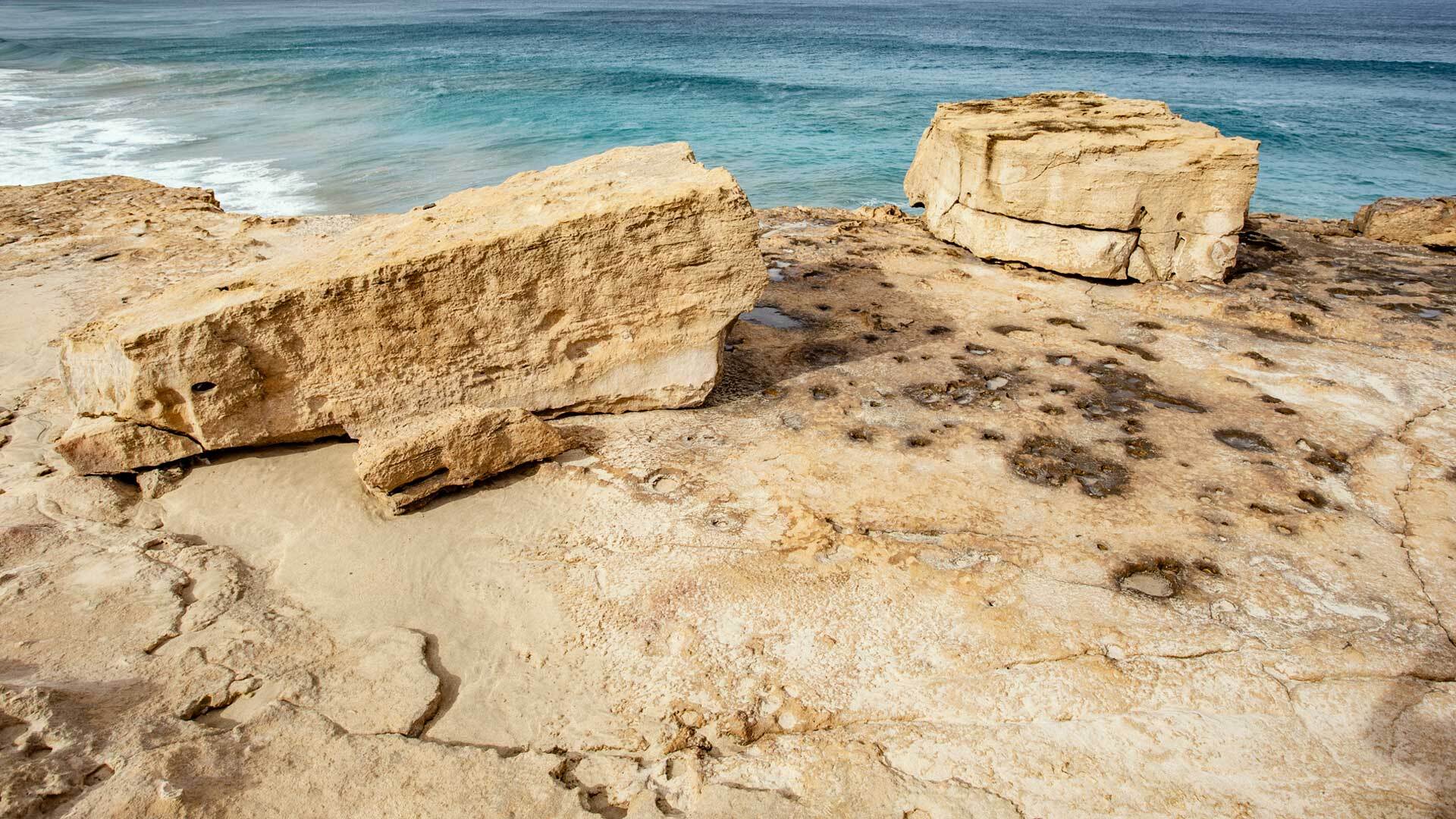
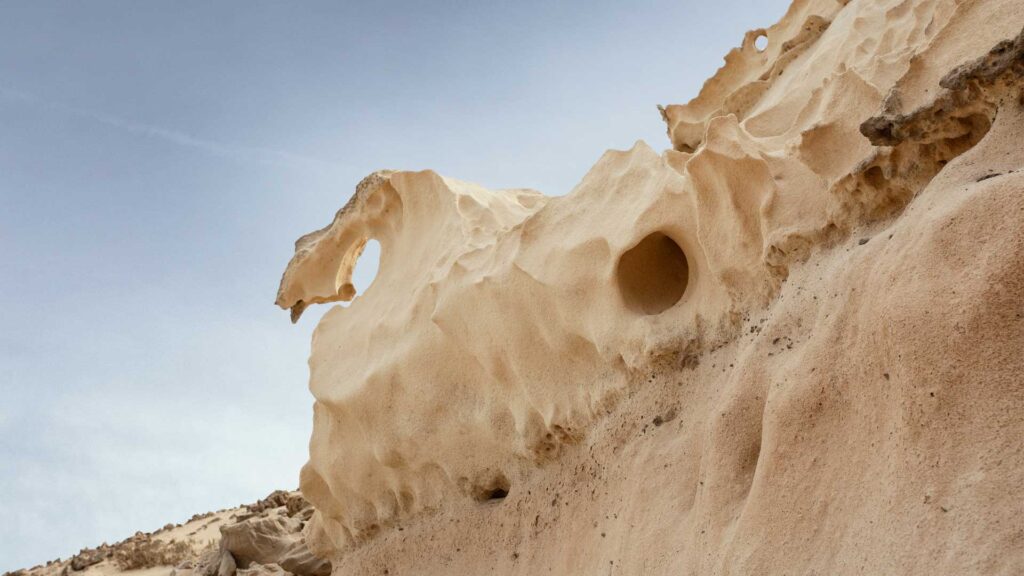
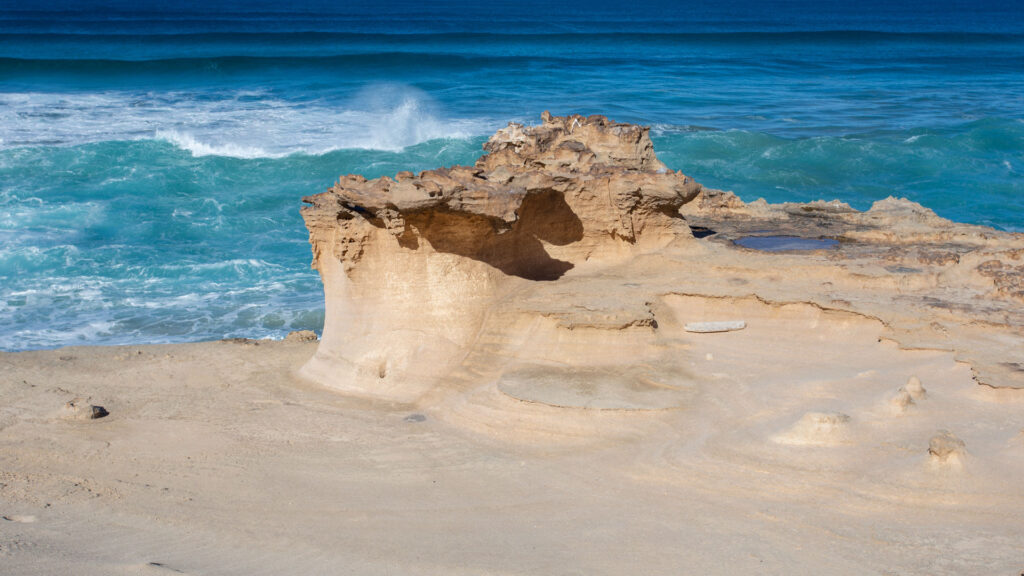
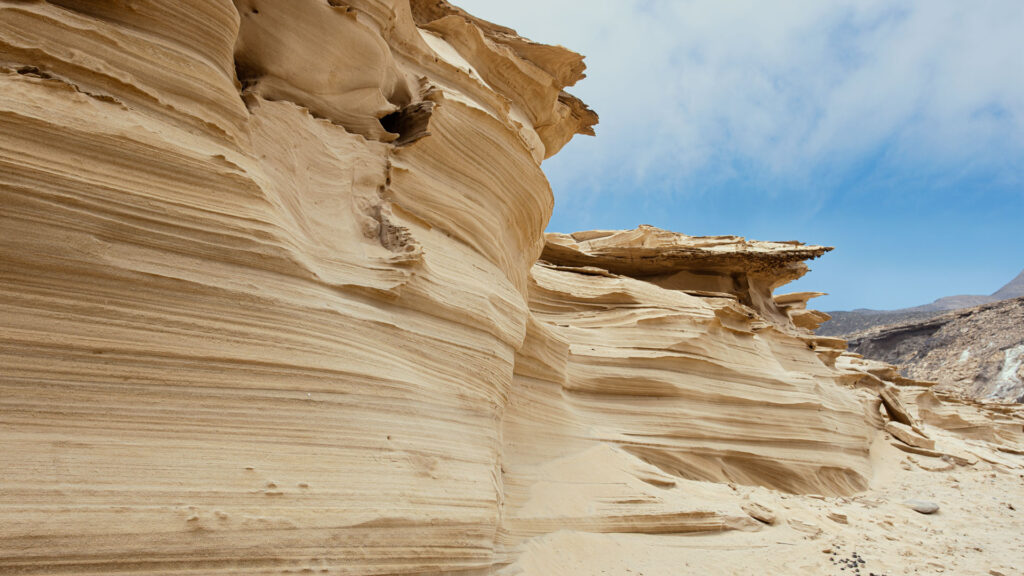
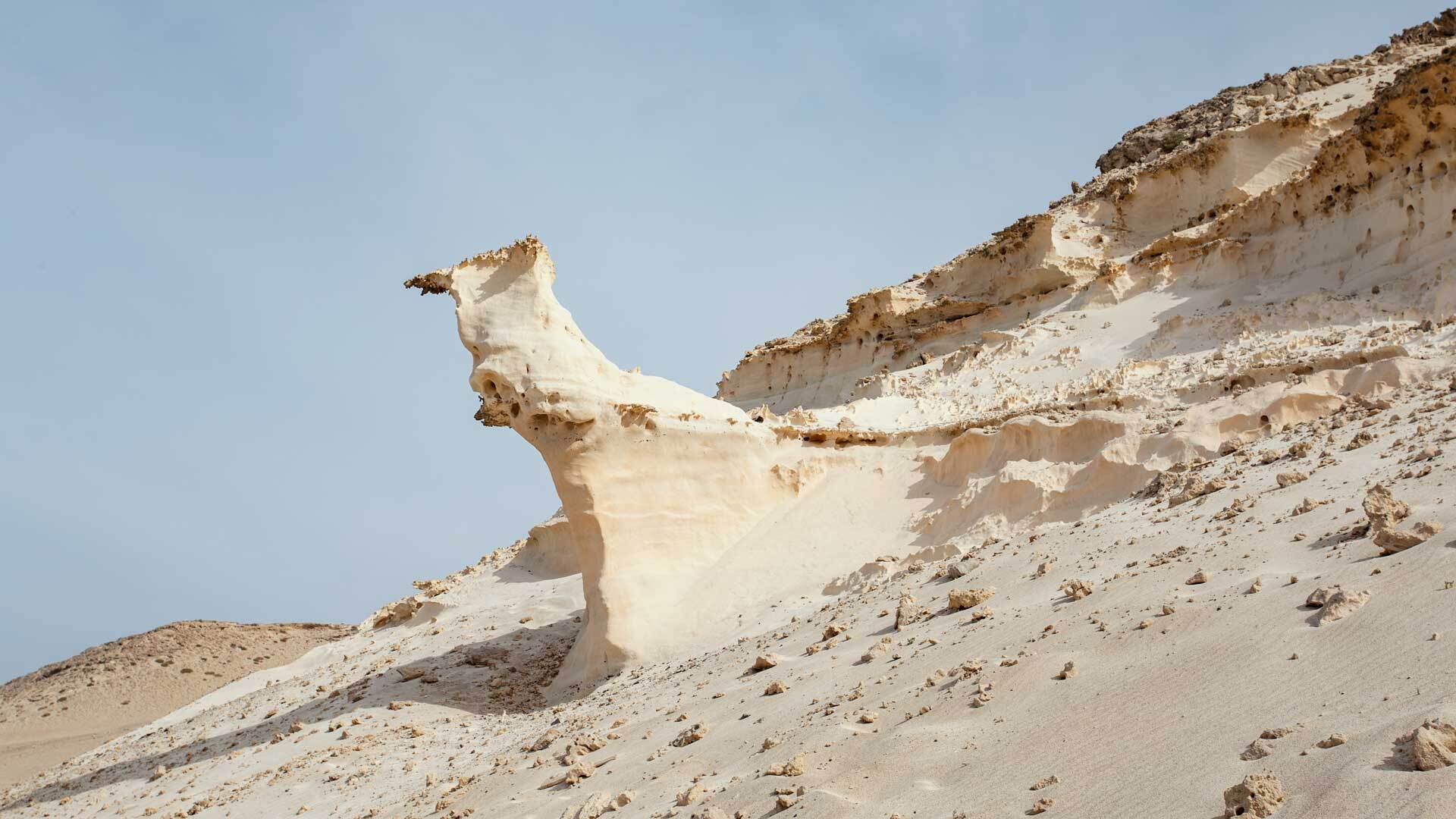
Particularly remarkable are the rock formations of consolidated sand around Agua Liques and Agua de Ovejas. These fully solidified, Quaternary sand deposits give the coastline a surreal, almost otherworldly appearance.
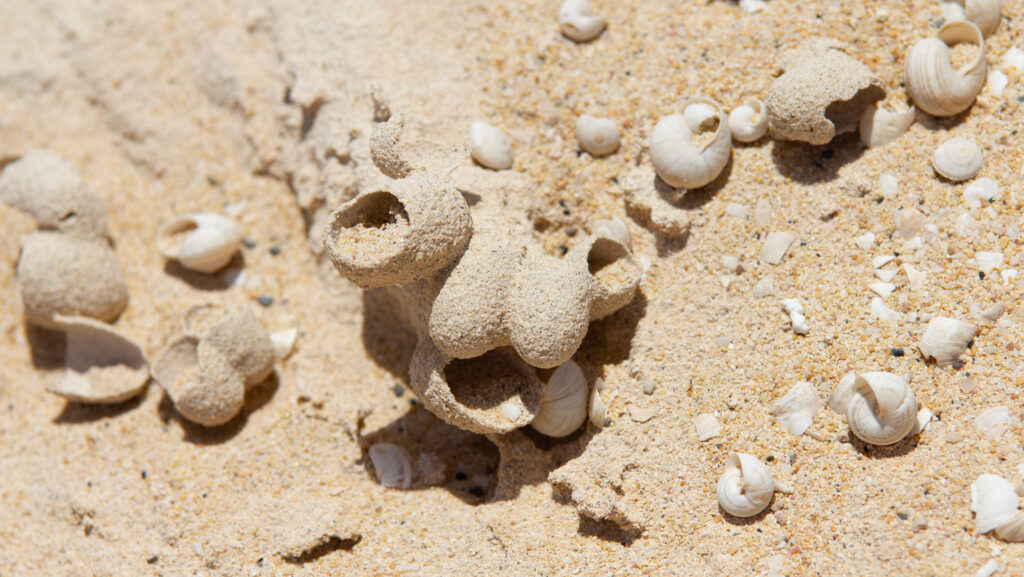
In this part of the island one encounters a remarkable geological curiosity: anthophora – fossilised nesting cells of extinct wasp-like insects, embedded in the rock like silent witnesses to a vanished world.
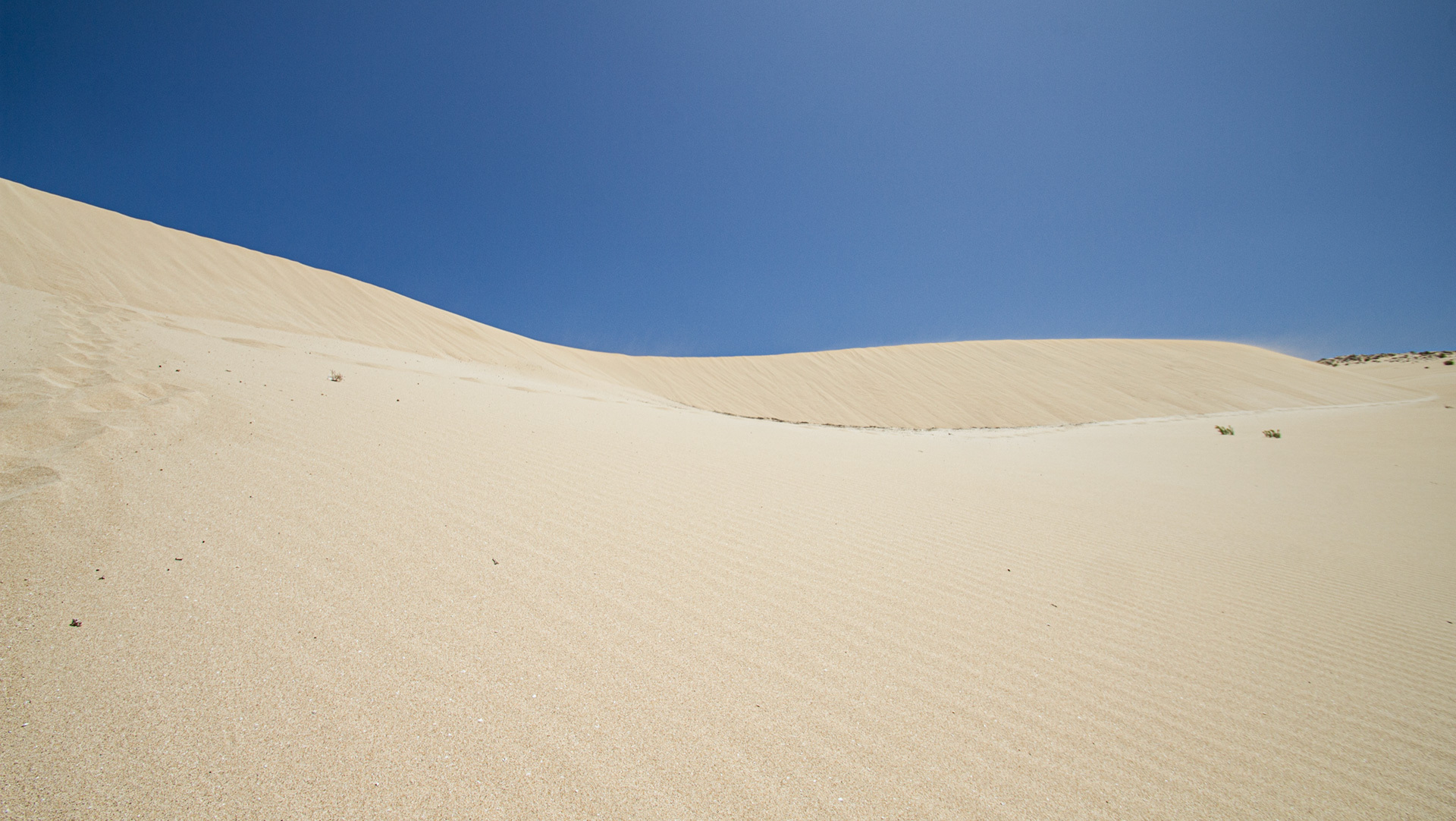
Hiking through the Sand Desert – Routes across the Istmo de la Pared
The dune-crossed desert landscape of the Istmo offers breathtaking hiking routes on Fuerteventura in a setting that evokes distant continents.
Walk La Pared – Playa Agua Liques: Around 9.5 km along the coast, 188 metres of elevation, approx. 3.5 hours. A route for anyone who enjoys the sea and the sand as constant companions.
Walk La Pared – Agua Liques – Agua Tres Piedras: 17.5 km, 331 metres of elevation, around 6 hours. Those who wish to linger longer in this austere splendour will be richly rewarded.
Circular walk Costa Calma – Agua Tres Piedras: Approx. 13 km, 226 metres of elevation, 4.5 hours. Ideal for a full day in the sand desert.
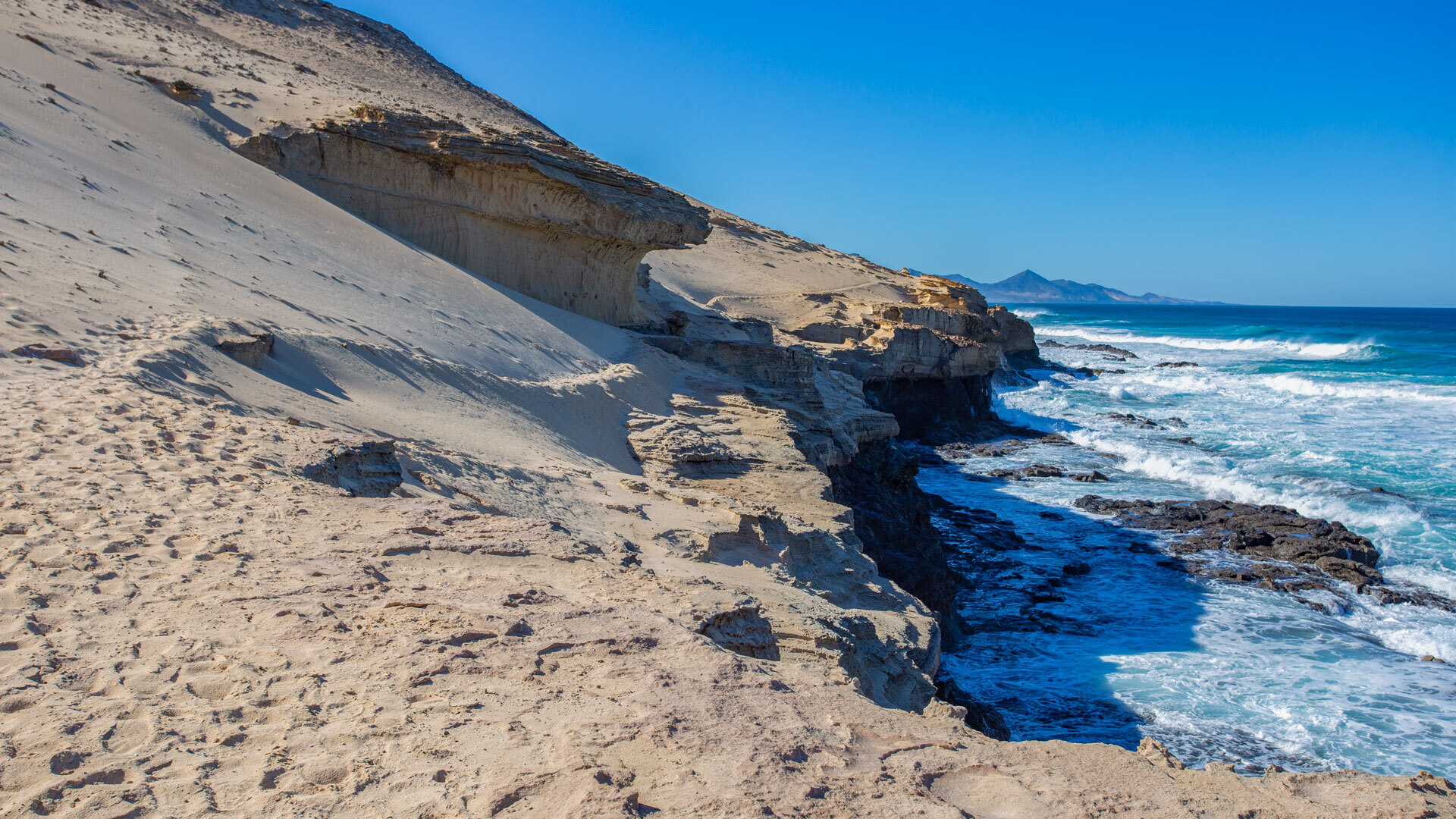
The Jandía Mountains: The Rooftop of Fuerteventura
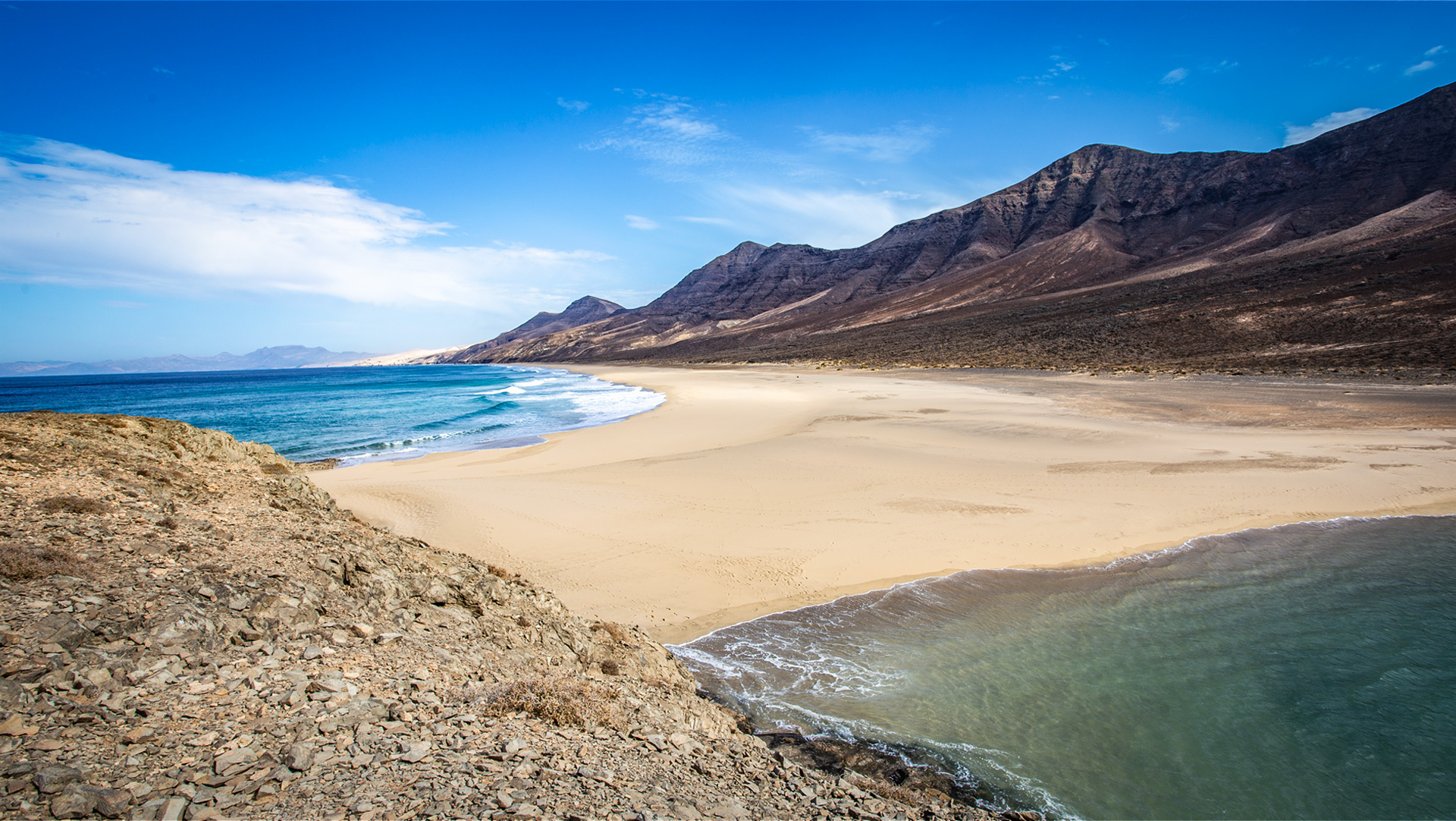
Beyond the Pecenescal Valley the sand landscape gives way. The land rises, and the eye is drawn to a rugged, majestic mountain panorama. The Jandía Mountains form a sweeping arc of peaks that drop steeply to the sea on the western side.
Here rise the island’s highest peaks: the Pico de la Zarza stands at 807 metres as Fuerteventura’s highest mountain, followed by the Pico de Mocán at 801 metres and the Pico de la Palma at 744 metres. The summits are wrapped in cloud year-round, creating a moist microclimate – a quiet contrast to the parched barrenness at the foot of the mountains.
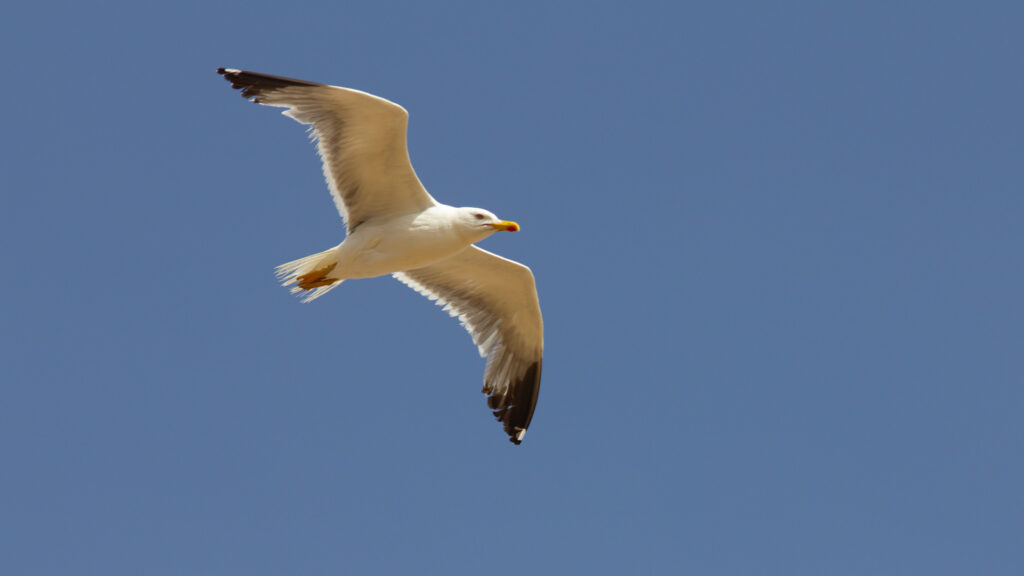
As altitude increases, the vegetation changes noticeably: lichens, the Canary Island daisy (Magarza de Jandía), and the Tajinaste de Jandía (Echium handiense) cling to the slopes. Birds of prey circle the ridgelines: the common buzzard, the Eleonora’s and lesser kestrel, and the critically endangered Egyptian vulture have made this their domain.
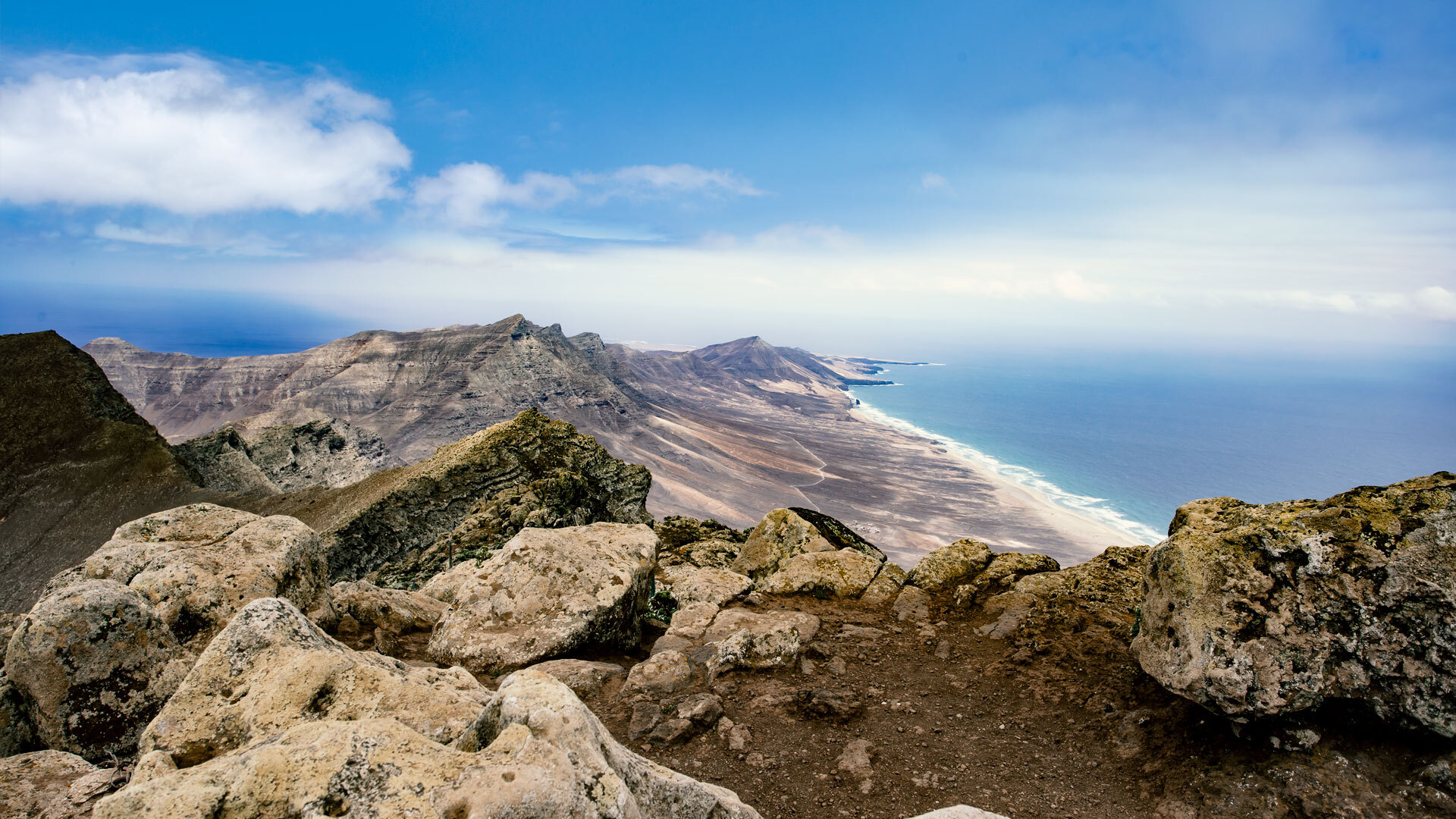
Hiking in the Jandía Mountains – The Most Beautiful Mountain Routes
Ascent of the Pico de la Zarza: 12.6 km, 714 metres of elevation, 4 to 4:45 hours. The hike to the highest summit in Fuerteventura is an experience that burns itself into the memory – especially when the cloud curtain briefly parts.
Circular walk Barranco de Pecenescal (SL FV 11) – Playa de Barlovento – Barranco del Rinconcillo: Approx. 17 km, 511 metres of elevation, around 6.5 hours. A magnificent tour through the heart of the mountains.
Hike to the Pico de Mocán: Over 13 km, 787 metres of elevation, 5 to 6 hours. The ascent of the island’s second highest peak is a true adventure for experienced walkers.
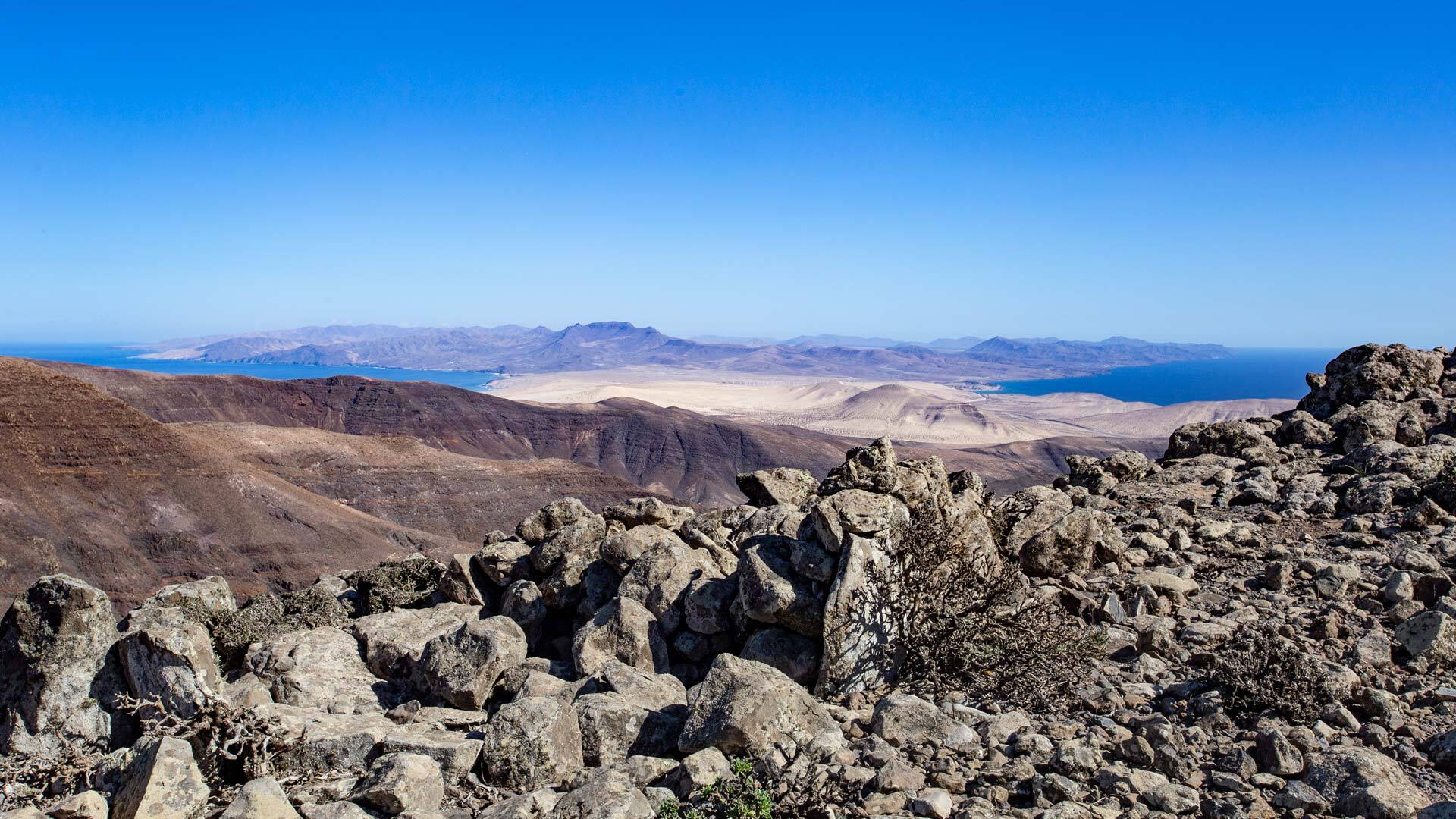
Playa de Cofete: The End of the World, Beautiful as a Dream
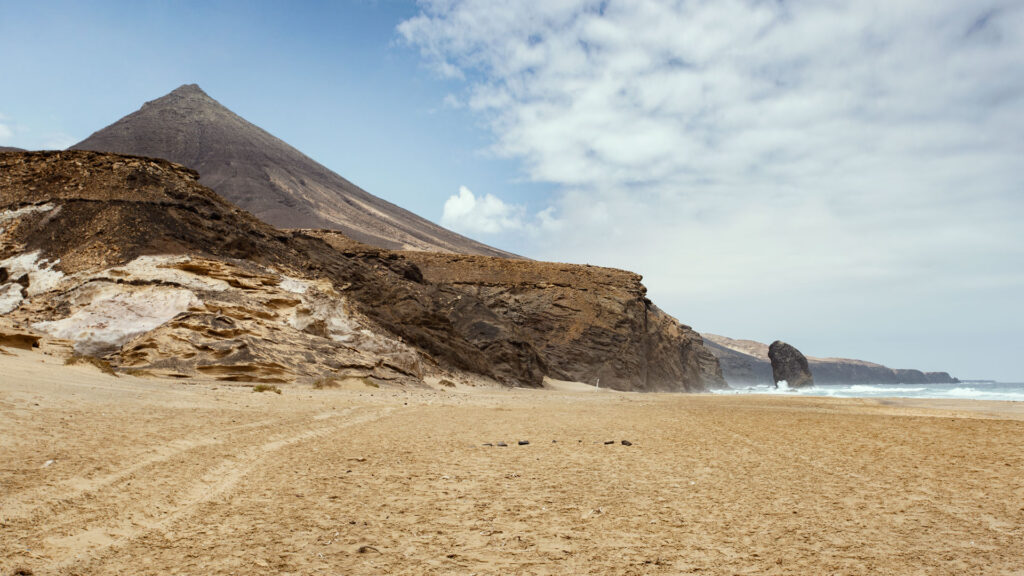
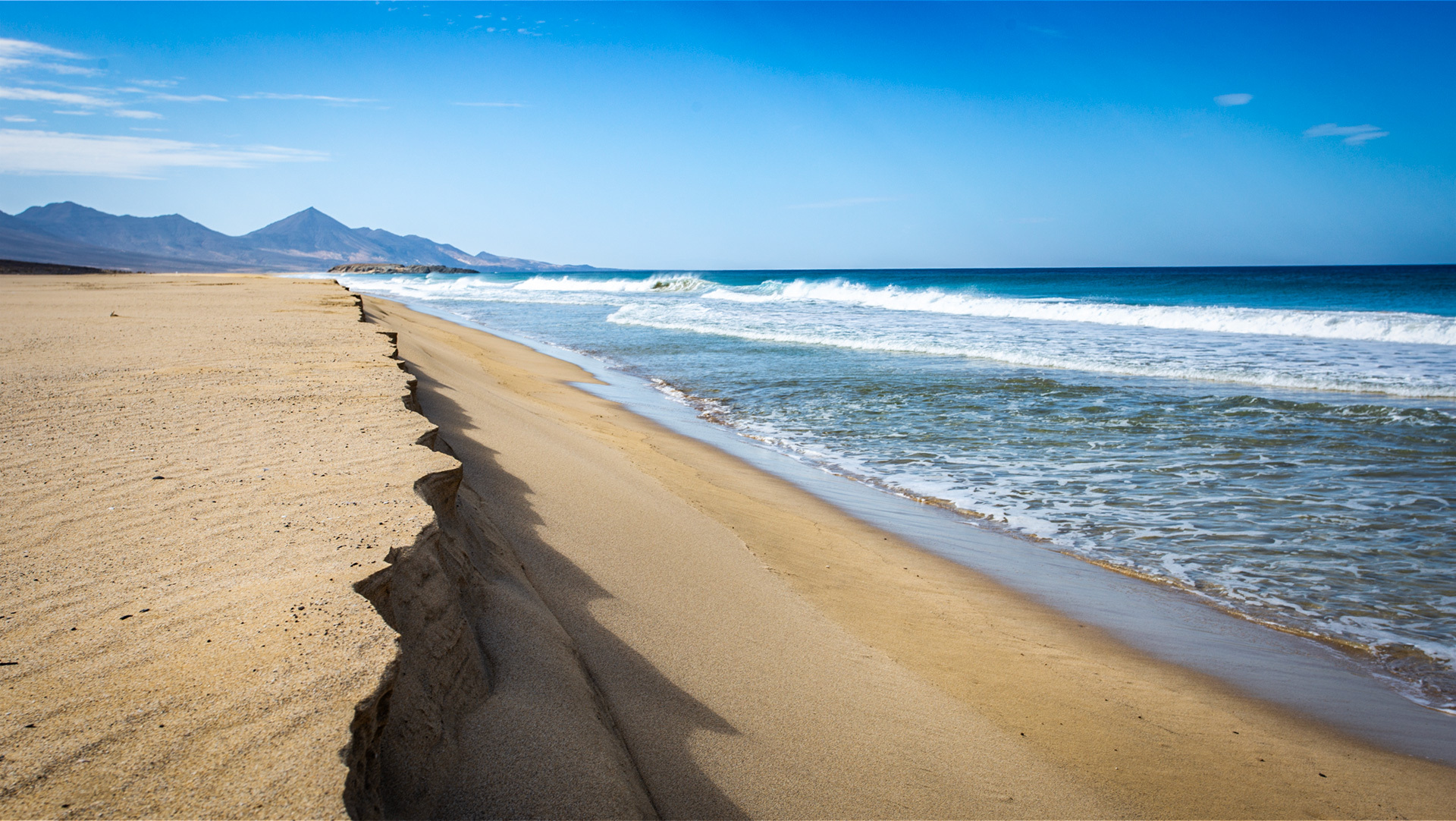
Below the Jandía massif lies one of the most significant beaches in the Canary Islands: the Playa de Cofete. Twelve kilometres long, 50 metres wide, bright sandy beach – bounded to the north by the small rocky islet El Islote, with the steeply falling mountain ranges of the Jandía massif as a backdrop. It is a setting that leaves one speechless.
Above the beach perches the tiny village of Cofete with its small restaurant and the legendary Villa Winter – a building that feeds rumours and writes its own stories.
At the southern end of the beach stands the Roque del Moro, a five-metre-high rock monolith, surrounded by beautiful formations of white and beige-veined trachyte – volcanic rock that looks like art.
Walks around Cofete
Gran Valle – Degollada del Cofete – Playa de Cofete: 7.5 km, 311 metres ascent, 368 metres descent. The walk crosses the Jandía Mountains at the pass and descends to the beach with breathtaking views.
Walk to the Roque del Moro: Approx. 9 km, minimal elevation change, 3 hours. Easy and rewarding.
Beach walk Playa de Cofete – El Islote – Playa de Barlovento: Approx. 14 km, 18 metres of elevation, around 5.5 hours. A long stroll at the end of the world.
Also popular is the Clifftop Trail as part of the West Coast Trail – a demanding path along the steep cliffs of the west coast that rewards with unforgettable views. For walkers without their own vehicle, Bus Line 111 offers a convenient connection between Cofete, Morro Jable and La Pared – twice daily.
Fauna and Flora: A Treasure of Endemic Species
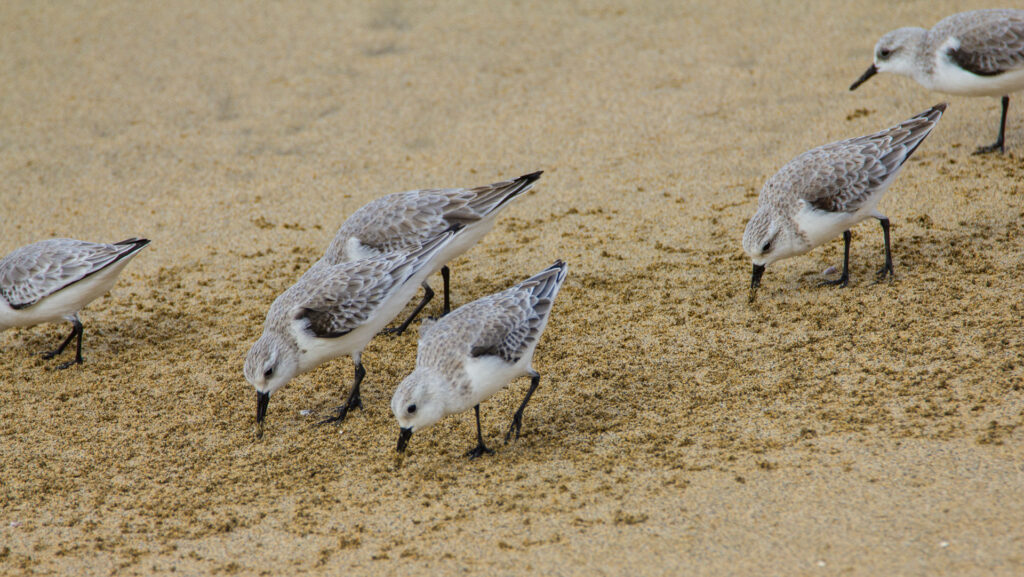
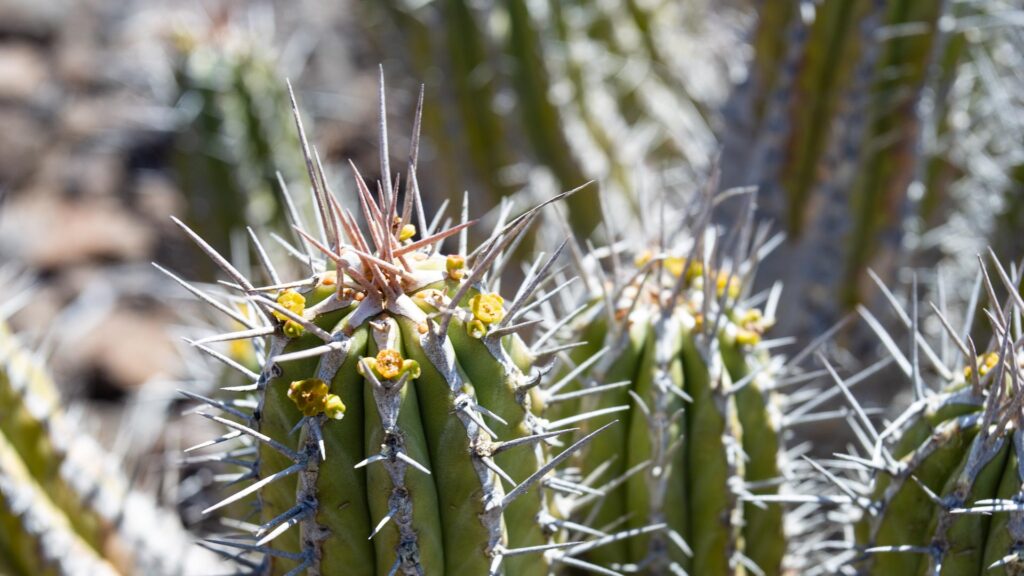
The Parque Natural de Jandía is a refuge for animals and plants found nowhere else on earth. Rangers keep careful watch over the rare species – in particular the spurge plants (Euphorbias) and the threatened houbara bustards.
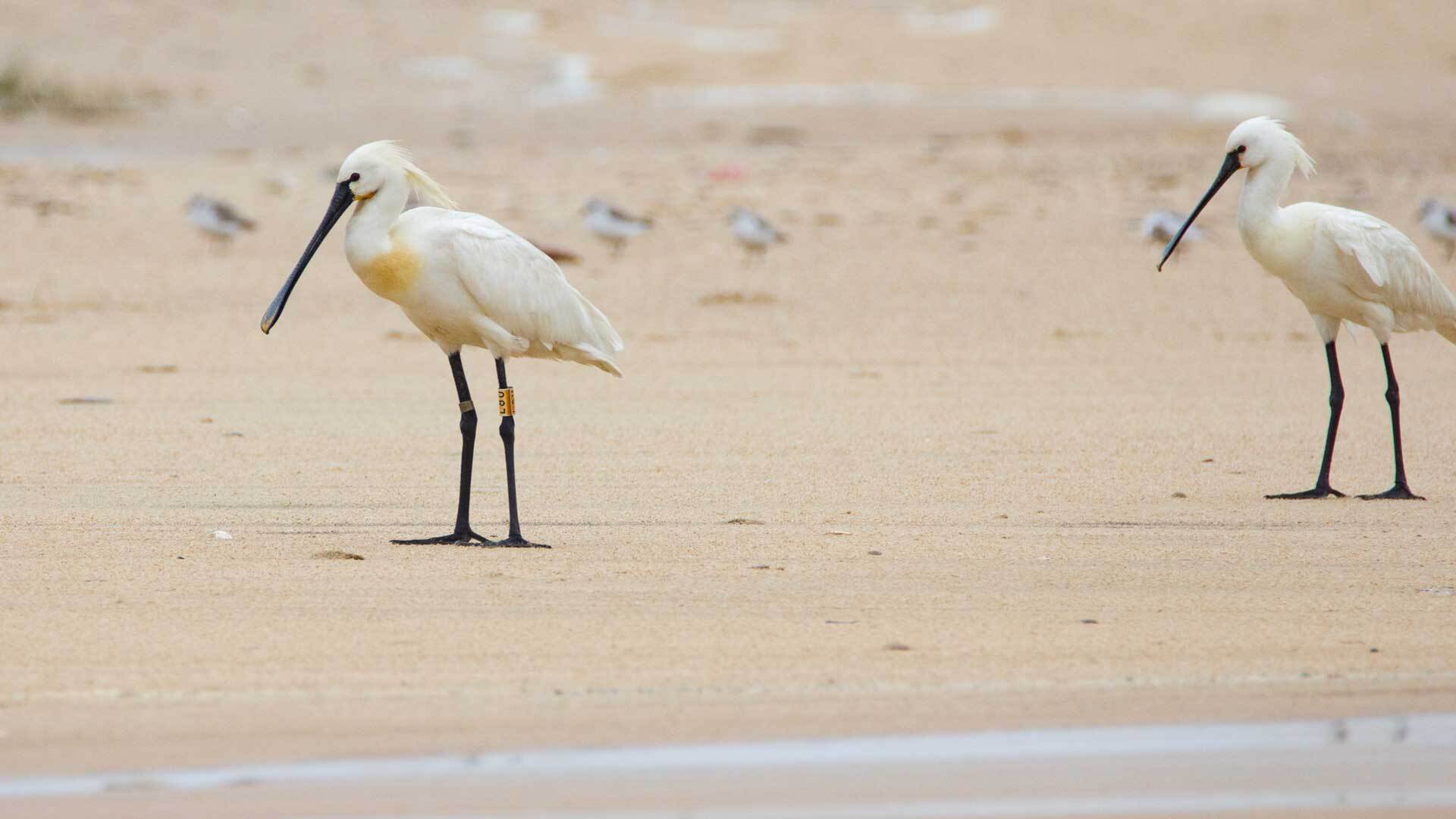
Those who wander through the park encounter geckos, Canary Island skinks and other reptiles, the hedgehog, herons, spoonbills, ibis and the common kestrel. On the summits and mountain slopes, endemic plants thrive: the Magarza de Jandía, the winter marguerite (Argyranthemum winteri), and the Jandía cactus (Euphorbia handiensis) – a botanical symbol of Fuerteventura found only within this park.
The entire coastline is a passage for whales and dolphins: in summer, fin whales, pilot whales, sperm whales and common bottlenose dolphins can be observed. And on the beaches of Cofete, the loggerhead sea turtle is being carefully reintroduced.
Coastlines Between Solitude and Silence
Towards the coast the land flattens out – only on the west coast do steep cliffs rise up, hiding secluded, lonely beaches such as the Playa de los Ojos. The east coast, by contrast, is calmer; here lies the Matorral beach, a former salt-extraction area where halophilic plants such as sea purslane have taken hold. The adjacent saltmarsh nature reserve El Saladar de Jandía is a quiet jewel of coastal ecology.
Conclusion: Jandía – Wild South, Unforgettable Nature
The Parque Natural de Jandía is more than a nature reserve. It is a journey into a primeval landscape that elevates Fuerteventura far beyond its image as a sun-and-sea destination. Hiking on Fuerteventura means here: lava and sand, cloud-wreathed summits and ocean stillness, endemic plants and circling birds of prey. Those who embrace it return changed.