The Flora of Fuerteventura – Survival as an Art Form
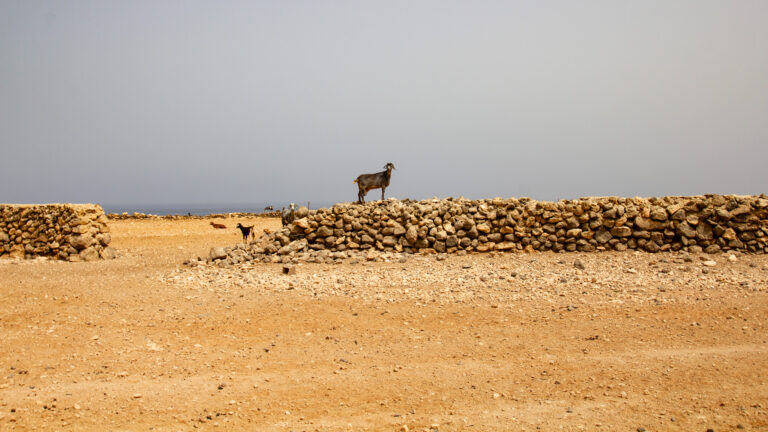
To the first-time visitor, Fuerteventura may appear barren – almost lunar in its raw stillness. Yet those who look more closely, who take their time and let their gaze drift slowly across rocks, dunes and dry hillsides, begin to understand: the plant life of Fuerteventura is no deficiency – it is a masterpiece of adaptation.
Canary Islands: A Botanical Refuge Since the Ice Age
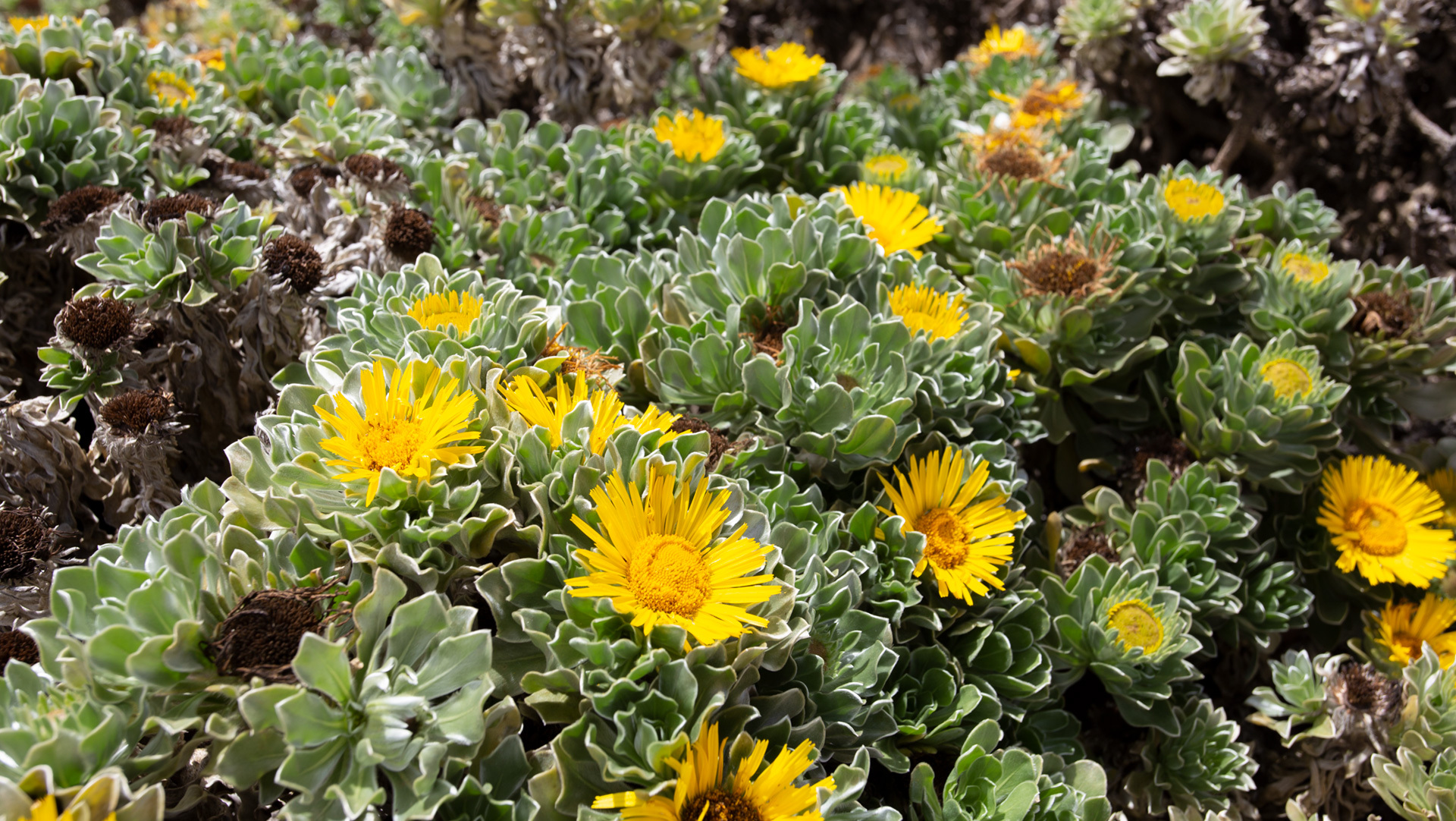
The Canary Islands are home to some 3,000 wild-growing plant species in total, around 1,000 of which are found nowhere else on earth. A quiet botanical treasure, shaped over millions of years. Fossil records show that some of these plants were once widespread – across the Mediterranean, the Alps, even the south of Russia. Then came the last Ice Age, and the climate changed with relentless thoroughness.
The endemic plants of the Canary Islands were driven from their original territories. Yet the Atlantic islands, with their isolated position and mild climate, offered refuge. Here they survived – undeterred, adaptable, tenacious. These ancient Canarian plants can be seen as living witnesses to another geological era: quiet survivors of a world long since gone.
Flora of Fuerteventura: Sparse, But Unique
On Fuerteventura itself, the distinctive vegetation has developed its own character. The island’s geological nature – ancient, parched, volcanic – and its minimal rainfall have given rise to a sparse plant world that is nonetheless perfectly adapted to these harsh conditions.
18 plant species on Fuerteventura are found exclusively on this island. A further 26 species grow only on the eastern Canaries, and around 60 are unique to the entire Canarian archipelago. Figures that may sound unremarkable at first – yet on closer inspection they reveal a quiet treasure.
Dunes, Salt Plants and Succulent Shrubs: Coastal Vegetation
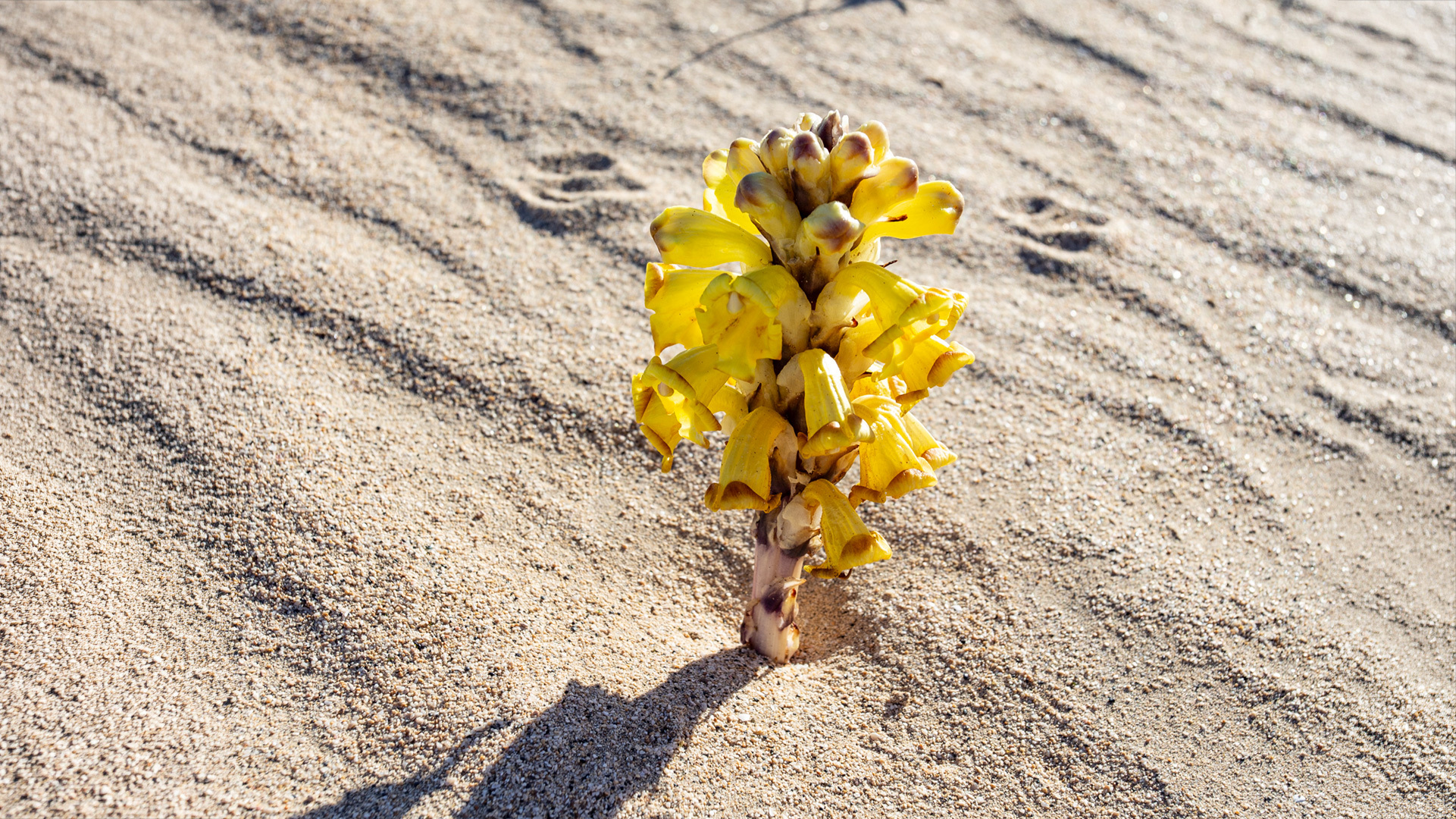
Along the coasts, Fuerteventura’s sand dunes define the landscape; inland, succulent shrubs prevail. Both are habitats with their own wordless beauty – anyone who has walked the dunes of Corralejo at dawn will know exactly that feeling.
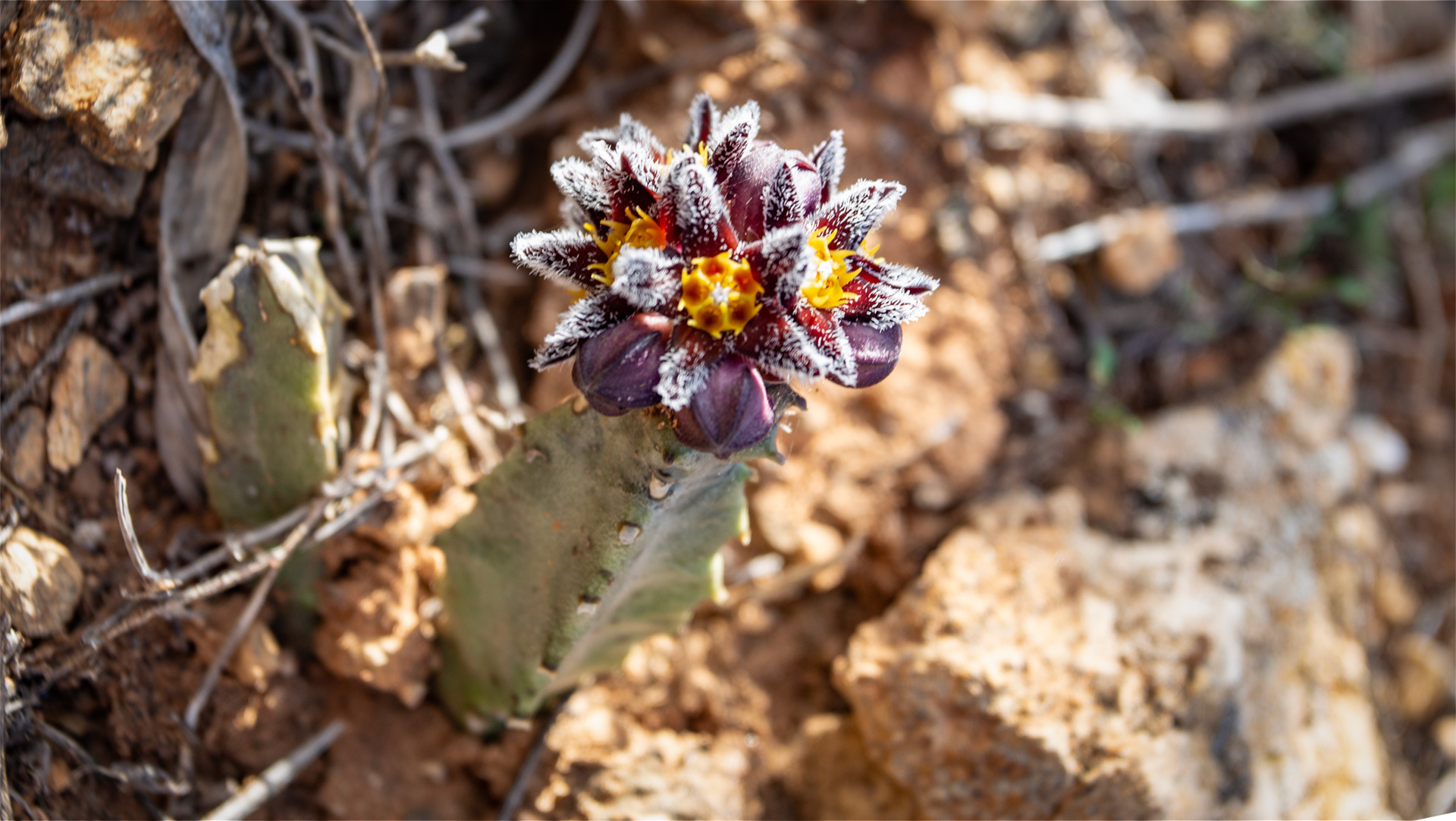
Particularly interesting is the vegetation around Jandía, near Morro Jable. Where the coastal plains are regularly inundated with saltwater, salt-tolerant plants have established themselves: the lush, green goosefoot family plants, holding firm against the soil. Plants such as Desfontaine’s bean caper (Zygophyllum fondanesii) thrive here on saline ground where no other plant would stand a chance.
Candelabra Spurge: The Emblem of Fuerteventura’s Flora
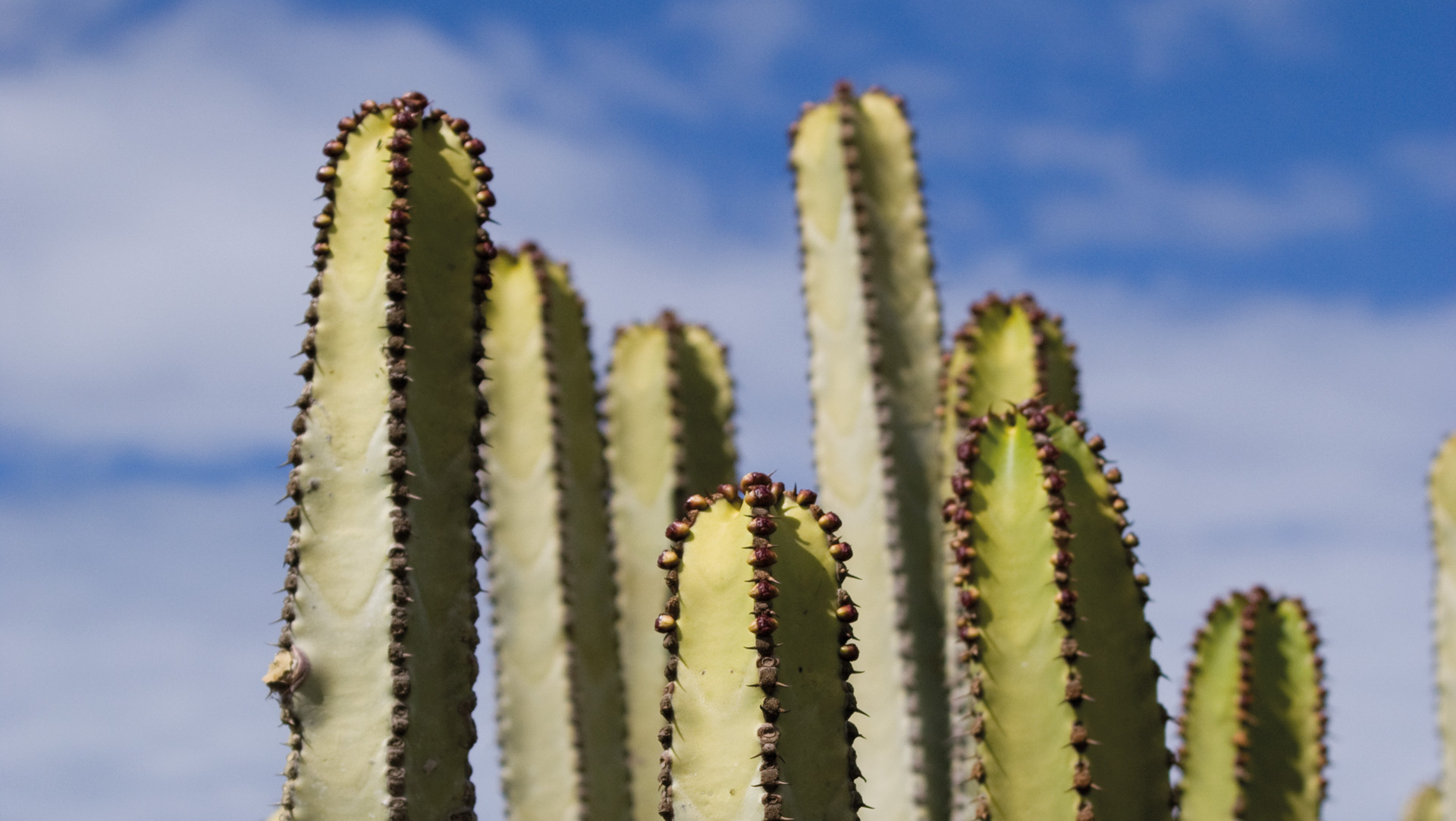
Those seeking a plant that embodies the spirit of Fuerteventura will find it in the candelabra spurge (Euphorbia canariensis) – affectionately known on the island as cardón. Like a natural monument it grows on rocks and dry mountain slopes, its mighty arms reaching skyward.
At first glance it resembles a cactus, yet the difference lies within: in its roots, arms and fruits it stores a toxic, milky-white sap. What makes this endemic plant of the Canary Islands even more fascinating, however, is its age. The candelabra spurge grows extremely slowly – the large, impressive specimens found on Fuerteventura are likely several hundred years old. Standing before them, one senses how many generations of people they have already outlasted.
Palms, Tamarisks and Mimosas: The Green Network of the Valleys
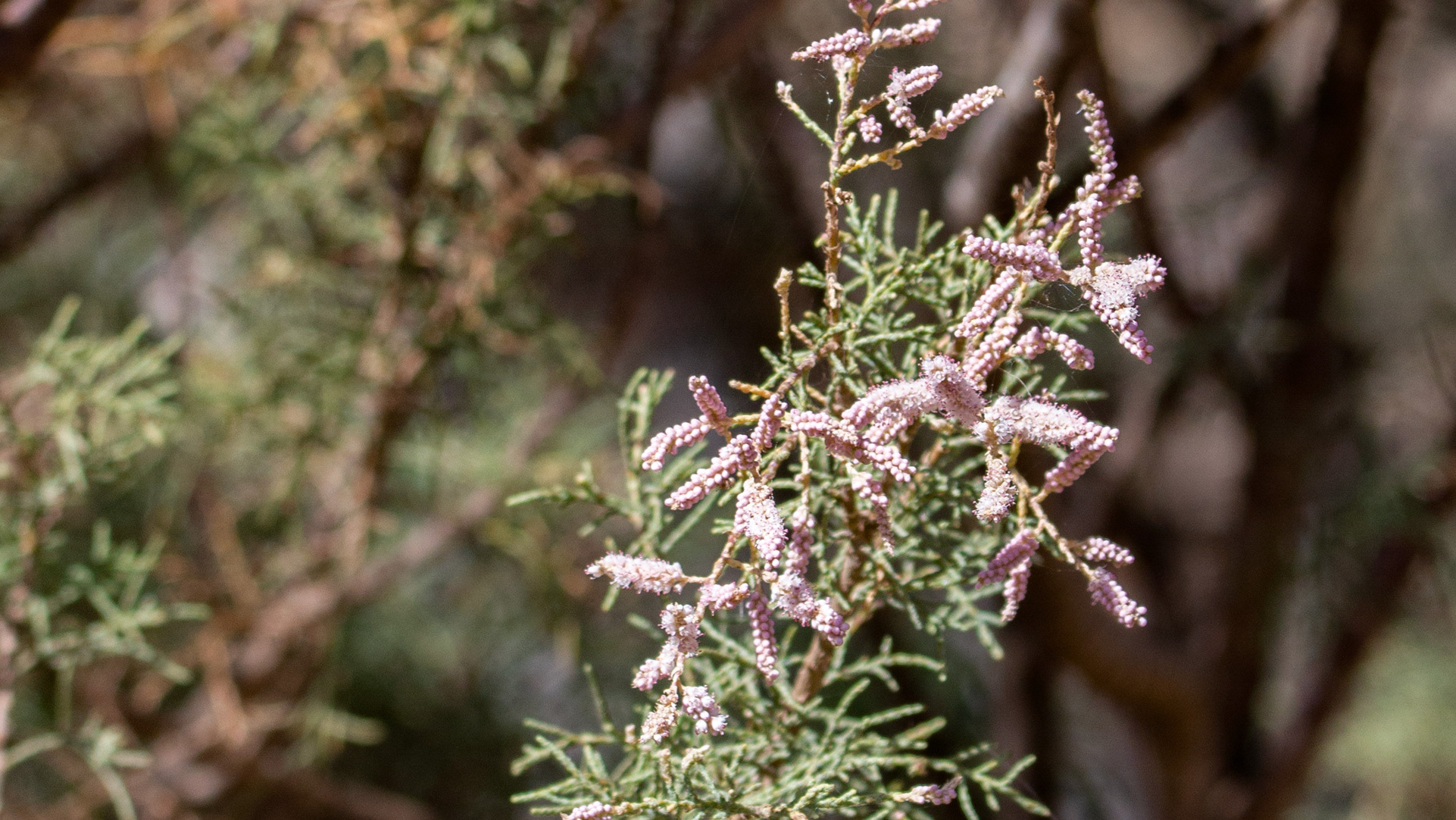
Palms, mimosas and tamarisks also number among Fuerteventura’s native plants. They tend to grow near valleys or on old terraced farmland. Their role is far more than decorative: they stabilise the soil, improve its water retention and counteract erosion. In a climate as dry as Fuerteventura’s, that is no small matter – it is a question of survival.
The Prickly Pear and Cochineal: A Forgotten Industry
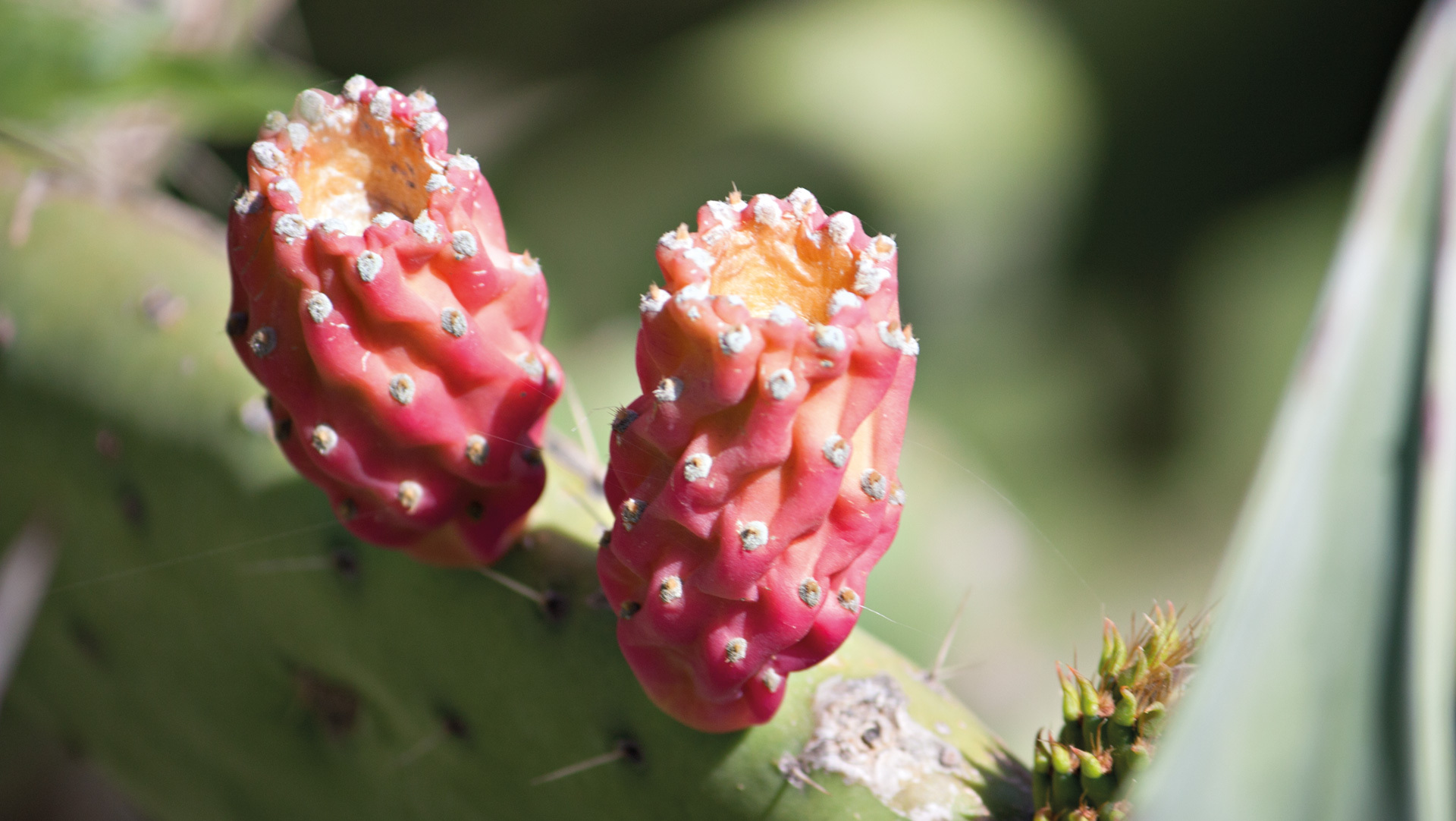
Introduced from Latin America, the prickly pear (Opuntia ficus-indica) has long since made itself at home on Fuerteventura. It once served as a host plant for the cochineal scale insect, that unassuming creature from which an intensely red dye was extracted. Cochineal farming on the Canary Islands was once a significant industry, before synthetic dye production all but displaced the traditional craft. Today, old rows of Opuntia plants in certain spots still bear witness to this vanished world.
Introduced Plants: Hibiscus, Bougainvillea and Eucalyptus
Alongside the native plants, people have over time brought further species to Fuerteventura: eucalyptus and blackberry, as well as the vivid hibiscus, oleander and the exuberantly flowering bougainvillea – plants that today shape the scene chiefly in gardens, along hotel walls and in village squares. They lend the island colour, but are not part of its original, wild soul.
The forests that once covered Fuerteventura were cleared over the centuries. What remains is what one sees today: a landscape that has learnt to make do with little – and in doing so has found its very own, unmistakable dignity.
Conclusion: The Quiet Beauty of Fuerteventura’s Plant World
The flora of Fuerteventura offers no spectacle of lushness. It is the opposite: precise, reduced, adapted. Those wishing to understand the vegetation of the Canary Islands must be prepared to look slowly. Then a world full of botanical secrets opens up – a world that has survived ice ages, that defies salt and drought, and that quietly lives on in every barren hill of Fuerteventura.