Fuerteventura: The Island That Never Stops Celebrating
White sand. Eternal wind. And a people who celebrate life as though every day were a festival — because on Fuerteventura, it truly can be.
Anyone travelling here should pack more than sun cream. It’s worth checking the Fuerteventura travel information: When does the island slow down? When does it truly come alive? The answers may surprise you.
Practicalities first: Consulate & Tourist Office
Should something go wrong — a lost passport, trouble with the authorities — the relevant consulate is your first port of call. No drama, simply good to know.
And for anyone wanting to know what’s happening on the island right now: the local tourist office provides up-to-date information on events, attractions and local highlights — more reliably than any algorithm.
Public Holidays: When Fuerteventura Pauses
The Roman Catholic faith has shaped the Canary Islands for centuries — and you can feel it in the public holiday calendar. Most statutory holidays on Fuerteventura have ecclesiastical roots, intertwined with Spain’s national days of remembrance.
| Date | Public Holiday |
|---|---|
| 1 January | New Year’s Day – Año Nuevo |
| 6 January | Epiphany – Los Reyes |
| 19 March | San José |
| Maundy Thursday | Jueves Santo |
| Good Friday | Viernes Santo |
| Easter Sunday | Pascua |
| 1 May | Labour Day |
| 30 May | Canary Islands Day – Día de las Islas |
| Whit Sunday | Pentecostés |
| Corpus Christi | Corpus Christi |
| 25 July | Feast of Santiago – Spain’s National Day |
| 15 August | Assumption of Mary |
| 3rd Saturday in September | Romería Virgen de La Peña (Fuerteventura only) |
| 12 October | Día de la Hispanidad |
| 1 November | All Saints’ Day |
| 6 December | Constitution Day |
| 8 December | Immaculate Conception |
| 25 December | Christmas Day |
One public holiday belongs exclusively to the island: the Romería Nuestra Señora La Virgen de La Peña in September. You won’t find it anywhere else.
Tip: If a public holiday falls on a Sunday, the following Monday or the preceding Friday may also be a day off. As Spain’s autonomous regions set the calendar anew each year, a quick check before you travel is worthwhile.
Fiestas: Because Every Village Deserves Its Patron Saint
On Fuerteventura, people don’t just celebrate — they celebrate properly. Every village is entitled by law to hold two fiestas of its own, honouring the local patron saint. Processions wind through the lanes, live music carries the atmosphere into the early hours, and tables groan under the weight of Canarian specialities.
The major festivals last up to a week. You arrive as a tourist — and before long you feel like a local.
Romería Virgen de La Peña: 40 Hours of Pure Island
The highlight of the festival calendar falls on the eve of the third Saturday in September. The Romería Nuestra Señora La Virgen de La Peña is no ordinary festival — it is a pilgrimage that draws thousands of people from Antigua to the chapel at Vega del Río Palma, where the island’s patron saint is venerated.
The spectacle lasts around 40 hours. Traditional wrestling and stick fighting, folkloric performances, and when the sun goes down: dancing, live music, fireworks. The desert sky as a stage.
For anyone who wants to experience Fuerteventura beyond the beaches — this is the moment.
Betancuria: A Festival With History
On 14 July, the former island capital of Betancuria commemorates the conquest of Fuerteventura by the Castilian Crown. A remnant of the flag of conquistador Jean de Béthencourt — incorporated into a replica — is carried ceremonially across the cobblestones.
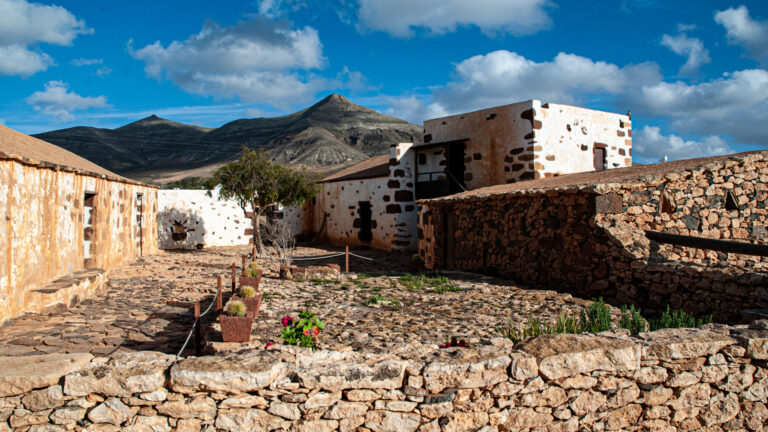
Betancuria is well worth a visit in any case: weathered church walls, quiet lanes, and the feeling that time moves more slowly here. The July festival brings the whole thing to life.
Carnival: Fuerteventura Lets Loose
February and March belong to carnival — and that is one of the best reasons to visit Fuerteventura at precisely this time of year. For three weeks, the island — especially Puerto del Rosario — transforms into one continuous festival of costumes, rhythm and boundless energy.
The highlight: the traditional masquerade ball, at which men dress as women following ancient custom. What sounds like a joke is a centuries-old tradition — and absolutely worth seeing.
You come for the beach. You stay for the carnival.
For up-to-date event information, contact the local tourist office or visit the official Canary Islands websites.