Ajuy on Fuerteventura – Where Time Has Learned to Forget
There are places on Fuerteventura that resist mass tourism with quiet dignity. Ajuy – also known as Puerto de La Peña – is one of them. Those who drive the FV-621 westward from Pájara and see the tarmac dissolve into a handful of whitewashed houses after eight kilometres sense it: this is not just where the road ends, it is where a whole world ends.
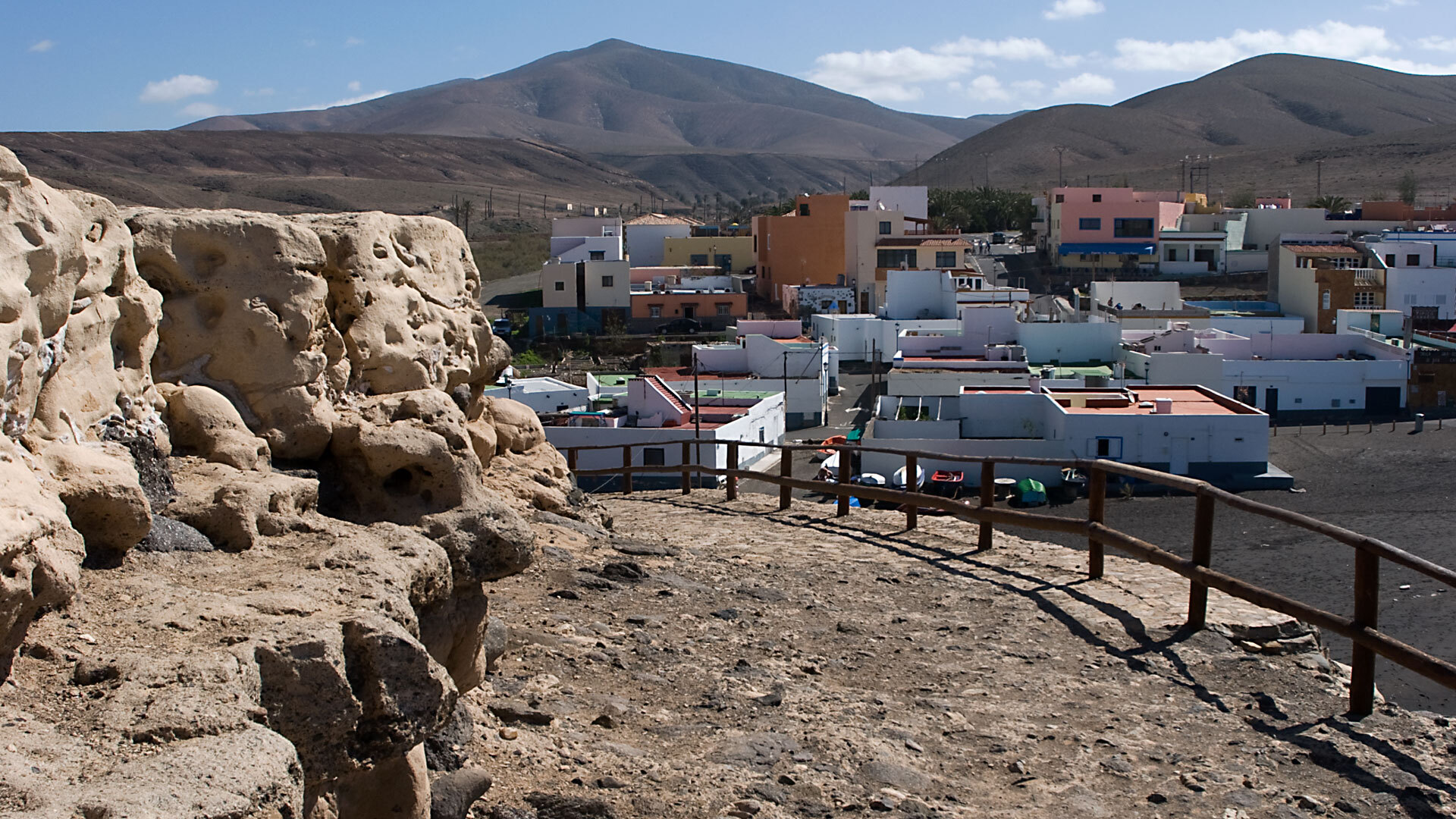
The small fishing village on the west coast of Fuerteventura lies at the mouth of a broad valley stretching from the old island capital of Betancuria down to the sea. With just 96 inhabitants (as of 2024), Ajuy is one of the smallest inhabited settlements on the island – and at the same time one of its most unspoilt.
A Harbour That Made History
Those who stroll through Ajuy walk on ground trodden by conquerors. In 1402, Jean de Béthencourt and Gadifer de La Salle are said to have used this very stretch of coast as their landing point – those Norman knights who claimed Fuerteventura in the name of the Spanish Crown. Béthencourt promptly declared Puerto de La Peña the sea harbour of the newly founded capital Betancuria, which grew up less than ten kilometres inland.
The harbour itself was built slightly north of the village along the rocky coastline. With it grew Ajuy’s importance. Well into the 19th century, lime was shipped from here to the other Canary Islands – quarried along a limestone seam some 15 kilometres long. The old lime kilns, which still stand near the harbour today, bear silent witness to the end of that era. Weathered, marked by salt and wind, they are a stone monument to change.
With the rise of Puerto del Rosario as the island’s commercial port, Ajuy gradually lost its importance from the mid-19th century onwards. The village sank into seclusion. For a long time it had no infrastructure at all – it was not connected to the water and electricity supply until 1986. A detail that says everything.
The Village, the Fishermen, the Sea
Today small fishermen’s cottages define the appearance of Ajuy. Their white facades glow in the afternoon light of the western sun, while the Atlantic pounds the dark lava rocks in this corner of the island with unbridled force. Fishing in Ajuy is no romantic relic – it is lived reality.
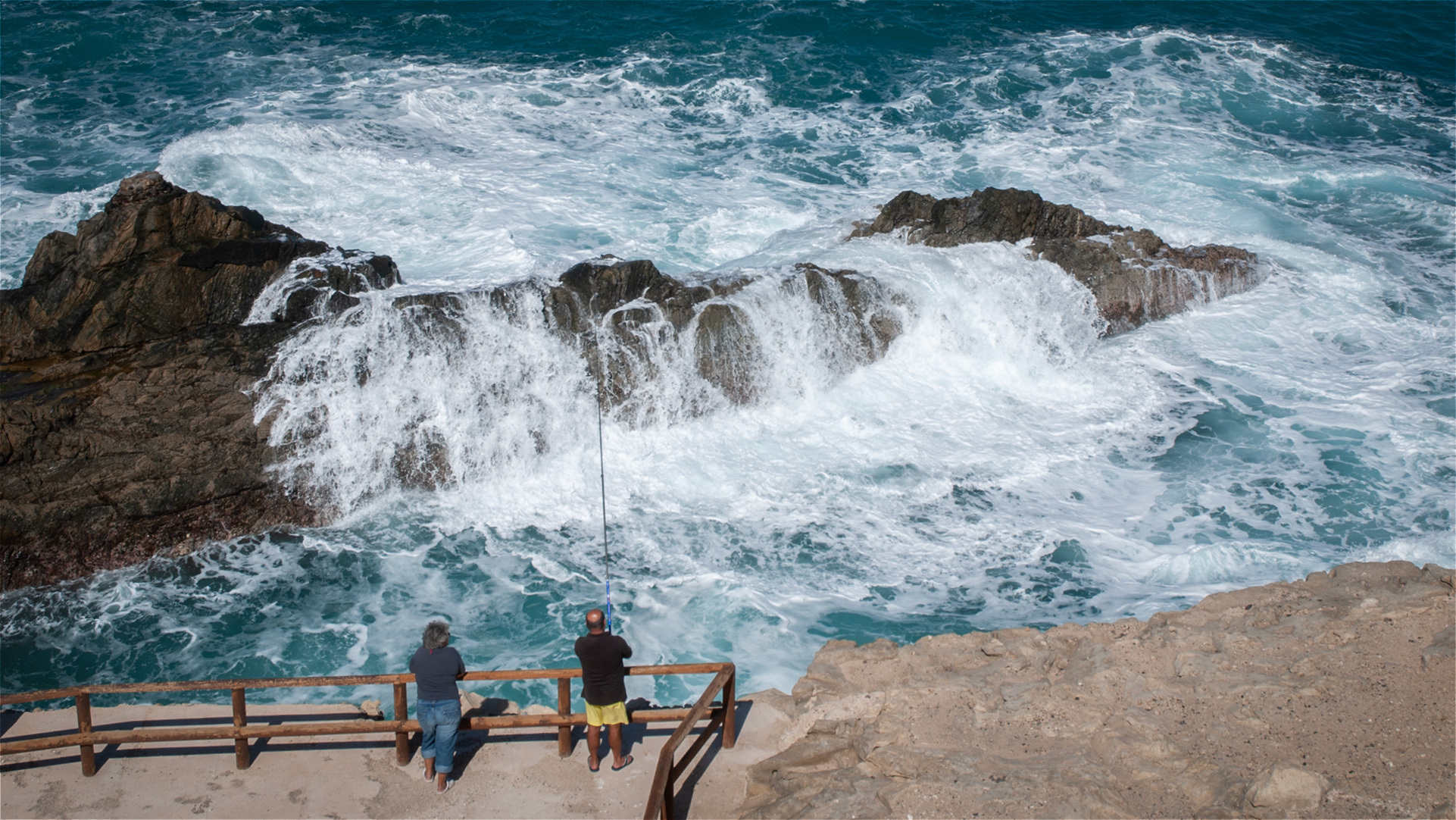
In the summer months, when the Atlantic is comparatively forgiving, the colourful fishing boats rest on nearby beaches or chug steadily across the sea. You see men mending nets, hear the creaking of wood and rope. But when winter comes and the waves reach heights that command every respect, the boats disappear – stowed in garages, patiently awaiting the next calm season. The rich marine fauna off Ajuy’s coast also makes it popular with anglers, who come here to pursue their catch with quiet concentration.
Playa de los Muertos – The Beach of the Dead
The beach immediately beside the village bears a name that stays with you: Playa de los Muertos – the Beach of the Dead. It owes its sombre ring to the numerous pirate raids that once began here. Pirates who came from the sea, landed on these shores, and ravaged the hinterland.
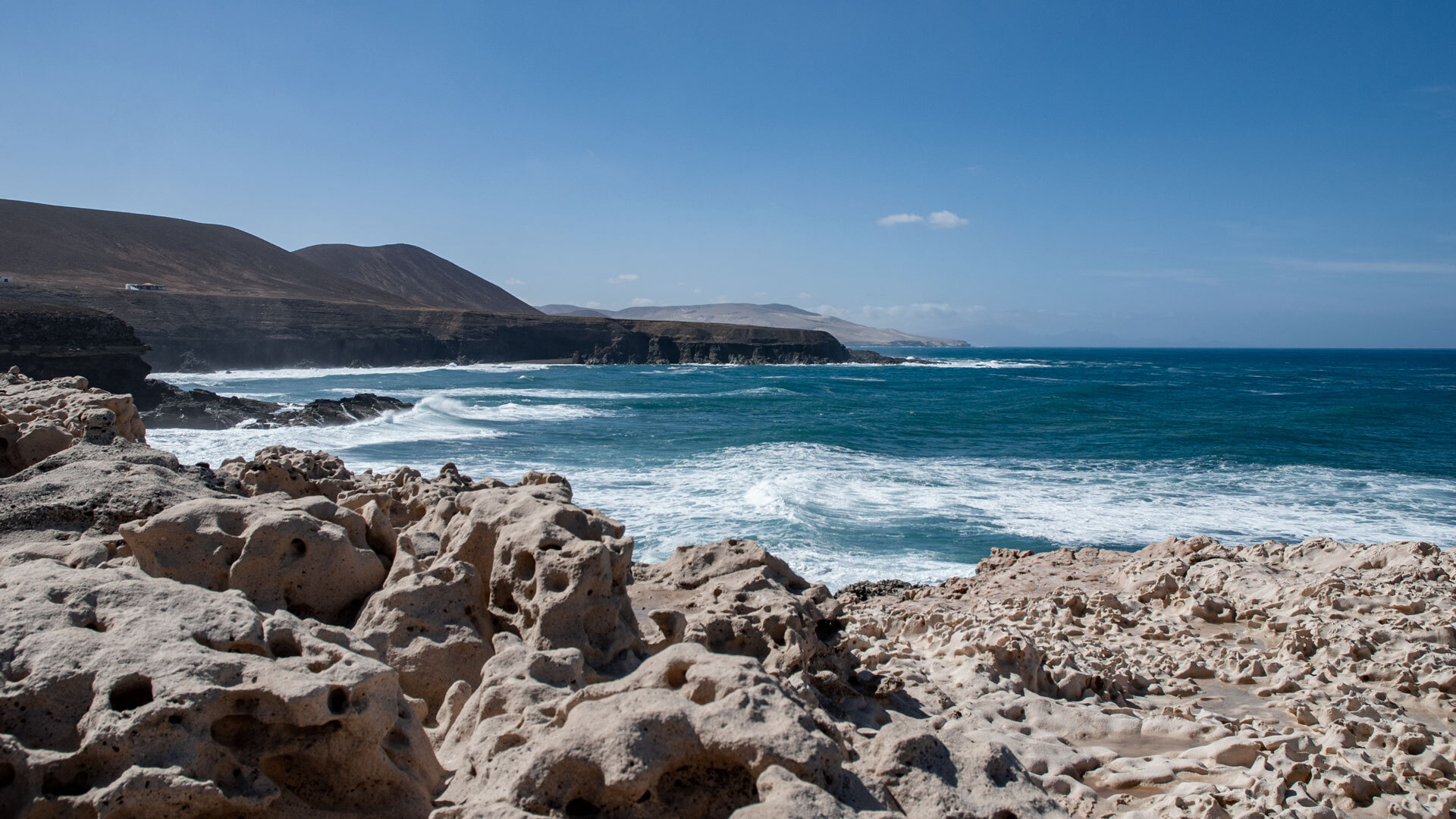
Today the beach is a place of rugged beauty. Dark sand, black rocks, the ceaseless breath of the sea. You stand there and feel that this stretch of coast offers no cosiness – but it does offer an encounter with the raw nature of Fuerteventura that you will never find on the tourist-filled beaches of the east coast.
Warning: Along the entire coastal area of Ajuy, one should enter the water only with the utmost caution, keeping a constant eye on the surf. The currents are treacherous and the Atlantic here is unpredictable.
Caleta Negra – Black Cove, Living Caves
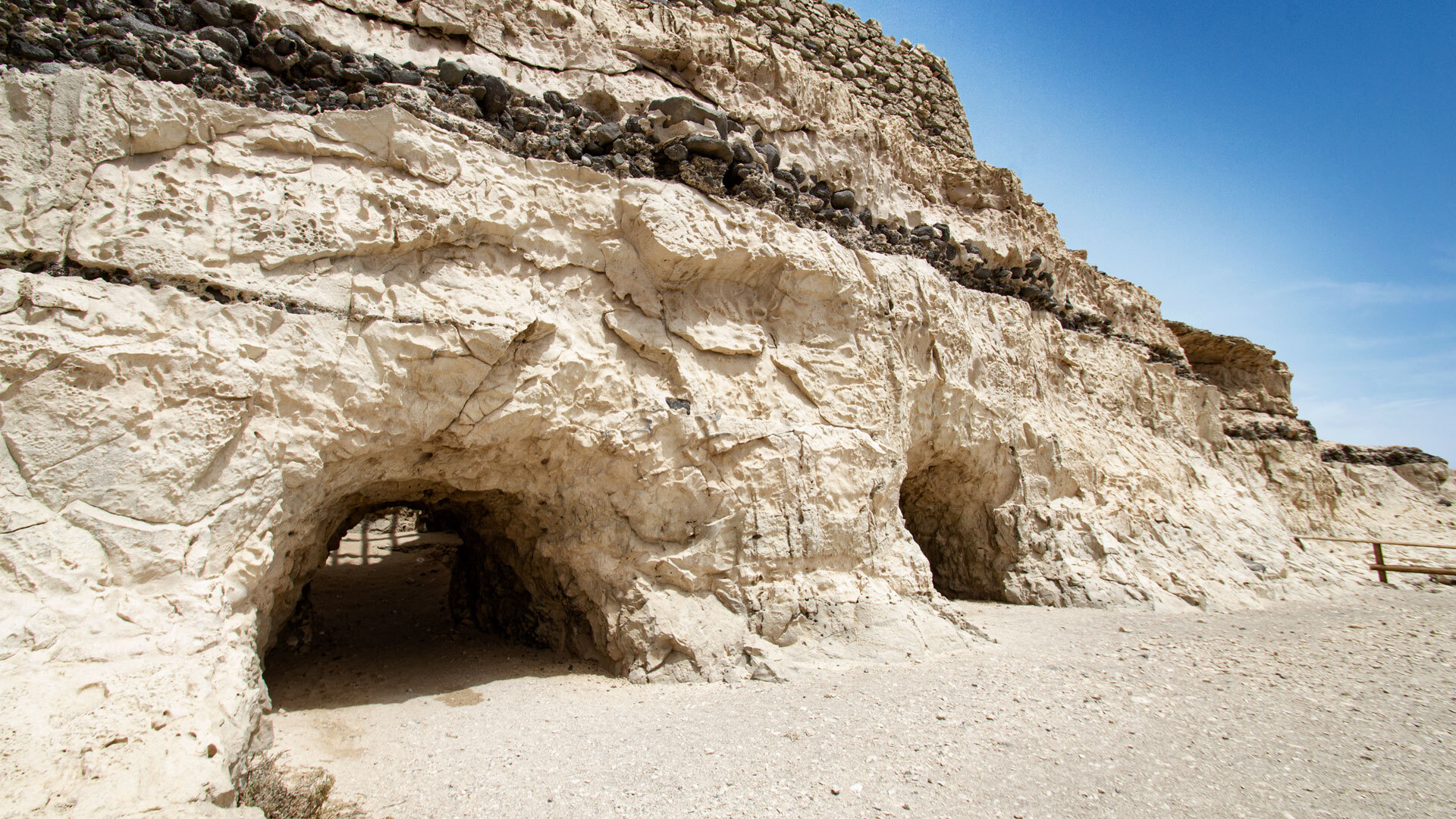
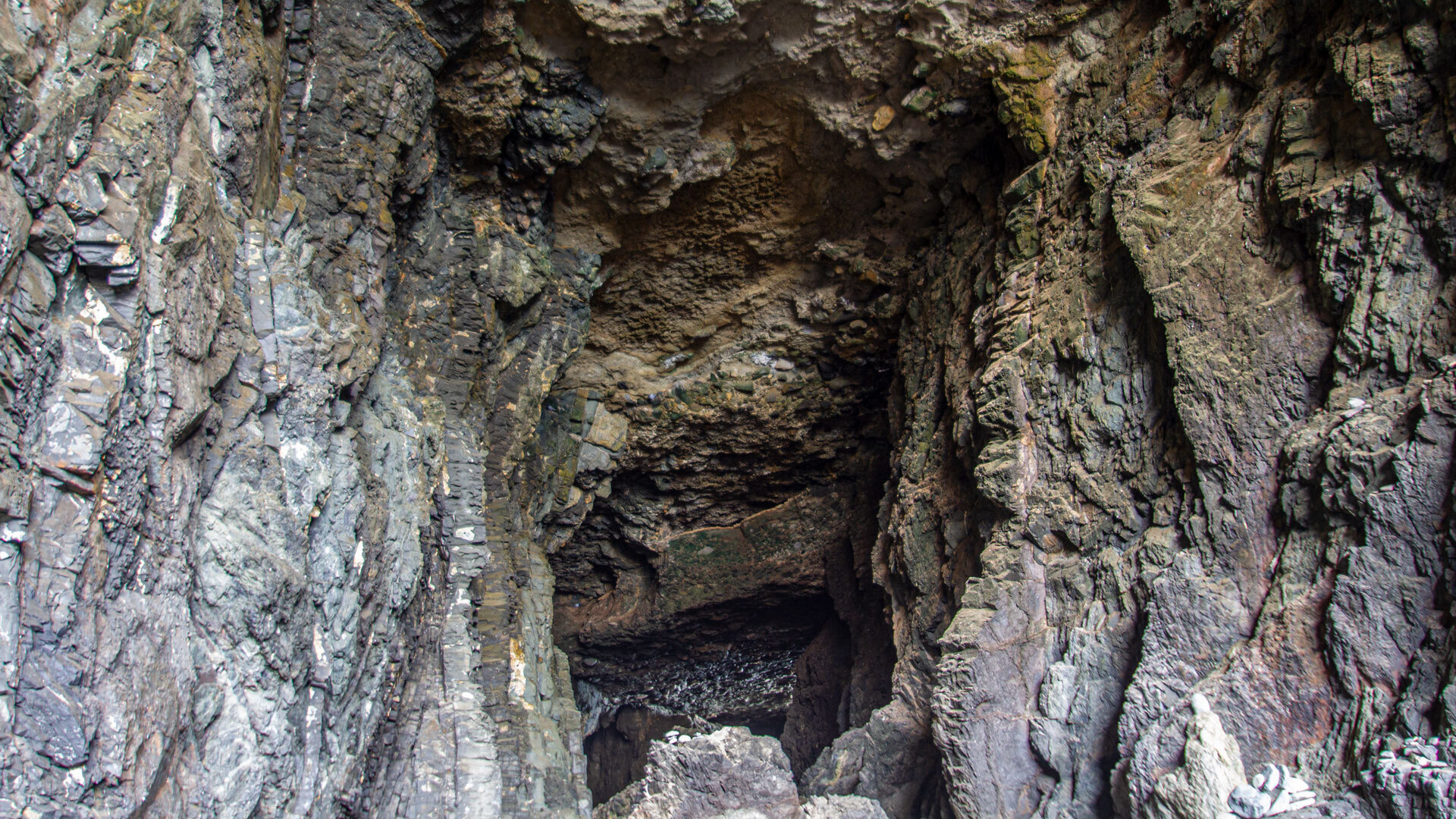
Those who follow the coastal path a little further north reach Caleta Negra – a black-sand cove of almost otherworldly beauty. Here, erosion and surf have worked for thousands of years, carving curious cave formations out of the volcanic rock. Some of these caves are flooded by seawater at high tide; others are accessible, secured with handrails, and invite visitors to venture into the interior of the island.
You step inside and suddenly find yourself in another world: light falls obliquely through cracks in the rock, the sound of the sea echoes back from the walls. Anyone who visits the caves of Ajuy understands why this stretch of Fuerteventura’s west coast is considered a geological gem.
Fish Restaurants & Percebes – Dining with a Sea View
Anyone who works up an appetite after the cave walk will find several fish restaurants in Ajuy along the beach and in the village itself, bringing the best of the Atlantic to the plate: fresh catch of the day, seafood, simplicity at its finest. The sound of the sea accompanies every meal.
The special delicacy of this place is percebes – those goose barnacles chiselled from the ceilings of sea caves. Anyone who has once tasted them understands why they are so coveted: an intense, iodine-rich experience of the sea that tolerates almost no preparation. Yet percebes have become scarce, their harvest laborious and risky – which is reflected in the price. A delicacy to be savoured consciously.
Fiesta de San Juan – Fire on the Beach of the Dead
Once a year, quiet Ajuy transforms into a place of radiant festivity. On 24 June, the village celebrates the Fiesta de San Juan – one of the oldest and most atmospheric folk festivals in the Canary Islands. Fires are lit along the beach, and dance and folklore fill the night with warmth. It is a festival you do not plan for – you simply experience it, when you happen to be in the right place at the right time.
Getting to Ajuy
The drive to Ajuy passes through Pájara. At the fork in the road, follow the sign branching off to the right towards the coast – the FV-621 – and after 8 kilometres you reach the village. A short drive through a landscape that grows barer and wider with every kilometre, until the sea appears on the horizon.
Conclusion: Ajuy – Fuerteventura’s Most Unspoilt Side
Ajuy on Fuerteventura is not a holiday destination in the conventional sense. There is no entertainment, no hotel complexes, no sun loungers for hire. What there is: history, silence, raw nature, and the unvarnished honesty of a fishing life that has barely changed over the centuries. Those who visit Puerto de La Peña return with an image of Fuerteventura that goes deeper than any sandy beach – and stays with them longer.