Road Trip South Fuerteventura: Dust, Silence and Endless Beaches
There are road trips where you start with a playlist and somewhere between the third song and the first bend, you forget the rest of the world exists. The road trip through southern Fuerteventura is one of those. Around 155 kilometres through volcanic landscape, salt wind and history – from the southern tip of the Jandía peninsula deep into the quiet, almost forgotten island interior. Those who take the plunge come back with dust on their shoes and a grin that’s hard to explain.
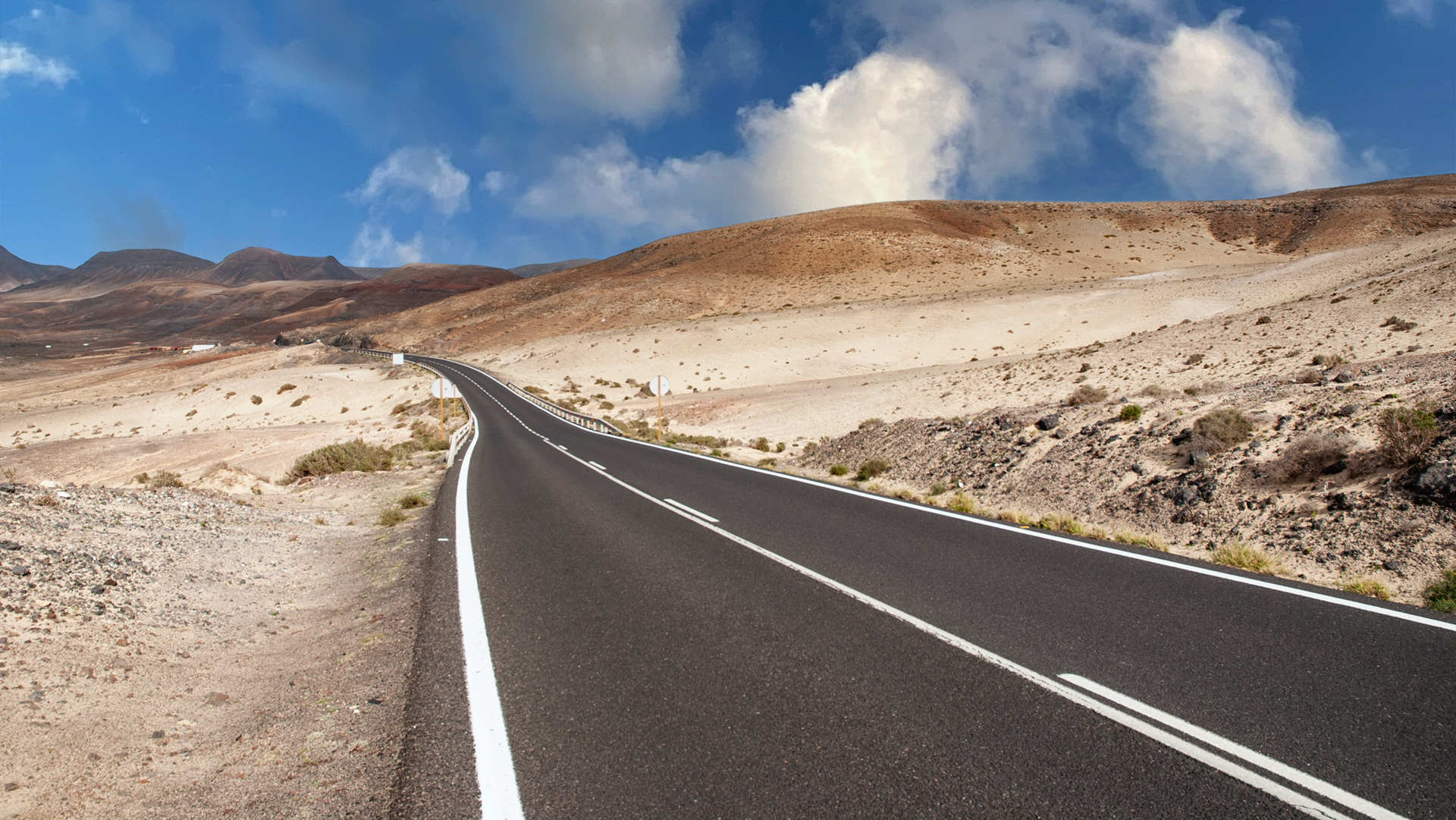
Morro Jable: A Leisurely Start at the End of the World
The tour begins in Morro Jable – the island’s southernmost holiday resort, which has merged with the neighbouring Jandía Playa to form a relaxed holiday region. No stress, no fuss. First, take a deep breath, a café solo in hand, sun on your skin.
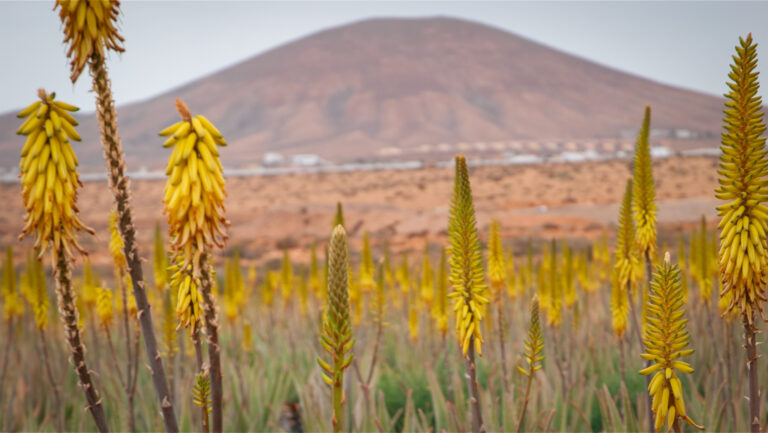
Those with a moment to spare can pop into the Aloe Vera Information Centre. The spiky desert plant is everywhere on Fuerteventura – along roadsides, in gardens, on driveways. The fact that it has been used for centuries against just about everything that hurts somehow suits this island perfectly.
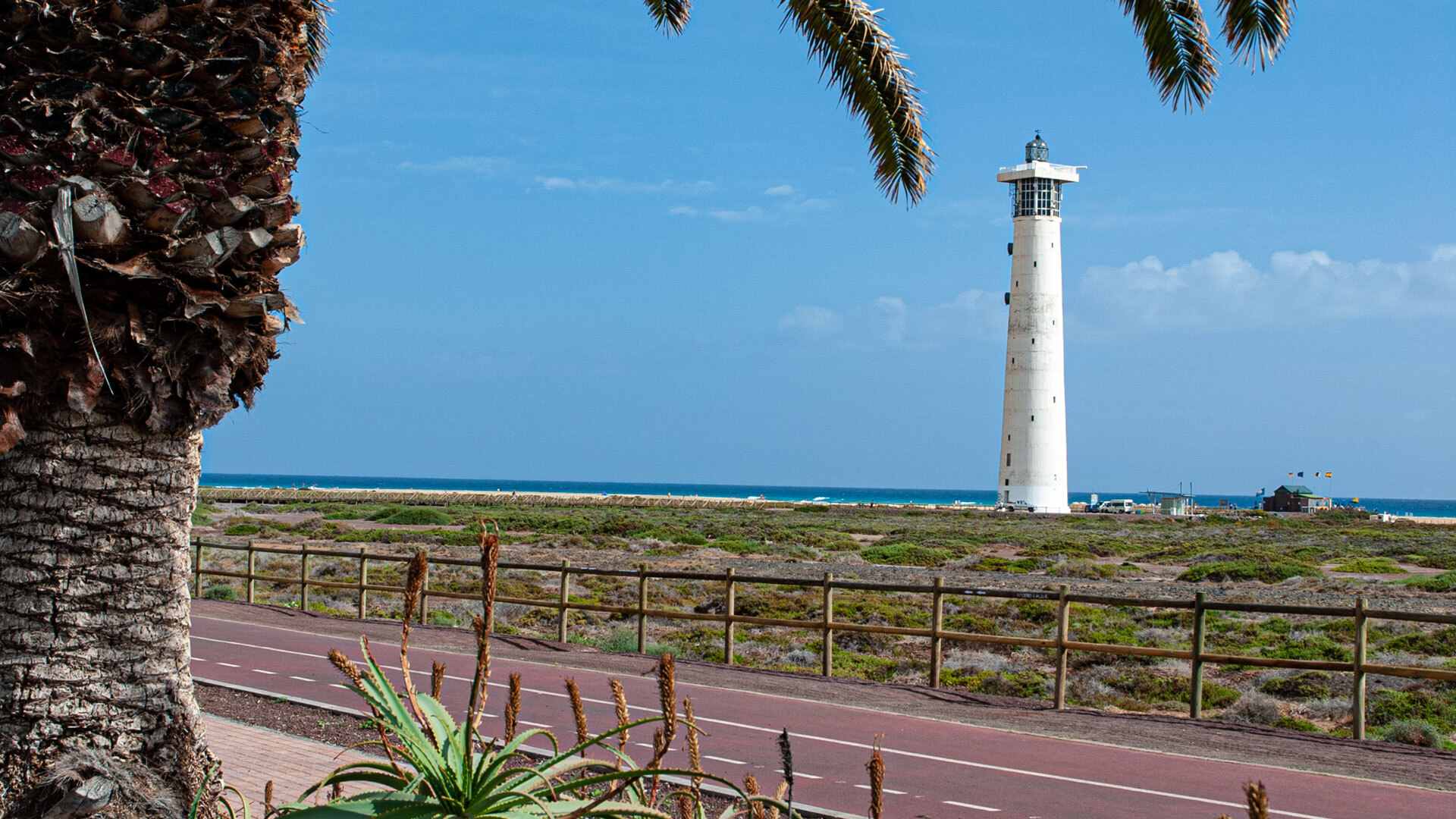
Jandía: Nature Reserve, Tracks and the Quiet Longing for a 4×4
The Jandía peninsula is almost entirely a nature reserve – and you feel it immediately. Nature here is not decorated; it simply exists. Sparse, vast, unimpressed. The eastern coastline still shows its gentle side with broad sandy beaches and turquoise water – but the moment you leave the tarmacked roads, the real adventure begins.
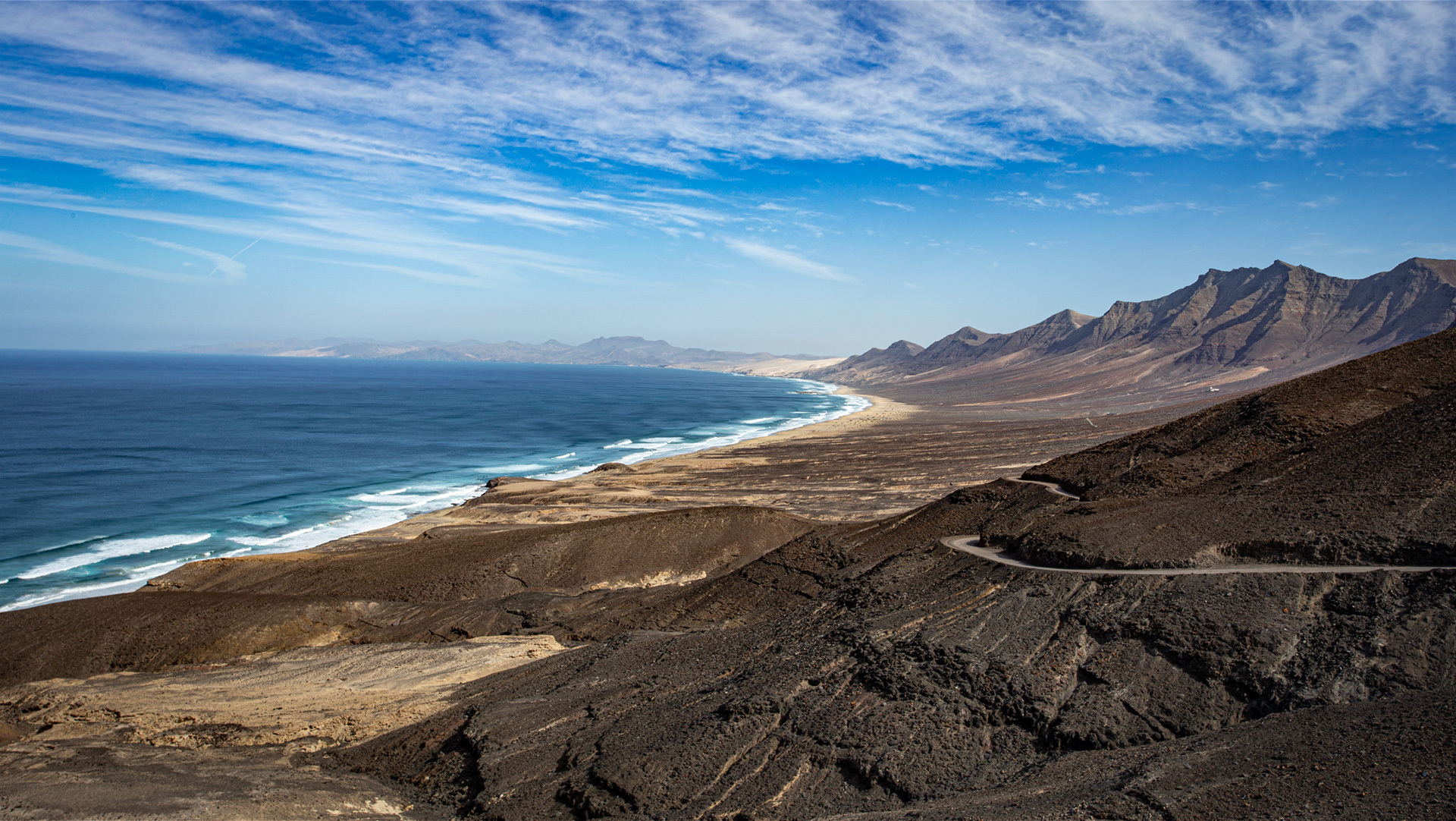
Cofete: The Track That Tests Every Hire Car Driver
Anyone who has ever thought about taking the legendary gravel track to Cofete will know the feeling: you sit in your perfectly decent hire car, look at the road ahead – and inevitably think: A 4×4 would be lovely right now. Very lovely, actually. But you don’t have one. And so you rattle off.
The track to Cofete is among the wildest this island has to offer. Potholes, gravel, bends, dust. And then, every other corner: oncoming traffic. An old saying inevitably springs to mind – “What do you mean, there’s a wrong-way driver heading towards you? No – hundreds of them!” – and you let out a brief laugh, because it’s not far from the truth. It feels as though every other driver meets the rest on the wrong side of the road, because there effectively is no right side. The road is too narrow for two cars, too winding for optimism, and too beautiful to turn back.
Arriving at the top: a deserted beach, heavy Atlantic surf, no sunshades, no bar, nobody asking whether you’d like another drink. Just wind, waves and the feeling of having landed somewhere at the edge of the world. That is Cofete. And every scratch on the undercarriage is worth it.
Playas de Sotavento: Where World Champions Surf and Everyone Else Just Lies There
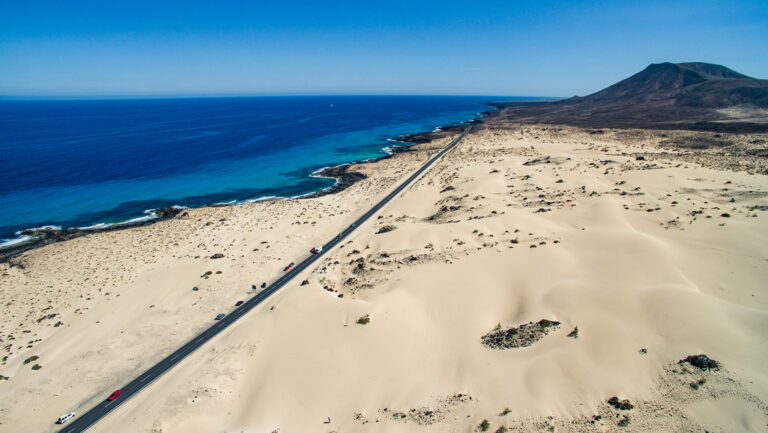
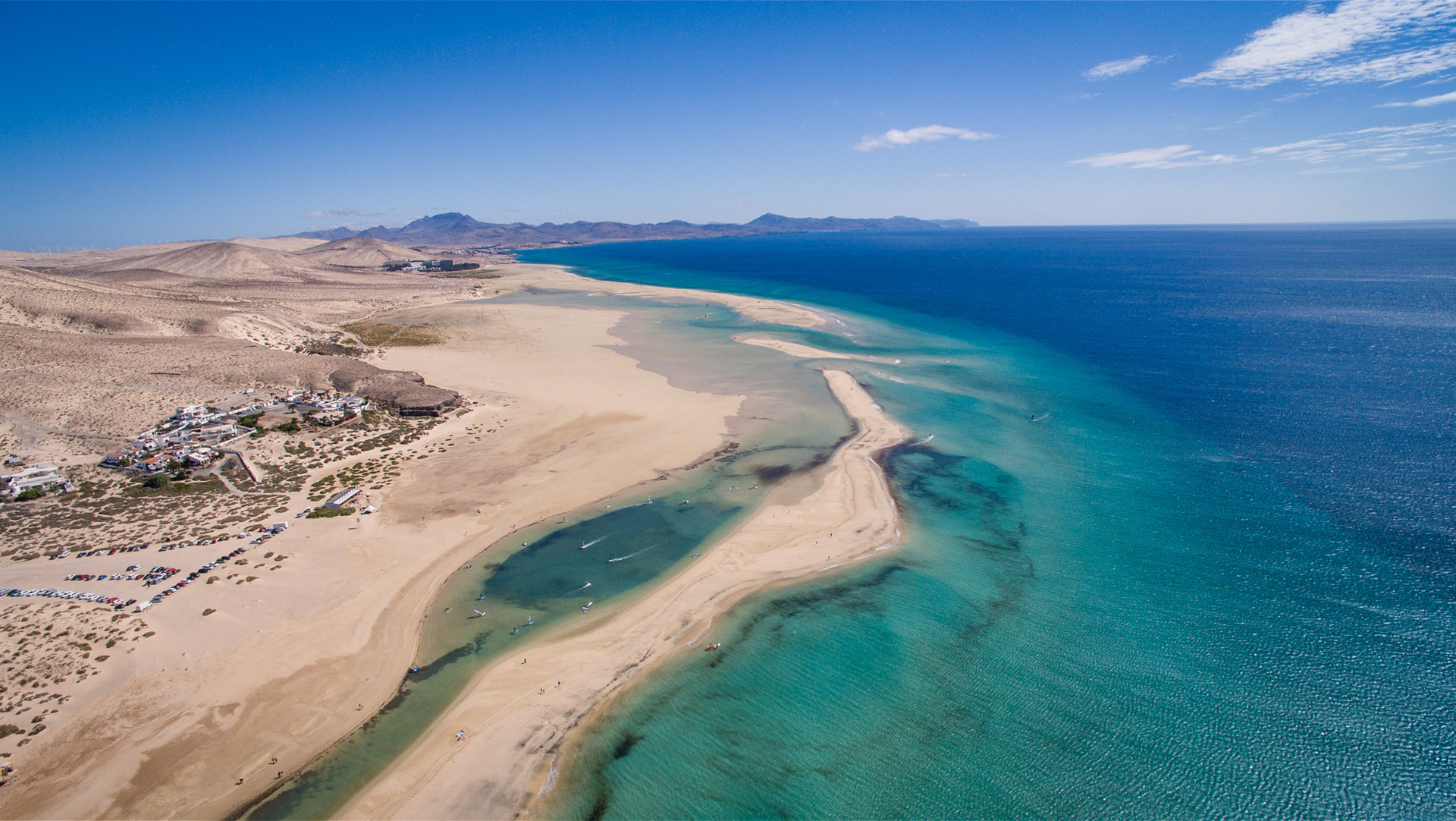
Back on the FV-2, the route heads north along the coast. After around 16 kilometres, a side road branches off to the Playas de Sotavento – five kilometres of white sand where the world turns a little slower. This is where the Fuerteventura Surfing World Championships take place every year. Kiters, windsurfers and wave riders from around the world fill the water. On land, you can watch them battle it out – or simply close your eyes and listen to the wind brushing over the sand.
Costa Calma: Palm Trees in the Middle of the Stone Desert
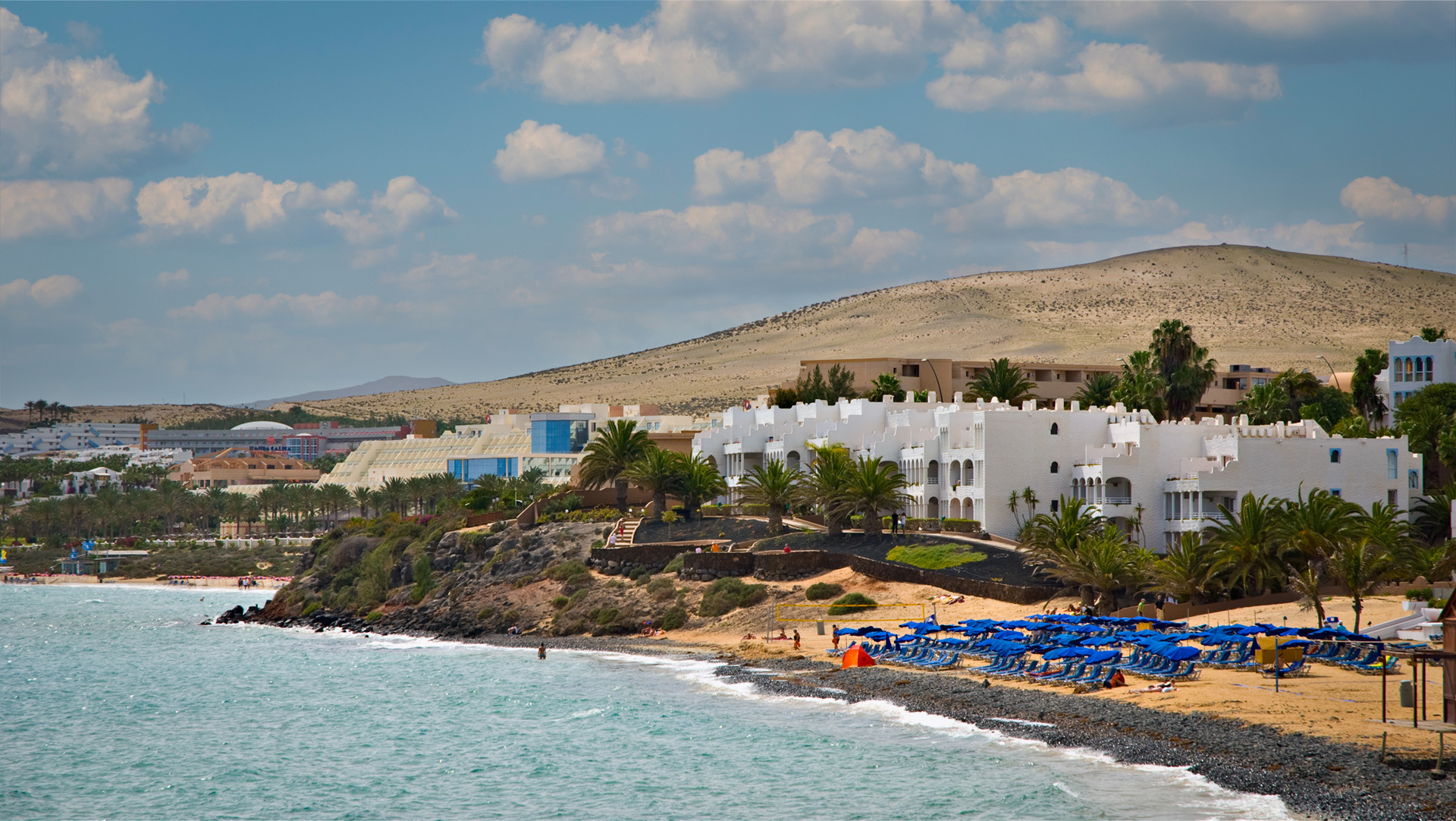
Costa Calma comes as a surprise. What you don’t expect: palm trees. Lots of palm trees. And pine trees. Since an ambitious planting project in 1986, they line the main road and create an almost woodland-like atmosphere that, amid Fuerteventura’s otherwise rocky surroundings, feels like a friendly joke played by nature. Hotels, holiday complexes, tourists – all present and correct. But somehow it doesn’t matter here.
La Pared: West Coast, Crashing Waves and the Limits of Swimming
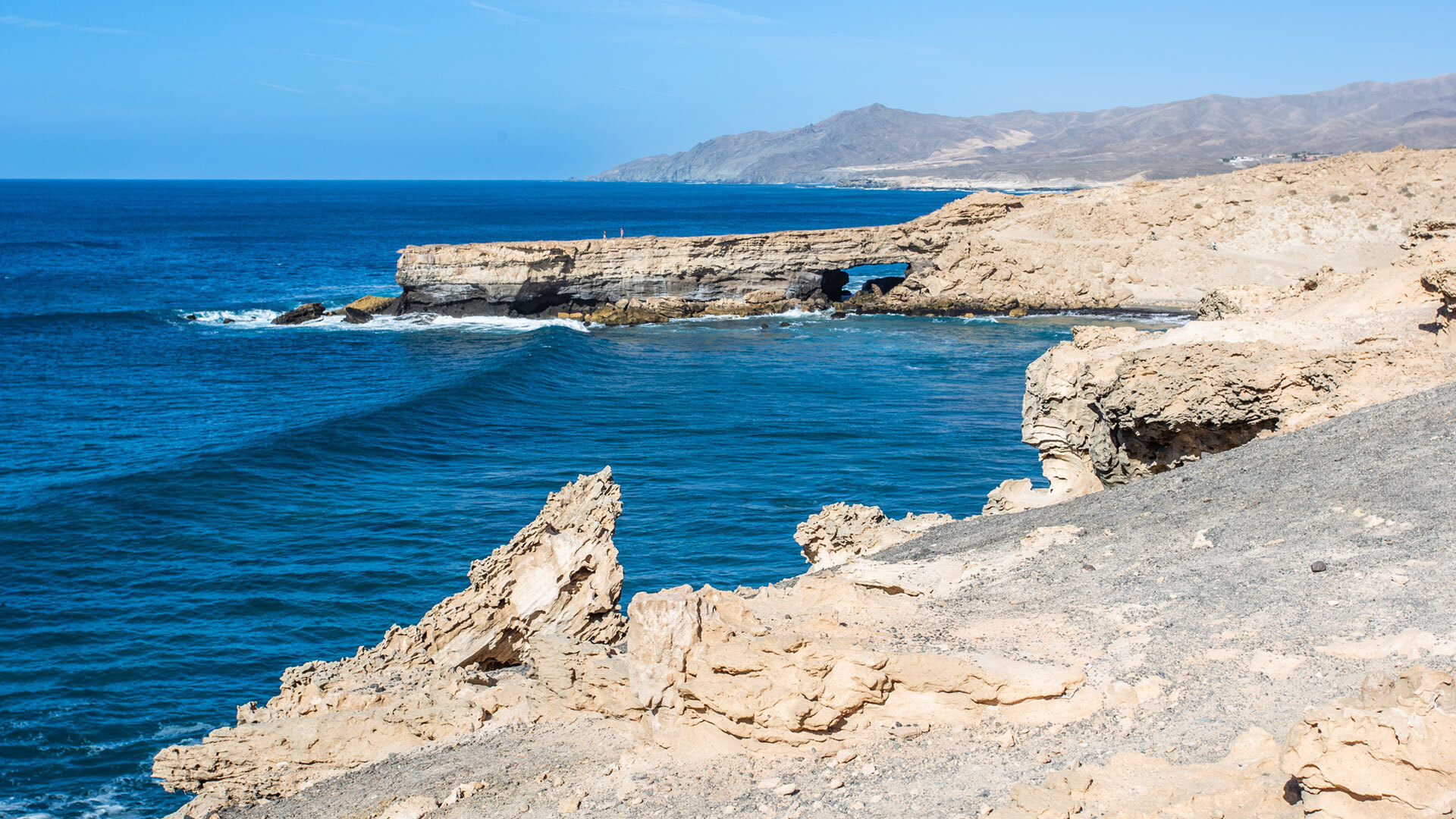
At the edge of the village, the FV-605 turns towards the west coast. The village of La Pared is small, the restaurants are good, the beach is peaceful – and the water is off-limits. Fuerteventura’s west coast means business. Strong currents, dangerous waves, an Atlantic Ocean that couldn’t care less about the “No Swimming” sign. You stand at the edge and watch the waves work on the rocks. Sometimes watching is the better decision.
Pájara: Mountain Village, Mountain Goats and a Church with an Aztec Portal
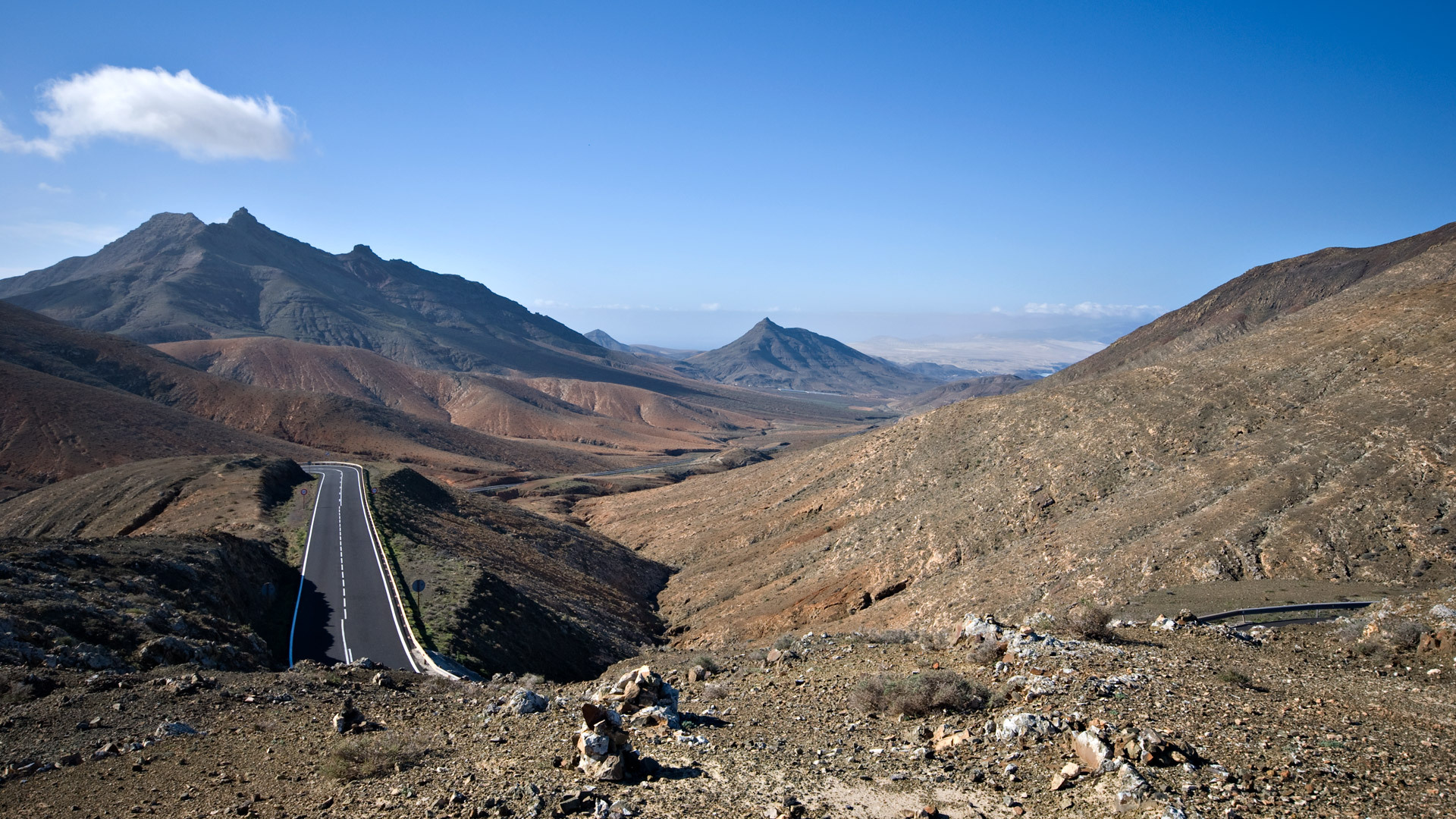
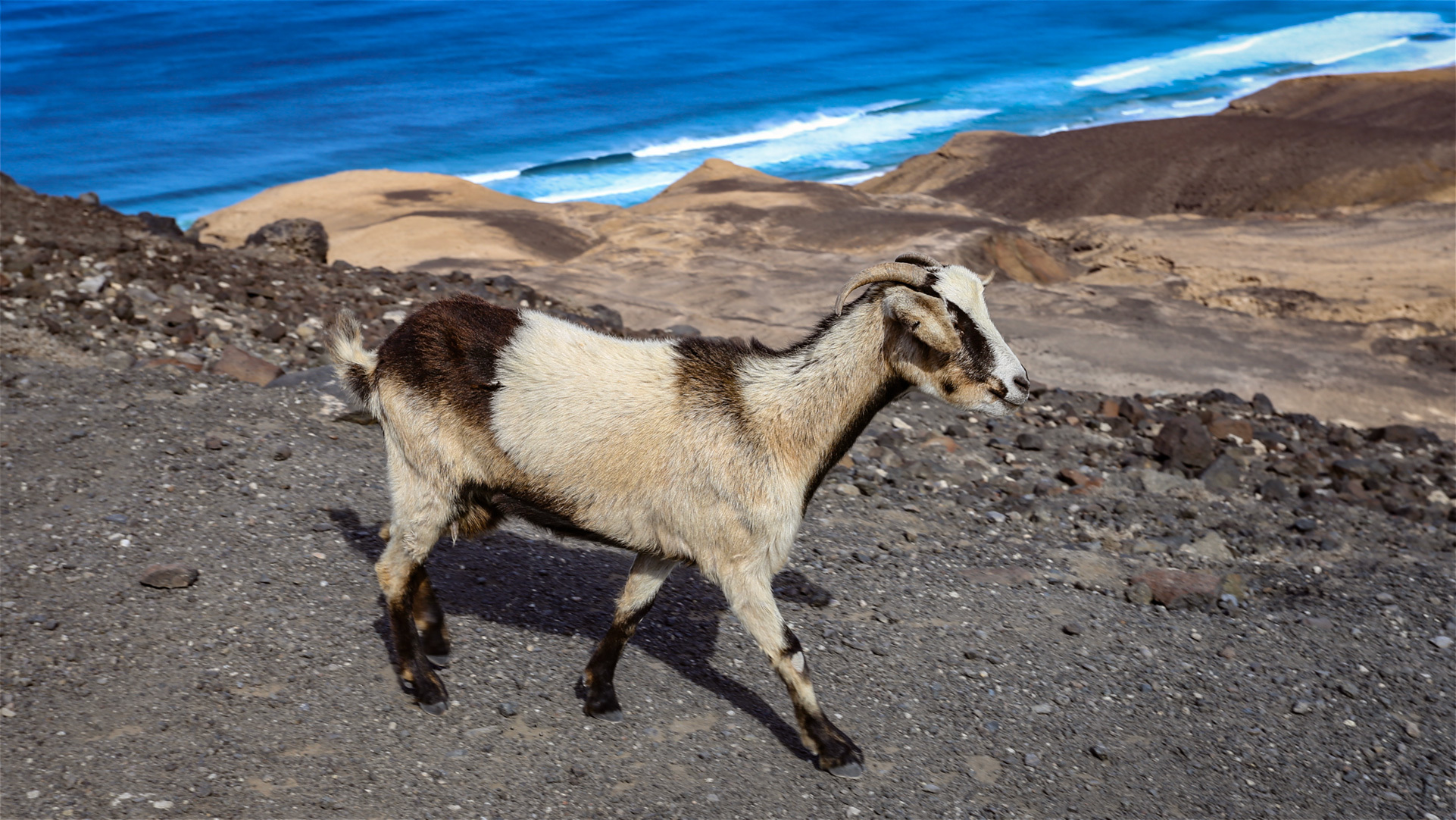
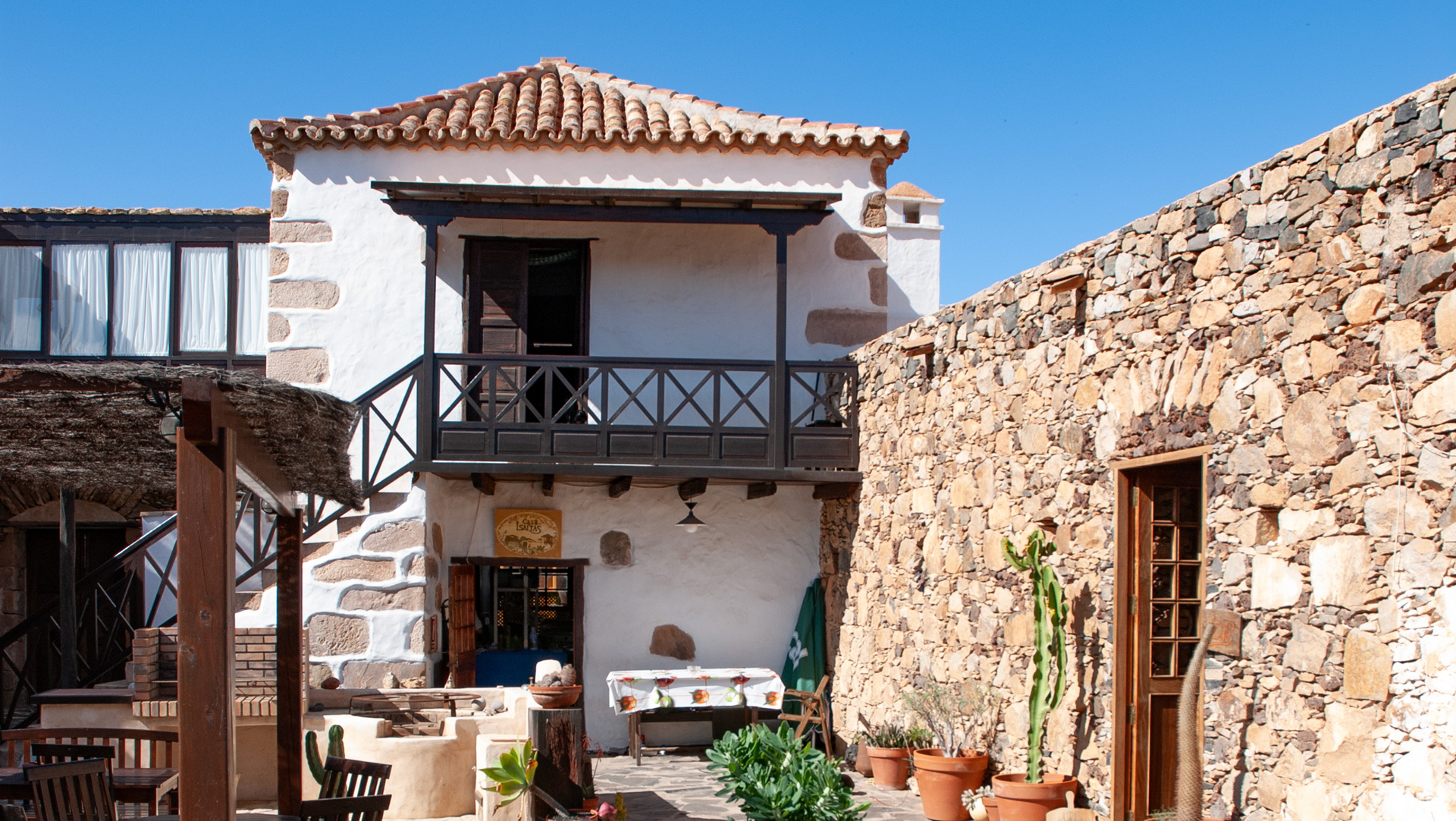
Continuing along the FV-605, the road leads through a landscape you can comfortably describe as epic. Bare plains, isolated cottages, goats doing whatever they please – and then Pájara appears, nestled between mountain walls up to 600 metres high. The small town is the administrative centre of the south and carries itself with corresponding confidence: well-kept green spaces, handsome town houses, a public open-air swimming pool.
The Mysterious Church of Pájara
The Iglesia de Virgen de la Regla draws every eye – not because of its size, but because of its entrance portal. Aztec motifs in a Canarian village church. How they got here is something art historians are still arguing about today. Beautiful either way.
Vega de Río de las Palmas: The Green Secret of Fuerteventura
From Pájara, the FV-30 winds its way up along a narrow mountain road. At the Degollada de Los Grandadillo pass, a brief stop is worthwhile – far below lies the valley, quiet and green and surreally beautiful in these sparse surroundings.
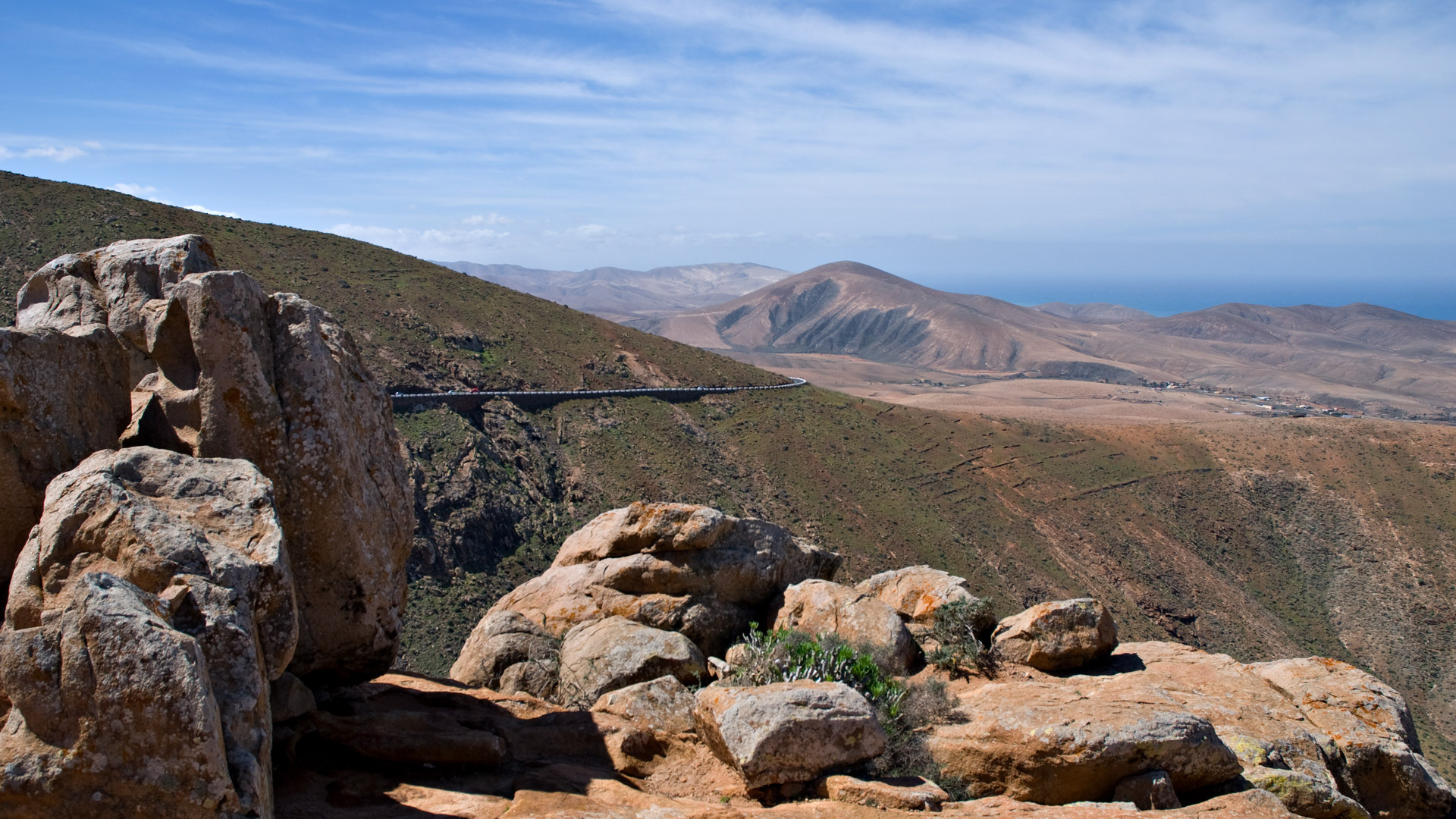
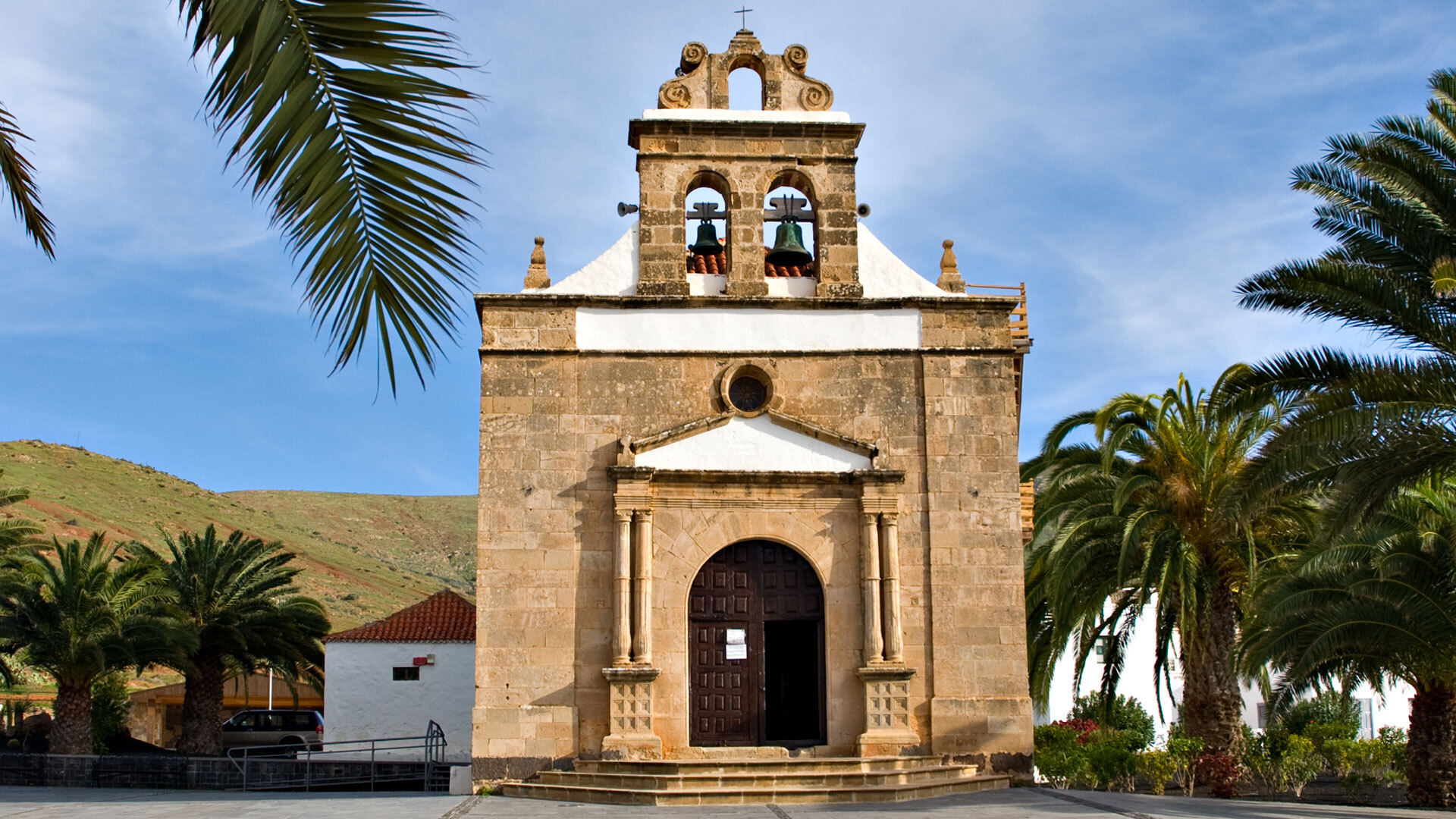
The village of Vega de Río de las Palmas lies in the island’s most water-rich area. Tomatoes grow here, palm trees, vegetables. A dried-up riverbed winds through the valley – in winter it occasionally carries water to the nearby Embalse de las Peñitas reservoir, which has since silted up and become a quiet biotope. Two churches stand in the village: the 17th-century Iglesia Nuestra Señora de la Peña and the small Ermita de Virgen de la Peña, which waits for visitors slightly off the beaten track on a footpath – as though it’s in no particular hurry.
Betancuria: The Old Capital Sleeps Gently
A few kilometres further lies Betancuria – the former island capital, now arguably the most atmospheric village on the entire southern island circuit. Canarian houses nestled between gardens and palms, a slowness that is contagious.
Iglesia de Santa María: Gilded Ceilings, Thick Walls
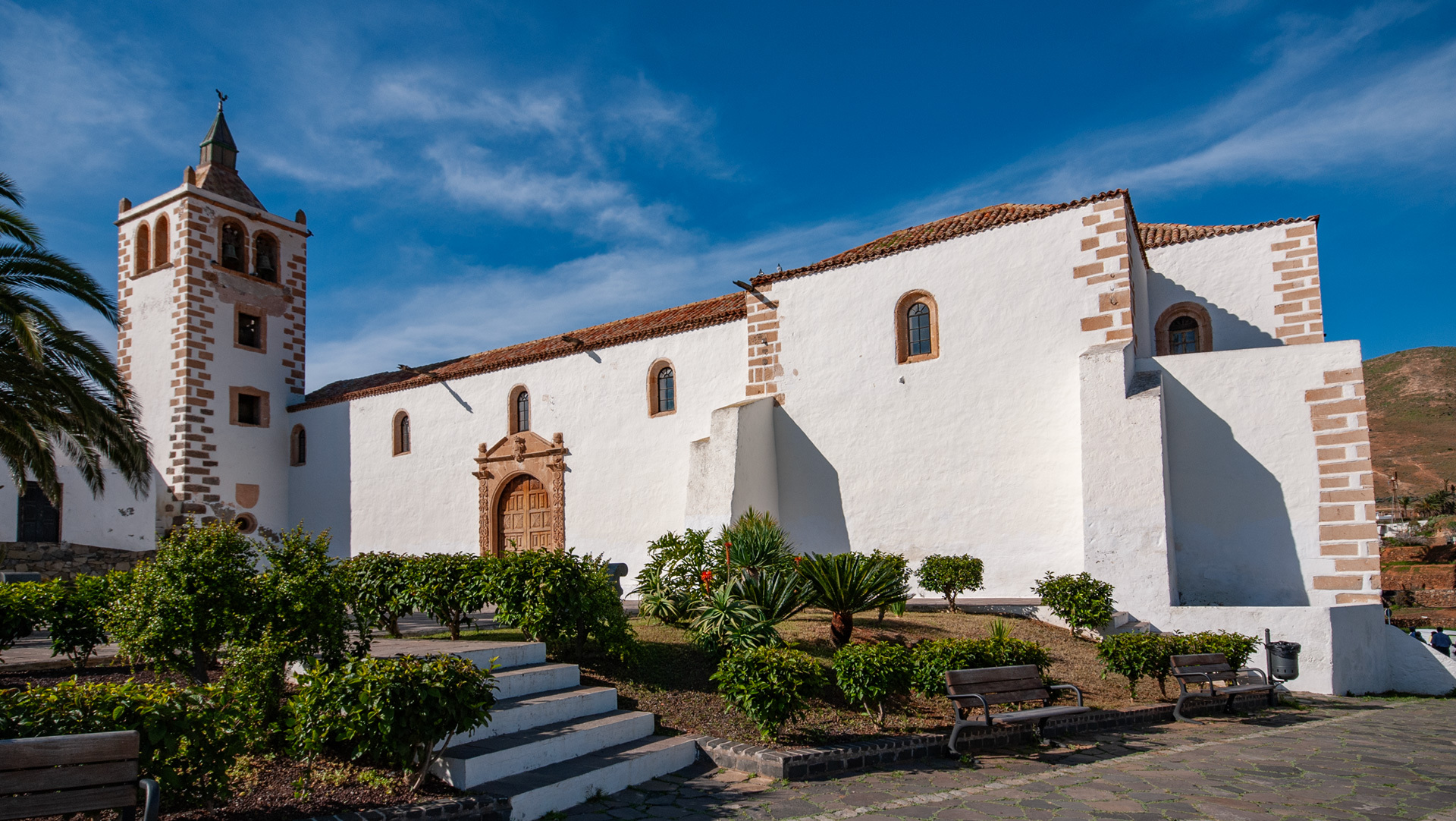
The Iglesia de Santa María in the village centre has thick walls – built to withstand pirate attacks. Inside: a gilded altar, a pine-wood ceiling in the Mudéjar style, cool air, silence. At the neighbouring El Centro Insular de Artesanía crafts centre, you’ll find genuine Canarian craftwork – the real thing, not souvenir-shop fare.
Antigua: Art Nouveau Villa and an Old Mill
Antigua was the island’s main town between 1834 and 1860. You can still feel it. Manor houses, villas, a pastel-blue Art Nouveau villa right on the main road, standing there as naturally as if it had always been. At the edge of town, the Molino de Antigua open-air museum – mill, museum, history and an attached restaurant serving Canarian cuisine. Exactly what you need after a long day.
Tiscamanita: Mills and the Great Bad Land
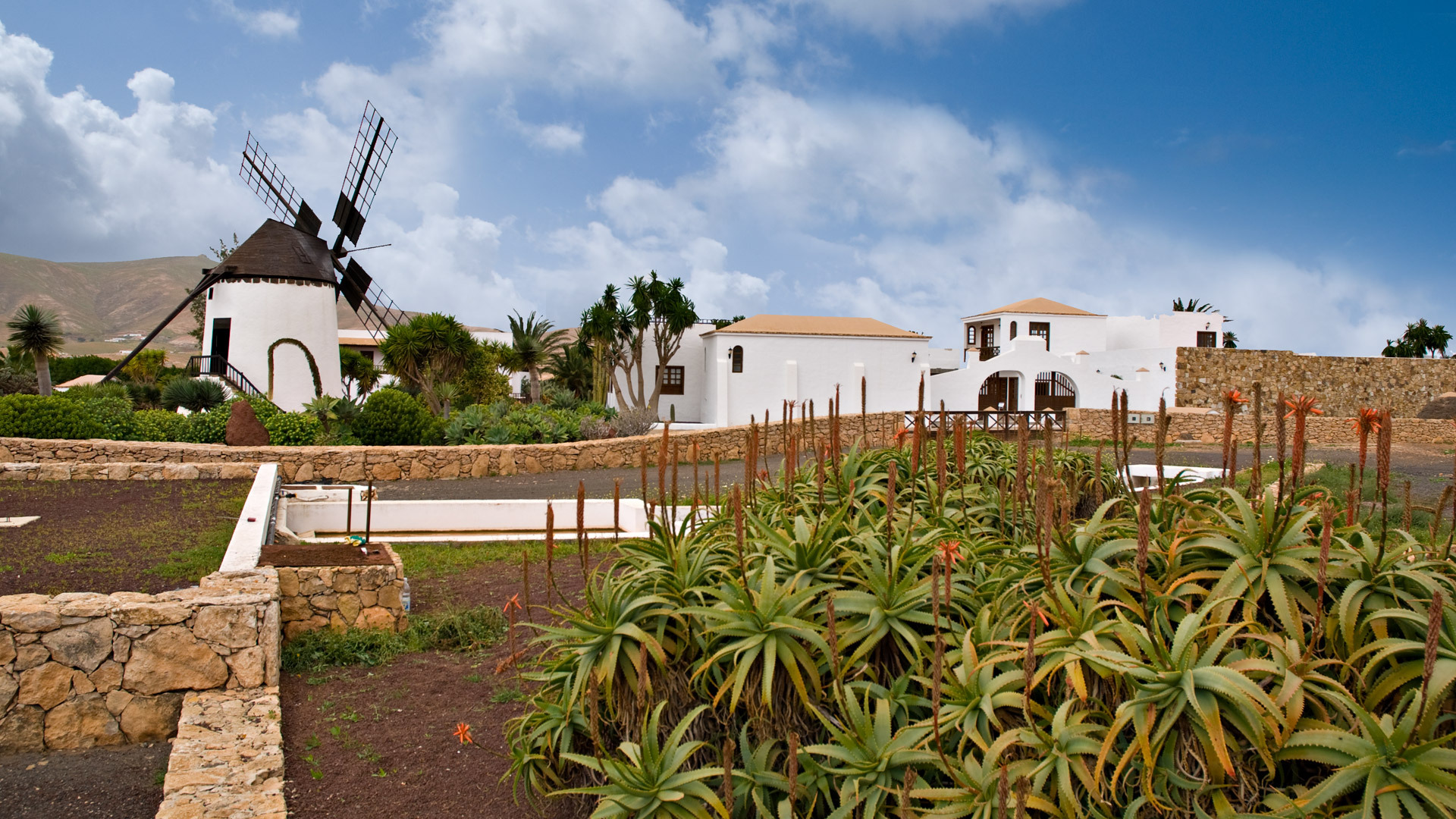
Further south on the FV-20, Tiscamanita appears – quiet, unhurried, with a beautifully restored windmill and the Centro de Interpretación Los Molinos. To the east of the village stretches the Malpaís Grande lava field – literally: “great bad land”. Anyone who approaches along a side road and gazes into this black, jagged landscape understands the name immediately. And finds it unfairly beautiful at the same time.
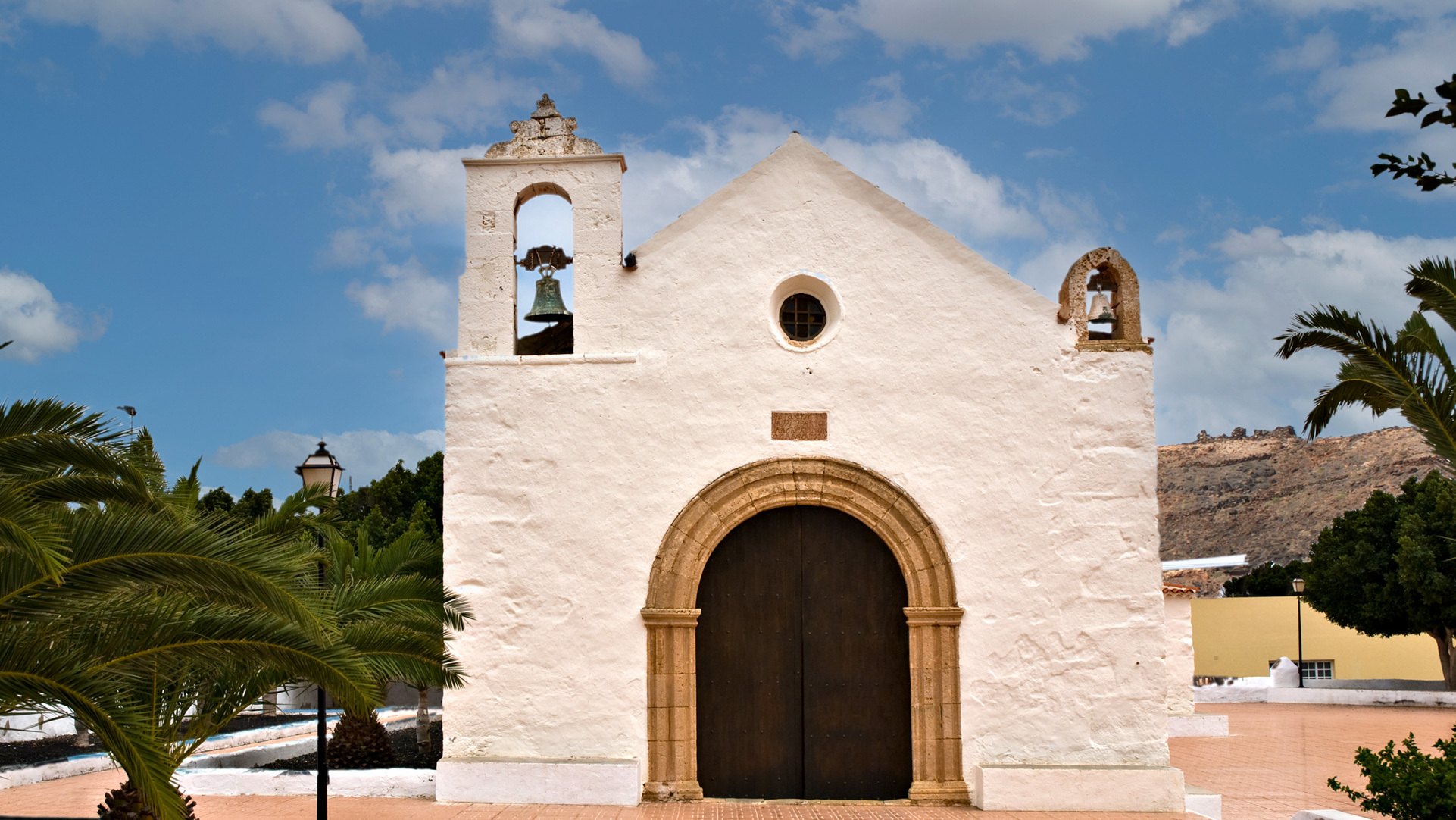
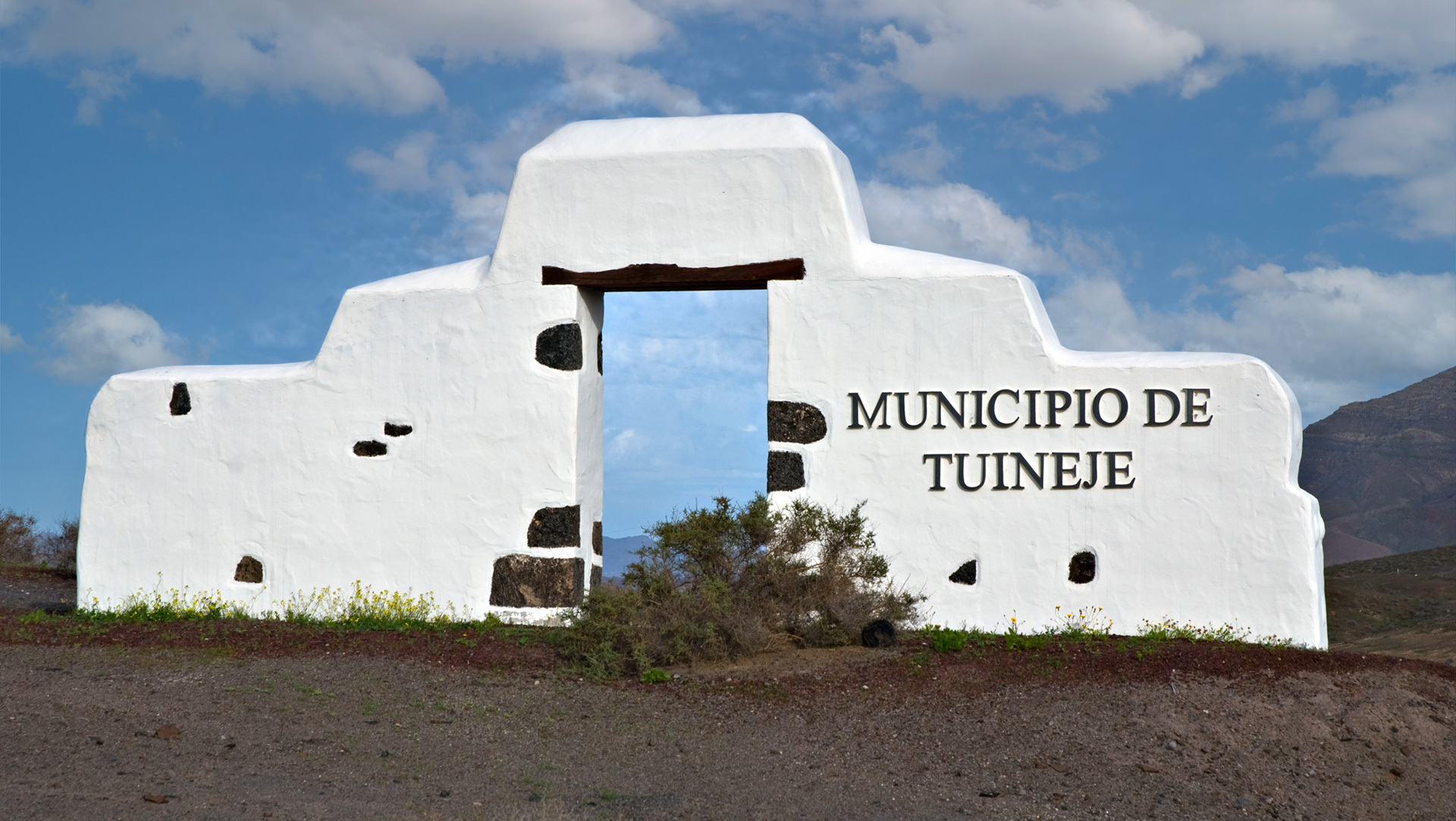
Tuineje: Farmland and a Pirate-Era Church
Tuineje is just four kilometres further – a small village with a rich clay soil. The area is still farmed today, simply because the soil allows it. The Iglesia San Miguel Arcángel, completed in 1790, surrounded by a defensive structure – another quiet testament to the times when pirates were no metaphor.
Oasis Park La Lajita: Africa in the Middle of the Desert
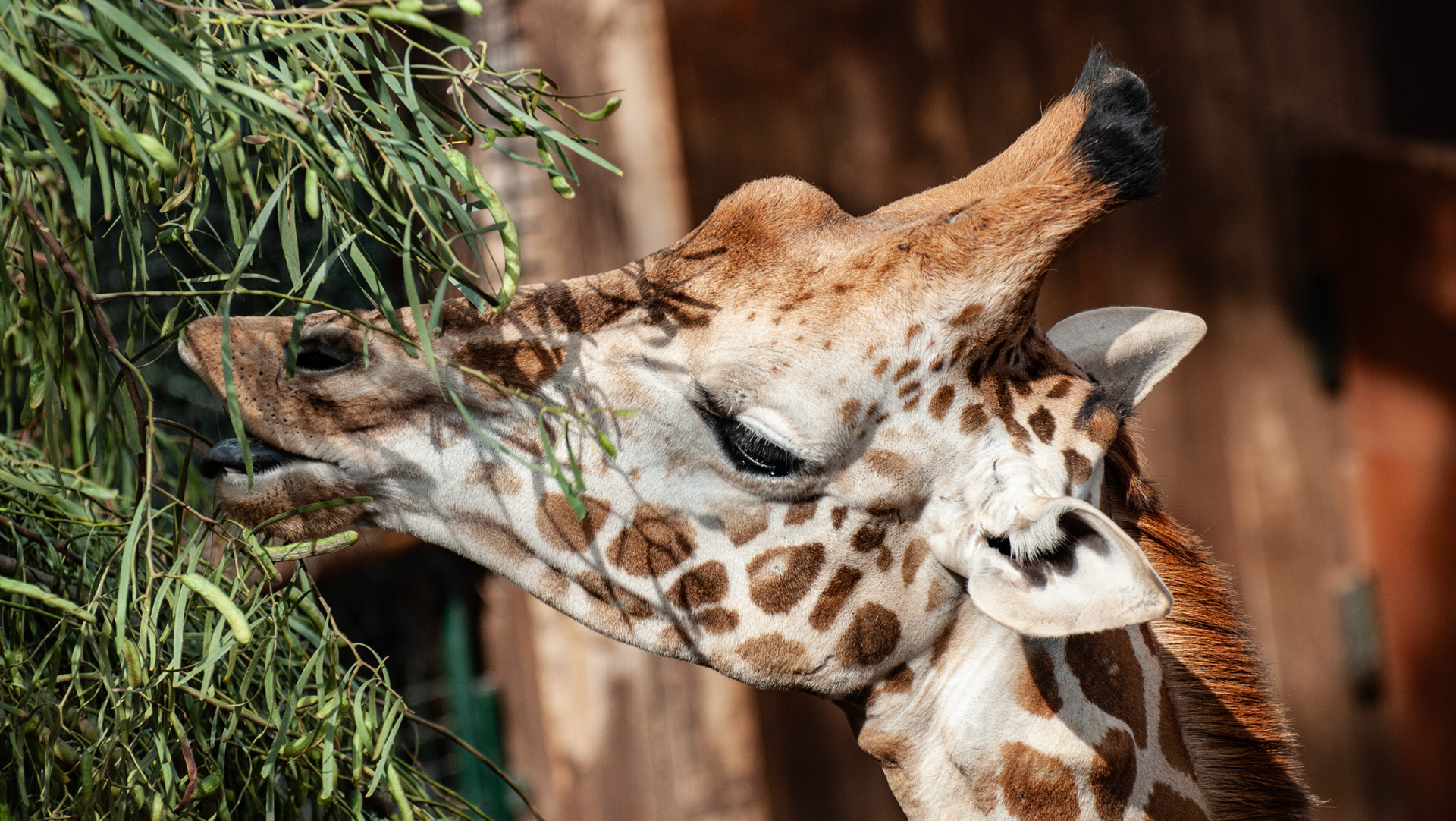
Then, just when you think you’ve seen everything: the Oasis Park near La Lajita. In the middle of dust and lava, an elaborate irrigation system has created a lush habitat for around 250 African, South American and Canarian species. Botanical rarities, endemic species, colour. You need a few hours – and you’ll happily take them.
Back to Morro Jable: With Dust on Your Shoes
The final kilometres on the FV-2 back to Morro Jable pass almost too quickly. The Jandía peninsula appears again, familiar this time. You know its bends a little now, have felt its tracks, heard its wind. And even as you step out of the car, you’re already thinking: Next time – with a 4×4.